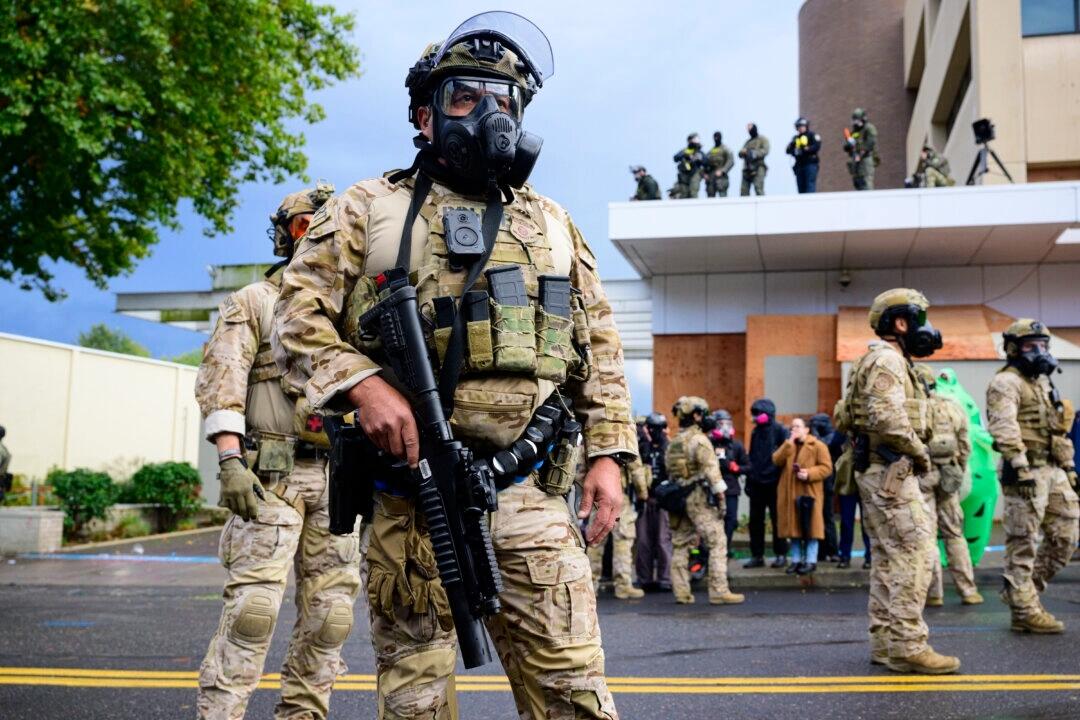
Category: News

Verizon is cutting more than 13,000 jobs as it works to ‘reorient’ entire company
NEW YORK — Verizon is laying off more than 13,000 employees, as the telecommunications giant says it must “reorient” its entire company.
The jobs cuts began on Thursday, per to a staff memo from Verizon CEO Dan Schulman. In the letter, which was seen by The Associated Press, Schulman noted that Verizon’s current cost structure limits the company’s ability to invest — pointing particularly to customer experiences.
“We must reorient our entire company around delivering for and delighting our customers,” Schulman wrote. He added that the company needed to simplify its operations “to address the complexity and friction that slow us down and frustrate our customers.”
Beyond the cuts across Verizon’s workforce, Schulman said that the New York company would also “significantly reduce” its outsourced and other outside labor expenses.
News of coming layoffs at Verizon were reported last week by The Wall Street Journal. The outlet says that the 13,000 job cuts announced Thursday mark the largest-ever round of layoffs at the company.
Verizon isn’t the only company to recently announce sizable workforce reductions. Over recent weeks and months, more and more layoffs have piled up at companies like Amazon, UPS, Nestlé and more.
Schulman on Thursday recognized that “changes in technology and in the economy are impacting the workforce across all industries.” He said that Verizon had established a $20 million “Reskilling and Career Transition Fund” for workers departing Verizon.
https://www.chicagotribune.com/2025/11/20/verizon-cutting-jobs/

US homes sales rose in October as homebuyers seized on declining mortgage rates
Sales of previously occupied U.S. homes increased last month to the fastest pace since February as lower mortgage rates helped pull more homebuyers into the market.
Existing home sales rose 1.2% in October from the previous month to a seasonally adjusted annual rate of 4.10 million units, the National Association of Realtors said Thursday.
Sales climbed 1.7% compared with October last year. The latest sales figure topped the roughly 4.09 million pace economists were expecting, according to FactSet.
The national median sales price increased 2.1% in October from a year earlier to $415,200. That’s the 28th consecutive month that home prices have risen on an annual basis.
The U.S. housing market has been in a slump since 2022, when mortgage rates began climbing from historic lows. Sales of previously occupied U.S. homes sank last year to their lowest level in nearly 30 years.
Sales have remained sluggish this year, but have gotten a boost this fall as the average rate on a 30-year mortgage declined to its lowest level in more than a year.
Even so, affordability and uncertainty over the economy and job market remain significant hurdles for many aspiring homeowners after years of skyrocketing home prices.
https://www.chicagotribune.com/2025/11/20/us-homes-sales-mortgage-rates/

GE Appliances refuerza lazos con proveedores de EEUU al trasladar producción de China a Kentucky
Por BRUCE SCHREINER
LOUISVILLE, Kentucky, EE.UU. (AP) — GE Appliances destacó el jueves los amplios efectos en cadena de trasladar la producción de China a Kentucky al anunciar más de 150 millones de dólares en nuevos contratos adjudicados a proveedores con sede en Estados Unidos.
Los contratos con los proveedores varían en valor desde 330.000 dólares hasta 41 millones de dólares, abarcan 10 estados y cubren segmentos cruciales de la cadena de suministro para la producción de lavadoras y secadoras del fabricante de electrodomésticos, desde plásticos y fundiciones hasta acero y aluminio, indicó la compañía. Los proveedores varían en tamaño desde U.S. Steel hasta empresas familiares.
GE Appliances señaló que con los nuevos contratos está aumentando el gasto nacional en proveedores en un 3,3%.
Los proveedores apoyarán la producción de una lavadora/secadora combinada y una línea de lavadoras de carga frontal, todas las cuales GE Appliances está trasladando de China a su extenso complejo en Louisville conocido como Appliance Park. La compañía anunció que está invirtiendo 490 millones de dólares para reequipar una planta para el proyecto, lo que creará 800 nuevos empleos.
Informó que la producción está programada para comenzar a principios de 2027 y ampliará el espacio total dedicado a la producción de cuidado de ropa en Appliance Park al equivalente de 33 campos de fútbol.
“Cuando invertimos en la manufactura en Estados Unidos y en nuestra gente, impulsa el crecimiento mucho más allá de nuestros propios muros”, afirmó el jueves Lee Lagomarcino, vicepresidente de GE Appliances, en un comunicado de prensa. “Estos nuevos contratos con proveedores representan lo que significa ‘Construido para Estados Unidos’: invertir en la manufactura en Estados Unidos, crear más empleos estadounidenses y construir oportunidades que se multiplican”.
Los anuncios se producen en un momento en que el presidente Donald Trump intenta atraer fábricas de regreso a Estados Unidos imponiendo impuestos de importación —aranceles— sobre productos extranjeros. El presidente dijo recientemente que Estados Unidos reducirá los aranceles implementados a principios de este año como castigo a China por su venta de productos químicos utilizados para fabricar fentanilo del 20% al 10%. Eso reduce la tasa total combinada de aranceles sobre China del 57% al 47%.
Los más de 150 millones de dólares en nuevos contratos con proveedores reflejan la cantidad que GE Appliances gastará cada año en envíos de piezas, componentes y materias primas para producir las lavadoras y secadoras, resaltó la compañía. Los valores de los contratos podrían aumentar si las ventas de las lavadoras y secadoras crecen, de acuerdo con la compañía.
GE Appliances destacó que gasta 4.600 millones de dólares con más de 6.500 proveedores en Estados Unidos, un aumento del 69% en el gasto y un aumento del 58% en su número de proveedores desde 2019. Su cadena de suministro en Estados Unidos ha crecido durante más de una década, aseveró.
“Si bien los aranceles ciertamente han sido un factor, también hay muchos otros beneficios, como tiempos de entrega más cortos, costos de transporte reducidos y la capacidad de colaborar con su cadena de suministro para, en última instancia, servir mejor a nuestros clientes”, dijo Lagomarcino.
Los nuevos contratos fueron adjudicados a empresas en Kentucky, Tennessee, Indiana, Ohio, Illinois, Pensilvania, Michigan, Minnesota, Alabama y California, detalló GE Appliances. Adjudicó más de 40 millones de dólares en contratos a proveedores en Kentucky, más que en cualquier otro estado.
Los contratos son los primeros de muchos efectos en cadena esperados de su compromiso más amplio de cinco años y 3.000 millones de dólares para fortalecer su manufactura en Estados Unidos, repatriar cierta producción y crear más de 1.000 empleos, indicó la compañía.
GE Appliances anunció planes en agosto para trasladar la producción de refrigeradores, cocinas de gas y calentadores de agua fuera de China y México. La compañía también tiene plantas de manufactura en Carolina del Sur, Alabama, Georgia, Tennessee y Connecticut. La compañía es una subsidiaria de la empresa Haier con sede en China.
___
Esta historia fue traducida del inglés por un editor de AP con ayuda de una herramienta de inteligencia artificial generativa.

Sindicato de Starbucks dice que más tiendas se unen a huelga
Por DEE-ANN DURBIN
El sindicato de Starbucks está ampliando su huelga, que comenzó hace una semana, contra la empresa.
Starbucks Workers United afirmó que baristas de 30 tiendas más en 25 ciudades de Estados Unidos planeaban unirse a la huelga el jueves, incluidas tiendas en Cleveland; Memphis, Tennessee; Springfield, Missouri, y Albany, Nueva York. Esto eleva el número total de tiendas con trabajadores en huelga a 95 en 65 ciudades, manifestó el sindicato.
La huelga comenzó el jueves pasado en el Día del Vaso Rojo de Starbucks, que suele ser uno de los días más ocupados del año para la empresa. Desde 2018, Starbucks ha regalado vasos reutilizables a los clientes que compran una bebida navideña en ese día.
Starbucks dijo que la huelga ha causado una interrupción mínima en sus operaciones y señaló que el Día del Vaso Rojo de este año fue el más fuerte en la historia de la compañía en términos de ventas y tráfico en las tiendas. Placer.ai, una empresa de datos de ubicación, indicó que el tráfico peatonal de Starbucks aumentó un 44,5% el jueves pasado en comparación con el promedio diario de este año.
Starbucks comentó que solo 49 de las 65 tiendas que el sindicato prometió que harían huelga la semana pasada experimentaron alguna interrupción, y 29 de ellas han reabierto.
Alrededor de 550 de las 10.000 tiendas de Starbucks en Estados Unidos, que son propiedad de la empresa, están sindicalizadas. Starbucks también tiene 7.000 ubicaciones con licencia en lugares como aeropuertos.
“Como hemos dicho, el 99% de nuestras 17.000 ubicaciones en Estados Unidos permanecen abiertas y recibiendo a los clientes, incluidas muchas que el sindicato declaró públicamente que harían huelga pero nunca cerraron o han reabierto desde entonces”, expresó la portavoz de Starbucks, Jaci Anderson.
Los trabajadores en huelga están protestando por la falta de progreso en las negociaciones laborales con la empresa. Dicen que buscan mejores salarios, una mejora en la dotación de personal en las tiendas y una resolución de cientos de cargos por prácticas laborales injustas presentados contra la empresa.
No hay una fecha establecida para el fin de la huelga, y más tiendas están preparadas para unirse si Starbucks no llega a un acuerdo contractual con el sindicato, dijeron los organizadores.
Starbucks manifestó que está preparada para dialogar cuando el sindicato esté listo para volver a la mesa de negociaciones. Las negociaciones entre ambas partes terminaron en abril.
___________________________________
Esta historia fue traducida del inglés por un editor de AP con ayuda de una herramienta de inteligencia artificial generativa.

Verizon recortará más de 13.000 empleos mientras busca “reorientar” la empresa
NUEVA YORK (AP) — La empresa estadounidense de telecomunicaciones Verizon está despidiendo a más de 13.000 empleados como parte de un esfuerzo para “reorientar” su estructura.
Los recortes de empleos comenzaron el jueves, según un memorando del personal del CEO de Verizon, Dan Schulman. En la carta, que fue vista por The Associated Press, Schulman señala que la estructura de costos actual de Verizon limita su capacidad de invertir, señalando particularmente las experiencias de los clientes.
“Debemos reorientar toda nuestra empresa en torno a entregar y deleitar a nuestros clientes”, escribió Schulman. Agregó que la empresa necesitaba simplificar sus operaciones “para abordar la complejidad y la fricción que nos ralentizan y frustran a nuestros clientes”.
Más allá de los recortes en la fuerza laboral de Verizon, Schulman dijo que la empresa de Nueva York también “reduciría significativamente” sus gastos de mano de obra subcontratada y otros trabajos externos.
La noticia de los próximos despidos en Verizon fue reportada la semana pasada por The Wall Street Journal. El medio dice que los 13.000 recortes de empleos anunciados el jueves marcan la mayor ronda de despidos en la historia de la empresa.
Verizon no es la única empresa que ha anunciado recientemente reducciones considerables en su fuerza laboral. En las últimas semanas y meses, más y más despidos se han acumulado en empresas como Amazon, UPS, Nestlé y más.
Schulman reconoció el jueves que “los cambios en la tecnología y en la economía están impactando la fuerza laboral en todas las industrias”. Dijo que Verizon había establecido un “Fondo de Recapacitación y Transición de Carrera” de 20 millones de dólares para los trabajadores que dejan Verizon.
___________________________________
Esta historia fue traducida del inglés por un editor de AP con ayuda de una herramienta de inteligencia artificial generativa.

EU’s Ukraine Funding Scheme Will Trigger Lawsuits, Collapse Of Euro & Be On Grandchildren’s Shoulders: Orban
EU’s Ukraine Funding Scheme Will Trigger Lawsuits, Collapse Of Euro & Be On Grandchildren’s Shoulders: Orban
Hungarian Prime Minister Viktor Orbán has issued a new warning that the European Commission (EC)-proposed new loan amount to Ukraine of 135 billion euros will end up being paid for by the grandchildren of EU country populations.
“An astronomical sum that does not exist today. It simply does not exist,” he began by saying. “The Brussels ‘magic trick’ would again be a joint European loan, a step that would guarantee that even our grandchildren would have to pay for the costs of the Russian-Ukrainian conflict,” he said.
This was his further response to a letter recently issued to EC President Ursula von der Leyen, seeking to desperately raise more funds for Kiev in order for it to close a some $150 billion budget gap.
“It will now be key to rapidly reach a clear commitment on how to ensure that the necessary funding for Ukraine will be agreed at the next European Council meeting in December,” she wrote.
But Orban chaffed and pointed out that this whopping amount is at least 65% of the annual volume of the Hungarian economy and almost 75% of the annual EU budget, an “absurd” ask. He quipped:
“This is more than impossible. This is absolutely ridiculous. Hungary’s response will follow immediately,” the Hungarian Prime Minister stressed.
He has also warned that if Brussels decides to use frozen Russian assets, it will trigger lawsuits and potentially the collapse of the Euro.
“Turning to frozen Russian assets. A convenient solution, but the consequences are unpredictable. Lengthy legal proceedings, numerous lawsuits, and the collapse of the euro. This is what awaits us if we choose this path,” Orban wrote on social media.
We earlier featured some of his initial reaction, as previously this week he flatly rejected the call for sending more support to Ukraine:
“I received a letter today from President von der Leyen. She writes that Ukraine’s financing gap is significant and asks member states to send more money,” he wrote on X. “It’s astonishing.”
“At a time when it has become clear that a war mafia is siphoning off European taxpayers’ money, instead of demanding real oversight or suspending payments, the Commission President suggests we send even more.”
€135 billion. That’s how much money the head of the Brusselian bureaucracy, President @vonderleyen, wants to scrape together for Ukraine. This is the price of prolonging the war.
The President has one problem: she doesn’t have this money. What she does have are 3 proposals on… pic.twitter.com/XFic4Fsgmr
— Orbán Viktor (@PM_ViktorOrban) November 20, 2025
Given Ukraine’s corruption, and there’s a raging scandal currently in the headlines which has resulted in the dismissal of several top officials and ministers, Orban likened the scheme to giving a drunk person more vodka.
But he vowed that Hungary has not lost its common sense and described, “This whole matter is a bit like trying to help an alcoholic by sending them another crate of vodka.” Budapest won’t go along with it.
* * *
More of PM Orban’s scathing critique on Thursday:
The [EC] President has one problem: she doesn’t have this money. What she does have are 3 proposals on the table:
1. That the member states should chip in. Willingly and cheerfully, from their own budgets. As if they had nothing better to do.
2. A well known Brusselian “magic trick”: joint borrowing. There’s no money for the war today, so our grandchildren will pay the bill. Absurd.
3. A proposal to seize the frozen Russian assets. A convenient solution, but its consequences are impossible to foresee. Lengthy legal wrangling, a flood of lawsuits and the collapse of the euro. This is what awaits us if we choose this path.
Tyler Durden
Thu, 11/20/2025 – 09:20
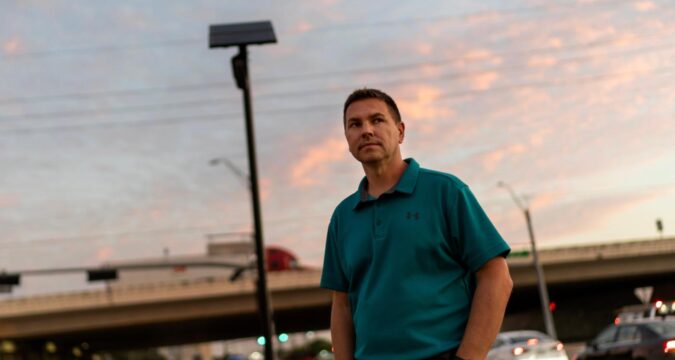
Border Patrol is monitoring US drivers and detaining those with ‘suspicious’ travel patterns
The U.S. Border Patrol is monitoring millions of American drivers nationwide in a secretive program to identify and detain people whose travel patterns it deems suspicious, The Associated Press has found.
The predictive intelligence program has resulted in people being stopped, searched and in some cases arrested. A network of cameras scans and records vehicle license plate information, and an algorithm flags vehicles deemed suspicious based on where they came from, where they were going and which route they took. Federal agents in turn may then flag local law enforcement.
Suddenly, drivers find themselves pulled over — often for reasons cited such as speeding, failure to signal, the wrong window tint or even a dangling air freshener blocking the view. They are then aggressively questioned and searched, with no inkling that the roads they drove put them on law enforcement’s radar.
Once limited to policing the nation’s boundaries, the Border Patrol has built a surveillance system stretching into the country’s interior that can monitor ordinary Americans’ daily actions and connections for anomalies instead of simply targeting wanted suspects. Started about a decade ago to fight illegal border-related activities and the trafficking of both drugs and people, it has expanded over the past five years.
The Border Patrol has recently grown even more powerful through collaborations with other agencies, drawing information from license plate readers nationwide run by the Drug Enforcement Administration, private companies and, increasingly, local law enforcement programs funded through federal grants. Texas law enforcement agencies have asked Border Patrol to use facial recognition to identify drivers, documents show.
This active role beyond the borders is part of the quiet transformation of its parent agency, U.S. Customs and Border Protection, into something more akin to a domestic intelligence operation. Under the Trump administration’s heightened immigration enforcement efforts, CBP is now poised to get more than $2.7 billion to build out border surveillance systems such as the license plate reader program by layering in artificial intelligence and other emerging technologies.
Gov. JB Pritzker meets pope in Rome, discussing Trump’s Chicago immigration crackdown
The result is a mass surveillance network with a particularly American focus: cars.
This investigation, the first to reveal details of how the program works on America’s roads, is based on interviews with eight former government officials with direct knowledge of the program who spoke on the condition of anonymity because they weren’t authorized to speak to the media, as well as dozens of federal, state and local officials, attorneys and privacy experts. The AP also reviewed thousands of pages of court and government documents, state grant and law enforcement data, and arrest reports.
The Border Patrol has for years hidden details of its license plate reader program, trying to keep any mention of the program out of court documents and police reports, former officials say, even going so far as to propose dropping charges rather than risk revealing any details about the placement and use of their covert license plate readers. Readers are often disguised along highways in traffic safety equipment like drums and barrels.
The Border Patrol has defined its own criteria for which drivers’ behavior should be deemed suspicious or tied to drug or human trafficking, stopping people for anything from driving on backcountry roads, being in a rental car or making short trips to the border region. The agency’s network of cameras now extends along the southern border in Texas, Arizona and California, and also monitors drivers traveling near the U.S.-Canada border.
And it reaches far into the interior, impacting residents of big metropolitan areas and people driving to and from large cities such as Chicago and Detroit, as well as from Los Angeles, San Antonio, and Houston to and from the Mexican border region. In one example, AP found the agency has placed at least four cameras in the greater Phoenix area over the years, one of which was more than 120 miles from the Mexican frontier, beyond the agency’s usual jurisdiction of 100 miles from a land or sea border. The AP also identified several camera locations in metropolitan Detroit, as well as one placed near the Michigan-Indiana border to capture traffic headed towards Chicago or Gary, Indiana, or other nearby destinations.
Border Patrol’s parent agency, U.S. Customs and Border Protection, said they use license plate readers to help identify threats and disrupt criminal networks and are “governed by a stringent, multi-layered policy framework, as well as federal law and constitutional protections, to ensure the technology is applied responsibly and for clearly defined security purposes.”
“For national security reasons, we do not detail the specific operational applications,” the agency said. While the U.S. Border Patrol primarily operates within 100 miles of the border, it is legally allowed “to operate anywhere in the United States,” the agency added.
While collecting license plates from cars on public roads has generally been upheld by courts, some legal scholars see the growth of large digital surveillance networks such as Border Patrol’s as raising constitutional questions. Courts have started to recognize that “large-scale surveillance technology that’s capturing everyone and everywhere at every time” might be unconstitutional under the Fourth Amendment, which protects people from unreasonable searches, said Andrew Ferguson, a law professor at George Washington University.
Today, predictive surveillance is embedded into America’s roadways. Mass surveillance techniques are also used in a range of other countries, from authoritarian governments such as China to, increasingly, democracies in the U.K. and Europe in the name of national security and public safety.
“They are collecting mass amounts of information about who people are, where they go, what they do, and who they know … engaging in dragnet surveillance of Americans on the streets, on the highways, in their cities, in their communities,” Nicole Ozer, the executive director of the Center for Constitutional Democracy at UC Law San Francisco, said in response to the AP’s findings. “These surveillance systems do not make communities safer.”
‘We did everything right and had nothing to hide’
In February, Lorenzo Gutierrez Lugo, a driver for a small trucking company that specializes in transporting furniture, clothing and other belongings to families in Mexico, was driving south to the border city of Brownsville, Texas, carrying packages from immigrant communities in South Carolina’s low country.
Gutierrez Lugo was pulled over by a local police officer in Kingsville, a small Texas city near Corpus Christi that lies about 100 miles from the Mexican border. The officer, Richard Beltran, cited the truck’s speed of 50 mph in a 45 mph zone as the reason for the stop.
But speeding was a pretext: Border Patrol had requested the stop and said the black Dodge pickup with a white trailer could contain contraband, according to police and court records. U.S. Route 77 passes through Kingsville, a route that state and federal authorities scrutinize for trafficking of drugs, money and people.
Gutierrez Lugo, who through a lawyer declined to comment, was interrogated about the route he drove, based on license plate reader data, per the police report and court records. He consented to a search of his car by Beltran and Border Patrol agents, who eventually arrived to assist.
They unearthed no contraband. But Beltran arrested Gutierrez Lugo on suspicion of money laundering and engaging in organized criminal activity because he was carrying thousands of dollars in cash — money his supervisor said came directly from customers in local Latino communities, who are accustomed to paying in cash. No criminal charges were ultimately brought against Gutierrez Lugo and an effort by prosecutors to seize the cash, vehicle and trailer as contraband was eventually dropped.
Luis Barrios owns the trucking company, Paquetería El Guero, that employed the driver. He told AP he hires people with work authorization in the United States and was taken aback by the treatment of his employee and his trailer.
“We did everything right and had nothing to hide, and that was ultimately what they found,” said Barrios, who estimates he spent $20,000 in legal fees to clear his driver’s name and get the trailer out of impound.
Border Patrol agents and local police have many names for these kinds of stops: “whisper,” “intel” or “wall” stops. Those stops are meant to conceal — or wall off — that the true reason for the stop is a tip from federal agents sitting miles away, watching data feeds showing who’s traveling on America’s roads and predicting who is “suspicious,” according to documents and people interviewed by the AP.
In 2022, a man from Houston had his car searched from top to bottom by Texas sheriff’s deputies outside San Antonio after they got a similar tipoff from Border Patrol agents about the driver, Alek Schott.
Federal agents observed that Schott had made an overnight trip from Houston to Carrizo Springs, Texas, and back, court records show. They knew he stayed overnight in a hotel about 80 miles (129 kilometers) from the U.S.-Mexico border. They knew that in the morning Schott met a female colleague there before they drove together to a business meeting.
At Border Patrol’s request, Schott was pulled over by Bexar County sheriff’s deputies. The deputies held Schott by the side of the road for more than an hour, searched his car and found nothing.
“The beautiful thing about the Texas Traffic Code is there’s thousands of things you can stop a vehicle for,” said Joel Babb, the sheriff’s deputy who stopped Schott’s car, in a deposition in a lawsuit Schott filed alleging violations of his constitutional rights.
According to testimony and documents released as part of Schott’s lawsuit, Babb was on a group chat with federal agents called Northwest Highway. Babb deleted the WhatsApp chat off his phone but Schott’s lawyers were able to recover some of the text messages.
Through a public records act request, the AP also obtained more than 70 pages of the Northwest Highway group chats from June and July of this year from a Texas county that had at least one sheriff’s deputy active in the chat. The AP was able to associate numerous phone numbers in both sets of documents with Border Patrol agents and Texas law enforcement officials.
The chat logs show Border Patrol agents and Texas sheriffs deputies trading tips about vehicles’ travel patterns — based on suspicions about little more than someone taking a quick trip to the border region and back. The chats show how thoroughly Texas highways are surveilled by this federal-local partnership and how much detailed information is informally shared.
In one exchange a law enforcement official included a photo of someone’s driver’s license and told the group the person, who they identified using an abbreviation for someone in the country illegally, was headed westbound. “Need BP?,” responded a group member whose number was labeled “bp Intel.” “Yes sir,” the official answered, and a Border Patrol agent was en route.
Border Patrol agents and local law enforcement shared information about U.S. citizens’ social media profiles and home addresses with each other after stopping them on the road. Chats show Border Patrol was also able to determine whether vehicles were rentals and whether drivers worked for rideshare services.
In Schott’s case, Babb testified that federal agents “actually watch travel patterns on the highway” through license plate scans and other surveillance technologies. He added: “I just know that they have a lot of toys over there on the federal side.”
After finding nothing in Schott’s car, Babb said “nine times out of 10, this is what happens,” a phrase Schott’s lawyers claimed in court filings shows the sheriff’s department finds nothing suspicious in most of its searches. Babb did not respond to multiple requests for comment from AP.
The Bexar County sheriff’s office declined to comment due to pending litigation and referred all questions about the Schott case to the county’s district attorney. The district attorney did not respond to a request for comment.
The case is pending in federal court in Texas. Schott said in an interview with the AP: “I didn’t know it was illegal to drive in Texas.”
‘Patterns of life’ and license plates
Today, the deserts, forests and mountains of the nation’s land borders are dotted with checkpoints and increasingly, surveillance towers, Predator drones, thermal cameras and license plate readers, both covert and overt.
Border Patrol’s parent agency got authorization to run a domestic license plate reader program in 2017, according to a Department of Homeland Security policy document. At the time, the agency said that it might use hidden license plate readers ”for a set period of time while CBP is conducting an investigation of an area of interest or smuggling route. Once the investigation is complete, or the illicit activity has stopped in that area, the covert cameras are removed,” the document states.
But that’s not how the program has operated in practice, according to interviews, police reports and court documents. License plate readers have become a major — and in some places permanent — fixture of the border region.
In a budget request to Congress in fiscal year 2024, CBP said that its Conveyance Monitoring and Predictive Recognition System, or CMPRS, “collects license plate images and matches the processed images against established hot lists to assist … in identifying travel patterns indicative of illegal border related activities.” Several new developer jobs have been posted seeking applicants to help modernize its license plate surveillance system in recent months. Numerous Border Patrol sectors now have special intelligence units that can analyze license plate reader data, and tie commercial license plate readers to its national network, according to documents and interviews.
Border Patrol worked with other law enforcement agencies in Southern California about a decade ago to develop pattern recognition, said a former CBP official who spoke on the condition of anonymity for fear of reprisal. Over time, the agency learned to develop what it calls “patterns of life” of vehicle movements by sifting through the license plate data and determining “abnormal” routes, evaluating if drivers were purposely avoiding official checkpoints. Some cameras can take photos of a vehicle’s plates as well as its driver’s face, the official said.
Another former Border Patrol official compared it to a more technologically sophisticated version of what agents used to do in the field — develop hunches based on experience about which vehicles or routes smugglers might use, find a legal basis for the stop like speeding and pull drivers over for questioning.
The cameras take pictures of vehicle license plates. Then, the photos are “read” by the system, which automatically detects and distills the images into numbers and letters, tied to a geographic location, former CBP officials said. The AP could not determine how precisely the system’s algorithm defines a quick turnaround or an odd route. Over time, the agency has amassed databases replete with images of license plates, and the system’s algorithm can flag an unusual “pattern of life” for human inspection.
The Border Patrol also has access to a nationwide network of plate readers run by the Drug Enforcement Administration, documents show, and was authorized in 2020 to access license plate reader systems sold by private companies. In documents obtained by the AP, a Border Patrol official boasted about being able to see that a vehicle that had traveled to “Dallas, Little Rock, Arkansas and Atlanta” before ending up south of San Antonio.
Documents show that Border Patrol or CBP has in the past had access to data from at least three private sector vendors: Rekor, Vigilant Solutions and Flock Safety.
Through Flock alone, Border Patrol for a time had access to at least 1,600 license plate readers across 22 states, and some counties have reported looking up license plates on behalf of CBP even in states like California and Illinois that ban sharing data with federal immigration authorities, according to an AP analysis of police disclosures. A Flock spokesperson told AP the company “for now” had paused its pilot programs with CBP and a separate DHS agency, Homeland Security Investigations, and declined to discuss the type or volume of data shared with either federal agency, other than to say agencies could search for vehicles wanted in conjunction with a crime. No agencies currently list Border Patrol as receiving Flock data. Vigilant and Rekor did not respond to requests for comment.
Where Border Patrol places its cameras is a closely guarded secret. However, through public records requests, the AP obtained dozens of permits the agency filed with Arizona and Michigan for permission to place cameras on state-owned land. The permits show the agency frequently disguises its cameras by concealing them in traffic equipment like the yellow and orange barrels that dot American roadways, or by labeling them as jobsite equipment. An AP photographer in October visited the locations identified in more than two dozen permit applications in Arizona, finding that most of the Border Patrol’s hidden equipment remains in place today. Spokespeople for the Arizona and Michigan departments of transportation said they approve permits based on whether they follow state and federal rules and are not privy to details on how license plate readers are used.
Texas, California, and other border states did not provide documents in response to the AP’s public records requests.
CBP’s attorneys and personnel instructed local cities and counties in both Arizona and Texas to withhold records from the AP that might have revealed details about the program’s operations, even though they were requested under state open records laws, according to emails and legal briefs filed with state governments. For example, CBP claimed records requested by the AP in Texas “would permit private citizens to anticipate weaknesses in a police department, avoid detection, jeopardize officer safety, and generally undermine police efforts.” Michigan redacted the exact locations of Border Patrol equipment, but the AP was able to determine general locations from the name of the county.
One page of the group chats obtained by the AP shows that a participant enabled WhatsApp’s disappearing messages feature to ensure communications were deleted automatically.
Transformation of CBP into intelligence agency
The Border Patrol’s license plate reader program is just one part of a steady transformation of its parent agency, CBP, in the years since 9/11 into an intelligence operation whose reach extends far beyond borders, according to interviews with former officials.
CBP has quietly amassed access to far more information from ports of entry, airports and intelligence centers than other local, state and federal law enforcement agencies. And like a domestic spy agency, CBP has mostly hidden its role in the dissemination of intelligence on purely domestic travel through its use of whisper stops.
Border Patrol has also extended the reach of its license plate surveillance program by paying for local law enforcement to run plate readers on their behalf.
A federal grant program called Operation Stonegarden, which has existed in some form for nearly two decades, has handed out hundreds of millions of dollars to buy automated license plate readers, camera-equipped drones and other surveillance gear for local police and sheriffs agencies. Stonegarden grant funds also pay for local law enforcement overtime, which deputizes local officers to work on Border Patrol enforcement priorities. Under President Donald Trump, the Republican-led Congress this year allocated $450 million for Stonegarden to be handed out over the next four fiscal years. In the previous four fiscal years, the program gave out $342 million.
In Cochise County, Arizona, Sheriff Mark Dannels said Stonegarden grants, which have been used to buy plate readers and pay for overtime, have let his deputies merge their mission with Border Patrol’s to prioritize border security.
“If we’re sharing our authorities, we can put some consequences behind, or deterrence behind, ‘Don’t come here,’” he said.
In 2021, the Ward County, Texas, sheriff sought grant funding from DHS to buy a “covert, mobile, License Plate Reader” to pipe data to Border Patrol’s Big Bend Sector Intelligence Unit. The sheriff’s department did not respond to a request for comment.
Other documents AP obtained show that Border Patrol connects locally owned and operated license plate readers bought through Stonegarden grants to its computer systems, vastly increasing the federal agency’s surveillance network.
How many people have been caught up in the Border Patrol’s dragnet is unknown. One former Border Patrol agent who worked on the license plate reader pattern detection program in California said the program had an 85% success rate of discovering contraband once he learned to identify patterns that looked suspicious. But another former official in a different Border Patrol sector said he was unaware of successful interdictions based solely on license plate patterns.
In Trump’s second term, Border Patrol has extended its reach and power as border crossings have slowed to historic lows and freed up agents for operations in the heartland. Border Patrol Sector Chief Gregory Bovino, for example, was tapped to direct hundreds of agents from multiple DHS agencies in the administration’s immigration sweeps across Los Angeles, more than 150 miles (241 kilometers) from his office in El Centro, California. Bovino later was elevated to lead the aggressive immigration crackdown in Chicago. Numerous Border Patrol officials have also been tapped to replace ICE leadership.
The result has been more encounters between the agency and the general public than ever before.
“We took Alek’s case because it was a clear-cut example of an unconstitutional traffic stop,” said Christie Hebert, who works at the nonprofit public interest law firm Institute for Justice and represents Schott. ”What we found was something much larger — a system of mass surveillance that threatens people’s freedom of movement.”
AP found numerous other examples similar to what Schott and the delivery driver experienced in reviewing court records in border communities and along known smuggling routes in Texas and California. Several police reports and court records the AP examined cite “suspicious” travel patterns or vague tipoffs from the Border Patrol or other unnamed law enforcement agencies. In another federal court document filed in California, a Border Patrol agent acknowledged “conducting targeted analysis on vehicles exhibiting suspicious travel patterns” as the reason he singled out a Nissan Altima traveling near San Diego.
In cases reviewed by the AP, local law enforcement sometimes tried to conceal the role the Border Patrol plays in passing along intelligence. Babb, the deputy who stopped Schott, testified he typically uses the phrase “subsequent to prior knowledge” when describing whisper stops in his police reports to acknowledge that the tip came from another law enforcement agency without revealing too much in written documents he writes memorializing motorist encounters.
Once they pull over a vehicle deemed suspicious, officers often aggressively question drivers about their travels, their belongings, their jobs, how they know the passengers in the car, and much more, police records and bodyworn camera footage obtained by the AP show. One Texas officer demanded details from a man about where he met his current sexual partner. Often drivers, such as the one working for the South Carolina moving company, were arrested on suspicion of money laundering merely for carrying a few thousand dollars worth of cash, with no apparent connection to illegal activity. Prosecutors filed lawsuits to try to seize money or vehicles on the suspicion they were linked to trafficking.
Schott warns that for every success story touted by Border Patrol, there are far more innocent people who don’t realize they’ve become ensnared in a technology-driven enforcement operation.
“I assume for every one person like me, who’s actually standing up, there’s a thousand people who just don’t have the means or the time or, you know, they just leave frustrated and angry. They don’t have the ability to move forward and hold anyone accountable,” Schott said. “I think there’s thousands of people getting treated this way.”
https://www.chicagotribune.com/2025/11/20/border-patrol-monitoring-us-drivers/
Inhabilitan por 2 años a fiscal general de España por filtrar información de caso de fraude fiscal
Associated Press
MADRID (AP) — El Tribunal Supremo de España declaró culpable el jueves al fiscal general del Estado de filtrar información confidencial sobre el novio de una destacada política conservadora y rival del gobierno.
El tribunal prohibió al fiscal general Álvaro García Ortiz ocupar su cargo durante dos años.
La decisión representa un golpe para el presidente del Gobierno de España, Pedro Sánchez, quien defendió a García Ortiz durante la prolongada investigación y el proceso judicial.
García Ortiz fue acusado de haber filtrado un correo electrónico a periodistas con información personal sobre Alberto González Amador, cuando el empresario estaba siendo investigado por presunto fraude fiscal. Esa pesquisa fiscal sigue abierta.
González Amador es la pareja de la influyente presidenta de la Comunidad de Madrid, Isabel Díaz Ayuso, una de las principales líderes de la oposición en España.
García Ortiz negó haber cometido alguna irregularidad.
Además de la destitución de su cargo, el tribunal ordenó que García Ortiz pague 7.300 euros (8.400 dólares) en multas, 10.000 euros (11.500 dólares) en daños a González Amador y los gastos judiciales.
El juicio a principios de este mes captó la atención de los medios españoles.
Esta fue la primera vez en la historia moderna de España que un fiscal de alto rango enfrentó un juicio penal. El caso es uno de varios que han implicado a personas cercanas a Sánchez.
___
Esta historia fue traducida del inglés por un editor de AP con ayuda de una herramienta de inteligencia artificial generativa.

Introducing the 2025 Naperville Sun Boys Soccer All-Area Team
The team includes nine players from Class 3A state champion Naperville North and six from Naperville Central.
FIRST TEAM
Jack Bouska, Naperville North, senior, goalkeeper: Posted a 0.44 goals-against average and 17 shutouts for Class 3A state champion to finish second on program’s career shutout list with 44. All-conference and all-state.
Ryan Gervase, Naperville Central, senior, defender: One of the best one-on-one defenders in the state had 5 goals and 5 assists. All-conference and all-sectional.
Andrew Hebron, Naperville North, senior, midfielder: Defensive midfielder for 3A state champion scored game-tying goal in state final. All-conference.
Sam Hess, Naperville North, senior, midfielder: Had 6 goals and 4 assists for 3A state champion. All-conference and all-state. Committed to Indiana.
Matias Jacobs, Naperville Central, senior, forward: Had 14 goals and 8 assists. All-conference.
Eli Jarrell, Naperville Central, senior, midfielder: Had 17 goals and 14 assists to finish second on program career lists in goals (38), assists (30) and points (106). All-conference, all-state, all-Midwest.
Colin McMahon, Naperville North, senior, defender: Lockdown defender had 5 goals and 6 assists for 3A state champion. All-conference and all-sectional.
Josh Pedersen, Naperville North, senior, forward: Had 30 goals and 10 assists for 3A state champion. All-conference and all-state player of the year. Committed to Bowling Green.
Sergio Polanco, Benet, senior, forward: Had 13 goals and 5 assists. Conference player of the year and all-sectional.
Benet’s Sergio Polanco (9) takes a shot under pressure from Naperville Central’s Calum Bohan (8) during a nonconference game in Lisle on Tuesday, Oct. 8, 2024. (Jon Cunningham / Naperville Sun)
Alex Serra, Neuqua Valley, senior, defender: Had 3 goals and 2 assists. All-conference and all-sectional honorable mention.
Michael White, Naperville Central, senior, midfielder: Had 11 goals and 10 assists. All-conference and all-sectional.
HONORABLE MENTION
Ethan Arbetman, Metea Valley, senior, forward
Brian Biederman, Naperville North, senior, forward
Calum Bohan, Naperville Central, junior, defender
Anthony Flores, Naperville North, senior, forward
Logan Godfrey, Naperville Central, junior, midfielder
Dylan Healy, Naperville North, junior, midfielder
Sebastian Herrera, Waubonsie Valley, senior, goalkeeper
Ruslan Holubec, Benet, senior, midfielder
Onkar Lidder, Naperville North, senior, forward
Jackson Mares, Benet, senior, defender
Ricardo Robledo, Neuqua Valley, senior, midfielder
Matt Le Cren is a freelance reporter.
https://www.chicagotribune.com/2025/11/20/2025-naperville-boys-soccer-all-area-team/
Democratic Lawmakers Call On Military Members, Intelligence Community To “Refuse Illegal Orders”
Democratic Lawmakers Call On Military Members, Intelligence Community To “Refuse Illegal Orders”
Authored by Jackson Richman & Joseph Lord via The Epoch Times,
Six Democratic lawmakers have called on members of the military and the intelligence community to disobey “illegal orders” from the top command.
A video was released on X on Nov. 18 featuring Sen. Elissa Slotkin (D-Mich.), Sen. Mark Kelly (D-Ariz.), Rep. Chrissy Houlahan (D-Pa.), Rep. Maggie Goodlander (D-N.H.), Rep. Chris Deluzio (D-Pa.), and Rep. Jason Crow (D-Colo.). Each of these lawmakers served in the military or the intelligence community.
We want to speak directly to members of the Military and the Intelligence Community.
The American people need you to stand up for our laws and our Constitution.
Don’t give up the ship. pic.twitter.com/N8lW0EpQ7r
— Sen. Elissa Slotkin (@SenatorSlotkin) November 18, 2025
“We want to speak directly to members of the military—and the Intelligence Community—who take risks each day to keep Americans safe,” said Kelly, Slotkin, Crow, and Deluzio, one by one, each speaking different sections of the sentence in the video.
Slotkin said service members are “under enormous stress and pressure right now” amid national disputes over the limits of executive authority and military operations.
Kelly, Slotkin, and Crow accused the Trump administration of “pitting our uniformed military and Intelligence Community professionals against American citizens.”
The Democratic lawmakers didn’t specify in their short video any specific orders from the administration they are targeting. Meanwhile, a handful of issues related to military and intelligence operations have flared up recently, including the Trump administration’s National Guard deployment to several major cities in recent months, including Los Angeles, Chicago, and Portland, Oregon.
Some local officials and Democratic governors opposed these deployments, which the administration said were intended to reduce crime and protect federal agents and property during federal law enforcement operations. The use of the National Guard for protection of federal property and other interests is permitted under federal statutes. Other functions, such as law enforcement, are more restricted.
The administration’s airstrikes on alleged drug boats—now numbering more than 20 strikes that have killed more than 80 alleged traffickers—have also come under scrutiny.
Critics, including Rep. Thomas Massie (R-Ky.) and Sen. Rand Paul (R-Ky.), have argued that these strikes constitute the military carrying out law enforcement functions and are contrary to American legal traditions and norms. In law enforcement matters, officials must follow the legal process, including obtaining warrants on suspects and receiving permission to make arrests or use lethal force.
The administration has stated that drug traffickers are foreign terrorists and that the airstrikes constitute self-defense amid an opioid crisis in America. The Department of Justice has said military service members who take part in the strikes will not be subject to prosecution.
Rep. Mike Rogers (R-Ala.), who has received classified briefings on the strikes, has called for the administration to share more information with the public on the strikes. Rogers said that the evidence presented to him showed that the strikes are “completely legal.”
“They should be more transparent about it, in my view,” he said of administration officials.
In the video, Kelly and Goodlander noted that members of the military and the intelligence community swore an oath to defend the Constitution.
“The threats to our Constitution aren’t just coming from abroad—but from right here at home,” Deluzio, then Crow said.
“Our laws are clear,” said Kelly, who added with Slotkin, “You can refuse illegal orders.”
“You must refuse illegal orders,” Deluzio continued.
“No one has to carry out orders that violate the law—or our Constitution,” said Slotkin, then Houlahan.
Under U.S. military law, members of the military are obligated to refuse “manifestly unlawful” orders, including orders to commit a crime or violate the Constitution. Federal law prohibits members of the intelligence community from taking part in unlawful or unconstitutional activities, even when ordered to do so by superiors.
The Trump administration criticized the video.
“Stage 4 [Trump Derangement Syndrome],” posted Defense Secretary Pete Hegseth.
White House Homeland Security adviser Stephen Miller in a post on X: “Democrat lawmakers are now openly calling for insurrection.”
Speaking later on Fox News, Miller described the video as a “rebellion” by Democrats.
“It is insurrection, plainly, directly, without question,” Miller said.
“It’s a general call for rebellion from the CIA and the armed services of the United States by Democrat lawmakers, saying that you have not only the right, but the duty and the obligation to defy orders of the commander-in-chief that those who carry weapons in America’s name should defy their chain of command and engage in open acts of insurrection.”
The Epoch Times reached out to the Office of the Director of National Intelligence for comment on the video and did not receive a response by publication time.
Tyler Durden
Thu, 11/20/2025 – 09:00