Category: News

Joe Flacco será titular en duelo de Bengals contra Patriots y Borrw sigue en la lista de lesionados
CINCINNATI (AP) — Joe Flacco será titular una vez más con los Bengals de Cincinnati después de que el quarterback Joe Burrow no fuera activado para el partido del domingo contra los Patriots de Nueva Inglaterra.
Burrow fue puesto como cuestionable en el informe de lesiones del viernes después de participar en las jugadas del primer equipo esta semana mientras continúa su regreso de una lesión en el dedo gordo del pie. El veterano de seis años fue degradado a fuera de juego el sábado en lugar de ser retirado de la reserva de lesionados.
El mariscal de campo franquicia de Cincinnati sufrió la lesión en el dedo gordo del pie izquierdo durante la primera mitad del partido del 14 de septiembre contra Jacksonville.
Suponiendo que no tenga contratiempos importantes, es probable que Burrow vuelva a la titularidad en el juego de los Bengals ante Baltimore la noche de Acción de Gracias en un enfrentamiento crucial de la AFC Norte. Burrow indicó que estaba apuntando a ese juego durante una disponibilidad con los medios el diez de noviembre.
Con la semana corta, es probable que los Bengals solo tengan prácticas de repaso el martes y miércoles, lo que significa que Burrow necesitaba trabajar en jugadas de 11 contra 11 la semana pasada.
Flacco hará su sexta aparición como titular para los Bengals (3-7), quienes han perdido siete de ocho partidos.
___
Deportes AP: https://apnews.com/hub/deportes

Bebés que tomaron fórmula ByHeart enfermaron meses antes del brote de botulismo, dicen padres
Por JONEL ALECCIA
A medida que las autoridades de salud investigan los más de 30 casos de botulismo infantil que se han vinculado a la fórmula láctea ByHeart desde agosto, los padres de familia que aseguran que sus hijos contrajeron la misma enfermedad meses antes del brote actual también exigen respuestas.
Las autoridades de salud pública de California confirmaron la noche del viernes que seis de los bebés en ese estado que consumieron la fórmula ByHeart recibieron atención por botulismo entre noviembre de 2024 y junio de 2025, hasta nueve meses antes del brote que ha enfermado a por lo menos 31 bebés en 15 estados.
En ese momento, “no había suficiente evidencia para sospechar de inmediato de una fuente común”, señaló el Departamento de Salud Pública de California en un comunicado.
Incluso ahora, “no podemos conectar ningún caso previo al 1 de agosto con el brote actual”, indicaron las autoridades.
Los padres de por lo menos cinco de los bebés señalaron que sus hijos recibieron atención por esta rara y potencialmente mortal enfermedad después de que tomaron la fórmula ByHeart a finales de 2024 y principios de 2025, según informes compartidos con The Associated Press por Bill Marler, un abogado de seguridad alimentaria con sede en Seattle que representa a las familias.
Amy Mazziotti, de 43 años y oriunda de Burbank, California, comentó que su hijo Hank, entonces de 5 meses de edad, se enfermó y fue tratado por botulismo en marzo, semanas después de que comenzó a tomar biberones con la fórmula ByHeart.
Katie Connolly, de 37 años y residente de Lafayette, California, dijo que su hija, M.C., entonces de 8 meses, fue hospitalizada en abril por botulismo después de que se le alimentó con la fórmula de ByHeart con la esperanza de que ayudara a su bebé a dormir.
Durante meses, ninguna de las madres tenía idea de dónde podrían haber surgido las infecciones. Este tipo enfermedades en bebés por lo general son causadas por esporas que se propagan en el ambiente o por miel contaminada.
Luego ByHeart ordenó el retiro de todos sus productos a nivel nacional el 11 de noviembre en relación con el creciente número de casos de botulismo infantil.
En cuanto escuchó que era ByHeart, Mazziotti dijo que pensó: “Esto no puede ser una coincidencia”.
Los funcionarios de ByHeart confirmaron esta semana que las pruebas de laboratorio en fórmulas sin abrir encontraron que algunas muestras estaban contaminadas con el tipo de bacteria que conduce al botulismo infantil.
Marler dijo que al menos otros tres casos anteriores al brote involucraron a bebés que tomaron ByHeart y recibieron atención médica por botulismo, según sus familias. Uno de ellos consumió la fórmula ByHeart en diciembre de 2024. Los otros dos se enfermaron meses más tarde, destacó.
Un funcionario de los Centros para el Control y la Prevención de Enfermedades de Estados Unidos (CDC por sus iniciales en inglés) dijo que los investigadores federales estaban al tanto de los reportes previos de enfermedades, pero que los esfuerzos actuales giran se centran en comprender el inusual aumento de docenas de infecciones documentadas desde el 1 de agosto.
“Eso no significa necesariamente que no sean parte de esto”, dijo la doctora Jennifer Cope, una científica de los CDC que encabeza la investigación. “Es sólo que ahora mismo, nos estamos enfocando en este marcado incremento”.
Como ha pasado tanto tiempo y debido a que es posible que los padres de los bebés que se enfermaron antes no hayan registrado los números de lote del producto ni guardado las latas vacías de fórmula, “será más difícil vincularlos definitivamente” al brote, explicó Cope.
Connolly dijo que siente que su hija ha sido olvidada.
“Lo que quiero saber es por qué los casos que comenzaron en agosto provocaron una investigación, pero los casos que comenzaron en marzo no”, dijo Connolly.
Cope y otros funcionarios de salud dijeron que el fuerte indicio que conecta a ByHeart con los casos de botulismo infantil sólo se hizo evidente en las últimas semanas.
Antes de este brote, ninguna fórmula infantil en polvo en Estados Unidos había dado positivo para el tipo de bacteria que conduce al botulismo, dijeron las autoridades de salud de California. El número de casos también se encontraba dentro de un rango esperado. Análisis de una lata de fórmula abierta que se le dio a un bebé enfermo a principios de este año no arrojó rastros de la bacteria.
Luego, a partir de agosto y hasta octubre, se identificaron más casos en el este del país que involucraban un tipo de toxina rara vez detectada en la región, indicaron las autoridades. Se registraron más casos en bebés muy pequeños y más casos involucraron a la fórmula ByHeart, que representa menos del 1% de la fórmula infantil que se vende en Estados Unidos.
Después de que una muestra de una lata de fórmula ByHeart que se le dijo a un bebé enfermo arrojó positivo a principios de este mes para el germen que conduce a la enfermedad, las autoridades notificaron a los CDC, a la Administración de Alimentos y Medicamentos de Estados Unidos (FDA por sus iniciales en inglés) y a la población.
Menos de 200 casos de botulismo infantil se reportan cada año en Estados Unidos. La enfermedad es causada cuando los bebés ingieren esporas que germinan en el intestino y producen una toxina. La bacteria que conduce a la enfermedad es ubicua en el ambiente, incluyendo el suelo y el agua, por lo que a menudo la fuente es desconocida.
Funcionarios del Programa de Tratamiento y Prevención del Botulismo Infantil de California rastrean los reportes de botulismo y la distribución del único tratamiento para la enfermedad, un medicamento intravenoso llamado BabyBIG.
Expertos externos en seguridad alimentaria dijeron que los CDC deberían incluir los casos anteriores como parte del brote actual si los bebés consumieron la fórmula ByHeart y fueron tratados por botulismo.
“Sin lugar a dudas, deberían ser incluidos”, dijo Frank Yiannas, ex subcomisionado de políticas alimentarias y respuesta de la FDA. “¿Por qué no deberían ser incluidos?”.
Sandra Eskin, directora ejecutiva de STOP Foodborne Illness, un grupo de defensa, estuvo de acuerdo.
“Este brote es traumático para los padres”, dijo. “Pudieron haber alimentado a sus recién nacidos y bebés con un producto que asumieron que era seguro. Y ahora están lidiando con la hospitalización y la enfermedad grave de sus bebés”.
Connolly y Mazziotti dijeron que sus bebés están mejorando, aunque todavía tienen algunos efectos persistentes. El botulismo causa síntomas que incluyen estreñimiento, mala alimentación, debilidad en la cabeza y las extremidades y otros problemas.
Después de meses de incertidumbre sobre la posible causa de la infección, Connolly dijo que “se obsesionó por completo” con la relación con la fórmula ByHeart. Ahora, sólo quiere respuestas.
“Merecemos conocer los datos que pueden ayudarnos a entender cómo se enfermaron nuestros bebés”, dijo.
___
El Departamento de Salud y Ciencia de The Associated Press recibe apoyo del Departamento de Educación Científica del Instituto Médico Howard Hughes y de la Fundación Robert Wood Johnson. La AP es la única responsable de todo el contenido.
___
Esta historia fue traducida del inglés por un editor de AP con la ayuda de una herramienta de inteligencia artificial generativa.

US senators slam Trump’s Russia-Ukraine peace plan as rewarding aggression
HALIFAX, Nova Scotia — U.S. senators critical of President Donald Trump’s approach to ending the Russia-Ukraine war said Saturday that the peace plan he is pushing Kyiv to accept would only reward Moscow for its aggression and send a message to other leaders who have threatened their neighbors.
The 28-point peace plan was crafted by the Trump administration and the Kremlin without Ukraine’s involvement. It acquiesces to many Russian demands that Ukrainian President Volodymyr Zelenskyy has categorically rejected on dozens of occasions, including giving up large pieces of territory. Trump says he wants Ukraine to accept the plan by late next week.
The senators’ opposition to the plan follows criticism from other U.S. lawmakers, including some Republicans, none of whom have the power to block it. The senators, who spoke at an international security conference in Canada, included a Democrat, an Independent and a Republican who does not plan to seek reelection next year.
“It rewards aggression. This is pure and simple. There’s no ethical, legal, moral, political justification for Russia claiming eastern Ukraine,” Independent Maine Sen. Angus King said during a panel discussion at the Halifax International Security Forum in Canada.
King, a member of the Senate Foreign Relations Committee, compared the proposal to British Prime Minister Neville Chamberlain’s Munich Pact with Adolf Hitler in 1938, a historic failed act of appeasement.
Republican Sen. Thom Tillis of North Carolina said Sen. Mitch McConnell, a former Republican Senate party leader, didn’t go far enough in his criticism of it. McConnell said in a statement Friday that “if Administration officials are more concerned with appeasing Putin than securing real peace, then the President ought to find new advisers.”
“We should not do anything that makes (Putin) feel like he has a win here. Honestly, I think what Mitch said was short of what should be said,” said Tillis. Tillis announced earlier this year that he would not seek reelection shortly after he clashed with the Trump administration over its tax and spending package.
Democratic Sen. Jeanne Shaheen of New Hampshire, the ranking member of the Senate Foreign Relations Committee, called it an “outrage.”
Putin welcomed the proposal late Friday, saying it “could form the basis of a final peace settlement” if the U.S. can get Ukraine and its European allies to agree.
Zelenskyy, in an address, did not reject the plan outright, but insisted on fair treatment while pledging to “work calmly” with Washington and other partners in what he called “truly one of the most difficult moments in our history.”
In its 17th year, about 300 people gather annually at the Halifax International Security Forum held at Halifax’s Westin hotel. The forum attracts military officials, U.S. senators, diplomats and scholars but this year the Trump administration suspended participation of U.S. defense officials in events by think tanks, including the Halifax International Security Forum.
A large number of U.S. senators made the trip this year in part because of strained relations between Canada and the U.S. Trump has alienated America’s neighbor with his trade war and insistence that Canada should become the 51st U.S. state. Many Canadians now refuse to travel to the U.S. and border states like Shaheen’s New Hampshire are seeing a dramatic drop in tourism.
“There’s real concern about that strain. That’s one reason why there’s such a big delegation is here,” Shaheen said. “I will continue to object to what the president is doing in terms about tariffs and his comments because they are not only detrimental to Canada and our relationship, but I think they are detrimental globally. They show a lack of respect of sovereign nations.”
https://www.chicagotribune.com/2025/11/22/senators-trumps-russia-ukraine-plan/
Comer Threatens Contempt Proceedings Against Clintons If They Continue To Ignore Epstein Subpoenas
Comer Threatens Contempt Proceedings Against Clintons If They Continue To Ignore Epstein Subpoenas
Authored by Debra Heine via American Greatness,
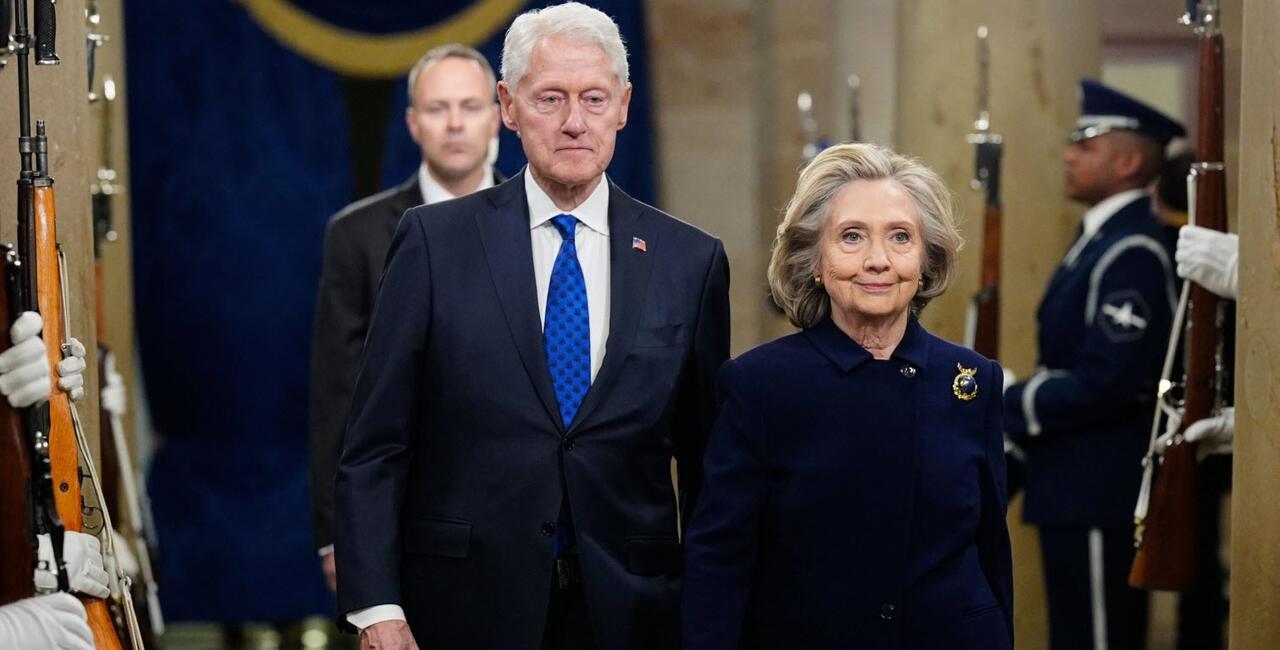
House Committee on Oversight and Government Reform Chairman James Comer (R-Ky.) warned Bill and Hillary Clinton Friday that if they continue to ignore deposition subpoenas regarding their history with Jeffrey Epstein, he will initiate contempt proceedings.
The House Oversight Committee is conducting a review of the federal government’s investigation into convicted sex offender Jeffrey Epstein and his accomplice Ghislaine Maxwell, focused on potential mismanagement of the case, the circumstances surrounding Epstein’s death, his trafficking network, and possible ethics violations by elected officials.
Comer sent a letter to Clinton attorney David Kendall, emphasizing that the Clintons are required to comply with House subpoenas and appear for scheduled in-person depositions.
According to the chairman, Democrats and Republicans on the Oversight Committee approved a motion to issue the subpoenas back in July.
“The Committee has since worked in good faith to schedule in-person depositions, but further delays are unacceptable,” Comer wrote.
“Given their history with Jeffrey Epstein and Ghislaine Maxwell, any attempt by the Clintons to avoid sitting for a deposition would be in defiance of lawful subpoenas and grounds to initiate contempt of Congress proceedings,” he added.
Comer stated that Bill Clinton’s deposition is scheduled for December 17, 2025, and Hillary Clinton’s deposition is scheduled for December 18, 2025 and asked Kendall to confirm their appearance.
Back in August, Comer subpoenaed the Estate of Jeffrey Epstein for unredacted documents, including cash ledgers, message logs, calendars, and flight logs.
The Committee has released over 65,000 pages of documents to date, including materials from Epstein’s Estate, as well as deposition transcripts from former Attorney General William Barr and former Labor Secretary Alexander Acosta.
The Committee conducted a deposition with Barr on August 18, 2025, and released the transcript the following month. Republicans on the Committee later said Barr “debunked the Democrats’ false claims about President Trump.”
Acosta, former U.S. Attorney for the Southern District of Florida and former Secretary of the U.S. Department of Labor, appeared voluntarily for a transcribed interview on September 19, 2025. The Republican-led Committee released that interview transcript on October 17, claiming that Acosta “destroyed the Democrats’ Trump-Epstein smear.”
“There was no contact between President Trump and former U.S. Attorney Acosta, and no link between Trump and Epstein in the case,” the Committee stated in a press release.
The Committee accepted “formal written declarations from former FBI Director James Comey and former Attorneys General Alberto Gonzelez, Eric Holder, Loretta Lynch, Jeff Sessions, and Merrick Garland under penalty of prosecution for false statements stating they possess no information about the Epstein or Maxwell cases.”
The Committee also issued a subpoena to former FBI director and special counsel Mr. Mueller, but withdrew it once they learned his health issues precluded him from testifying.
On November 18, 2025, the Committee issued subpoenas to JPMorgan Chase and Deutsche Bank for Epstein’s financial records, asserting that financial institutions may have played a role in facilitating sex trafficking activities.
The subpoena to JPMorgan seeks records that could shed light on suspicious transactions, while the Committee also requested information from U.S. Virgin Islands Attorney General Gordon Rhea regarding Epstein’s connections to local officials, including donations, employment of relatives of the governor, and alleged payments to law enforcement.
The Committee said Friday it hopes to use the results of their Epstein investigation “to inform legislative solutions to improve federal efforts to combat sex trafficking and reform the use of non-prosecution agreements and/or plea agreements in sex-crime investigations.”
Tyler Durden
Sat, 11/22/2025 – 15:10

Brazil’s Bolsonaro arrested over alleged plot to escape, avoid 27-year prison term
BRASILIA, Brazil — Brazil’s federal police on Saturday arrested former president Jair Bolsonaro over suspicion he was plotting to escape and avoid starting a 27-year prison sentence for leading a coup attempt. The decision laid bare some of the country’s divisions, with many uncorking Champagne outside the far-right leader’s prison to celebrate as his supporters prepared a religious act in his favor.
In a dramatic and unexpected twist in the final stage of a long and divisive criminal trial, federal agents entered Bolsonaro’s house early Saturday under the order of a Supreme Court Justice to take the former president to the headquarters of the country’s federal police in the capital, Brasilia.
Justice Alexandre de Moraes, who oversaw the case on Bolsonaro’s attempt to keep the presidency after his defeat to President Luiz Inácio Lula da Silva in 2022, ordered the preemptive arrest after saying the far-right leader’s ankle monitor was violated at 12:08 a.m. on Saturday. His lawyers claimed in a statement that did not take place.
Bolsonaro, 70, who had been under house arrest, was ordered to wear the device after being deemed a flight risk. His aide Andriely Cirino confirmed to The Associated Press that the arrest took place around 6 a.m. on Saturday.
In the following hours, dozens of cars honked outside the federal police’s headquarters as some Bolsonaro supporters protested. Police have since tried keep the small, but fierce, opposing sides separated.
A protest organized by Bolsonaro’s son alerted the justice
De Moraes said the arrest was a preventive measure to avoid a potential escape during a protest organized by his son later Saturday.
“Are you going to fight for your country or are you going to watch it all from your cellphone in your home’s sofa?,” Flávio Bolsonaro said in a video inviting people to go outside his fathers’ house at 7 p.m. “I invite you to fight with us.”
De Moraes said the attempt to break the ankle monitor was a confirmation Bolsonaro would try to escape during “the confusion that would be caused by a demonstration organized by his son.”
The judge said there was a chance of Bolsonaro fleeing to the U.S. Embassy in Brasilia. The Supreme Court justice also mentioned other defendants in the coup case and political allies of the former president leaving Brazil to avoid jail.
“He is located about 13 kilometers (8 miles) away from where the United States of America embassy lies, in a distance that can be covered in a 15-minute drive,” said de Moraes, who has been sanctioned by the Trump administration.
In August, Brazil’s federal police found messages that linked Bolsonaro to a political asylum request to Argentina, where an ally of his, Javier Milei, is president.
Trump was asked outside the White House on Saturday about Bolsonaro’s arrest, but said that was the first he was hearing of it. “Is that what happened? That’s too bad,” he said.
Pressed for further comment he simply said, “I just think it’s too bad.”
Trump also said he’d spoken with Lula on Friday night and that the two might be meeting “in the very near future.”
Bolsonaro’s lawyers said in a statement that the former president’s arrest “causes deep perplexity because, as (de Moraes’) chronology of facts shows, it is based in a vigil for prayer,” not a protest.
The preemptive arrest of Bolsonaro, who is an ally of U.S. President Donald Trump, will be discussed and voted on Monday by the five-justice Supreme Court panel that both convicted and sentenced him to prison by 4 votes to 1 in September.
‘Pathetic illegal initiatives’
Local media reported that Bolsonaro, who was Brazil’s president from 2019 to 2022 and remains a key political player, was expected to begin serving his sentence sometime next week after all appeals of his conviction are exhausted.
Few protesters were outside the federal police headquarters in Brasilia as of Saturday morning, with more expected later as organizers of the vigil mentioned by Bolsonaro’s lawyers say they will move it to where the former president is jailed.
Detractors of the former president were celebrating online and scheduling parties later in the day in major Brazilian cities.
“The video shot by Flávio Bolsonaro stimulates the disrespect to the constitutional text, to the judicial decision and to (democratic) institutions, showing there’s no limits for the criminal organization in its attempt to create chaos and conflict in this country, in a total disrespect to democracy,” de Moraes wrote in his ruling.
Bolsonaro and several of his allies were convicted by a panel of Supreme Court justices for attempting to overthrow Brazil’s democracy following his 2022 election defeat. Prosecutors said the coup plot included plans to kill Lula, Vice President Geraldo Alckmin and de Moraes.
Bolsonaro was also found guilty on charges of leading an armed criminal organization and attempting the violent abolition of the democratic rule of law. He denies any wrongdoing.
Bolsonaro’s allies vow to defend him
Fabio Wajngarten, Bolsonaro’s former press adviser and lawyer, said the arrest of the former president was “a terrible stain on the institutions.”
Speaking in a video posted on X, Wajngarten added: “It’s a shame. I hope this is reviewed soon.” He claimed Bolsonaro’s ankle monitoring device was working perfectly as of Saturday morning.
“How could something that was broken, violated, be functioning normally nine hours later?” he wrote. “The president had dinner — a soup — yesterday with four brothers and brothers-in-law, took medication for hiccups, felt drowsy and laid down around 10 p.m. None of his sons were at the house.”
Sóstenes Cavalcante, Bolsonaro’s party whip in the lower house, accused de Moraes of showing “psychopathy at the highest level.”
“We will always stand by your side. Stay strong,” he said in a video shared with the AP. “We will respond appropriately.”
In an Instagram post, Michelle Bolsonaro, the former first lady, vowed Bolsonaro’s supporters “will not give up on our nation.” She was outside Brasilia when her husband was arrested at home.
Lula is in South Africa for a summit of the G20 group of industrialized and emerging-market nations. Gleisi Hoffmann, one of his top ministers, said on her social media channels that Bolsonaro’s arrest comes after “violent attempts of coersion” of Supreme Court justices by the former president.
‘Martyr and impactful popular leader’
Bolsonaro was placed under house arrest in early August, weeks before he was convicted. His lawyers were pleading with Brazil’s Supreme Court to keep him at home to serve his sentence, citing his poor health, but Brazilian law requires that all convicts start their sentences in prison.
Creomar de Souza, a political analyst with Dharma Political Risk and Strategy, a political consultancy firm based in Brasilia, said the move by de Moraes will impact next year’s presidential election, with Lula seeking reelection and Bolsonaro already barred from running.
“They had the idea of turning the 2026 election into a referendum on Bolsonaro. And for that to happen they needed actions, they needed to build an optics of Bolsonaro as a martyr and an impactful popular leader,” de Souza told the AP. “At the end of the day, this shows the Bolsonaro family they will need to build their own alternative for the 2026 elections.”
Savarese reported from Sao Paulo. Associated Press writers Gabriela Sá Pessoa in Sao Paulo and Will Weissert in Washington contributed to this report.
https://www.chicagotribune.com/2025/11/22/brazil-bolsonaro-arrested-plot-escape/

España sorprende a Alemania en dobles y llega a la final de la Copa Davis ante Italia
BOLOGNA, Italia (AP) — España alcanzó la final de la Copa Davis gracias a la pareja de dobles Marcel Granollers y Pedro Martínez, quienes derrotaron el sábado 6-2, 6-3 a los alemanes Tim Pütz y Kevin Krawietz para ganar 2-1 la serie de semifinales.
Alexander Zverev mantuvo vivas las esperanzas de los alemanes con una victoria de 7-6 (2), 7-6 (5) sobre Jaume Munar después de que Pablo Carreño Busta le diera la ventaja a los españoles contra Jan-Lennard Struff.
Carreño Busta salvó cinco puntos de set consecutivos en el desempate antes de vencer por 6-4, 7-6 (6) al veterano alemán.
Pero Granollers y Martínez sorprendieron a Pütz y Krawietz al propinarles solo su segunda derrota en la Copa Davis.
Esto llevó al equipo español, que estaba sin el lesionado número uno Carlos Alcaraz, de vuelta a la final por primera vez en seis años.
España enfrentará al campeón defensor Italia, que el viernes derrotó a Bélgica.
___
Deportes AP: https://apnews.com/hub/deportes

Republicanos causaron expectación de archivos sobre Epstein por años; ahora Trump enfrenta presión
Por JOEY CAPPELLETTI y STEPHEN GROVES
WASHINGTON (AP) — Lo que comenzó como una promesa de campaña para hacer públicos los archivos sobre Jeffrey Epstein se ha convertido en una de las pruebas más difíciles del segundo mandato del presidente Donald Trump —lo que abre una fisura dentro de su coalición política e incrementa los riesgos para un gobierno bajo intensa presión para que divulgue documentos que podrían estar muy por debajo de las expectativas del público.
El asunto llegó a un punto crítico esta semana. Tras meses de esfuerzos por parte del gobierno de Trump para anularla, ambas cámaras del Congreso aprobaron una medida que obliga a que se hagan públicos los archivos sobre Epstein con un apoyo casi unánime. Trump, quien cambió de postura días antes de la votación para aprobar la iniciativa, firmó la ley el miércoles, lo que dio inicio a un plazo de 30 días para que el Departamento de Justicia entregue los registros.
Las expectativas son altísimas, avivadas por años de teorías de conspiración promovidas por muchos que están ahora en la órbita de Trump. No obstante, con algunas afirmaciones ya declaradas inexistentes por las autoridades federales —como una supuesta “lista de clientes” de hombres prominentes vinculados a Epstein—, la coalición antisistema que Trump construyó, en parte al exaltar esas teorías, muestra grietas que podrían agravarse con la divulgación tan esperada.
“Observar esto convertirse de hecho en una pelea ha destrozado al movimiento MAGA”, dijo esta semana la representante Marjorie Taylor Greene, republicana por Georgia, rodeada de sobrevivientes de los abusos de Epstein antes de la votación en la Cámara de Representantes. “MAGA” es acrónimo en inglés de “Devolvamos la grandeza a Estados Unidos”.
“Lo único que resonará con las mujeres poderosas y valientes que están atrás de mí es que ya se tomen medidas para hacer públicos estos archivos”, agregó Greene, quien anunció el viernes por la noche que renunciará al Congreso en enero. “Y el pueblo estadounidense no tolerará ninguna otra m…”.
Cómo los archivos sobre Epstein se enclavaron en la corriente política dominante
Los abusos por parte de Epstein, y su muerte en 2019 en una celda de Nueva York, han generado teorías conspirativas durante años, especialmente en la derecha política.
Durante la campaña electoral, Trump se mostró dispuesto a hacer públicos los documentos de la investigación, e hizo un guiño a las exigencias antisistema para que se dieran a conocer los archivos del gobierno sobre otros casos de alto perfil, como los asesinatos de John F. Kennedy y Martin Luther King Jr.
Pero una vez que Trump regresó al cargo, divulgar los registros de las pesquisas federales, así como satisfacer el apetito de los fanáticos de las teorías de conspiración, se volvió menos atractivo. Pam Bondi, la secretaria de Justicia, generó las expectativas de que se publicarían por completo, pero dio un giro radical de postura durante el verano. Su intento de pasar la página sobre la saga de Epstein indignó a muchos en la derecha.
Esa fue la primera señal de una ruptura en la coalición de Trump, y los demócratas se percataron de ello.
En el Congreso, comenzaron a buscar maneras de obligar a los republicanos a votar a favor de hacer públicos los archivos sobre Epstein. Finalmente, encontraron impulso con dos vías: iniciar una investigación en la Comisión para la Supervisión y Reforma del Gobierno de la Cámara de Representantes de Estados Unidos, y dar pleno apoyo a una petición —rara vez exitosa— que evade el control del presidente de la cámara baja sobre qué proyectos de ley se someten a votación.
El esfuerzo demócrata, al que se unieron algunos republicanos clave, entre ellos Greene, culminó la semana pasada con la aprobación del proyecto de ley con un apoyo abrumador de ambas cámaras del Congreso. Fue una señal de que los archivos sobre Epstein habían pasado del ámbito de los oscuros fanáticos de teorías de conspiración a una fuerza política que ningún partido podía negar.
Sin embargo, no está claro si se publicarán los archivos completos —ni si en algún momento se satisfará el interés público en ellos.
La publicación y el alcance de lo que pueden contener los archivos
El martes, en una conferencia de prensa previa a la votación en la cámara baja, los promotores del proyecto de ley —los legisladores Ro Khanna, demócrata por California, y Thomas Massie, republicano por Kentucky— se unieron a Greene y a varios sobrevivientes de los abusos de Epstein para advertir al gobierno que no se guarde nada.
“La prueba verdadera será si el Departamento de Justicia hace públicos los archivos, o si todo sigue enredado en las investigaciones”, dijo Greene, y agregó que si se divulga una lista de nombres “será la prueba verdadera”. Aunque Bondi declaró en febrero en el canal de noticias Fox News que una “lista de clientes” de Epstein se encontraba “sobre mi escritorio ahora mismo para que la revise”, su Departamento cambió de postura desde entonces y dice ahora que dicha lista no existe. En una carta de julio, el Departamento de Justicia escribió que su revisión no descubrió ninguna “lista de clientes” incriminatoria.
Este es un ejemplo de cómo el gobierno de Trump contribuyó a generar expectación para la divulgación de los archivos —y un recordatorio del peligro político que supone no poder entregar el material que su coalición cree desde hace mucho tiempo que se mantiene oculto.
Antes que el Congreso interviniera, se publicaron decenas de miles de páginas de registros a lo largo de los años mediante demandas civiles, los expedientes penales públicos de Epstein y Ghislaine Maxwell, divulgaciones públicas y solicitudes amparadas en la Ley de Libertad de Información.
Los legisladores creen que hay muchísimos más documentos, pero han recibido pocos indicios de que el Departamento de Justicia está dispuesto a divulgar esa información a pesar de una citación que la Comisión para la Supervisión y Reforma del Gobierno de la Cámara de Representantes emitió en agosto.
Khanna dijo que a él aún le preocupa el grado de cumplimiento del gobierno, pero cree que la aprobación del proyecto de ley —y la posibilidad de desacato al Congreso— otorgan a los legisladores una mayor capacidad de ejercer presión. Declinó especular sobre quiénes podrían aparecer en los archivos, pero expresó que espera que surjan informantes si se oculta algo.
“El presidente se ha dado cuenta, como dijo Marjorie Taylor Greene, de que esto está dividiendo a su base MAGA”, agregó Khanna.
“Sería una tontería de su parte enzarzarse en una lucha a cuentagotas. Me refiero a que, si quiere pelear por el tema de Epstein el resto de su presidencia, supongo que podemos (hacerlo). Pero eso no es nada inteligente”.
“El Estados Unidos olvidado contra la clase Epstein”
Khanna, un progresista de Silicon Valley con aspiraciones a ascender en la política, espera que la lucha contra Epstein se convierta en un movimiento más amplio, y lo describió como una versión moderna de la “clase olvidada contra los monárquicos económicos” del presidente Franklin D. Roosevelt.
“Este es el Estados Unidos olvidado contra la clase (vinculada a) Epstein”, dijo Khanna en una entrevista.
“Hay una verdadera indignación contra una élite que la gente cree que está desconectada (de la realidad) y que les está quitando el control sobre sus vidas”, agregó.
Al tiempo que los demócratas buscan maneras de reconectar con los votantes de clase trabajadora, Khanna cree que el partido debería impulsar causas como la divulgación de los archivos sobre Epstein. Ya ha iniciado conversaciones con Massie, Greene y otros para volver a colaborar.
“Esta grieta”, dijo Khanna respecto a la votación por los archivos sobre Epstein, “es la respuesta para enfrentar a Trump”.
More than 300 children abducted in Nigerian school attack
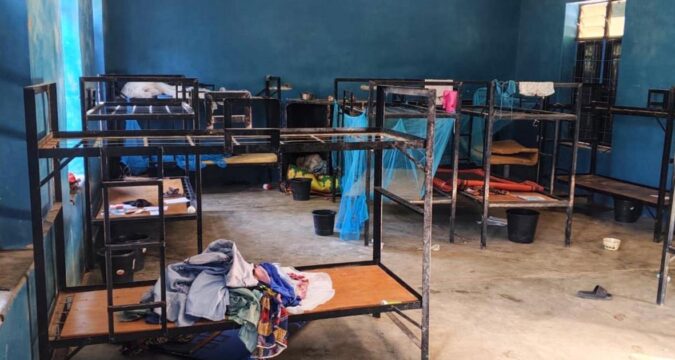
ABUJA, Nigeria — A total of 303 schoolchildren and 12 teachers were abducted by gunmen during an attack on St. Mary’s School, a Catholic institution in north-central Nigeria’s Niger state, the Christian Association of Nigeria said Saturday, updating an earlier tally of 215 schoolchildren.
The tally was changed “after a verification exercise and a final census was carried out,” according to a statement issued by the Most. Rev. Bulus Dauwa Yohanna, chairman of the Niger state chapter of CAN, who visited the school on Friday.
He said 88 other students “were also captured after they tried to escape” during the attack. The students were both male and female and ranged in age from 10 to 18.
The school kidnapping in Niger state’s remote Papiri community happened four days after 25 schoolchildren were seized in similar circumstances in neighboring Kebbi state’s Maga town, which is 106 miles away.
No group has yet claimed responsibility for the abductions and authorities have said tactical squads have been deployed alongside local hunters to rescue the children.
Yohanna described as false a claim from the state government that the school had reopened for studies despite an earlier directive for schools in that part of Niger state to close temporarily due to security threats.
“We did not receive any circular. It must be an afterthought and a way to shift blame,” he said, calling on families “to remain calm and prayerful.”
School kidnappings have come to define insecurity in Africa’s most populous nation, and armed gangs often see schools as “strategic” targets to draw more attention.
UNICEF said last year that only 37% of schools across 10 of the conflict-hit states have early warning systems to detect threats.
Niger state has now shut down all schools as a measure to forestall other kidnappings. The decision was in a bid to protect lives and property, Niger Gov. Umar Bago told reporters Saturday after meeting with security officials in Minna.
“It is the decision of stakeholders today to close all schools in Niger state. All schools are closed till further notice. So we have declared Christmas holiday for all schools in Niger state,” Bago said.
The kidnappings are happening amid U.S. President Donald Trump’s claims of targeted killings against Christians in the West African country. Attacks in Nigeria affect both Christians and Muslims. The school attack earlier this week in Kebbi state was in a Muslim-majority town.
The attack also took place as Nigerian National Security Adviser Nuhu Ribadu was visiting the U.S. where he met Defense Secretary Pete Hegseth on Friday.
https://www.chicagotribune.com/2025/11/22/300-children-abducted-nigeria/

US Navy Racing To Recover Crashed Jet And Helicopter From South China Sea
US Navy Racing To Recover Crashed Jet And Helicopter From South China Sea
The US Navy is working to retrieve an F/A-18 Super Hornet and an MH-60 helicopter from the bottom of the South China Sea—wreckage that analysts say could hand Beijing valuable intelligence if China were to reach it first, according to CNN.
Both aircraft went down within about 30 minutes in late October while operating from the USS Nimitz. All personnel were rescued, and while the Navy has not identified a cause, former President Donald Trump suggested soon afterward that “contaminated fuel” may be responsible.
The Navy confirmed Friday that a salvage vessel is already on-site. “USNS SALVOR (T-ARS 52), a Safeguard-class salvage ship operated by Military Sealift Command, is on-scene conducting operations in support of the recovery efforts,” said Cmdr. Matthew Comer of the 7th Fleet. The Salvor can lift up to 300 tons—far more than the weight of either aircraft.
CNN writes that experts warn that both wrecks contain technology China would like to examine. Carl Schuster, former director of operations at US Pacific Command’s Joint Intelligence Center, said, “Acquiring an air frame and surviving systems will … provide valuable insights into its technological strengths and how to defeat it tactically.”
He noted that Beijing has never had access to a crashed F/A-18; recovering one could help China refine its carrier-based J-15T jets. The MH-60’s anti-submarine warfare systems could also offer insights to a PLA Navy that, Schuster said, is urgently trying to modernize: “So, recovering that helicopter should enjoy a high priority.”
It’s unclear whether China is attempting to locate the wrecks. Still, geography favors Beijing. As Schuster put it, “If China makes it a race, it enjoys homefield advantage … and can be expected to impede our recovery efforts” if it chooses.
The crashes occurred in waters Beijing claims almost entirely as its own, rejecting an international tribunal ruling to the contrary. China’s Foreign Ministry said it could offer humanitarian help but also criticized Washington’s regional presence. Spokesperson Guo Jiakun said the incidents happened during “US military exercises” and argued, “The US has been flexing muscles by frequently sending military vessels and aircraft to the South China Sea. This is the root cause of security issues at sea and disruption to regional peace and stability.”
The US last mounted a similar recovery in 2022, when a lost F-35 was lifted from 12,400 feet. With decades of Chinese military expansion in the region and heavy strategic competition, the race for this wreckage carries stakes well beyond hardware.
Tyler Durden
Sat, 11/22/2025 – 14:35
https://www.zerohedge.com/markets/us-navy-racing-recover-crashed-jet-and-helicopter-south-china-sea
Chris Paul insinúa retiro de la NBA con video antes del juego Clippers-Hornets en su estado natal
Por STEVE REED
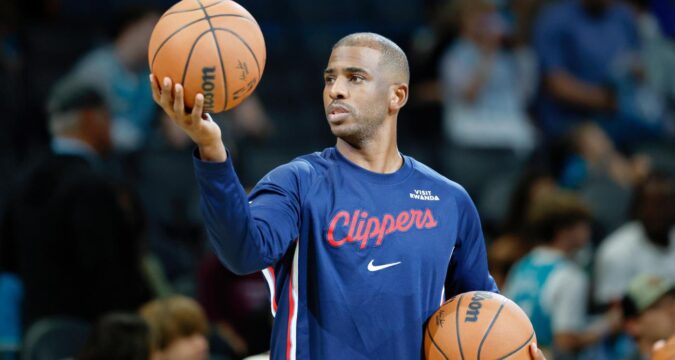
CHARLOTTE, Carolina del Norte, EE.UU. (AP) — El base de los Clippers de Los Ángeles, Chris Paul, insinuó su posible retiro antes del partido del ante los Hornets de Charlotte el sábado, en lo que sería su último juego en su estado natal de Carolina del Norte.
El nativo de Winston-Salem, Carolina del Norte, publicó un video en las redes sociales aproximadamente 90 minutos antes del inicio del partido, mostrando momentos destacados de él jugando para varios equipos de la NBA a lo largo de sus 21 años de carrera profesional. El video también incluye imágenes de Paul desde su infancia hasta la escuela secundaria, sus días jugando en Wake Forest y su selección en el draft de la liga.
“¡De vuelta en Carolina del Norte! Qué viaje… Aún queda mucho… ¡AGRADECIDO por este último!!”, publicó Paul en X.
Paul, de 40 años, firmó un contrato de un año para regresar a los Clippers antes de la temporada.
“No quiero hablar de nadie retirándose. Es un momento difícil, especialmente cuando has dedicado tanto trabajo en tu vida a jugar este juego”, comentó el entrenador Tyronn Lue antes del juego. “Cuando se acaba y llega a su fin, para mí fueron días oscuros porque es algo que has hecho toda tu vida”.
Lue añadió que está “feliz de que pueda regresar a casa para terminar su carrera”.
Paul no estuvo disponible para comentarios antes del partido.
Paul está promediando 2,5 puntos y 3,3 asistencias por juego en un rol limitado para los Clippers.
Doce veces All-Star de la NBA, Paul fue la quinta selección general de los Hornets de Charlotte en 2005 y ha sido seleccionado siete veces para el primer equipo defensivo de la NBA. Ha jugado para siete equipos diferentes de la NBA y esta es su segunda etapa con los Clippers.
___
Deportes AP: https://apnews.com/hub/deportes