Category: News

Liam Neeson, MAHA Ally? Narrates RFK Jr. Doc Slamming Lockdowns And COVID Jabs
Liam Neeson, MAHA Ally? Narrates RFK Jr. Doc Slamming Lockdowns And COVID Jabs
Authored by Steve Watson via Modernity.news,
In an unexpected pivot that’s sending shockwaves through the pharma lobby, Liam Neeson has narrated a documentary titled Plague of Corruption: 80 Years of Pharmaceutical Corruption Exposed, an adaption of Dr. Judy Mikovits’ book and backed by Robert F. Kennedy Jr.‘s Children’s Health Defense.
It appears this is not just another celeb voiceover—it’s a direct assault on the COVID-era overreach that crushed freedoms and livelihoods under the guise of “public health.”
Neeson, long hailed for his UNICEF ambassadorship pushing global jabs, now aligns with the Make America Healthy Again (MAHA) movement, calling out mRNA vaccines as “dangerous experiments” and the scientists behind them as “fanatics.”
When Liam Neeson narrates the truth they tried to hide…
Full trailer + exclusive screening Nov 16: https://t.co/CIXm4dAZ1B pic.twitter.com/cXeD3UNH4A
— PLAGUE of CORRUPTION Movie – RSVP for Premiere!! (@amigofilmstudio) October 24, 2025
The film is outspoken on lockdowns, highlighting how they wrecked millions without saving lives from the virus itself.
The documentary, co-authored by Mikovits and attorney Kent Heckenlively, pulls the curtain on decades of alleged pharmaceutical scandals.
Published by Kennedy’s group—now with RFK Jr. at the helm of Health and Human Services under Trump—it features interviews praising Kennedy as a truth-teller against Big Pharma’s stranglehold.
Neeson’s narration drives home the human cost of tyrannical policies: “Thousands of lives were lost, not to the virus, but to the mental anguish brought on by these harsh restrictions.”
He wraps with a call to action: “We cannot change the past, but we can demand transparency and accountability for the future.” And defiantly: “This is not the end of our story. This is the beginning of a new chapter.”
Of course, the backlash was swift from the usual suspects in media and pharma circles, desperate to discredit anyone questioning their narrative.
Neeson’s reps fired back in a statement, insisting: “We all recognize that corruption can exist within the pharmaceutical industry, but that should never be conflated with opposition to vaccines. Liam never has been, and is not, anti-vaccination.”
Liam Neeson is denying holding anti-vaccine views after narrating a controversial new documentary, and insisting: ‘He did not shape the film’s editorial content.’ https://t.co/Of1ZI2Om6O
— Entertainment Weekly (@EW) December 12, 2025
They doubled down: “His extensive work with UNICEF underscores his long-held support for global immunization and public-health initiatives.” And clarified: “He did not shape the film’s editorial content, and any questions about its claims or messaging should be directed to the producers.”
So he just did it for the money? Weak sauce, man.https://t.co/G940Gl269F
— Deonandan (@deonandan) December 12, 2025
It’s a very odd move for Neeson, who previously heaped praise on vaccines, including COVID jabs, in a 2022 UNICEF spot, where he called them a “remarkable human success story.”
He elaborated: “Over the last 75 years, billions of children have been vaccinated, thanks to scientists, to health workers, to volunteers.”
Continuing: “If you’ve ever been vaccinated, or vaccinated your children, then you are part of the arm-to-arm chain that keeps all humanity safe.”
But in today’s climate, with RFK Jr. draining the swamp at HHS, Neeson’s involvement signals a shift. It’s no secret the COVID mandates were a power grab, forcing experimental shots on Americans while Big Pharma raked in billions tax-free. Lockdowns shuttered businesses, spiked suicides, and eroded liberties—all while elites partied mask-free.
For the documentary, Mikovits, a whistleblower vilified by the establishment, teams with Heckenlively to expose how agencies like the CDC buried evidence of harm.
The film’s trailer features RFK Jr. front and center, promising accountability. It’s a far cry from the Plandemic series, but builds on that momentum to challenge the deep state’s health cartel.
Your support is crucial in helping us defeat mass censorship. Please consider donating via Locals or check out our unique merch. Follow us on X @ModernityNews.
Tyler Durden
Sun, 12/14/2025 – 14:00

Merrill Kelly regresa a los Diamondbacks por dos años, según fuente de AP
Por DAVID BRANDT
PHOENIX (AP) — El veterano abridor Merrill Kelly acordó el domingo regresar a los Diamondbacks de Arizona con un contrato de dos años por 40 millones, según una persona familiarizada con el movimiento.
La persona habló con The Associated Press bajo condición de anonimato debido a que el acuerdo no ha sido anunciado y está pendiente de un examen físico.
El lanzador derecho pasó los primeros seis años y medio de su carrera con los Diamondbacks antes de que fuera traspasado a los Rangers de Texas en la fecha límite de cambios de este año en julio antes de convertirse en agente libre. Fue bueno para ambos equipos, terminando con un récord combinado de 12-9 y una efectividad de 3.52.
El regreso de Kelly al desierto no es una gran sorpresa considerando que es nativo de Scottsdale y jugó en el colegial para Arizona State.
Fue una pieza clave del equipo que llegó a la Serie Mundial en 2023. Tuvo un récord de 12-ocho y una efectividad de 3.29 esa temporada, sumando una actuación magistral en el juego 2 de la Serie Mundial contra los Rangers, que es el único juego que los D-backs ganaron en el Clásico de Otoño.
El pelotero de 37 años no tiene un repertorio abrumador, pero prospera gracias a una mezcla de seis lanzamientos que mantiene a los bateadores desequilibrados. Ha forjado una sólida carrera en la MLB a pesar de que debutó hasta los 30 años en 2019.
Fue seleccionado en el draft de 2010 por los Rays de Tampa Bay, pero se quedó atascado en Triple A antes de optar por firmar con los SK Wyverns de la Organización de Béisbol de Corea de 2015 a 2018, logrando un récord de 48-32 con una efectividad de 3.86.
A los Diamondbacks les gustó lo que vieron y lo firmaron con un contrato de cuatro años por 14,5 millones en 2018.
Acordó un contrato de dos años por 18 millones con Arizona en 2022 que cubría las temporadas 2023 y 2024 e incluía una opción del club para 2025 que los D-backs ejercieron.
___
Deportes AP: https://apnews.com/hub/deportes

Tras ser liberado, Nobel Bialiatski relata a la AP su calvario en prisión en Bielorrusia
Por YURAS KARMANAU
VILNA, Lituania (AP) — El laureado con el Premio Nobel de la Paz, Ales Bialiatski, llegó a una entrevista con The Associated Press el domingo en la capital de Lituania, Vilna, directamente de una cita con el dentista.
El veterano defensor de los derechos humanos, de 63 años, estaba experimentando un regreso a la vida diaria después de más de cuatro años tras las rejas en Bielorrusia. Fue liberado repentinamente el sábado.
La asistencia médica en la colonia penal donde cumplió su condena de 10 años era muy limitada, dijo en su primera entrevista presencial tras su liberación. Sólo había una opción para tratar los problemas dentales tras las rejas: extraer los dientes, comentó.
Bialiatski recordó cómo en las primeras horas del sábado estaba en una celda de prisión abarrotada en la Colonia Penal Número 9 en el este de Bielorrusia cuando de repente le ordenaron empacar sus cosas. Con los ojos vendados, lo llevaron a algún lugar.
“Me pusieron una venda sobre los ojos. Ocasionalmente miraba hacia dónde nos dirigíamos, pero sólo entendí que nos dirigíamos hacia el oeste”.
En Vilna, abrazó a su esposa por primera vez en años.
“Cuando crucé la frontera, fue como si emergiera del fondo del mar y saliera a la superficie del agua. Tienes mucho aire, sol, y allá atrás estabas en una situación completamente diferente, bajo presión”, le dijo a la AP.
Bialiatski fue uno de los 123 prisioneros liberados por Bielorrusia a cambio de que Estados Unidos levantara las sanciones impuestas al sector bielorruso de potasa, crucial para la economía del país.
Bielorrusia, un aliado cercano de Rusia, ha enfrentado aislamiento y sanciones occidentales durante años. Su presidente, Alexander Lukashenko, ha gobernado la nación de 9,5 millones de habitantes con mano de hierro durante más de tres décadas, y el país ha sido sancionado repetidamente por Occidente por su represión de los derechos humanos y por permitir que Moscú use su territorio en la invasión de Ucrania en 2022.
En un esfuerzo por un acercamiento con Occidente, Bielorrusia ha liberado a cientos de prisioneros desde julio de 2024.
Bialiatski ganó el Premio Nobel de la Paz en 2022 junto con el destacado grupo ruso de derechos Memorial y el Centro para las Libertades Civiles de Ucrania. Galardonado con el premio cuando estaba en la cárcel esperando juicio, fue posteriormente condenado por contrabando y financiamiento de acciones que violaban el orden público, cargos ampliamente denunciados como políticamente motivados, y sentenciado a 10 años de prisión.
El veterano defensor, que fundó el grupo de derechos humanos más antiguo y prominente de Bielorrusia, Viasna, fue encarcelado en una colonia penal en Gorki, en una instalación notoria por las palizas y el trabajo duro.
Le dijo a la AP que no fue golpeado tras las rejas; su estatus como laureado del Premio Nobel de la Paz, tal vez, lo protegió de la violencia física, comentó.
Pero dijo que pasó por mucho de lo que todos los presos políticos en Bielorrusia atraviesan: confinamiento solitario, castigos arbitrarios por infracciones menores, no poder ver a sus seres queridos, rara vez poder recibir cartas.
“Definitivamente podemos hablar de un trato inhumano, de crear condiciones que violan tu integridad y algún tipo de dignidad humana”, expresó.
Bialiatski está preocupado por dos de sus colegas de Viasna, Marfa Rabkova y Valiantsin Stefanovic, que permanecen encarcelados, y por los 1.110 prisioneros políticos que aún están tras las rejas, según Viasna.
“A pesar de que los prisioneros están siendo liberados ahora, regularmente nuevas personas terminan tras las rejas. Está ocurriendo algún tipo de esquizofrenia: con una mano, las autoridades liberan a prisioneros políticos bielorrusos, y con la otra toman más prisioneros para intercambiar, para mantener esta situación anormal en Bielorrusia”, manifestó.
El defensor promete continuar luchando por la liberación de todos los prisioneros políticos, añadiendo: “No tiene sentido liberar a los antiguos si estás encarcelando a nuevos”.
Tiene la intención de usar su estatus como laureado del Premio Nobel de la Paz —del cual se enteró en prisión y al principio no podía creerlo— para ayudar a los bielorrusos “que eligieron la libertad”.
“Este premio no me fue otorgado a mí como persona, sino a mí como representante de la sociedad civil bielorrusa, de los millones de bielorrusos que expresaron voluntad y deseo de democracia, de libertad, de derechos humanos, de cambiar esta situación estancada en Bielorrusia”, le dijo a la AP.
“Y también fue una señal para las autoridades bielorrusas de que es hora de cambiar algo en la vida de los bielorrusos”, indicó.
___
Esta historia fue traducida del inglés por un editor de AP con ayuda de una herramienta de inteligencia artificial generativa.

Education Dept To Warn Applicants For Aid At Schools With Low Earnings For Grads
Education Dept To Warn Applicants For Aid At Schools With Low Earnings For Grads
In a bid to help young Americans make better-informed judgements about the costs and benefits of college education, the US Department of Education has started issuing warnings to students applying for financial aid to attend schools whose graduates have weak earnings.
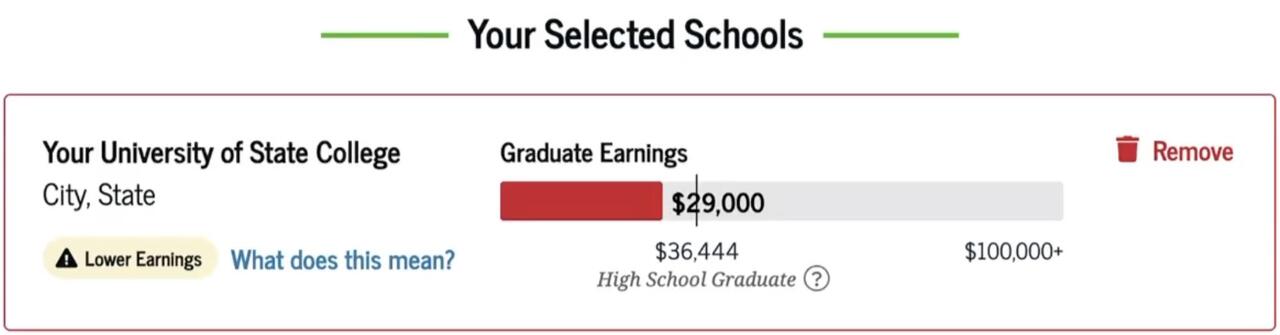
The red flag is now being presented within the Free Application for Federal Student Aid (FAFSA) process. It’s triggered when applicants indicate they’re considering a school where the average graduate earns less than a high school graduate. Secretary of Education Linda McMahon said the move will help clear the fog that’s led too many students to stumble into educational paths that carry a high risk of a crummy earnings:
“More than half of all Americans now say a college degree is not worth the price, and total outstanding student loan debt is approaching $1.7 trillion. Families deserve a clearer picture of how postsecondary education connects to real-world earnings, and this new indicator will provide that transparency. Not only will this new FAFSA feature make public earnings data more accessible, but it will empower prospective students to make data-driven decisions before they are saddled with debt.”
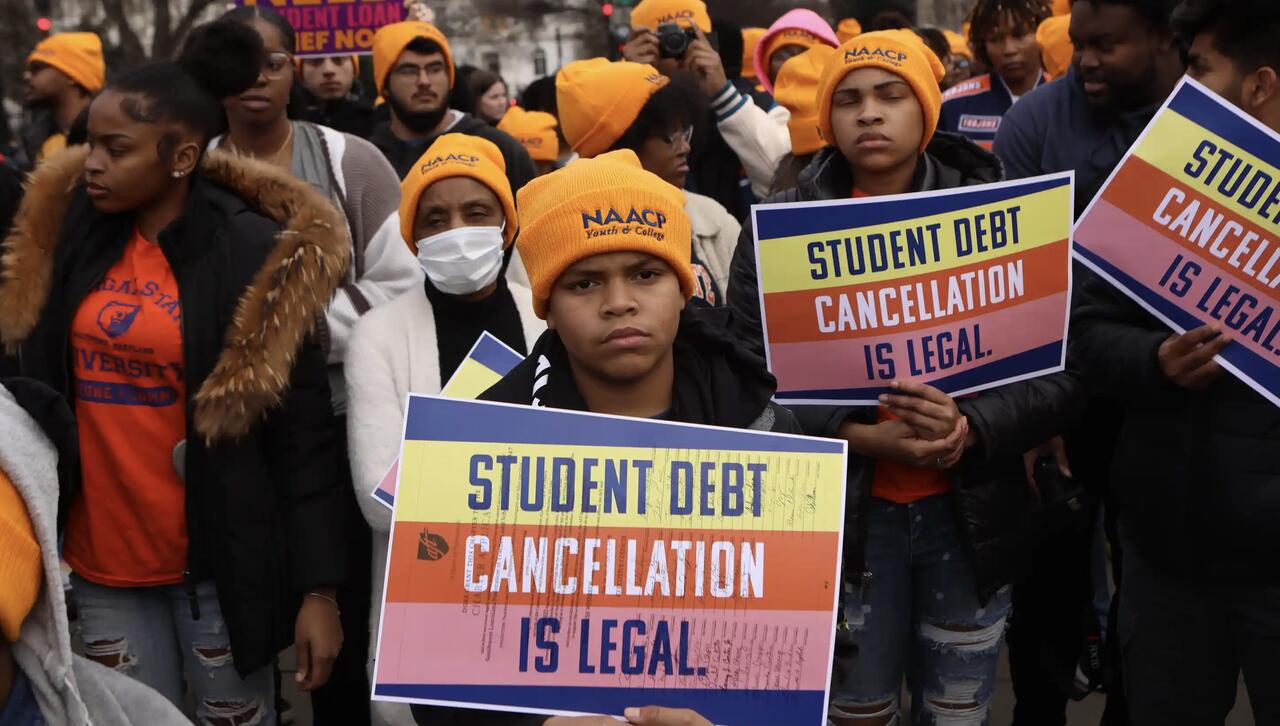
Americans have racked up $1.7 trillion in student loan debt, with many of them turning around and asking for their debt to be cancelled (Anna Rose Layden – New York Times)
As students complete the FAFSA, they will be presented with an “earnings indicator” for every school where they direct FAFSA to provide information to. When applicants apply to a school that fails the high school comparison, a “low earnings” warning will appear, and the school’s average graduate earnings will be depicted with the color red in the accompanying chart.
According to the Education Department, more than 2% of the country’s undergrads are attending colleges that fit that dismal profile. However, more than 22% of colleges in the Education database are in the “low earnings” category. Most of them are for-profit schools — such as beauty schools — and there are also an assortment of historically black institutions, Bloomberg reports. Collectively, colleges whose grads lag high school graduates are raking in upwards of $2 billion in federal aid every year.
At CollegeScorecard.ed.gov, students can not only view average earnings at some 5,900 colleges, but also dive deeper to see earnings at the program level. For example, the report on Bucknell University shows that median graduates of the selective Pennsylvania school earn $93,807, compared to the $53,747 midpoint for four-year colleges. (These figures are incomes 10 years after entering a school.) For economics majors, the Bucknell median is $101,580. Meanwhile, the historically black Virginia University of Lynchburg’s median earnings are just $28,000 — below the $32,860 median for American high school completers.
MIT graduates’ median income of $143,000 puts the school atop the Department of Education database. (Pictured: Belgian MIT engineering grad student Sofie Stribos – MIT photo)
Nudging people away from schools with lousy earnings profiles doesn’t only help students, it may also serve taxpayers by trimming the number of people who default on federal loans. Student loan delinquencies are soaring following the end of the Biden-era payment holiday / vote-buying scheme. More than 9 million student-loan debtors have missed at least one payment in 2025, and the share of accounts more than 30 days past a payment due-date has doubled from the level seen before the payment suspensions kicked in during the Covid pandemic, according to the Financial Times.
Tyler Durden
Sun, 12/14/2025 – 13:25
https://www.zerohedge.com/political/education-dept-warn-applicants-aid-schools-low-earnings-grads

Espectador desarma a tirador en playa australiana y es elogiado por su valentía
SYDNEY (AP) — Un transeúnte visto en un video ampliamente difundido desarmando a un hombre durante el ataque contra un evento judío en Australia está siendo aclamado como un héroe.
El video publicado en redes sociales muestra a un transeúnte vestido con una camiseta blanca y pantalones oscuros agachándose detrás de un coche estacionado antes de acercarse sigilosamente por detrás al hombre armado, agarrarlo y quitarle el arma. El transeúnte luego apunta al agresor, quien cae al suelo.
La intervención recibió amplios elogios, incluso del primer ministro israelí Benjamin Netanyahu. El primer ministro de Nueva Gales del Sur, Chris Minns, lo calificó como la “escena más increíble”.
“Un hombre acercándose a un tirador que había disparado contra la comunidad y desarmándolo él solo, poniendo su propia vida en riesgo para salvar las vidas de innumerables otras personas”, declaró Minns. “Ese hombre es un verdadero héroe”.
El transeúnte fue identificado como Ahmed Al Ahmed, de 43 años, por 7NEWS Australia, que entrevistó a su primo.
Fue herido de bala dos veces, con heridas en el brazo y la mano, y necesitó cirugía, según el primo identificado por el medio de noticias como Mustafa. Dijo que su primo es dueño de una frutería y padre de dos hijos de Sydney.
“Esperamos que esté bien”, indicó Mustafa. “Es un héroe. Cien por ciento, es un héroe”.
La policía de Nueva Gales del Sur reconoció las acciones del transeúnte, pero no pudo confirmar su identidad. “Las investigaciones continúan y todavía estamos tratando de identificar a todos los involucrados”, señaló la policía en un comunicado enviado por correo electrónico.
Dos hombres armados atacaron una celebración de Janucá en la playa Bondi de Sydney el domingo, matando al menos a 11 personas y hiriendo a decenas más. El ataque está siendo calificado como un acto de terrorismo antisemita.
La masacre en una de las playas más populares e icónicas de Australia siguió a una ola de ataques antisemitas que han sacudido al país durante el último año, aunque las autoridades no sugirieron que esos episodios y el tiroteo del domingo estuvieran conectados. Es el tiroteo más mortífero en casi tres décadas en un país con estrictas leyes de control de armas.
___________________________________
Esta historia fue traducida del inglés por un editor de AP con ayuda de una herramienta de inteligencia artificial generativa.

Brrrrr down: The 11 coldest Chicago Bears games played at Soldier Field
The Chicago Bears are barely above .500 in their 10 coldest games at Soldier Field since they began playing their home games there in 1971 — including 3 wins and 2 losses against the Green Bay Packers.
The Packers also played against the Dallas Cowboys in the NFL’s coldest game — 13 degrees below zero on Dec. 31, 1967 — known as “The Ice Bowl.”
Temperature is recorded at kickoff in NFL games, which doesn’t take into consideration any fluctuations that happen after the game starts. USA Today has reported that late-in-the-season games are likely to end at a lower temperature.
Here’s a look at the 10 coldest Bears games at Soldier Field.
Want the latest Bears news? Subscribe to the Chicago Tribune to read it all — and sign up for our free Bears Insider newsletter.
Dec. 19, 2004: 12 degrees (22 degrees below normal)
Texans 24, Bears 5
Kickoff: 12:02 p.m.
“Sunday’s temperature was announced as 12 degrees at kickoff, with a minus-8 windchill. On days like this, the Bears are supposed to have the advantage over a team from a place that might confuse snow with cotton. But the Texans prevailed handily.” — Lew Freedman
Dec. 18, 2005: 12 degrees (22 degrees below normal)
Bears quarterback Rex Grossman in the fourth quarter against the Falcons at Soldier Field on Dec. 18, 2005. (Nuccio DiNuzzo/Tribune)
Bears 16, Falcons 3
Kickoff: 7:37 p.m.
“The improbable play that ruined the Atlanta Falcons on Sunday night was challenged, reviewed, dissected — and didn’t even involve points going up on the scoreboard. It happened in the fourth quarter when the Falcons trailed the Bears by the same 16-3 margin as the final score. Atlanta quarterback Michael Vick completed a pass to receiver Michael Jenkins for what should have been a gain to the 10-yard line. Instead, Bears safety Mike Green creamed Jenkins, flipping the ball into the air and into the arms of teammate Nathan Vasher. Falcons coach Jim Mora tossed the red replay flag onto the field. The officials ruled against him, and Mora gave them enough what-for to earn a 15-yard unsportsmanlike-conduct penalty. More than 12 minutes remained, but the Falcons never got within the same ZIP code of the end zone again. Asked about the officials’ decision, Mora said only, ‘I think they do a wonderful job.’ The Bears spent the frigid evening smothering the Atlanta offense. Yet the Falcons, most of whom wore long sleeves and spend much of their football lives in a climate-controlled dome, refused to admit being bothered.” — Lew Freedman
Dec. 23, 1990: 11 degrees (22 degrees below normal)
Bears 27, Buccaneers 14
Kickoff: 12:01 p.m.
“The cold, hard realities of football and life were at once addressed Sunday afternoon on the frozen tundra of Soldier Field. The Bears resurrected the momentum of their remarkable season with a 27-14 defeat of the Tampa Bay Buccaneers in front of 46,456 hearty fans. … ‘That’s life. It is a tough thing,’ said linebacker Mike Singletary, ‘The injuries, the (death of) Fred Washington in the car wreck. It is the harsh reality of life. What are you going to do when that happens?’ … With the thermometer reading 11 degrees and a wind-chill factor of minus-3, the Bears overcame the slippery field conditions to run up 368 total yards.” — Fred Mitchell
Dec. 18, 2016: 11 degrees (25 degrees below normal)
Bears head coach John Fox on the sideline in the third quarter against the Packers at Soldier Field on Dec. 18, 2016. (Chris Sweda/Chicago Tribune)
Packers 30, Bears 27
Kickoff: 12:02 p.m.
“It was cold. It was blustery. It was another Bears loss. The Bears fell short with a rally against their archrivals when they fell to the Green Bay Packers 30-27 on Sunday at frigid Soldier Field. With the game-time temperature of 11 and a wind chill of 4 degrees below zero, the Bears fell behind the Packers 27-10 after three quarters before roaring back behind the arm of quarterback Matt Barkley. The Packers won it as time expired on Mason Crosby’s 32-yard field goal.” — Chris Kuc
Dec. 11, 1977: 10 degrees (26 degrees below normal)
Bears fullback Roland Harper takes a handoff from quarterback Bob Avellini against the Packers at Soldier Field on Dec. 12, 1977. Harper carried nine times for 55 yards. (Ernie Cox Jr./Tribune)
Bears 21, Packers 10
Kickoff: 2 p.m.
“The Bears failed to lose for the fifth game in a row Sunday, and it is still hard to tell whether they are getting easier or harder to believe. But get ready to believe. By Sunday’s 21-10 victory over Green Bay in frigid Soldier Field, they are one more victory from the playoffs unless the unbelievable happens again in an unbelievable season.” — Don Pierson
Dec. 17, 1989: 10 degrees (24 degrees below normal)
Packers 40, Bears 28
Kickoff: 12:02 p.m.
“Without having to loft nary a punt, the Packers dispatched the Bears 40-28 in front of 44,781 hearty souls, who braved a minus-7 degree wind chill factor and five Bear turnovers. In losing their fifth straight for the first time since 1978, the Bears (6-9) assured themselves a losing record for the first time since 1981.” — Fred Mitchell
Dec. 24, 2022: 9 degrees (25 degrees below normal
Bills 35, Bears 13
Kickoff: 12:02 p.m.
“The sprinkling of Chicago Bears fans who still were standing in the subzero windchill at Soldier Field as the clock ticked down Saturday weren’t gifted with a victory. The Bears defense had three takeaways but also gave up 254 rushing yards, including three touchdowns on the ground in the second half, in the Bills’ 35-13 victory. It was the Bears’ eighth straight loss.” — Colleen Kane
Dec. 14, 2025: 8 degrees (29 degrees below normal)
Chicago Bears quarterback Caleb Williams warms up to face the Cleveland Browns on Sunday, Dec. 14, 2025, at Soldier Field. (Brian Cassella/Chicago Tribune)
Browns at Bears
Dec. 9, 2013: 8 degrees (29 degrees below normal)
Bears 45, Cowboys 28
Kickoff: 7:40 p.m.
“Mike Ditka didn’t bring the 1985 Bears defense with him down the red carpet to midfield at halftime Monday night. Because of the 2013 offense, he didn’t have to. Backup quarterback Josh McCown accounted for five touchdowns, three before the Bears retired their iconic coach’s jersey No. 89 at intermission, and their beleaguered defense benefited from playing with the lead in a 45-28 victory over the Cowboys at frigid Soldier Field.” — Rich Campbell
Jan. 10, 1988: 4 degrees (27 degrees below normal)
Bears running back Walter Payton eludes a Washington defender during a playoff game on Jan. 10, 1988 (John Swart/AP)
Redskins 21, Bears 17
Kickoff: 11:32 a.m.
“A whole bunch of eras ended for the Bears Sunday in Soldier Field, where the Washington Redskins knocked them out of the NFC divisional playoffs for the second year in a row, 21-17. It was a cold thing coach Joe Gibbs and the Redskins did, pulling the magic carpet out from under Jim McMahon just when everything appeared warmed up for a National Conference title game next week against the Minnesota Vikings.” — Don Pierson
Dec. 18, 1983: 3 degrees (31 degrees below normal)
Bears 23, Packers 21
Kickoff: 12:02 p.m.
“Jim McMahon and the Bears put on their gloves Sunday for more than warmth. When they just as easily could have gone stiff in the zero-degree cold of Soldier Field, the Bears proved that they, too, can be 8-8. Scoring twice in the final four minutes — three times in the last 22 minutes — they overcame the Packers 23-21 on a 22-yard field goal by Bob Thomas with 10 seconds left. McMahon threw two touchdown passes, ran for another score and set up a kick by Thomas with a masterful two-minute drive that warmed what was left of the crowd of 35,807 (29,986 no-shows). The Bears knocked Green Bay out of the playoffs and joined the clamor for anonymity in the National Five Hundred League, where it matters not whether you win or lose because everybody does.” — Don Pierson
Dec. 22, 2008: 2 degrees (31 degrees below normal)
Bears 20 Packers 17 (OT)
Kickoff: 7:40 p.m.
“With a chance to earn a spot in the postseason, the Bears looked early on like they had their minds on the off-season. If revenge is a dish best served cold, the Bears didn’t put it on the menu against the team that had beaten them by 34 points a month ago until the final course. But it tasted sweet as ever after Robbie Gould nailed a 38-yard field goal through the uprights in the south end zone to keep the Bears’ playoff hopes alive.” — David Haugh
Sources: National Weather Service, Chicago Bears, NFL, Tribune reporting and archives
https://www.chicagotribune.com/2025/12/14/chicago-bears-coldest-games-soldier-field/

Indiana among states with cuts as EPA lessens oversight, report says
From 2010 to 2024, Indiana has faced funding and staffing cuts, according to a new Environmental Integrity Project report.
Northwest Indiana activists say the impact has been felt in the region.
“The consequences of these EPA cuts are being felt acutely in the region,” Ashley Williams, executive director of Just Transition Northwest Indiana, said in a statement. “Our region, long exploited as a polluter’s paradise by heavy industry, is bearing the brunt of this destructive deregulatory agenda: stalled pollution controls at our steel mills, delayed closure of leaking coal ash ponds poisoning our waters, and a growing list of preventable harms.”
On Wednesday, the Environmental Integrity Project released its report, which said 27 states have cut environmental agency budgets in the last 15 years, according to a news release. The organization also found that 31 states cut jobs at environmental agencies between 2010 to 2024, the timeframe in which it was studied.
According to the report, 22 states cut at least 10% of funding for their respective environmental agencies, with Indiana cutting 19%. The 27 states with decreases cut their budgets by about $1.4 billion, when adjusted for inflation, according to the report.
Staffing in Indiana also decreased by 14%, according to the report. Cuts have occurred in states controlled by Democrats and Republicans.
“The evidence in this report bolsters the case against severe cuts to EPA’s budget and staff, because many states have already weakened critically important programs that are supposed to protect our nation’s waters, lands, and air,” Jen Duggan, executive director of the Environmental Integrity Project, said in a Wednesday news release. “If both lines of defense fail — with harsh cuts to environmental agencies at both the federal and state level — public health, our natural resources, and the global climate will suffer grave harm.”
Discovery of the cuts comes more than nine months after President Donald Trump’s administration announced staffing and funding changes for the U.S. Environmental Protection Agency.
In late February, a White House spokeswoman announced that EPA budget cuts were likely, according to the Associated Press. The New York Times reported that more than 1,100 employees hired in the past year or on probationary status who work on climate change, reducing air pollution, enforcing environmental laws and other programs were told they could be fired at any time, according to Post-Tribune archives.
A White House spokeswoman said Trump, EPA Administrator Lee Zeldin and the Department of Government Efficiency “are committed to cutting waste, fraud and abuse,” and Zeldin is “committed to eliminating 65% of the EPA’s wasteful spending,” according to Post-Tribune archives.
“The Trump Administration is attempting to dismantle EPA and rollback common sense federal pollution rules, claiming that the states can pick up the slack and protect our communities — but that’s not the case,” Duggan said. “The implementation of our environmental laws depend on both a strong EPA and state agencies that have the resources they need to do their jobs. But our research found that many states have already cut their pollution control agencies and so more cuts at the federal level will only put more Americans at risk.”
A spokesperson for the Indiana Department of Environmental Management responded to the report in a Friday email, claiming Indiana is a national leader and has one of the “most efficient environmental permitting programs in the country.”
“IDEM is in a stable financial position due to a diversity of revenue sources, including permitting, waste disposal, cleanup programs, recycling activities, and the state general fund,” the agency’s statement said. “A smaller portion comes from federal categorical grant programs. Funding from these programs has remained largely flat over the last two decades, and there has been no disruption in IDEM’s operation of key air, land, and water quality programs in the state of Indiana.”
IDEM administers nearly all air, water and land quality permits in Indiana, and also most of its compliance and enforcement activities, according to the agency.
The agency claims to be “among the smallest backlog of state-issued permits,” with less than 1%, while other states have more than 20% backlogged. IDEM also claims to beat state permitting deadlines by about 50%, and issue permits in months compared to years.
“EPA found that IDEM’s air permit program strengths include robust online public access to various types of supporting permit records and detailed technical support documents that clearly identify any changes to the current permit and that provide justification for IDEM’s decisions,” former President Joe Biden’s EPA said about IDEM, according to the agency. “In addition, IDEM’s permit development and issuance process is well-supported by permit drafting tools and resources, internal review procedures, and training for permit writers. We also acknowledge IDEM’s achievement in maintaining a very low Title V permit renewal backlog of 1% — significantly lower than Region 5’s backlog goal of less than 10%.”
In her statement, Williams said that IDEM “routinely rubber-stamps directives from the Trump EPA.”
“Now, as we confront an onslaught of unchecked (artificial intelligence) data center sprawl in the region, our communities are left dangerously exposed,” Williams said. “With little recourse at the state or federal levels, we have no choice but to do what we’ve always done: organize and push back, community by community.”
Carolyn McCrady, member of Gary Advocates for Responsible Development, had a similar response, saying the Trump administration is “systematically destroying” environmental protections.
“Cuts to IDEM’s budget have been ongoing and are a reflection of the bias toward the industry, especially in Indiana, where IDEM decisions in the vast majority of cases favor the original permit proposed by the industry,” McCrady said in a statement. “All this has meant more illness in fenceline communities. Protection of industry at the expense of the health and wellbeing of people, particularly in Black and Brown communities, remains outrageous and is the reason that people will continue to fight these injustices.”

Regular pruning keeps color coming in dogwoods
Many holiday floral arrangements include branches with red bark. Colorful bark is a characteristic of certain kinds of shrubs that can brighten winter when they grow in your own yard.
“For the best color, they’ll need regular pruning,” said Spencer Campbell, Plant Clinic manager at The Morton Arboretum in Lisle.
Among the shrubs with bright red, orange or yellow bark are red-osier dogwood (Cornus sericea subsp. sericea), Siberian dogwood (Cornus alba), blood-twigged dogwood (Cornus sanguinea) and coral-bark willow (Salix alba var. vitellina ‘Britzensis’).
The best color is on new growth — branches that are just a year or two old. Older branches will turn grayish or brown. “To keep the shrubs colorful, prune every year to remove the oldest, dullest stems and encourage the plant to send up new ones with brighter bark,” Campbell said. Pruning can also control the size of these fast-growing shrubs.
If you prune them in winter, when the plants are dormant and the leaves are gone, you can easily see the branch structure and compare the size and color of the stems. Locate the oldest stems, which will be the thickest and often have dull bark. Using clean, sharp pruners, cut them off within an inch or two of the ground. By the next winter, bright new stems will have sprouted.
“If you make a habit of pruning out the oldest stems every winter, you’ll always have good bark color the next winter,” Campbell said.
Don’t take out more than one-third of the plant’s stems in any one year, to make sure it will still be able to put out enough leaves in spring to support itself. If you harvest some of the newer, brighter branches for holiday decorations, leave a few older stems to compensate.
Not every kind of plant should be pruned yearly. In some species of trees and shrubs, branches only develop their winter interest with age. For example, the characteristic peeling bark of paperbark maples (Acer griseum), river birch trees (Betula nigra) and oakleaved hydrangea shrubs (Hydrangea quercifolia) only appears on the oldest branches and the trunk. Young branches have smooth bark.
“If you need to prune these plants, be sure to leave some branches to mature into the peeling bark stage,” Campbell said.
These differences between species are one reason it’s important to identify your shrubs and trees before you prune them. “When you know what kind of plant you have, you can find out when to prune it,” Campbell said.
The Plant Clinic can help identify plants from photos submitted by email (see mortonarb.org/plant-clinic). Once you know the species of your plants, you can use the Arboretum’s online resources to learn what kind of pruning they need. For example, find out about the needs of the most common garden shrubs at mortonarb.org/pruning-deciduous-shrubs.
“Learning about your plants will help you care for them to make the most of their most attractive features, whether it’s spring flowers or interesting bark,” Campbell said.
For tree and plant advice, see the online resources of The Morton Arboretum at mortonarb.org/plant-care, or submit your questions online at mortonarb.org/plant-clinic or by email to plantclinic@mortonarb.org. Beth Botts is a staff writer at the Arboretum.
https://www.chicagotribune.com/2025/12/14/dogwood-color-pruning-home-garden/

Atacante que mató a tropas de EEUU en Siria era recluta reciente de las fuerzas de seguridad
Por ABBY SEWELL
BEIRUT (AP) — El hombre que llevó a cabo un ataque en Siria que mató a tres ciudadanos de Estados Unidos se había unido a las fuerzas sirias como guardia de seguridad de base dos meses antes y fue reasignado recientemente ante sospechas de que podría estar afiliado al grupo Estado Islámico, dijo un funcionario sirio a The Associated Press el domingo.
El ataque del sábado en el desierto sirio cerca de la histórica ciudad de Palmira mató a dos militares estadounidenses y a un civil de ese país, y dejó heridos a otros tres. También hirió a tres miembros de las fuerzas de seguridad sirias que se enfrentaron con el atacante, según el portavoz del ministerio del interior, Nour al-Din al-Baba.
Al-Baba declaró que las nuevas autoridades de Siria habían enfrentado escasez de personal de seguridad y tuvieron que reclutar rápidamente después del inesperado éxito de una ofensiva rebelde el año pasado que tenía la intención de capturar la ciudad norteña de Alepo, pero que terminó derrocando al gobierno de Bashar Assad.
“Nos sorprendió que en 11 días tomáramos toda Siria y eso puso una gran responsabilidad frente a nosotros desde el lado de la seguridad y la administración”, expresó.
El atacante estaba entre los 5.000 miembros que recientemente se unieron a una nueva división en las fuerzas de seguridad interna formadas en la región desértica conocida como la Badiya, uno de los lugares donde los remanentes del grupo extremista Estado Islámico han permanecido activos.
El atacante había levantado sospechas
Al-Baba reveló que el liderazgo de las fuerzas de seguridad interna había comenzado a sospechar recientemente que alguien le estaba pasando información al EI y comenzó a evaluar a todos los miembros en el área de Badiya.
La investigación levantó sospechas la semana pasada sobre el hombre que luego llevó a cabo el ataque, pero los funcionarios decidieron continuar monitoreándolo durante unos días para tratar de determinar si era un miembro activo del EI y para identificar la red con la que se estaba comunicando, indicó al-Baba. No nombró al atacante.
Al mismo tiempo, como “medida de precaución”, dijo, el hombre fue reasignado para custodiar equipo en la base en un lugar donde estaría más lejos del liderazgo y de cualquier patrulla de las fuerzas de la coalición liderada por Estados Unidos.
El sábado, el hombre irrumpió en una reunión entre funcionarios norteamericanos y sirios que estaban almorzando juntos y abrió fuego después de enfrentarse con guardias sirios, dijo al-Baba. El atacante fue abatido en el lugar.
Al-Baba reconoció que el incidente fue “una gran brecha de seguridad”, pero sostuvo que en el año desde la caída de Assad “ha habido muchos más éxitos que fracasos” por parte de las fuerzas de seguridad.
Tras el tiroteo, dijo, el ejército sirio y las fuerzas de seguridad interna “lanzaron barridos de gran alcance en la región de Badiya” y desmantelaron varias supuestas células del EI.
Una asociación delicada
El incidente ocurre en un momento delicado, ya que el ejército de Estados Unidos está ampliando su cooperación con las fuerzas de seguridad sirias.
Estados Unidos ha tenido fuerzas en el terreno en Siria durante más de una década, con una misión declarada de luchar contra el EI, con alrededor de efectivos tropas presentes allí hoy.
Antes de la destitución de Assad, Washington no tenía relaciones diplomáticas con Damasco y el ejército norteamericano no trabajaba directamente con el ejército sirio. Su principal socio en ese momento era las Fuerzas Democráticas Sirias lideradas por los kurdos en el noreste del país.
Eso ha cambiado en el último año. Los lazos se han estrechado entre las administraciones del presidente estadounidense Donald Trump y el presidente interino de Siria, Ahmad al-Sharaa, exlíder del grupo islamista Hayat Tahrir al-Sham que solía estar listado por Washington como una organización terrorista.
En noviembre, al-Sharaa se convirtió en el primer presidente sirio en visitar Washington desde la independencia del país en 1946. Durante su visita, Siria anunció su entrada en la coalición global contra el Estado Islámico, uniéndose a otros 89 países que se han comprometido a combatir al grupo.
Funcionarios de Estados Unidos han prometido represalias contra el EI por el ataque, pero no han comentado públicamente sobre el hecho de que el tirador era miembro de las fuerzas de seguridad sirias.
Críticos de las nuevas autoridades sirias han señalado el ataque del sábado como evidencia de que las fuerzas de seguridad están profundamente infiltradas por el EI y son un socio poco confiable.
Mouaz Moustafa, director ejecutivo del Grupo de Trabajo de Emergencia Sirio, un grupo de defensa que busca construir relaciones más estrechas entre Washington y Damasco, dijo que eso es injusto.
A pesar de tener ambos raíces islamistas, HTS y EI eran enemigos y a menudo se enfrentaron durante la última década.
Entre los exmiembros de HTS y grupos aliados, dijo Moustafa, “es un hecho que incluso aquellos que tienen las creencias más fundamentalistas, los más conservadores dentro de los combatientes, tienen un odio vehemente hacia el EI”.
“La coalición entre Estados Unidos y Siria es la asociación más importante en la lucha global contra el EI porque solo Siria tiene la experiencia y el conocimiento para lidiar con esto”, afirmó.
___________________________________
Esta historia fue traducida del inglés por un editor de AP con ayuda de una herramienta de inteligencia artificial generativa.

En batallas por redistribución distrital, partidarios consideran “justo” el dominio partidista
Por DAVID A. LIEB
Cuando Indiana adoptó nuevos distritos de la Cámara de Representantes de Estados Unidos hace cuatro años, los líderes legislativos republicanos los elogiaron como “mapas justos” que reflejaban las comunidades del estado.
Pero cuando el gobernador Mike Braun intentó recientemente redefinir los distritos para ayudar a los republicanos a ganar más poder, instó a los legisladores a “votar por mapas justos”.
¿Qué cambió? La definición de “justo”.
A medida que los estados emprenden la redistribución de distritos a mitad de década instigada por el presidente Donald Trump, republicanos y demócratas están utilizando una definición de justicia de “ojo por ojo” para justificar distritos que dividen comunidades en un intento de enviar delegaciones políticamente desiguales al Congreso. Es justo, argumentan, porque otros estados han hecho lo mismo. Y es necesario, afirman, para mantener un equilibrio partidista en la Cámara de Representantes que refleje la división política nacional.
Esta nueva visión para reestructurar mapas congresuales está creando un escenario en que “el ganador se lleva todo” y que trata a la cámara baja, tradicionalmente un mosaico más diverso de políticos, como el Senado, donde los miembros reflejan el partido mayoritario de un estado. El resultado podría ser un poder reducido para las comunidades minoritarias, menos atención a ciertos temas y menos voces distintas escuchadas en Washington.
El senador republicano Rand Paul de Kentucky teme que la manipulación sin restricciones de distritos lleve a Estados Unidos a un camino peligroso, si los demócratas en estados como Texas y los republicanos en estados como California se sienten excluidos de la política electoral.
“Creo que va a generar más tensión civil y posiblemente más violencia en nuestro país”, señaló el domingo en el programa “Meet the Press” de la cadena NBC.
Aunque los senadores estatales de Indiana rechazaron un nuevo mapa respaldado por Trump y Braun que podría haber ayudado a los republicanos a ganar los nueve escaños del estado en el Congreso, los distritos ya han sido reestructurados en Texas, California, Missouri, Carolina del Norte y Ohio. Otros estados podrían considerar cambios antes de las elecciones intermedias de 2026 que determinarán el control del Congreso.
“Es un debilitamiento fundamental de una condición democrática clave”, sostuvo Wayne Fields, un profesor de inglés retirado de la Universidad de Washington en San Luis que es experto en retórica política.
“Se supone que la Cámara de Representantes representa al pueblo”, añadió Fields. “Ganamos mucho al hacer que se escuchen partes particulares de la población”.
Redistribución de distritos diluye la representación comunitaria
De acuerdo con la Constitución, el Senado tiene dos miembros de cada estado. La Cámara de Representantes tiene 435 escaños divididos entre los estados según la población, y cada estado tiene garantizado al menos un representante. En el Congreso actual, California tiene la mayoría con 52, seguida de Texas con 38.
Debido a que los senadores son elegidos a nivel estatal, casi siempre son pares políticos de un partido u otro. Pensilvania y Wisconsin son los únicos estados ahora con un demócrata y un republicano en el Senado. Maine y Vermont tienen cada uno un independiente y un senador afiliado a un partido político.
Por el contrario, la mayoría de los estados elige una mezcla de demócratas y republicanos para la cámara baja. Eso se debe a que los distritos de la Cámara de Representantes, con un promedio de 761.000 residentes, según el censo de 2020, son más propensos a reflejar las preferencias partidistas variables de los votantes urbanos o rurales, así como diferentes grupos raciales, étnicos y económicos.
La redistribución de distritos de este año está disminuyendo esos distritos localmente únicos.
En California, los votantes en varios condados rurales que apoyaron a Trump fueron separados de áreas rurales similares y unidos a un distrito congresual remodelado que contiene comunidades costeras liberales. En Missouri, los votantes con inclinación demócrata en Kansas City fueron divididos de un distrito congresual principal en tres, con cada distrito revisado extendiéndose profundamente en áreas rurales republicanas.
Algunos residentes se quejaron de que sus voces están siendo ahogadas. Pero los gobernadores Gavin Newsom, demócrata de California, y Mike Kehoe, republicano de Missouri, defendieron la manipulación de distritos como un medio para contrarrestar otros estados y amplificar las voces de aquellos alineados con la mayoría del estado.
Todo es “justo” en la redistribución de distritos
La delegación de Indiana en la Cámara de Representantes de Estados Unidos consta de siete republicanos y dos demócratas: uno que representa a Indianápolis y el otro a un distrito suburbano de Chicago en la esquina noroeste del estado.
Definiciones opuestas de justicia se exhibieron en el Capitolio de Indiana cuando los legisladores consideraban un plan de redistribución de distritos respaldado por Trump que habría dividido Indianápolis entre cuatro distritos inclinados hacia los republicanos y fusionado los suburbios de Chicago con áreas rurales republicanas. Los opositores recorrieron los pasillos en protesta, portando carteles como “¡Yo apoyo mapas justos!”
Ethan Hatcher, un presentador de radio que dijo que vota por republicanos y libertarios, denunció el plan de redistribución de distritos como “una toma de poder descarada” que “compromete los principios de nuestros Padres Fundadores” al fracturar bastiones demócratas para diluir las voces de los votantes urbanos.
“Es un asalto calculado a la representación justa”, dijo Hatcher a una comisión del Senado estatal.
Pero otros afirmaron que será justo que los republicanos de Indiana ocupen todos esos escaños en la Cámara de Representantes, porque Trump ganó el “estado sólidamente republicano” por casi tres quintos del voto.
“Nuestra actual delegación congresual de 7-2 no refleja completamente esa fuerza”, dijo la residente Tracy Kissel en una audiencia de la comisión. “Podemos crear distritos más justos y competitivos que se alineen con cómo votan los habitantes de Indiana”.
Cuando los senadores derrotaron un mapa diseñado para entregar una delegación congresual de 9-0 para los republicanos, Braun lamentó que hubieran perdido una “oportunidad de proteger a los habitantes de Indiana con mapas justos”.
Interrumpiendo un equilibrio
Según algunas mediciones nacionales, la Cámara de Representantes de Estados Unidos ya es políticamente justa. La mayoría de 220-215 que los republicanos ganaron sobre los demócratas en las elecciones de 2024 casi se alinea perfectamente con la proporción de votos que los dos partidos recibieron en distritos de todo el país, según un análisis de The Associated Press.
Pero ese equilibrio general oculta un desequilibrio que existe en muchos estados. Incluso antes de la redistribución de distritos de este año, el número de estados con distritos congresuales inclinados hacia un partido u otro era más alto que en cualquier momento en al menos una década, encontró el análisis de la AP.
Las divisiones partidistas han contribuido a un “entorno político despiadado” que “lleva a los partidos a medidas extremas”, dijo Kent Syler, profesor de Ciencias Políticas en la Universidad Estatal de Middle Tennessee. Señaló que los republicanos ocupan el 88% de los escaños congresuales en Tennessee, y los demócratas tienen un equivalente en Maryland.
“Una redistribución de distritos más justa dará más a la población la sensación de que tienen voz”, afirmó Syler.
Rebekah Caruthers, quien lidera el Fair Elections Center, un grupo sin fines de lucro de derechos de voto, dijo que debería haber distritos compactos que permitan a las comunidades de interés elegir a los representantes de su elección, independientemente de cómo eso afecte el equilibrio político nacional. La manipulación de distritos para que sean dominados por un solo partido resulta en “una privación injusta” de algunos votantes, resaltó.
“En última instancia, esto no va a ser bueno para la democracia”, dijo Caruthers. “Necesitamos algún tipo de distensión”.
___
Esta historia fue traducida del inglés por un editor de AP con ayuda de una herramienta de inteligencia artificial generativa.