Category: News
At least 16 files have disappeared from the DOJ webpage for documents related to Jeffrey Epstein
NEW YORK — At least 16 files disappeared from the Justice Department’s public webpage for documents related to Jeffrey Epstein — including a photograph showing President Donald Trump — less than a day after they were posted, with no explanation from the government and no notice to the public.
The missing files, which were available Friday and no longer accessible by Saturday, included images of paintings depicting nude women, and one showing a series of photographs along a credenza and in drawers. In that image, inside a drawer among other photos, was a photograph of Trump, alongside Epstein, Melania Trump and Epstein’s longtime associate Ghislaine Maxwell.
The Justice Department did not say why the files were removed or whether their disappearance was intentional. A spokesperson for the department did not immediately respond to a request for comment.
Online, the unexplained missing files fueled speculation about what was taken down and why the public was not notified, compounding long-standing intrigue about Epstein and the powerful figures who surrounded him. Democrats on the House Oversight Committee pointed to the missing image featuring a Trump photo in a post on X, writing: “What else is being covered up? We need transparency for the American public.”
The episode deepened concerns that had already emerged from the Justice Department’s much-anticipated document release. The tens of thousands of pages made public offered little new insight into Epstein’s crimes or the prosecutorial decisions that allowed him to avoid serious federal charges for years, while omitting some of the most closely watched materials, including FBI interviews with victims and internal Justice Department memos on charging decisions.
Scant new insight in the initial disclosures
Some of the most consequential records expected about Epstein are nowhere to be found in the Justice Department’s initial disclosures, which span tens of thousands of pages.
Missing are FBI interviews with survivors and internal Justice Department memos examining charging decisions — records that could have helped explain how investigators viewed the case and why Epstein was allowed in 2008 to plead guilty to a relatively minor state-level prostitution charge.
The gaps go further.
The records, required to be released under a recent law passed by Congress, hardly reference several powerful figures long associated with Epstein, including Britain’s former Prince Andrew, renewing questions about who was scrutinized, who was not, and how much the disclosures truly advance public accountability
Among the fresh nuggets: insight into the Justice Department’s decision to abandon an investigation into Epstein in the 2000s, which enabled him to plead guilty to that state-level charge, and a previously unseen 1996 complaint accusing Epstein of stealing photographs of children.
The releases so far have been heavy on images of Epstein’s homes in New York City and the U.S. Virgin Islands, with some photos of celebrities and politicians.
There was a series of never-before-seen photos of former President Bill Clinton but fleetingly few of Trump. Both have been associated with Epstein, but both have since disowned those friendships. Neither has been accused of any wrongdoing in connection with Epstein and there was no indication the photos played a role in the criminal cases brought against him.
Despite a Friday deadline set by Congress to make everything public, the Justice Department said it plans to release records on a rolling basis. It blamed the delay on the time-consuming process of obscuring survivors’ names and other identifying information. The department has not given any notice when more records might arrive.
That approach angered some Epstein accusers and members of Congress who fought to pass the law forced the department to act. Instead of marking the end of a yearslong battle for transparency, the document release Friday was merely the beginning of an indefinite wait for a complete picture of Epstein’s crimes and the steps taken to investigate them.
“I feel like again the DOJ, the justice system is failing us,” said Marina Lacerda, who alleges Epstein started sexually abusing her at his New York City mansion when she was 14.
Many of the long-anticipated records were redacted or lacked context
Federal prosecutors in New York brought sex trafficking charges against Epstein in 2019, but he killed himself in jail after his arrest.
The documents just made public were a sliver of potentially millions of pages records in the department’s possession. In one example, Deputy Attorney General Todd Blanche said Manhattan federal prosecutors had more than 3.6 million records from sex trafficking investigations into Epstein and Maxwell, though many duplicated material already turned over by the FBI.
Many of the records released so far had been made public in court filings, congressional releases or freedom of information requests, though, for the first time, they were all in one place and available for the public to search for free.
Ones that were new were often lacking necessary context or heavily blacked out. A 119-page document marked “Grand Jury-NY,” likely from one of the federal sex trafficking investigations that led to the charges against Epstein in 2019 or Maxwell in 2021, was entirely blacked out.
Trump’s Republican allies seized on the Clinton images, including photos of the Democrat with singers Michael Jackson and Diana Ross. There were also photos of Epstein with actors Chris Tucker and Kevin Spacey, and even Epstein with TV newscaster Walter Cronkite. But none of the photos had captions and was no explanation given for why any of them were together.
The meatiest records released so far showed that federal prosecutors had what appeared to be a strong case against Epstein in 2007 yet never charged him.
Transcripts of grand jury proceedings, released publicly for the first time, included testimony from FBI agents who described interviews they had with several girls and young women who described being paid to perform sex acts for Epstein. The youngest was 14 and in ninth grade.
One had told investigators about being sexually assaulted by Epstein when she initially resisted his advances during a massage.
Another, then 21, testified before the grand jury about how Epstein had hired her when she was 16 to perform a sexual massage and how she had gone on to recruit other girls to do the same.
“For every girl that I brought to the table he would give me $200,” she said. They were mostly people she knew from high school, she said. “I also told them that if they are under age, just lie about it and tell him that you are 18.”
The documents also contain a transcript of an interview Justice Department lawyers did more than a decade later with the U.S. attorney who oversaw the case, Alexander Acosta, about his ultimate decision not to bring federal charges.
Acosta, who was labor secretary during Trump’s first term, cited concerns about whether a jury would believe Epstein’s accusers.
He also said the Justice Department might have been more reluctant to make a federal prosecution out of a case that straddled the legal border between sex trafficking and soliciting prostitution, something more commonly handled by state prosecutors.
“I’m not saying it was the right view,” Acosta added. He also said that the public today would likely view the survivors differently.
“There’s been a lot of changes in victim shaming,” Acosta said.
Associated Press journalists Ali Swenson, Christopher L. Keller, Aaron Kessler and Mike Catalini contributed to this report.
https://www.chicagotribune.com/2025/12/20/epstein-files-disappeared-doj-webpage/

El novato de Miami se redime con un touchdown decisivo en la victoria 10-3 sobre Texas A&M
Por KRISTIE RIEKEN
COLLEGE STATION,Texas, EE.UU. (AP) — La recepción de touchdown de 11 yardas de Malachi Toney, para desempatar el juego con menos de dos minutos restantes, llevó al sembrado No. 10, Miami, a una victoria de 10-3 sobre el sembrado número siete, Texas A&M, el sábado en la primera ronda de los playoffs del fútbol americano colegial.
Mark Fletcher Jr. logró un récord personal de 172 yardas por tierra para ayudar a los Hurricanes (11-2) a avanzar al Cotton Bowl, donde enfrentarán al sembrado número dos, Ohio State, el 31 de diciembre.
La gran jugada de Toney llegó después de lo que pareció un error devastador para el novato. Toney hizo una recepción, pero Dalton Brooks le arrebató el balón y Daymion Sanford lo recuperó en la yarda 47 de Texas A&M con aproximadamente siete minutos por jugar. Los compañeros rodearon a un Toney visiblemente molesto en el banco, animándolo y tratando de mantenerlo positivo.
Él y la ofensiva de Miami tuvieron otra oportunidad cuando Rueben Bain Jr. capturó a Marcel Reed en dos de tres jugadas en la siguiente serie para forzar un despeje.
Una carrera de 56 yardasen la primera jugada de la siguiente serie, la más larga que ha tenido Fletcher en el colegio, llevó a los Hurricanes a la yarda 30 de Texas A&M con aproximadamente tres minutos por jugar. Miami utilizó cuatro carreras más de Fletcher para ponerse en posición de anotar antes de que Toney recibiera el pase corto de Carson Beck y se lanzara hacia la zona de anotación.
Los Aggies tuvieron una oportunidad de empatar después de eso, pero Bryce Fitzgerald interceptó a Reed por segunda vez, esta vez en la zona de anotación, para finalizar el partido.
___
Deportes AP: https://apnews.com/hub/deportes

Project Sunrise: Inside The $112BN Plan To Rebuild Gaza As ‘High Tech Metropolis’
Project Sunrise: Inside The $112BN Plan To Rebuild Gaza As ‘High Tech Metropolis’
US special envoy Steve Witkoff and Jared Kushner have presented a $112 billion reconstruction plan to Gulf officials to build a “high-tech metropolis” atop the remains of Gaza, the Wall Street Journal reported on Friday. The 32-page PowerPoint presentation labeled “sensitive” and titled “Project Sunrise” was developed over 45 days and reportedly presented to officials from Qatar, UAE, Egypt, and Turkiye.
The plan envisions turning the Gaza Strip into a “high-tech metropolis” over the next two decades with four phases of reconstruction beginning in southern Gaza. It also calls for turning Rafah into Gaza’s new “administrative center,” housing over 500,000 residents.
However, the plan does not specify where two million Palestinians would be sheltered during the reconstruction period. Israel’s blockade of shelter materials has left Palestinians sheltering in bombed-out buildings and tattered tents.
In early December, a severe winter storm caused over a dozen fatalities, including three infants who succumbed to exposure, and led to the collapse of several buildings. About 95 percent of Gaza’s tent camps have flooded due to the heavy rain.
Witkoff and Kushner’s reconstruction plan also proposes monetizing 70 percent of Gaza’s coastline beginning in year ten of the project, a move officials hope would generate over “$55 billion in long-run investment returns for prospective investors.”
Both Witkoff and Kushner come from prominent Jewish real estate families rooted in New York’s property sector, with careers built around large-scale, high-value developments and deep financial ties to Gulf sovereign wealth funds.
According to the proposal, the US would provide $60 billion in grants and loan guarantees to back new debt, with expectations that the project would become self-financing as local industry and the broader economy recover. The World Bank would also have a role in the project.
The proposal is contingent on Hamas demilitarizing and decommissioning all weapons and tunnels. This precondition is highlighted in bold red type on the second page of the slide deck.
Hamas officials recently offered to “bury” the group’s weapons and hand over power to a Palestinian governing body.
President Donald Trump shared an AI-generated demo for ‘Trump Gaza’ on Truth Social. The video depicts his “Riviera Plan” come to life. It involves the forced removal of the indigenous Palestinian population, U.S. ownership, and development of the land for “world people.” pic.twitter.com/j9mWl8muHD
— Drop Site (@DropSiteNews) February 26, 2025
However, Israel has blocked those efforts and refused the participation of nearly all Palestinian technocrats and bureaucrats who would be suited to govern Gaza.
Earlier this year, Trump proposed permanently relocating Gaza’s Palestinian residents to transform the strip into a “Riviera of the Middle East,” a plan rejected by several countries but welcomed by Israel’s government.
Tyler Durden
Sat, 12/20/2025 – 16:20

Isak se lesiona el tobillo al anotar para Liverpool en la victoria ante Tottenham
LONDRES (AP) — Alexander Isak fue ayudado a salir del campo con una aparente lesión en el tobillo izquierdo sufrida al anotar para el Liverpool, apenas 11 minutos después de entrar como sustituto en el descanso en la victoria del sábado 2-1 contra el Tottenham en la Liga Premier.
Mientras el fichaje récord del fútbol británico remataba con el pie izquierdo para darle al Liverpool una ventaja de 1-0 a los 56 minutos, Micky van de Ven se deslizó con un desafío que impactó en el tobillo del delantero sueco.
Isak ni siquiera celebró el gol y, tras recibir tratamiento, fue llevado fuera del campo con la ayuda del personal médico del Liverpool.
El entrenador del Liverpool, Arne Slot, dijo que era demasiado pronto para determinar la gravedad de la lesión.
“Esperemos que esté de vuelta con nosotros pronto”, dijo Slot. “Difícil decirlo ahora”.
Van de Ven no fue sancionado por la falta. El Tottenham ya estaba con diez hombres después de que Xavi Simons recibiera una tarjeta roja directa a los 33 minutos por una entrada con los tacos por delante sobre su compatriota neerlandés Virgil van Dijk y terminó el partido con nueve hombres tras la expulsión de Cristian Romero en el tiempo de descuento.
___
Deportes AP: https://apnews.com/hub/deportes
Bill Clinton Responds After Half-Naked Photos Appear In Latest Epstein Drop
Bill Clinton Responds After Half-Naked Photos Appear In Latest Epstein Drop
For months, Democrats have tried to weaponize the delayed release of the Epstein files against President Donald Trump, after Trump got all weird about releasing the files in February. In recent weeks, House Dems selectively leaked materials to suggest the delay meant Trump had something to hide, even though none of the photos or emails implicated him in Epstein’s sex-trafficking (something the NY Times even admitted). And after enormous bipartisan pressure spearheaded by Rep. Thomas Massie and MTG, Trump finally signed the Epstein Files Transparency Act into law – requiring the release of ‘all’ the Epstein files no later than Friday. And while the DOJ only released ‘about half’ of what they were supposed to, they did offer a deeper peek into what was going on behind the scenes.
The first tranche of DOJ files released Friday include thousands of pages of material on Epstein and Ghislaine Maxwell, along with photos featuring high-profile figures such as Bill Clinton, Michael Jackson, Diana Ross, Mick Jagger, Kevin Spacey, Chris Tucker, Sarah Ferguson, Prince Andrew, and Bill Gates.
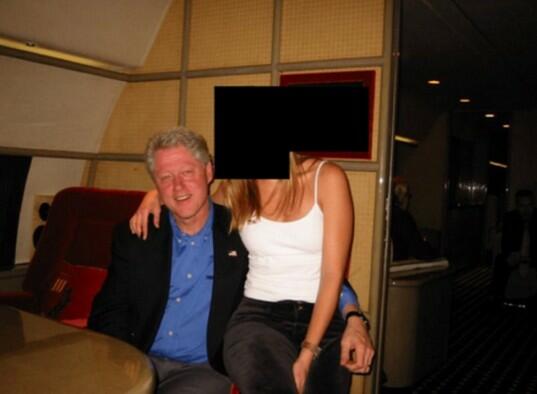
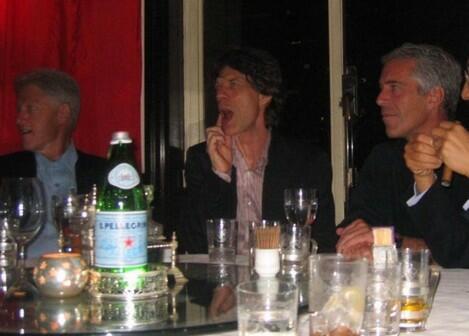
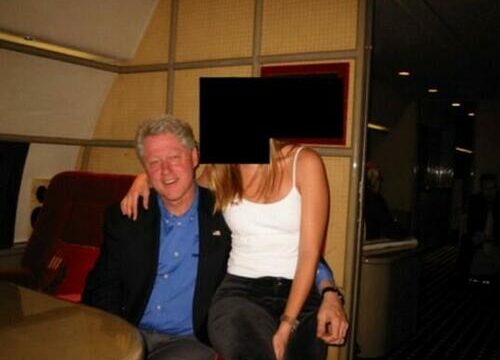
While no major bombshells have surfaced yet, former President Bill Clinton is facing renewed scrutiny because of some of the photos in the latest release: him posing with Epstein in matching shirts, chatting up a dancer, and lounging on what appears to be a plane with a redacted woman on his lap. Clinton also appears at a dinner table with Mick Jagger, Epstein, and Maxwell.
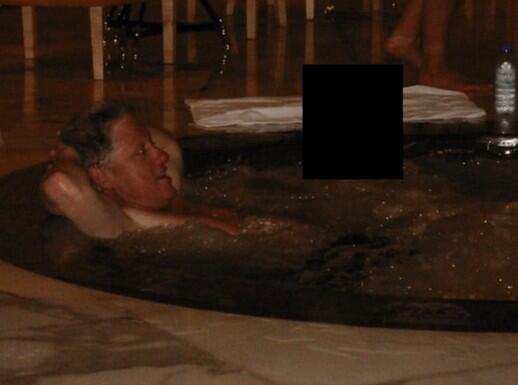
One standout image captures Clinton in a pool or hot tub with an unidentified woman whose face the DOJ blacked out, indicating that the individual is a victim and/or underage, which was allowed by the Epstein Files Transparency Act.
Mr. Clinton is one of the few people whose faces were not redacted, along with Mr. Epstein himself and Ms. Maxwell. In posts on X after the release, a White House spokeswoman repeatedly pointed out photos of Mr. Clinton and argued that the news media did not want to focus on the images.
“Here is Bill Clinton in a hot tub next to someone whose identity has been redacted. Per the Epstein Files Transparency Act, DOJ was specifically instructed only to redact the faces of victims and/or minors. Time for the media to start asking real questions,” White House deputy press secretary Abigail Jackson wrote on her personal X account.
Meanwhile, Republicans on the House Oversight Committee are also seeking to force Bill and Hillary to give in-person depositions in their own investigation. On social media, Trump has claimed without evidence that Clinton and other Democrats spent “spent large portions of their life with Epstein, and on his ‘Island.’”
Unsurprisingly, the Clinton camp wasn’t happy about the latest drop. Angel Ureña, Clinton’s deputy chief of staff, posted an angry statement attacking the release on X. “The White House hasn’t been hiding these files for months only to dump them late on a Friday to protect Bill Clinton. This is about shielding themselves from what comes next, or from what they’ll try and hide forever. So they can release as many grainy 20-plus-year-old photos as they want, but this isn’t about Bill Clinton. Never has, never will be. Even Susie Wiles said Donald Trump was wrong about Bill Clinton,” Ureña wrote. ”There are two types of people here. The first group knew nothing and cut Epstein off before his crimes came to light. The second group continued relationships with him after. We’re in the first. No amount of stalling by people in the second group will change that.”
Ureña concluded, “Everyone, especially MAGA, expects answers, not scapegoats.”
Clinton’s ties to Epstein have been well documented – having moved in the same elite circles as far back as the early 1990s, leaving behind a trail of photos over the years. Epstein and Maxwell visited the Clinton White House multiple times, and Maxwell later appeared at Chelsea Clinton’s 2010 wedding.
Clinton also flew on Epstein’s jet in the early 2000s for trips his team says were connected to Clinton Foundation work in Europe, Asia, and Africa. Clinton faces no criminal charges related to Epstein, and his representatives insist he did not know about Epstein’s crimes.
And of course, the MSM is pissed!
“The images and documents have been released without context or background information,” the New York Times writes. “It is unclear which photographs might have been taken by Mr. Epstein and which might have been sent to or acquired by him, or where many of them were taken. Justice Department officials have not said how they selected the particular tranche of documents that were released on Friday.”
Tyler Durden
Sat, 12/20/2025 – 15:45
Archivos de Epstein dan poca información nueva sobre sus crímenes o cómo evitó un juicio serio
Por MICHAEL R. SISAK y DAVID B. CARUSO
NUEVA YORK (AP) — La tan esperada liberación de registros relacionados con Jeffrey Epstein por parte del Departamento de Justicia de Estados Unidos adquirió la forma de un torrente de documentos que hicieron poco para calmar la prolongada intriga, en gran parte porque algunos de los registros más importantes no se encontraron por ningún lado.
Las divulgaciones iniciales, que abarcan decenas de miles de páginas, ofrecen poca información nueva sobre los crímenes de Epstein o las decisiones que le permitieron evitar un juicio federal serio durante años. Faltan las entrevistas del FBI con sobrevivientes y los memorandos internos del Departamento de Justicia donde se examinan las decisiones de acusación, registros que podrían haber ayudado a explicar cómo los investigadores veían el caso y por qué a Epstein se le permitió en 2008 declararse culpable de un cargo relativamente menor de prostitución a nivel estatal.
Las lagunas van más allá.
Los registros, que deben ser divulgados en virtud de una ley reciente aprobada por el Congreso, no contienen referencias a distintas figuras poderosas vinculadas durante mucho tiempo con Epstein, como el expríncipe Andrés de Reino Unido, lo que renueva las preguntas sobre quién fue investigado, quién no, y en qué medida las divulgaciones fomentan realmente la rendición de cuentas pública.
Entre las nuevas revelaciones está una visión sobre la decisión del Departamento de Justicia de abandonar una investigación sobre Epstein de la década de 2000, lo que le permitió declararse culpable de ese cargo a nivel estatal, y una denuncia de 1996, previamente desconocida, donde se acusaba al magnate de robar fotografías de niños.
En las divulgaciones hechas hasta ahora abundan las imágenes de las casas de Epstein en la ciudad de Nueva York y las Islas Vírgenes de Estados Unidos, con algunas fotos de celebridades y políticos.
Hubo una serie de fotos nunca vistas del expresidente Bill Clinton, pero muy pocas del presidente Donald Trump. Ambos han estado relacionados con Epstein, pero han desmentido esas amistades desde entonces. Ninguno ha sido acusado de ningún delito en relación con el magnate, y no hubo indicios de que las fotos jugaran un papel en los casos criminales presentados en su contra.
A pesar de que el viernes se cumplió la fecha límite fijada por el Congreso para hacer público todo el material, el Departamento de Justicia dijo que planea liberar los registros de manera continua. Atribuyó el retraso al largo proceso de ocultar los nombres de los sobrevivientes y otra información identificativa. El departamento no ha informado cuándo podrían llegar más registros.
Ese enfoque enfureció a algunos acusadores de Epstein y a miembros del Congreso que lucharon para aprobar la ley que obligó al departamento a actuar. En lugar de marcar el final de una batalla de años por la transparencia, la divulgación de documentos del viernes fue meramente el comienzo de una espera indefinida para obtener un panorama completo de los crímenes de Epstein y los pasos que se dieron para investigarlos.
“Me siento como si nuevamente el DOJ, el sistema de justicia nos estuviera fallando”, dijo Marina Lacerda, refiriéndose al Departamento de Justicia por sus siglas en inglés; afirma que Epstein comenzó a abusar sexualmente de ella en su mansión de la ciudad de Nueva York cuando tenía 14 años.
Los fiscales federales en Nueva York presentaron cargos de tráfico sexual contra Epstein en 2019, pero él se suicidó en la cárcel tras su arresto.
Los documentos recién divulgados son una pequeña parte de los posiblemente millones de páginas de registros en posesión del departamento. En un ejemplo, el subsecretario de Justicia Todd Blanche señaló que los fiscales federales de Manhattan tenían más de 3,6 millones de registros de investigaciones de tráfico sexual sobre Epstein y su confidente Ghislaine Maxwell, aunque muchos duplicaban material ya entregado por el FBI.
Gran parte de los registros liberados hasta ahora habían sido hechos públicos en presentaciones judiciales, divulgaciones del Congreso o solicitudes de libertad de información, aunque, por primera vez, estaban todos en un solo lugar y disponibles para que el público los explore de forma gratuita.
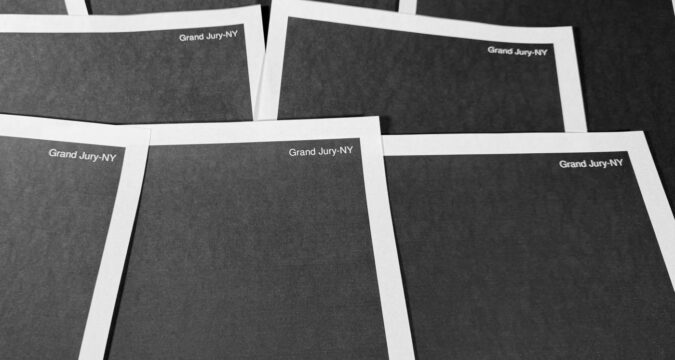
Los que eran nuevos a menudo carecían del contexto necesario o estaban fuertemente censurados. Un documento de 119 páginas marcado como “Jurado Investigador-NY”, probablemente de una de las investigaciones federales de tráfico sexual que llevaron a acusar a Epstein en 2019 o a Maxwell en 2021, estaba completamente censurado.
Los aliados republicanos de Trump se aprovecharon de las imágenes de Clinton, incluidas fotos del demócrata con los cantantes Michael Jackson y Diana Ross. También había fotos de Epstein con los actores Chris Tucker y Kevin Spacey, e incluso con el presentador de noticias de televisión Walter Cronkite. Pero ninguna de ellas tenía leyendas y no explicó por qué estaban juntos.
Los registros más sustanciosos liberados hasta ahora muestran que los fiscales federales tenían lo que parecía ser un caso sólido contra Epstein en 2007, pero nunca lo acusaron.
Las transcripciones de las actas del jurado investigador, liberadas públicamente por primera vez, incluyeron el testimonio de agentes del FBI que describieron entrevistas que tuvieron con varias niñas y mujeres jóvenes que dijeron haber recibido pagos para realizar actos sexuales para Epstein. La más joven tenía 14 años y estaba en noveno grado.
Una de ellas contó a los investigadores que fue agredida sexualmente por Epstein cuando inicialmente se resistió a sus insinuaciones durante un masaje.
Otra, entonces de 21 años, testificó ante el jurado investigador sobre cómo Epstein la contrató cuando tenía 16 años para realizar un masaje sexual y cómo había reclutado a otras chicas para hacer lo mismo.
“Por cada chica que traía a la mesa, él me daba 200 dólares”, dijo. Eran principalmente personas que conocía de la escuela secundaria, afirmó. “También les dije que, si eran menores de edad, simplemente mintieran sobre eso y le dijeran que tenían 18″.
Los documentos también contienen una transcripción de una entrevista que los abogados del Departamento de Justicia hicieron más de una década después con el fiscal federal que supervisó el caso, Alexander Acosta, sobre su decisión final de no presentar cargos federales.
Acosta, quien fue secretario de trabajo durante el primer mandato de Trump, mencionó preocupaciones sobre si un jurado creería a las acusadoras de Epstein.
También dijo que el Departamento de Justicia podría haber sido más reacio a realizar un proceso judicial federal de un caso que cruzaba la frontera legal entre el tráfico sexual y la solicitud de prostitución, algo que más comúnmente manejan los fiscales estatales.
“No estoy diciendo que fuera la visión correcta”, agregó Acosta. También señaló que el público hoy probablemente vería a las sobrevivientes de manera distinta.
“Ha habido muchos cambios en el avergonzamiento de las víctimas”, afirmó.
___
El periodista de The Associated Press Mike Catalini contribuyó a este despacho.
___
Esta historia fue traducida del inglés por un editor de AP con la ayuda de una herramienta de inteligencia artificial generativa.
Aldermen pass 2026 budget in historic revolt against Mayor Brandon Johnson
Aldermen passed the final part of a counterproposal to Mayor Brandon Johnson’s budget on Saturday, in a historic meeting that redraws the political lines at City Hall and further imperils his progressive agenda.
The consequential day was punctuated by hours of floor speeches with the usual finger-pointing and grandstanding between the council’s ever-deepening factions, before a final 30-18 vote on the remainder of a $16.6 billion budget for next year that Johnson has failed to stop. The revenue package of that plan passed in a 29-19 vote a day earlier.
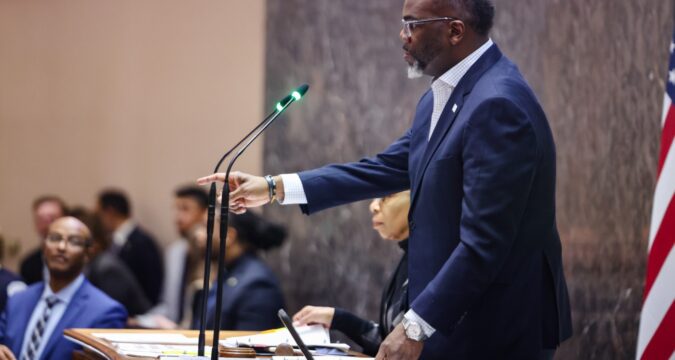
Now, all eyes are on Johnson and whether he will follow through on a mayoral veto. The mayor addressed the floor before the vote to reflect on the weight of his office, even in “times of great consternation and division,” by invoking civil rights leaders such as Dr. Martin Luther King Jr. and connecting their struggles with his attempt to tax the rich.
“I know that losing the battle does not mean that we have lost the war,” he said in conclusion. “Though we may not have a majority of the council, we do have the people.”
Johnson’s speech lasted almost 20 minutes but did not reveal his veto decision beyond declaring his stalled budget proposal’s corporate head tax is “a battle that is still not over.” A few aldermen applauded while he spoke, as the mayor at times castigated his opponents for how they have treated him.
“I cannot take responsibility for our emotions that I have nothing to do with,” Johnson said. “We don’t build our hopes on emotions. We build our hope on what is just.”
Ahead of the vote, many of Johnson’s City Council foes did not hold back in blaming him on how messy the 2026 budget process has gotten. But a leader of the opposition — and also Johnson’s handpicked Finance Chair — Ald. Pat Dowell sought to tamp down the rancorous tone.
“I think what happened in this council is good for the city of Chicago, because we came together,” Dowell, 3rd, addressed the floor. “It’s not perfect, but it is a good budget, and one that we can work with. And if we keep involved post-2025 and work together as a collective, it’ll be good for the city of Chicago.”
Some of the sharpest critiques of the mayor came from former allies on his leadership team and the Progressive Caucus. Their frustrations fold into a larger trend of the first-term mayor’s coalition shrinking since he took office in 2023 and found himself steadily isolated inside the mayor’s office on the fifth floor of City Hall, where critics say his activist approach to governance has alienated all but his most loyal supporters.
In a way, the tense atmosphere on the council floor Saturday was the story of the Johnson administration for the last two years now: A freshman organizer-turned-executive who inherited a host of problems, structural budget deficit and underfunded pension and debt obligations notwithstanding, but worsened his situation through a series of political missteps. A legislative body, growing into independence for many years now, that broke into full-out revolt as they sensed his struggle to navigate City Hall’s treacherous political waters. And now, a frustrated progressive movement at a crossroads.
The mayor’s council surrogates who remain in his inner circle, however, went to bat for him Saturday. Their attempts to shore up his diminishing position hinged on the moral urgency of Johnson’s budget proposal that would reinstate Chicago’s corporate head tax.
Progressive Ald. Byron Sigcho-Lopez compared his colleagues to an opposition bloc against Mayor Harold Washington, the city’s first Black mayor who four decades ago faced resistance every step of the way from then-Alds. Ed Burke and Edward Vrdolyak and their white allies.
“We have the same fight that we had in the 80’s: We have the new Vrdolyaks trying to come back,” Sigcho-Lopez, 25th, said.
Washington was the last Chicago mayor to veto a budget, exactly 40 years ago.
Ald. Andre Vasquez, co-chair of the Progressive Caucus, rejected the comparison, however: “This ain’t the Vrdolyak crew. You’re not Harold Washington.” Still, the 40th Ward alderman voted no.
Johnson and his allies have also argued the alternative plan relies on faulty assumptions that ultimately make it unbalanced and have taken particular issue with the plan to sell to debt collectors $1 billion in long-outstanding money owed to the city for pennies on the dollar.
“I support asking those who have benefited the most from our city’s economy to contribute their share,” Johnson ally Ald. Jessie Fuentes, 26th, said. “We must have difficult conversations, but avoiding those is how we end up here year after year.”
Johnson’s slim leverage rests in a potential veto, which would require 34 votes for aldermen to override. He first made the threat over a month ago, but with an end-of-year deadline to pass a budget before a cataclysmic government shutdown now 10 days away, actually escalating the fight to that level would be his riskiest political decision yet.
The mayor’s framing of the fight speaks to the difficult political position he finds himself in. Many of his most ardent progressive supporters view the plan’s added debt sale and dropped head tax as intolerable but agree that the government shutdown that could be triggered by a veto is similarly unacceptable.
Johnson and the Chicago Teachers Union, his top backer in the 2023 election, have positioned this budget fight as one between poor and rich, under a backdrop of President Donald Trump’s “war” on Chicago, in an attempt to sway holdouts. But some aldermen on Saturday said they had grown weary of that strategy.
“Don’t use my people for political theater,” said Ald. Monique Scott, 24th, a member of the opposition bloc and the Black Caucus. “That’s using my people to send your political rhetoric. Don’t do that. We have an obligation as legislators to collect on debt.”
The next step of this struggle will not just hinge on the dollars and cents of the budget negotiations but on who wears the political jacket. That’s the case for either a worst-case scenario of a government shutdown, or a credit downgrade.
Johnson admonished the council for trying to pin the blame on him in his floor speech that again accused the alternative budget of being unbalanced.
“The incredible impact that this shortfall could have, you place it on one person,” Johnson said. “Let’s not pick and choose when someone else has to take the responsibility.”
The budget that passed contains a mix of untouched Johnson proposals — which his allies have been celebrating as a victory — slight tweaks to his original plan, and wholesale revenue changes.
Much of Johnson’s initial proposal is fully intact. That includes a $1 billion TIF surplus to yield $572 million for Chicago public schools and $233 million for the city; short-term borrowing to cover the cost of back pay for Chicago firefighters and legal settlements and borrowing plans for infrastructure improvements.
The city’s tax on personal property leases, which applies to everything from car rentals to cloud computing, goes up from 11% to 15%. Johnson initially proposed 14%. The congestion zone for rideshare trips on Uber and Lyft will expand, but not with Johnson’s proposed percentage-based fee structure.
The head tax is gone. There is no major property tax hike either, save for a $9.1 million increase dedicated to the city’s libraries, nor a hike in garbage fees. That’s a reflection of the political climate, and upcoming 2027 election. And the alternative budget restores the full advance pension payment that Johnson’s initial proposal had cut by roughly half.
The alternative revenue plan relies on a constellation of new taxes and raised fees that Johnson did not initially propose for virtual and traditional advertising on city property, liquor, and video gambling.
Meanwhile, Johnson introduced his own revised budget plan Friday that would replace the debt sale plan with the head tax, restore the full advance pension payment that he had proposed halving, not legalize video gambling terminals and count on slot machines being placed at a Midway Airport lounge. Opponents stalled the measure.
The defiant aldermen have said one of their goals was to prevent a ratings downgrade, but experts say based on recent trades, buyers of Chicago debt are already expressing their doubts.
Johnson’s most recent budget triggered a credit downgrade from S&P in January, bringing the city’s rating to just two notches above junk.
S&P warned last month there was a one-in-three chance of a lower rating within the next two years if the city failed to implement structural reforms, minimize growth in the city’s pension liabilities, and make sure “outyear cost pressures” don’t keep rising in a way that threatens future budgets. Downgrades can make borrowing more expensive, increasing interest costs.
A longtime watcher of Chicago’s finances, Rich Ciccarone, a municipal bond analyst and the emeritus president of Merritt Research Services said Friday the market has already been pricing city debt “as if it’s on the verge of a downgrade, if not a downgrade.”
“They’re watching and have already started to anticipate the difficulty of the situation,” Ciccarone said.
Fulton County Admits Certification Of 315K Potentially Unlawful Ballots In 2020
Fulton County Admits Certification Of 315K Potentially Unlawful Ballots In 2020
Authored by Luis Cornelio via Headline USA,
An attorney for Fulton County, Georgia admitted earlier this month that the county accepted roughly 315,000 early votes that were not lawfully certified in the 2020 presidential election.
Attorney Ann Brumbaugh made the admission while representing the Fulton County Board of Registration and Elections at a Dec. 9 hearing before the Georgia State Election Board, according to Wednesday’s reporting by The Federalist.
The SEB hearing pertained to a complaint filed by election integrity activist David Cross, who accuses Fulton County of having violated Georgia law by counting early votes that were not properly signed off by election workers.
As quoted by The Federalist, Brumbaugh told the board that Fulton County does “not dispute that the tapes were not signed.”
She added, “It was a violation of the rule. We, since 2020, again, we have new leadership and a new building and a new board and a new standard operating procedures. And since then the training has been enhanced. … But … we don’t dispute the allegation from the 2020 election.”
According to The Federalist:
“Georgia’s Secretary of State Office investigated the alleged failure to sign tabluation [sic] tapes and ‘substantiated’ the findings that Fulton County ‘violated Official Election Record Document Processes when it was discovered that thirty-six (36) out of thirty-seven (37) Advanced Voting Precincts in Fulton County, Georgia failed to sign the Tabulation Tapes as required [by statute],’ according to a 2024 investigation summary. In addition to probing the unsigned tabulation tapes, the investigation also found that officials at 32 polling sites failed to verify their zero tapes.”
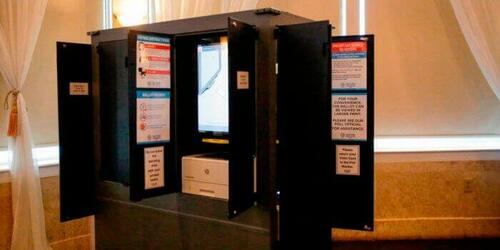
The issue, as detailed by the outlet, is that Georgia statute orders election officials to print three “closing tapes” toward the end of each voting day.
Doing so allows officials to officially end counting for the day and avoid votes from the previous day being overcounted.
“These signed tapes are the sole legal certification that the reported totals are authentic,” Cross said during the SEB hearing.
“Fulton County produced zero signed tabulator tapes in early voting.”
Cross reportedly uncovered the discrepancy through open records requests that cost him $15,800.
“These are not clerical errors. They are catastrophic breaks in chain of custody and certification,” Cross said.
“Because no tape was ever legally certified, Fulton County had no lawful authority to certify its advanced voting results to the secretary of state. Yet it did. And Secretary Raffensperger accepted and folded those uncertified numbers into Georgia’s official total without questioning them. This is not partisan. This is statutory. This is the law. When the law demands three signatures on tabulator tapes and the county fails to follow the rules, those 315,000 votes are, by definition, uncertified.”
Tyler Durden
Sat, 12/20/2025 – 15:10
Prisioneros liberados en Bielorrusia denuncian “truco sucio” tras confiscación de pasaportes
Por YURAS KARMANAU
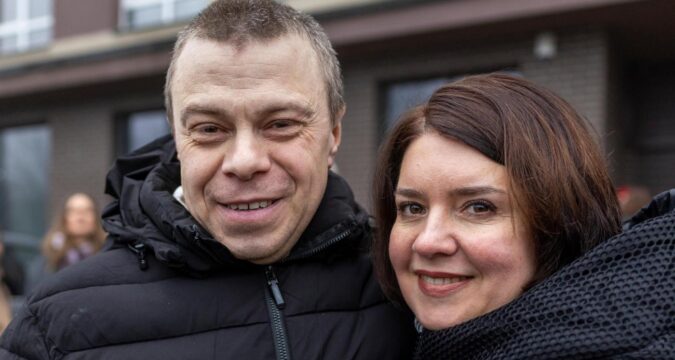
TALLIN, Estonia (AP) — El único documento oficial que el defensor de los derechos humanos Uladzimir Labkovich tenía consigo cuando fue liberado repentinamente de una prisión en Bielorrusia, vendado y llevado a la vecina Ucrania, era un papel con su nombre y foto de ficha policial.
“Después de cuatro años y medio de abusos en prisión, fui expulsado de mi propio país sin pasaporte ni documentos válidos”, dijo Labkovich a The Associated Press el miércoles en llamada telefónica desde Ucrania. “Este es otro truco sucio de las autoridades bielorrusas, que siguen dificultando nuestras vidas”.
Labkovich, de 47 años, fue uno de los 123 prisioneros liberados por Bielorrusia el 13 de diciembre a cambio de que Estados Unidos levantara algunas sanciones comerciales al gobierno autoritario del presidente Alexander Lukashenko. Todos menos nueve fueron trasladados a Ucrania; el resto, incluido el laureado con el Premio Nobel de la Paz Ales Bialiatski, fueron enviados a Lituania.
Lukashenko, un aliado cercano de Rusia, ha gobernado su nación de 9,5 millones de habitantes con mano de hierro durante más de tres décadas. Bielorrusia ha enfrentado años de aislamiento y sanciones por parte de Occidente debido a su ofensiva contra los derechos humanos y por permitir que Moscú use su territorio para invadir a Ucrania en 2022.
Recientemente, Lukashenko ha buscado establecer mejores relaciones con Occidente, liberando a cientos de prisioneros desde julio de 2024.
Pero en un acto final de indignidad y represión, a los prisioneros recién liberados a menudo se les oculta que están siendo deportados sin pasaportes u otros documentos de identidad. Deben reconstruir sus vidas en el extranjero, enfrentando obstáculos burocráticos sin ninguna ayuda de su país natal.
Represalias tras la liberación
Labkovich dijo que, debido a que tenía los ojos vendados, él y otras personas solo pudieron darse cuenta de que se dirigían al sur. Al menos 18 prisioneros trasladados a Ucrania, entre ellos, Labkovich y las figuras de la oposición bielorrusa Vitkar Babaryka y Maria Kolesnikova, no llevaban documentos con ellos, según defensores de derechos. Alemania prometió dar refugio a Babaryka y Kolesnikova.
“Sueño con abrazar a mis tres hijos y esposa en Vilna (la capital lituana), pero, en cambio, tengo que lidiar con absurdos procedimientos burocráticos”, expresó Labkovich.
La líder opositora bielorrusa Sviatlana Tsikhanouskaya, quien huyó del país en 2020, comentó a la AP en declaraciones escritas que la forma en que los prisioneros fueron sacados de Bielorrusia fue “una deportación forzada en violación de todas las normas y regulaciones internacionales”, y añadió que fue un trato inhumano.
“Aun después de indultar a las personas, Lukashenko sigue tomando represalias contra ellas”, manifestó Tsikhanouskaya. “Les prohíben quedarse en el país, las expulsan a la fuerza de Bielorrusia sin documentos para humillarlas aún más”.
En septiembre, Lukashenko indultó a más de 50 prisioneros políticos que fueron trasladados a la frontera lituana.
Uno de ellos, el destacado activista opositor Mikola Statkevich, se negó a salir de Bielorrusia. El hombre de 69 años, que calificó las acciones del gobierno como una “deportación forzada”, logró bajar del autobús y permaneció varias horas en tierra de nadie entre ambas fronteras antes de ser capturado por la policía bielorrusa y devuelto a prisión.
Otras catorce personas que cruzaron a Lituania desde la liberación de septiembre no tenían pasaportes. El activista liberado Mikalai Dziadok dijo que los agentes de seguridad bielorrusos rompieron su pasaporte frente a él. El periodista liberado Ihar Losik dijo que todos sus papeles, incluidos sus diarios, fueron confiscados.
“Mi pasaporte simplemente fue robado. Llegamos aquí (a Lituania), y nadie tenía pasaportes. Tomaron fotos, todos los papeles, el veredicto, cuadernos, se llevaron todo”, afirmó Losik.
Nils Muižnieks, relator especial de la ONU sobre derechos humanos en Bielorrusia, describió lo que les sucedió a los prisioneros como “no indultos, sino exilio forzado”.
“Estas personas esperaban regresar a sus hogares y con sus familias”, dijo en un comunicado. “En cambio, fueron expulsadas del país, abandonadas sin medios de subsistencia y, en algunos casos, despojadas de documentos de identidad”.
Un grupo de activistas ha recaudado más de 245.000 euros (unos 278.000 dólares) para los prisioneros liberados, y Tsikhanouskaya dijo que ha pedido ayuda a los gobiernos occidentales.
“Las personas pasaron por un verdadero infierno, y ahora trabajamos juntos para ayudarlas a facilitar su legalización y asentamiento, recurriendo a todos los contactos con aliados estadounidenses y europeos”, expresó.
Duras condiciones en prisión
Bialiatski, Labkovich y otros cinco miembros de Viasna, el grupo de derechos más antiguo y prominente de Bielorrusia, fueron arrestados en la ofensiva de Lukashenko contra las protestas masivas tras una elección en 2020 que lo mantuvo en el poder y fue denunciada como fraudulenta por la oposición y Occidente. Decenas de miles de personas fueron arrestadas, muchas brutalmente golpeadas, mientras que cientos de miles huyeron al extranjero.
Junto con Bialiatski, Labkovich fue acusado de “financiar disturbios públicos” y ayudar a los afectados por la represión. Bialiatski fue sentenciado a 10 años de prisión; Labkovich recibió siete.
Las autoridades penitenciarias intentaron coaccionar a Labkovich para que cooperara e iniciaron dos procedimientos penales más en su contra: negarse a obedecer órdenes de las autoridades de la prisión y alta traición, lo que podría haber añadido otros 15 años a su sentencia.
Labkovich dijo que pasó más de 200 días en confinamiento solitario y “perdió la cuenta de las noches en el suelo de concreto en la celda helada”.
Otros dos activistas de Viasna, Marfa Rabkova y Valiantsin Stefanovic, permanecen encarcelados. Labkovich cree que ellos y otros siguen retenidos para que las autoridades “puedan influir en el comportamiento y las declaraciones de los liberados”.
Babaryka, de 62 años, recordó que mientras estaba en prisión en 2023, comenzó a tener episodios de desmayo y una vez se despertó con una costilla rota, un pulmón desgarrado, neumonía y 23 cortes en el cuero cabelludo. Dijo que no sabía qué había sucedido mientras estaba inconsciente y no quiso hablar más sobre las condiciones tras las rejas.
“Te diré la verdad: quienes salen no deberían hablar sobre cómo estaban y qué sintieron, porque muchas personas permanecen dentro del sistema y, dependiendo de lo que digan, generalmente obtendrán desventajas en lugar de ventajas”, dijo Babaryka el domingo en Chernihiv, Ucrania.
Su hijo de 35 años, Eduard Babaryka, es uno de los más de 1.100 prisioneros políticos que aún están detenidos en Bielorrusia, cumpliendo una sentencia de 10 años por cargos de organizar disturbios masivos.
Represión en casa y más allá
Aunque las liberaciones de prisioneros se han vuelto más regulares recientemente, la represión de Lukashenko continúa y tiene como objetivo a sus críticos dondequiera que vivan. Los bielorrusos que viven en el extranjero no pueden renovar sus pasaportes ni obtener nuevos en embajadas y consulados, lo que dificulta la vida de miles de personas que huyeron de la represión.
Activistas de oposición, defensores de derechos y periodistas en el exilio enfrentan juicios penales en ausencia. Las autoridades confiscan sus apartamentos y otras propiedades, mientras que los tribunales rechazan los intentos de impugnar esas acciones.
Los activistas dicen que hay una “puerta giratoria” de liberaciones y arrestos de prisioneros. Desde la liberación del 13 de diciembre, Viasna ha declarado a siete personas más como prisioneros políticos, y 176 desde septiembre.
A pesar de los indultos de este mes, la directora de Amnistía Internacional para Europa del Este, Marie Struthers, instó a la gente a no olvidar a aquellos cuya libertad “está pendiente desde hace mucho”.
“Si esta liberación es parte de un acuerdo político, solo subraya el trato cínico de las autoridades bielorrusas hacia las personas como peones”, afirmó.
A principios de esta semana, el activista Aliaksandr Zdaravennau, de 46 años, de la ciudad sureña de Rechytsa, fue condenado por alta traición y participación en actividades extremistas y sentenciado a 10 años. El ingeniero del metro Yury Karnitski, de 44 años, y la dependienta Alena Hartanovich, de 52 años, fueron añadidos a la lista de extremistas elaborada por el Ministerio del Interior.
“Si bien las liberaciones de prisioneros son ciertamente un alivio, no hay señales de un cambio en la política o práctica de la represión por parte de las autoridades bielorrusas”, señaló Muižnieks. “Bielorrusia continúa estando entre los países con el mayor número de prisioneros políticos per cápita”.
___
Esta historia fue traducida del inglés por un editor de AP con la ayuda de una herramienta de inteligencia artificial generativa.
Australian state plans tougher laws against displaying extremist flags after Bondi shooting
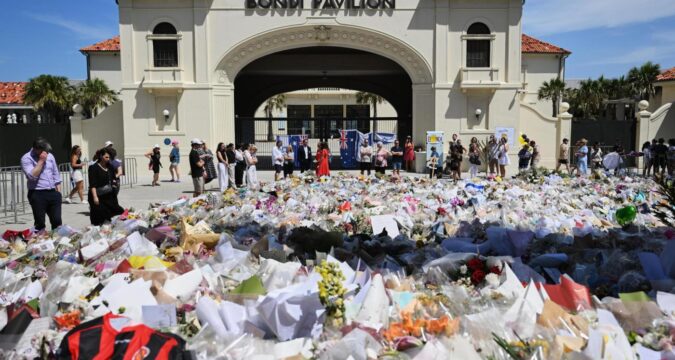
SYDNEY — The Australian state of New South Wales is proposing to ban public displays of Islamic State group flags or extremist symbols after a mass shooting driven by antisemitism killed 15 people at Sydney’s Bondi Beach.
Under draft laws to be debated by the state Parliament, publicly displaying the IS flag or symbols from other extremist groups will be offenses punishable by up to two years in prison and fines.
The state’s premier, Chris Minns, also said chants of “globalize the intifada” will be banned and police would be given greater powers to demand protesters remove face coverings at demonstrations.
“Hate speech or incitement of hatred has no place in our society,” Minns said Saturday.
The Arabic word intifada is generally translated as “uprising.”
While pro-Palestinian demonstrators say the slogan describes the worldwide protests against the war in Gaza, Jewish leaders say it inflames tensions and encourages attacks on Jews.
“Horrific, recent events have shown that the chant ‘globalize the intifada’ is hate speech and encourages violence in our community,” Minns told reporters. “You’re running a very risky racket if you’re thinking of using that phrase.”
New South Wales politicians are expected to debate the reforms on Monday after the premier recalled parliament.
Police said Sunday’s attack, targeting a Hanukkah celebration on Australia’s most famous beach, was “a terrorist attack inspired by (the) Islamic State ” group. Police said they found two homemade IS flags in the vehicle used by the two suspects.
Prime Minister Anthony Albanese has pledged to introduce measures to curb radicalization and hate, including broadening the definition of hate speech offenses for preachers and leaders who promote violence, and toughening punishments for such crimes. The proposals would also designate some groups as hateful, and allow judges to consider hate as an aggravating factor in cases of online threats and harassment.
Albanese has also announced plans to tighten Australia’s already strict gun laws.
The prime minister, who joined the Jewish community at Sydney’s Great Synagogue on Friday, said “the spirit of our Jewish Australian community is completely unbreakable.”
“Australia will not allow these evil antisemitic terrorists to divide us,” he told reporters. “No matter how dark things were, and continue to be, light will triumph.”
Authorities said the country will hold a National Day of Reflection on Sunday, the final day of Hanukkah, in honor of the victims. Flags will be flown at half-mast from all official buildings, and Albanese will join others at Bondi on Sunday to observe a minute of silence at 6:47 p.m., the time when police received the first reports of gunfire.
Police said one of the suspects, Sajid Akram, was shot dead on Sunday. His son, Naveed Akram, 24, remains in custody in a New South Wales hospital. He has been charged with 59 offences, including murder and committing a terrorist act, and police are reviewing the evidence against him.
The attack has raised questions about whether Australian Jews are sufficiently protected from rising antisemitism.
Australia has 28 million people, including about 117,000 who are Jewish. Antisemitic incidents, including assaults, vandalism, threats and intimidation, surged more than threefold in the country during the year after Hamas attacked Israel on Oct. 7, 2023, and Israel launched a war on Hamas in Gaza in response, the government’s Special Envoy to Combat Antisemitism Jillian Segal reported in July.
https://www.chicagotribune.com/2025/12/20/extremist-flag-laws-bondi-shooting/