Category: News
Gold and silver hit all-time highs as geopolitical tensions rise
Gold and silver soared to all-time highs, as escalating geopolitical tensions and bets on further US rate cuts added momentum to the best annual performance in more than four decades.
Bullion climbed as much as 2.1% to surpass the previous record of $4,381 an ounce set in October, while silver rallied as much as 3.4%, closing in on $70 an ounce. The move extends a blistering rally that has put both metals firmly on course for their strongest annual performance since 1979.
The latest push higher comes as traders bet that the Federal Reserve will cut interest rates twice in 2026, and as US President Donald Trump also advocates for looser monetary policy. Lower rates are typically a tailwind for precious metals, which don’t pay interest.
Rising geopolitical tensions are also enhancing the haven appeal of gold and silver. The US has intensified an oil blockade against Venezuela, stepping up pressure on the government of President Nicolás Maduro, while Ukraine attacked an oil tanker from Russia’s shadow fleet in the Mediterranean Sea for the first time.
“Today’s rally is largely driven by early positioning around Fed rate-cut expectations, amplified by thin year-end liquidity,” said Dilin Wu, a strategist at Pepperstone Group Ltd. Sluggish jobs growth and softer-than-expected US inflation in November supported the narrative for more rate cuts, she said.
Gold has surged by more than 65% this year, underpinned by increased central-bank purchases and inflows into bullion-backed exchange-traded funds. Trump’s aggressive moves to reshape global trade — as well as his threats to the US central bank’s independence — added fuel to the scorching rally earlier this year.
Investors have also played an important role in gold’s ascent, spurred in part by the so-called debasement trade — a retreat from sovereign bonds and the currencies they are denominated in over fears their value will erode over time due to ballooning debt levels. Gold-backed ETFs have seen inflows rise over the last four straight weeks, according to data compiled by Bloomberg, and World Gold Council figures show total holdings in these funds have risen every month this year except May.
Other precious metals also surged, with palladium rallying as much as 5.1% to hit the highest in nearly three years. Platinum rose for an eighth straight session and traded above $2,000 for the first time since 2008.
Gold has bounced back quickly after a retreat from its peak in October, when the rally was seen as crowded and overheated, and is now positioned to carry these gains into next year. Goldman Sachs Group Inc. is among several banks who predict prices will keep rising in 2026, issuing a base-case scenario of $4,900 an ounce with risks to the upside. ETF investors, it said, are starting to compete with central banks for limited physical supply.
Central-bank buying, physical demand and geopolitical hedging were “medium- to long-term anchors, while Fed policy and real rates continue to drive cyclical swings,” according to Pepperstone’s Wu. New entrants to the gold market, such as stablecoin issuers like Tether Holdings SA and certain corporate treasury departments, were creating a “broader capital base” that “adds resilience to demand,” she said in a note.
Silver’s recent advance has been buoyed by speculative inflows and lingering supply dislocations across major trading hubs following a historic short squeeze in October. The total trading volume for silver futures in Shanghai spiked earlier this month to levels near those seen during the crunch a couple of months ago.
Platinum — which has rallied about 125% this year — has risen with added speed in recent days as the London market shows signs of tightening. Banks are parking more metal in the US to insure against the risk of tariffs, while exports to China have been robust as demand grows and contracts begin trading on the Guangzhou Futures Exchange.
Spot gold rose 2.1% to $4,429.99 an ounce as of 10:45 a.m. in New York. Silver advanced 2.7% to $68.96 an ounce. The Bloomberg Dollar Spot Index fell 0.4%.
The main factors affecting the market were the prospect of more rate cuts and “geopolitical concerns, particularly around Ukraine and the Trump administration’s recent national security strategy,” said Nicholas Frappell, global head of institutional markets at ABC Refinery in Sydney, adding that Japan-China tensions and the situation in Venezuela were also supporting gold.

Notre Dame — with 96-game rivalry series vs. USC now on pause — announces home-and-home with BYU
Notre Dame football announced a home-and-home series with BYU over the next two seasons after pausing its longtime rivalry series with USC on Monday.
The Irish will travel to Provo, Utah, in 2026 and then will host the Cougars in 2027.
That announcement came in the wake of Notre Dame failing to come to an agreement with USC to extend its annual series. Yahoo Sports reported the schools had been close to finalizing an agreement in which USC would have hosted Notre Dame the weekend after Thanksgiving next season, but USC officials didn’t think such a game date was ideal for College Football Playoff consideration. The schools also reportedly discussed playing in Week 0.
Notre Dame and USC have played 96 times, including Oct. 18 when the Irish beat the Trojans 34-24 behind Jeremiyah Love’s 228 rushing yards. Notre Dame coach Marcus Freeman and USC coach Lincoln Riley both said then they were hopeful the series would be extended.
The schools issued a joint statement Monday.
“USC and Notre Dame recognize how special our rivalry is to our fans, our teams, and college football, and our institutions will continue working towards bringing back The Battle for the Jeweled Shillelagh,” the statement said. “The rivalry between our two schools is one of the best in all of sport, and we look forward to meeting again in the future.”
Notre Dame (10-2 this season) and BYU (11-2) have played nine times, with the Irish holding a 7-2 advantage in the series. They last met in 2022 in the Shamrock Series in Las Vegas. The teams, which were the first two left out of the CFP this season, likely would have played each other in the Pop-Tarts Bowl this month had Notre Dame not opted out of a bowl game.
Notre Dame players made the controversial decision to opt out after not making the CFP because several individuals wouldn’t have played in the game as they prepared for the NFL draft. BYU will play Georgia Tech instead.
https://www.chicagotribune.com/2025/12/22/notre-dame-byu-usc/

Actor James Ransone, known for his role in ‘The Wire,’ dead at 46
LOS ANGELES — James Ransone, the actor who played Ziggy Sobotka in the HBO series “The Wire” and appeared in many other TV shows and movies, has died. He was 46.
The Los Angeles County Medical Examiner’s office said in online records that Ransone died by suicide on Friday.
Ransone’s film credits include “It: Chapter Two,” “The Black Phone” and “Black Phone 2,” and he appeared in TV shows including the cop drama “Bosch” and “Poker Face.”
Messages seeking comment were left for representatives of Ransone on Sunday, as well as with a spokesperson for the medical examiner’s office.
https://www.chicagotribune.com/2025/12/22/actor-james-ransone-dead/

Want to read more in 2026? Here’s how to revive your love of books.
NEW YORK — People stop reading in adulthood for lots of reasons. But it’s never too late to turn the page on old habits and start again.
Curling up with a good book can reduce stress, increase creativity and boost empathy. A recent analysis of U.S. government data found that the percentage of Americans who read for pleasure during an average day has fallen to 16% in 2023 from 28% in 2004. That includes not just books but audiobooks, e-books and periodicals like magazines.
Some people say they’re fatigued from years of assigned reading in school. Others don’t have the time or would rather zone out by doom-scrolling on social media. And many just got out of the habit.
“It’s difficult for people who are really tired and busy to think about getting into reading if it’s not something they’re used to,” said Jacqueline Rammer, director of Menomonee Falls Public Library in Wisconsin.
For those looking to set reading goals or resolutions in 2026, here’s how to get back into the habit.
Choose the right book
When picking your next book, avoid dense nonfiction or a 500-page doorstop.
“Your first book should be something that you think will be joyful,” said Jocelyn Luizzi, a software engineer from Chicago who blogs about books.
Everyone’s taste is different, so get recommendations from a variety of places including friends, booksellers and online communities like BookTok.
Rammer and her staff ask library visitors: What was the last book, TV show or movie that you really enjoyed? Then, they look for similar genres or themes.
Many libraries offer access to a service called NoveList which suggests “read-alikes” for various books and authors.
Set a reading routine
To create a habit that sticks, “start by scheduling reading into your day,” said Gloria Mark, an attention span expert with the University of California, Irvine. Read five pages during a lunch break or right before bed.
If you’re reading a physical book, Mark said to avoid distractions by keeping phones and laptops out of sight.
But experimenting with other formats can make reading more convenient. E-books are portable and audiobooks are a good candidate to accompany chores or the morning commute. You can likely access both for free by downloading an app called Libby and signing in with a library card.
Try to read in a quiet setting, but don’t be afraid to make it a social activity. Many cities in the U.S. and around the world host silent book clubs where people read their own books together in coffee shops and libraries.
Setting a reading goal for the year or joining a local library’s winter reading challenge can help with motivation — but if it feels like added pressure, don’t do it.
Shannon Whitehead Smith, a book blogger from the Atlanta area who also works in marketing, says scrolling through lists of other people’s reads on social media and trackers like StoryGraph encourages her to keep the habit.
“Seeing all these other people reading motivates me to put my phone down and pick up this book that’s sitting beside me,” she said.
Feel free to skip a read
If a book feels particularly sluggish, it’s OK to put it down and start another. Reading “shouldn’t feel like a burden,” said Jess Bone with University College London, who analyzed the survey data about American adults reading for pleasure.
Routine readers say the habit helps them stay curious and release the stress of the day. Rammer, the library director, reads mysteries rife with twists and turns, and romances that cycle through roller coasters of emotions.
Most of all, she likes books that end with a “happily ever after.”
“I think the guarantee of knowing that things are going to end up OK is really reassuring,” Rammer said.

Barry Manilow se someterá a cirugía por cáncer de pulmón temprano y pospone conciertos de enero
The Associated Press
Barry Manilow se someterá a una cirugía para extirpar una mancha cancerosa en su pulmón y reprogramará sus conciertos de enero, anunció el cantante el lunes.
Manilow, de 82 años, declaró que los médicos encontraron el cáncer después de que tuvo un episodio prolongado de bronquitis: seis semanas, seguido de una recaída de otras cinco semanas.
“Mi maravilloso médico ordenó una resonancia magnética solo para asegurarse de que todo estuviera bien”, escribió Manilow en Instagram. “La resonancia magnética descubrió una mancha cancerosa en mi pulmón izquierdo que necesita ser removida. Es gracias a la pura suerte (y al gran médico) que se haya encontrado tan temprano”.
Agregó que los médicos no creen que el cáncer se haya propagado, por lo que “no habrá quimioterapia, no habrá radiación. Solo sopa de pollo y ver capítulos viejos de ‘I Love Lucy’”.
Un comunicado emitido por los representantes de Manilow especificó que la mancha era un tumor en etapa uno, y que la cirugía se llevaría a cabo a finales de diciembre.
Manilow estará recuperándose durante el mes de enero y planea volver a conciertos el fin de semana de San Valentín comenzando el 12 de febrero en el Westgate Las Vegas Resort and Casino, y luego a conciertos en espacios grandes a partir del 28 de febrero en Tampa, Florida.
Manilow debía realizar 10 conciertos en enero en nueve ubicaciones en Florida, Carolina del Norte, Carolina del Sur, Georgia y Ohio. Ahora se llevarán a cabo en febrero.
___________________________________
Esta historia fue traducida del inglés por un editor de AP con ayuda de una herramienta de inteligencia artificial generativa.
Yields Hit Session Highs After Poor, Tailing 2Y Auction Sees Lowest Foreign Demand Since 2023
Yields Hit Session Highs After Poor, Tailing 2Y Auction Sees Lowest Foreign Demand Since 2023
It’s the last treasury auction week of the year, and due to upcoming holidays, we are running on an accelerated scheduled which means the 2Y auction which usually takes placed on Tuesday, is Monday’s business instead. It was a subpar auction with modest demand; overall grade – not great, not terrible.
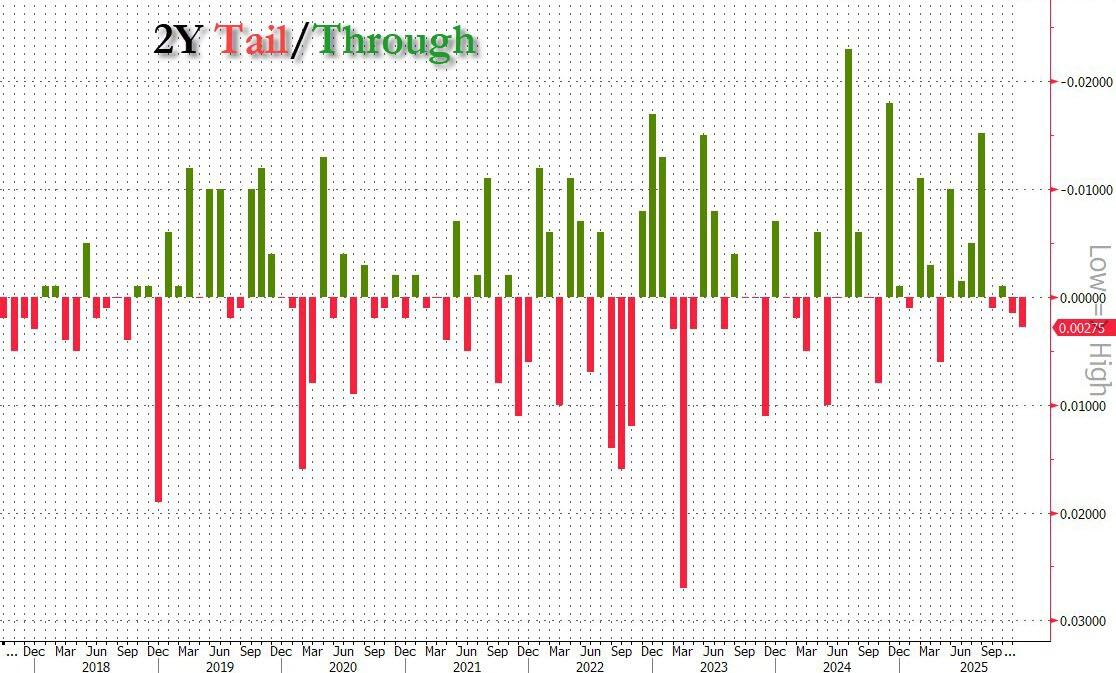
The auction of $69BN in 2Y paper stopped at a high yield of 3.499%, up 1bp from last month’s 3.489%, and tailed the When Issued by 0.3bps, the biggest tail for the short-end since April’s 0.6bps tail. It followed a series of what had been mostly stopping through auctions throughout 2025.
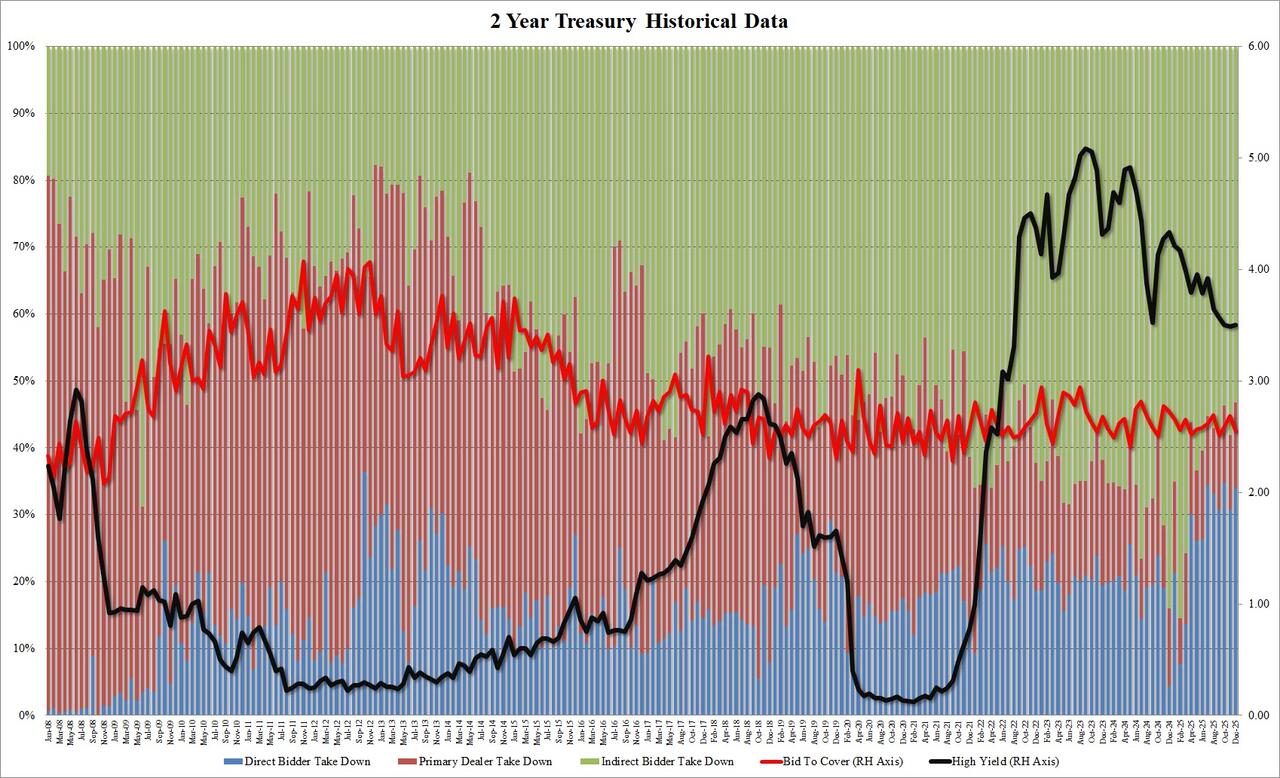
The bid to cover was 2.543, down from 2.684 in November and the lowest since September; it was also below the 6-auction average of 2.623.
The internals were also mediocre at best, with Indirects awarded just 53.21, down from 58.07 and the lowest since March 2023. And with Directs taking down 34.05%, higher than November’s 30.74% and above the recent average of 31.69%, Dealers were left holding 12.74% of the sale, the most since June.
Overall, this was a soft, subpar auction, with weak demand metrics, confirmed by the jump in 10y yields to session highs after the break.
Tyler Durden
Mon, 12/22/2025 – 13:32
A Christmas Carol For The Markets, 2025 Edition
A Christmas Carol For The Markets, 2025 Edition
By Elwin de Groot, Head of Macro Strategy at Rabobank
As the year draws to a close, Ebenezer “Macro” Scrooge looks back on an eventful 2025. Sitting alone in his glass-walled office on Christmas Eve, the city below twinkling like a Bloomberg terminal in night mode. His screens glowed with charts: yield curves steepening, equities hitting all-time highs, and a lonely alert blinking – “Critical raw materials shortage: nutmeg unavailable.”
“Bah, tariffs!” he grumbled, stabbing at his keyboard. “Christmas is inefficient. If only people understood the beauty of a well-balanced trade account.”
The year had been brutal on his nerves: Trump’s tariff threats in January, the April Global Tariff Shock. And even if the US Supreme Court decides to annul those tariffs, refunding the collected import tariffs would create a “major problem”, Kevin Hassett, US economic policy advisor and shortlisted for replacing Powell, noted over the weekend.
And the list goes on… China’s rare earth export controls in October, and wars that rattled energy markets. Even Scrooge’s Christmas tree had become a macroeconomic case study – 15% pricier thanks to US import tariffs. And the cake for this week’s party? Delayed because nutmeg and cinnamon were now a geopolitical pawn. The EU and China aren’t of much help either. EU-China relations have changed dramatically this year: yesterday China levied tariffs of up to 42.7% on some dairy products from the bloc. And thinking about getting stuff from the North to the South pole? Well, shipping isn’t what it used to be!
As the clock struck midnight, a chill swept through the room. Suddenly, a shimmering figure appeared – the Ghost of Christmas Past, dressed in a suit stitched from old bond certificates.
“Ebenezer,” the ghost intoned, “look back at 2025.”
The office dissolved into January’s chaos: Trump inaugurated, markets jittering at threats of 25% tariffs on autos and semiconductors. February brought German elections and a €500bn debt-fuelled spending spree. April’s tariff shock loomed large, sending reciprocal tariffs ricocheting across continents. In the UK, Reform UK may, someday, Reform the Bank. And France still has got no 2026 budget! Scrooge watched traders panic, algorithms whirring like snowblowers in a storm.
“Remember the fear?” the ghost asked. “Yet markets proved resilient. AI investments and consumer spending kept growth alive. Oil prices have kept falling; the US blockade of Venezuelan oil has only dented that move. And even Europe, with its post-NATO summit defence roadmap and green-tech push, surprised you.”
Scrooge snorted. “Resilient? My stress index hit a record high.”
Before he could argue, the Ghost of Christmas Present appeared – a lively spirit juggling ornaments labelled “Geopolitics,” “AI,” and “Interest Rates”; It whisked him to a bustling Christmas market. Families laughed despite the higher prices of gifts and trees.
“See?” said the ghost. “People adapt. They value togetherness over tariffs. Even after war in the Middle East, after shutdowns and rare earth scares, they choose negotiations and peace at their tables. And let’s hope that is also a prospect for the Sudanese and Ukrainian people.”
Scrooge noticed a baker struggling with a half-finished cake. “Critical raw materials,” the ghost chuckled. “China’s export controls made nutmeg a luxury. But look – some kind of monetary policy will still be made and neighbours share what they have. The cake will be baked.”
“Sharing?” Scrooge frowned. “Sounds like fiscal transfers.”
The ghost winked. “Call it social capital. Higher ROI than any hedge fund.”
Finally, the Ghost of Christmas Yet to Come appeared, shrouded in clouds of uncertainty like a long-term yield curve. It showed Scrooge a future where his firm ignored human values, chasing only returns. The office was empty, silent – no laughter, no warmth.
“This,” the ghost whispered, “is the cost of forgetting what matters.”
Scrooge trembled. “No! Tell me the future can change!”
He awoke on Christmas morning, heart pounding like a trader’s after a Fed rate cut announcement. Throwing open the window, he saw delivery drones buzzing in with gifts – late, but arriving. The baker waved: the cake was done, thanks to a last-minute spice swap. Scrooge smiled for the first time in years. He cancelled his meeting on tariff hedging and joined his family, raising a toast:
“To resilience – in markets and in life! May our yield curves steepen with joy, not stress.”
And so, despite a year of shocks – tariffs, wars, shutdowns, and shortages – Christmas triumphed. Not through perfect policy or flawless forecasts, but through the enduring power of connection. Even Ebenezer Macro Scrooge learned that while currencies weaken and spreads tighten, the true value lies in being present.
….
Dear reader, this was just a small selection of some of the most eye-catching developments we wrote about in 2025. With this last Global Daily, we thank you for your attention and all the feedback we have received. Our service resumes on 5 January. We look forward to do it all over again in 2026!
Happy Holidays!
Tyler Durden
Mon, 12/22/2025 – 13:25
https://www.zerohedge.com/markets/christmas-carol-markets-2025-edition
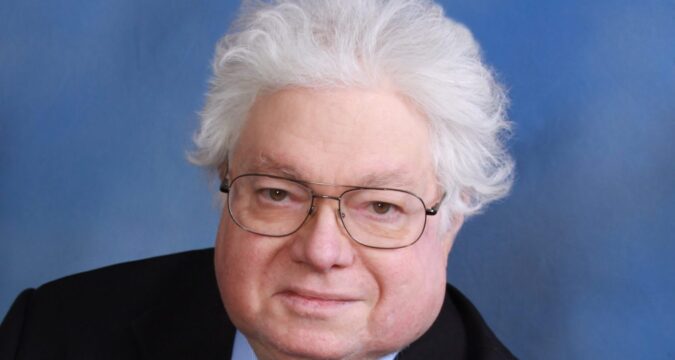
Ken Shepro gets to work as Kane County’s local historian: ‘Kane County is just an unusual county’
Ken Shepro is not new to Kane County, but he’s new to a job aimed at telling its history.
After holding various local roles — serving a stint on the Kane County Board, working as the county board’s attorney and spending some time as the Republican Party chair for the county — he’s taken on a different kind of position recently, as county historian. He was appointed and began his duties in November.
But, first, a brief personal history of Shepro.
Shepro, 75, was born in Berwyn at MacNeal Hospital, which was across the street from his family’s home. They later moved to La Grange Park, he said in an interview recently.
He attended college and then law school, and ultimately landed in Kane County in the late 1980s, with his wife and 1-year-old daughter.
More specifically, they moved to Wayne, a village of a little over 2,000 residents, according to U.S. Census Bureau numbers, that sits northwest of St. Charles, split between Kane and DuPage counties.
They ultimately bought a house next door to the Dunham Castle, a mansion built in 1883 by Mark Dunham, a Percheron horse breeder, and have lived there ever since, Shepro said.
Shepro’s house is relevant to his fascination with Kane County history, he explained.
“When we dug up the back yard to do an addition, we found all kinds of pottery and things dating back to the period,” Shepro explained.
But his love for history started much earlier.
As a child playing in his grandfather’s office, he recalled, he used a desk blotter with pictures of the presidents of the United States — all 34 of them.
So, it became his trick as a child to memorize and recite them, in order.
He remained fascinated with history, and eventually discovered Winston Churchill’s books, including his writings on the American Revolution.
“I just read voraciously,” he said.
And the rest is history.
Now, Shepro continues to practice law — “until I get it right,” he jokes — and has spent a number of years in various county positions. A few months ago, he recounted, Kane County Board Chair Corinne Pierog told him about the historian gig.
The state of Illinois’ Local Historian Act, which went into effect in 2023, allows all counties, municipalities and townships the ability to establish a local historian position. The purpose of the position is to have an individual in charge of “preparing and publishing local histories, preserving and protecting local historic records, artifacts and edifices and documenting local current events.”
The position is unpaid, according to Pierog, aside from reimbursement for expenses related to the job.
“Just like George Washington, who served without pay as commander in chief but said, ‘I will only work for my expenses,’” Shepro said, then referenced a book from the 1970s detailing Washington’s meticulous expense records.
The local historian is expected to report annually to the government entity they work for about their activities and recommendations, per the state legislation. And an annual report will be sent to the Abraham Lincoln Presidential Library and Museum in Springfield.
Shepro’s appointment was approved by the coounty board at a meeting in November, at which Pierog called Shepro “the only one here that we (could) certainly agree on that has deserved and earned this position.”
Jumping between tales of the Revolutionary War and more recent history, Shepro described some of what the job entails.
The county is still figuring out some of the details, like where his office at the county will be. But, for now, Shepro’s got documents and binders filled with historical information — like one with his face superimposed on a portrait of Henry Knox.
In part because he had “a good portrait that was suitable for doctoring,” according to Shepro, and in part because Shepro is interested in his story, that of a bookseller who ultimately became the country’s first Secretary of War.
“One could argue he’s the most unsung hero (of the Revolution) because, if he had not dragged all those guns across from Lake Champlain to Boston the British would probably still be there,” he said.
Shepro attends the county’s committee meetings and does research — using books, YouTube videos, podcasts. Much of his current research concerns the Revolutionary War, as the 250th anniversary of American independence approaches.
One thing he’s begun working on is validating the research from the local Daughters of the American Revolution chapter about Revolutionary War veterans buried in Kane County.
He’s also starting to give the “semiquincentennial minute” at some county meetings in celebration of the 250th anniversary of the country’s founding — a la the “Bicentennial Minutes” on TV in the 1970s that commemorated the nation’s bicentennial.
And he hopes to start a Revolutionary War-related essay contest for students in Kane County.
But, while the anniversary of the United States’ founding has been a focus so far, Shepro is also researching local history — collecting books, compiling a list of the area’s historical societies, etc. He’s acquired, for example, an index of all the family farms in Kane County.
Shepro started looking for local historical materials after he moved to the county, long before he became its historian.
“We were very taken with the idea that we were living in a historic house,” he said of his arrival in Wayne. “So that’s when I started (acquiring) the Kane County stuff.”
Shepro has shared his interest in history with his children, too. He recalled, for example, a memory of taking his son to Gettysburg in Pennsylvania.
“We spen(t) more time in Gettysburg than Lee did, because we were there for five days,” he said.
A notable fact, he mentioned, was that the first shot at the Battle of Gettysburg was apparently fired by a regiment that came from Kane County.
But, in more recent Kane County history, Shepro described a county that he’s seen change considerably over the years.
“When we moved here, you could stand on Randall Road and look west, and you wouldn’t see any lights,” he recalled. “That was the end of the metropolitan area of Chicago … that was literally the end of the known universe.”
But he also pointed to the fact that residents of Kane County can see traces of history in the place they live.
“Kane County is just an unusual county,” he said. “You’ve got other collar counties which have rural areas, but, generally speaking, if you look at their plans and what’s going on there, they don’t intend to keep it that way. Agriculture is a holding zone until something better comes along. We actually believe that we want farmland, and we preserved it.”
He spoke to having been part of that work when he served on the Kane County Regional Planning Commission.
“What we’ve lived through is now history to most people,” Shepro said. “So it’s my job to see that people don’t forget it.”
mmorrow@chicagotribune.com
House Republicans Setting Up Early 2026 Vote On Stock Trading Ban
House Republicans Setting Up Early 2026 Vote On Stock Trading Ban
House Republicans are teeing up a vote in early 2026 on legislation that would ban members of Congress from trading stock, however Democrats are insisting that it be expanded to cover the president, vice president, and their spouses.
On Thursday a group of House Republicans met to hash out the framework for an intraparty compromise that will only place restrictions on lawmakers, with a target date of March for a floor vote.
“I think we’re going to deliver a really strong product in 2026,” said Rep. Chip Roy (R-TX) in a statement to the Washington Times, adding that the legislation will include “a lot of elements” of his bipartisan bill – the Restore Trust in Congress Act, which is cosponsored by Rep. Seth Magaziner (D-RI).
The new measure would ban members of Congress, their spouses, and dependent children from owning or trading stocks, securities, commodities, futures, or comparable economic investments, and would require current lawmakers to divest such assets within 180 days of the bill’s enactment. Future lawmakers would be required to divest within 90 days of taking office.
According to Roy, the final legislation will be a Republican Conference product which he hopes Democrats will warm up to.
Earlier this year Florida GOP Rep. Anna Palina Luna filed a discharge petition to force a vote on the Roy-Magaziner bill, however it fell significantly short of the 218 signatures needed.
Jeffries Demands President Too
House Minority Leader Hakeem Jeffries (D-NY) says he won’t back any bipartisan deal unless it also bans presidents, vice presidents and their spouses from stock trading – provisions which Magazier included in a new bill released this week for which he’s launching a discharge petition.
“There is absolutely no justification for the president, who has far more power than any individual member of Congress, or the vice president, to be able to trade stocks in real time when they have more access to inside information that perhaps the entire United States Congress combined as it relates to regulatory activity,” said Jeffries.
And of course, the new GOP bill won’t satisfy his demands.
“The executive branch has rules,” said Roy. “Right now, we’re trying to just focus on cleaning up our own mess, and then we can try to look elsewhere if we need to.”
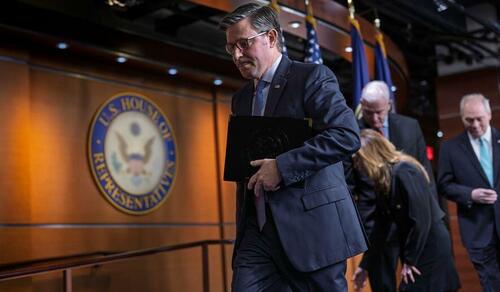
House Speaker Mike Johnson met with Roy, Luna and other Republicans on Thursday to coordinate the stock trading ban. Also in the meeting were Reps. Tim Burchett of Tennessee and Nancy Mace of South Carolina – who all left the meeting ‘confident’ that the new legislation would achieve the underlying goal, the Times continues.
“No more insider trading,” said Luna, promising that the bill they’re assembling “is going to be good.”
“I think it would be stupid for any member of Congress to not vote for this,” she said. “It is the most bipartisan issue. Now, we have to make sure that the Senate does it too. But there’s also talk about potentially changing the House rules to get this effected immediately.”
President Trump has previously said that he would sign a congressional stock trading ban if one made it to his desk – though he then threw a tantrum when Sen. Josh Hawley (R-MO) joined with Democrats in July to advance a bill out of the Senate Homeland Committee that banned lawmakers, the president, the vice president, their spouses, and dependent children from trading stonks.
“I don’t think real Republicans want to see their President, who has had unprecedented success, TARGETED, because of the ‘whims’ of a second-tier Senator named Josh Hawley!” Trump said on social media.
It turns out Trump was misinformed by other GOP senators who told him the bill would require him to sell his assets.
“I said that is absolutely not true at all,” Hawley told reporters. “I said your assets are all protected. It applies to the next president. … He finished by saying, ‘You’re totally exonerated, Josh. We love you.’”
Tyler Durden
Mon, 12/22/2025 – 13:05
https://www.zerohedge.com/political/house-republicans-setting-early-2026-vote-stock-trading-ban

Portage RDC plans to spend $11.2 million in 2026
The Portage Redevelopment Commission approved an $11.2 million budget for 2026, setting aside $3.6 million for a surplus in case it’s needed for anything special that pops up.
Redevelopment Director Dan Botich told the RDC Thursday to anticipate receiving $5 million from the sale of property on the city’s north side. A company relocating to the city is requesting around $25,000 for help with employee training, he said.
While economic development officials are restricted by nondisclosure agreements from public statements about which companies are considering relocating or expanding in the city, Mayor Austin Bonta said after his election but before taking office that World’s Finest Chocolate was planning to build a plant in Portage.
The city plans a major transit-oriented development project on the city’s north side, including extending Burns Parkway and the Marquette Greenway as well as attracting some $360 million in private investment for residential, commercial and office use as well as an inn.
That’s all within a transit development district that has all the features of a tax increment financing district with the added sweetener of capturing the increase in income tax revenues to help fund needs like public infrastructure.
Some $7.4 million next year will go toward for road and trail resurfacing projects. The city is eligible to apply for matching grants through the Indiana Department of Transportation.
Another $1.4 million will be earmarked for improvements at Founders Square, including work on the beer garden, resurfacing the splash pad and streetlight repairs and replacement.
About $3.9 million will be set aside for repayment of debts incurred to pay for previous projects, including the fire and police stations.
Money will also be held for public safety needs as well as grants to Portage Township Schools. A TIF district captures the increase in property tax revenue for the RDC’s use, so schools wouldn’t get a share of that money without the grants being awarded.
In other business, real estate consultant Bill Rathjen updated the RDC on work being done at Portage Mall to turn the parking lot into the beginnings of a downtown streetscape.
All 11 property owners signed a letter of intent, an important first step, and 10 of 11 title reports have been completed. Then conversations with lien holders will begin.
“Everything right now is moving very well,” Rathjen said.
“It has pushed that first domino over” for an appropriate downtown with pedestrian access, and the start of a downtown street grid, Botich said.
“This board consistently works on anything deemed impossible,” Bonta said, calling it a strong testament to the confidence people have in the city.
Bonta is excited about moving toward a true downtown in the city. A project pursued by past mayoral administrations is now coming to fruition.
“The tough part was step one. The rest of it now is just a process” for the Portage Mall project, Rathjen said.
A full purchase agreement will come after engineering work is done. Once all the parcel owners agree with the design, the city will purchase the property so work can begin.
No action by the commission was needed Thursday, but Bonta called the report an appropriate step for transparency. “I will say it’s a true redevelopment project,” taking land that has been complicated by issues with land ownership and stormwater management, among others.
That will allow development on the east side of the mall, too. “It opens up acreage that will be multimillions of dollars for us,” Botich said.
Doug Ross is a freelance reporter for the Post-Tribune.
https://www.chicagotribune.com/2025/12/22/portage-rdc-plans-to-spend-11-2-million-in-2026/