
Category: News
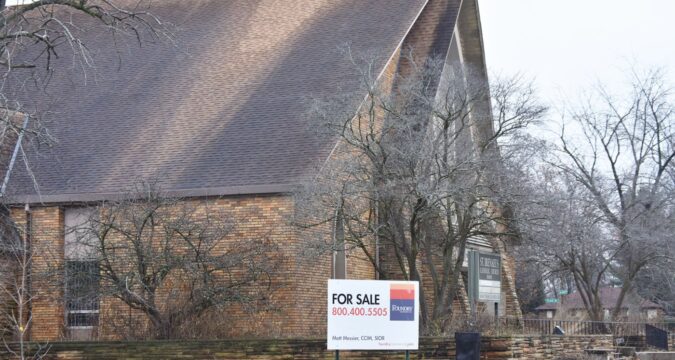
Column: Deteriorating state of St. Irenaeus Catholic Church reflects changing religious culture in Park Forest
For decades, St. Irenaeus Catholic Church with its imposing spire always seemed to stand watch over the coming and goings of Park Forest. In years past, when the plaza was in operation in the heart of town, the church was a visible anchor for the shopping center. Sunday mornings the parking lot at Indianwood Boulevard and Orchard Drive, the south end of the plaza across from the church, was usually crammed with cars.
“Saint I’s,” as the church was called, was the site of numerous village events, including the Blue Mass honoring police officers, the annual interfaith Thanksgiving service and a large turnout in 2016 paying tribute to Park Forest police Officer Tim Jones after he was shot.
That was then. More recently and as part of a regional overhaul of Catholic churches in the south and southwest suburbs, “St. I” closed its doors in July 2022.
When it closed, I wrote that religious buildings are repositories of shared memories. When doors are permanently locked congregations can scatter like dandelion seeds on a windy day and pages of personal scrapbooks of life can fade.
Today the church, its buildings and classroom, rectory and convent lie empty with only a large “for sale” sign conveying what is left of its dust-covered presence in the community.
The state of this iconic building is one of the reasons former Mayor John Ostenburg recently sent a letter to Cardinal Blase Cupich of the Archdiocese of Chicago urging something be done to save the deteriorating building.
In a bold-faced portion of the two-page letter, Ostenburg wrote that “what was once a magnificent structure … today is an eyesore!”
He added all the structures “are not being properly maintained, regularly have had an overgrowth of grass and weeds, and are a blemish where once stood a beauty.”
Ostenburg’s letter comes on the heels of the end of Trinity Lutheran Church’s 76-year existence in the village. What was once a flourishing religious community of hundreds and a pillar of the village’s religious community. At the end, Trinity was down to 48 members, but it ended its congregational life on a note of charity, donating $228,000 to various religious and nonprofit groups in the area.
St. Irenaeus Catholic Church in Park Forest in 2022. (Penny Shnay/for the Daily Southtown)
In the bustling first years of the village, the Holiday movie theater was the site for Jewish services Saturday mornings and United Protestant services on Sundays. Today, many old houses of worship have new tenants.
Example. Congregation Am Echad Synagogue and Temple Beth Sholom, the two Jewish houses of worship, have changed hands and denominations and where there were once four United Protestant churches, now only Grace and Calvary exist. Hope Lutheran Church with its large tower and gorgeous acoustics, is now home to Lilydale Baptist Church.
Time, that great shape shifter, changes everything.
Sad last words
During the funeral service Saturday for Tim Jones, I heard the words that he was shot “in the line of duty.” That is a standard response by both police and the military when something bad happens to those doing what we demand of them — to keep us safe.
Hopes and deeds
The new year always comes with fresh plans, renewed hopes and a promise of change, and although we have written these words each year at this time, it bears repeating now more than ever.
We live in challenging times and every so often we need to recall and grasp the words of a poem by Eugene Pickett, the former president of the Unitarian Church of America.
Pickett’s eight optimistic verses always seem appropriate at the dawn of each year. He begins with homage to the universe and moves from there to a celebration of our world, our lives and our beliefs, concluding with a plea that we live “not by our fears but our hopes, not by our words, but our deeds.”
The year 2026 might be the right time to start.
Happy New Year, dear readers.
Jerry Shnay, at jerryshnay@gmail.com, is a freelance columnist for the Daily Southtown.

2025 in review: Chicago’s yearlong fight against violent crime
Chicago’s struggles around public safety were the subject of many Chicago Tribune editorials in 2025.
As part of our annual look back at the editorials of the year, today we focus on both the politics and the human costs of violent crime and our collective search for solutions.
Paying an excessively large settlement to the survivors of those killed after violently attacking cops sends a few unmistakable messages. In the more immediate sense, the message sent to the officers involved in the Reed shooting, who remain suspended while they await the outcome of COPA’s investigation and the departmental response, is that the city already considers them responsible. That’s inappropriate.
But, more broadly, the message delivered to all the other men and women on our streets putting their lives in jeopardy each day to try to make Chicago safer is that they put their livelihoods and reputations at risk when they use deadly force to protect themselves against someone shooting at them.
SPARs aren’t used for the most serious cases of questionable police behavior, those involving use of deadly force, for example. They’re the primary tool for instilling day-to-day discipline in the ranks, addressing problems like officers failing to activate body-worn cameras or neglecting to appear in court to testify in cases in which they’re witnesses.
We don’t think readers should conclude from this statistical surge in 2024 that Chicago police performance is slipping. Rather, it’s evidence to us that CPD leadership, starting with Superintendent Larry Snelling, is strengthening internal management. In other words, the increase in recorded officer infractions looks to us like a positive development, strange as that may sound.
Laterria Smith receives a hug while watching a lantern she released rise into the sky during a vigil to remember her son, Jayden Perkins, on the one-year anniversary of the 11-year-old’s murder in Chicago’s Edgewater neighborhood on March 13, 2025. (Chris Sweda/Chicago Tribune)
Chicago has 185 shelter beds. New York has 3,000. Harris County, Texas, which includes Houston, has 336 beds. While Chicago experienced 59 domestic-violence homicides in 2023, New York had 23 and Harris County had 38. Pyron points to these numbers as evidence that providing sanctuary for victims works.
“If you look at neighborhoods where domestic violence homicides are highest, you’ll see a lack of visible domestic violence services,” she said. “These incidents are lowest where people have physical, accessible services.”
More shelter and services for victims is a priority. Failure to invest in protecting the vulnerable likely means the current awful trends will continue. Let’s commit to better safeguarding our vulnerable mothers, sisters, daughters, friends and neighbors and the people who love them.
Cook County State’s Attorney Eileen O’Neill Burke on Aug. 13, 2025, at the Leighton Criminal Court Building. (Brian Cassella/Chicago Tribune)
The state’s attorney’s office, which has a current-year budget of $187 million, badly needs a bona fide case-management system, and that will cost millions. Money well spent, we say, because the public would have access to this important information, and the office itself could make better decisions about resource allocation and — critically — move criminal cases through the process much faster than the current woefully slow pace of prosecutions.
But that’s not all. If anything, we were more shocked to hear that our local prosecutor’s office essentially has no internal forensics unit. Cook County is virtually the only major urban local prosecution office in the nation without one. In this day and age, DNA analysis, drug content analysis and of course fingerprint analysis are integral components of most felony cases. The office currently has a single scientist handling its forensics needs. Veteran lawyers with significant forensics-evidence experience left during the previous administration, we’re told. An effective forensics team needs to be established as soon as possible.
A Chicago police officer investigates a shooting where four people were killed and 14 others were wounded in the late hours of July 2, 2025, outside Artis Restaurant and Lounge in the River North neighborhood. (Peter Tsai/Chicago Tribune)
There are statistics, and then there’s the way people feel. Do they feel safe when they walk the streets, particularly at night? On that score, anecdotally at least, we don’t believe many Chicagoans feel any safer now than they did a year ago when statistics told a different story. Statistics offer no solace to victims of crime. They offer cold comfort to those who regularly hear gunfire from their homes.
That’s why it’s unwise for Mayor Brandon Johnson to routinely remind Chicagoans about the decline in violent crime rates and even more questionable to claim his policies are the reason. Chicago clearly is benefiting from a nationwide trend that no doubt has multiple causes. Johnson’s victory laps also appear insensitive when they’re followed by events like Wednesday night’s horror in River North. While we understand the mayoral desire for credit when crime rates fall — especially given that the blame comes hard and fast when they rise — mayors before Johnson have at least been a bit more cautious about their roles when crime stats dip.
That’s because it takes just one horrific incident to make such claims look ridiculous.
A person walks up stairs at the CTA’s Sheridan Red Line “L” station in Uptown on Aug. 21, 2025. (Eileen T. Meslar/Chicago Tribune)
Chicagoans can breathe a sigh of relief. Allowing passengers on CTA trains and buses to carry concealed weapons is a recipe for making an unacceptably unsafe transit system that much more dangerous. Imagine riding in a crowded “L” car and seeing a rider, feeling threatened, brandishing a firearm in their own defense. Would that make you — the unarmed passenger — feel safer? With the prospect of gunshots in a confined space striking people other than the intended target?
Keeping guns off trains and buses as much as possible clearly is in the public interest, and we’re confident the majority of Illinoisans agree. But that doesn’t mean public safety is where it needs to be, particularly on the “L.” Ultimately, the best argument against those agitating to bring more weapons into public spaces is to make those spaces safer.
We believe the public at large is generally unaware that there’s now effectively no timely enforcement for those who violate or ignore conditions of release under the EM program. Given that EM has become the main alternative to incarceration under the SAFE-T Act when judges opt not to detain those accused of serious crimes, the currently lax state of EM enforcement obviously is a serious threat to public safety. Tim Evans, a fierce proponent of criminal justice reform and the SAFE-T Act over his 24 years as chief judge, will be chief judge only until the end of the month, having been defeated in September in his bid for reelection by Cook County Judge Charles Beach. At the top of Beach’s list of priorities when he takes office on Dec. 1 must be an overhaul of the EM program to ensure that dangerous people who violate their terms of release face timely repercussions.
The Nov. 17 horror on that Blue Line train was preventable.
Mario Butler, center, and fellow members of the Englewood First Responders patrol the streets of Chicago’s Englewood neighborhood on July 31, 2025. (Antonio Perez/Chicago Tribune)
These programs are difficult to manage given the inevitability that participants — both workers and those getting the assistance — are intimately aware of street life in Chicago’s grittiest neighborhoods. Most don’t come by that knowledge without having been involved somehow or another in activities that are unsavory, whether criminal or otherwise.
Cook County State’s Attorney Eileen O’Neill Burke, who met with the editorial board on Tuesday, recounted for us riding with one of the CVI groups and watching as an unarmed worker leaped out of their car to break up a heated face-off on the street in which at least one man was wielding a gun. “It definitely has utility,” she said of CVI.
She made the point at the same time that “some organizations do this (work) better than others.” We agree and a few months ago called on the CVI sector, for lack of a better term, to strengthen its management controls.
That said, combating violent crime in Chicago, a scourge that has held the city back in multiple ways, is a complicated effort. The battle requires law-and-order measures, but it also entails making would-be criminals aware there are alternatives and there’s help available in pursuing them.
People walk around a bus shelter to avoid a crime scene where several people were shot outside the Chicago Theatre in the 100 block of North State Street on Nov. 21, 2025. (John J. Kim/Chicago Tribune)
Ald. Brian Hopkins, whose 2nd Ward includes much of downtown Chicago, deserves the city’s thanks for striving repeatedly to find a means that will pass muster with our mayor to control mobs of teens who “take over” the Loop and cause mayhem and sometimes death. The issue has resurfaced with the downtown shooting death of a 14-year-old last month after the annual tree-lighting ceremony. With two days’ notice that a large teen gathering was planned, police appeared to take all the right steps to keep things under control. But tragedy ensued anyway.
We think Ald. Hopkins finally has hit on the right way of giving the Chicago Police Department the tools it needs to stop these mob events before they get started. A new proposed ordinance he filed earlier this week would allow CPD Superintendent Larry Snelling, in consultation with Deputy Mayor for Community Safety Garien Gatewood, to declare four-hour curfews for minors within discrete areas with at least 12 hours’ advance notice.
The minimum 12-hour lead time Hopkins now is proposing gives minors and their parents more than ample warning to stay away from a specific part of the city at a specific time. Arrests for curfew violations, rather than for failing to respond to dispersal orders outside of curfew hours, don’t go on teens’ records and thus don’t affect anyone’s future prospects. Those arrested are held until picked up by a parent or someone else responsible for them.
Submit a letter, of no more than 400 words, to the editor here or email letters@chicagotribune.com.
https://www.chicagotribune.com/2025/12/29/2025-review-of-the-year-chicago-violent-crime/

Chicago violence continued to plummet in 2025 despite high-profile crimes
When it comes to Chicago and crime, perception isn’t always reality.
At times, 2025 brought deadly chaos to Chicago’s shimmering downtown: An 18-victim mass shooting in River North, the worst the city’s seen in years. The annual Christmas tree lighting marred by two more shootings, including the murder of a teen boy. A young woman from Indiana set on fire while riding the CTA Blue Line through the Loop.
Those crimes were red meat for those who revel in the city’s reputation as a lawless wasteland helmed by liberal politicians. But despite the headline-grabbing mayhem — which often distracts from the day-to-day violence that plays out in poorer neighborhoods across the city — in 2025 Chicago’s gun violence fell to levels not seen in a decade.
In fact, Chicago’s murder total in 2025 will be roughly half what it was just four years ago.
As of Tuesday, the city had logged 403 murders on the year, a 30% decrease from the same period in 2024, according to Chicago police. At the same time, 1,430 more people suffered nonfatal gunshot injuries, compared with 2,169 in the same period a year earlier — a 34% reduction.
That will make 2025 the fourth consecutive year of declines in Chicago’s entrenched gun violence, though the continuing drop is cold comfort to the scores of families still affected by shootings every year.
Predictably, perhaps wisely, no one is taking a victory lap.
“I feel like we still have work to do,” Police Department Superintendent Larry Snelling, now in his third year leading the department, said during a recent interview with the Tribune. “You can always appreciate the decline and the decrease for those who have not been harmed and (are) feeling that things are getting safer, but you can never be happy until things are safe — completely safe.”
“I don’t know if we’ll ever get there, but as long as we continue to work toward that, we’ll have less people who are victimized (and) we’ll create a better and safer environment for everybody in Chicago,” he added.
A police officer walks through the scene where multiple teens were shot outside the Chicago Theatre on Nov. 21, 2025. (John J. Kim/Chicago Tribune)
The violence totals in 2025 are the lowest seen in Chicago since 2014, when the city ended the year with 425 murders and about 2,000 more shooting victims, according to city violence data.
2025 marked the fourth consecutive year of marked declines in shootings, keeping with a trend seen in major cities across the country since the abatement of the COVID-19 pandemic and the unrest that followed George Floyd’s murder by a Minneapolis police officer in 2020.
What’s more, in 2025 the Chicago Police Department reported double-digit declines in robberies, car thefts, burglaries and batteries.
Police operations
The sharp drop in killings year-over-year will benefit not just Chicago, but the homicide rate throughout the country, said Chuck Wexler, longtime director of the Police Executive Research Forum, a Washington, D.C.-based police think tank.
“Chicago dropping (at least) 25% will not only impact Chicago, but it’ll impact the homicide rate across the country with those kinds of numbers,” Wexler said. “Is this a trend across the country? Yes. But is Chicago seeing significantly bigger returns? Absolutely.”
More cases are being solved, too. As of Dec. 23, CPD’s Bureau of Detectives reported a nearly 72% homicide clearance rate, the highest in at least a decade, according to a department spokesperson.
Through mid-December, CPD records show, the city’s officers made more than 35,800 arrests, a slight uptick from 2024. About 60% of the year’s arrests were related to assaults, batteries, narcotics and domestic violence, records show.
In an interview with the Tribune earlier this month, Cook County State’s Attorney Eileen O’Neill Burke pointed to stricter policies around seeking detention and prison sentences that she implemented upon taking office, including mandating that prosecutors ask for detention in all cases if they meet certain criteria, as well as seeking prison sentences in every felony case involving machine gun-type weapons.
“One of the few levers we can pull is to let people know we take this very, very seriously,” she said of certain gun cases. “This is a very serious crime. And the way we can do that is ask for detention and jail time. It’s one of the few levers available to us.”
Burke’s policies, though, have often elicited criticism from advocates, community members and some lawmakers who see stricter stances on incarceration as a step backward. Her time in office has correlated with an increase in Cook County’s jail population after years of decline.
Meanwhile, CPD’s warrant activity remained steady. Through mid-November, CPD officers had executed a little more than 1,400 search warrants in 2025, according to records obtained via the Freedom of Information Act. Officers executed about 1,500 warrants in all of 2024.
All across the city, CPD officers once again recovered about 1,000 guns each month this year. A recent Tribune analysis found that, of the more than 11,000 guns confiscated through mid-December, nearly 400 were “privately made firearms” — effectively untraceable “ghost guns” made without serial numbers.
The year was not without tragedy for CPD.
Police search a residential building at the scene where Officer Krystal Rivera was shot near the 8200 block of South Drexel Avenue in the Chatham neighborhood, June 5, 2025, in Chicago. (Armando L. Sanchez/Chicago Tribune)
In June, Officer Krystal Rivera was shot and killed by a fellow officer as they tried to arrest an alleged weapons suspect in an apartment in the 8200 block of South Drexel. Rivera, a 36-year-old mother to an adolescent daughter, was the first CPD officer to die in a friendly fire incident in nearly 40 years.
Earlier this month, Rivera’s family filed a lawsuit against the city, CPD and the officer who fired the fatal bullet. The nine-count suit alleges willful and wanton conduct, negligence and intentional infliction of emotional distress. The first hearing in that case is scheduled for next February, records show.
‘Midway Blitz’
Of course, CPD was not the only law enforcement body working in Chicago in 2025.
Much of the year’s second half was marked by the highly publicized influx of agents from Immigration and Customs Enforcement and U.S. Customs and Border Protection — despite Chicago being several hundred miles from the Canadian border.
As Operation Midway Blitz took hold in September and October, city crime data revealed a steep decline in calls placed to Chicago’s 911 center. The drop-off was especially pronounced in CPD’s Ogden District, which covers the Little Village neighborhood, the most populous Mexican American community in the city.
Chicago police officers leave the area near the 2300 block of South Sawyer Avenue after federal officers attempted to enter a building while conducting an immigration enforcement action in Chicago’s Little Village neighborhood on Nov. 8, 2025. (Armando L. Sanchez/Chicago Tribune)
The decline reflected more than just safer streets in Little Village, as experts suggested all interactions with police were likely suppressed — including calls from crime victims seeking help. Federal officials advertised the effort as an attempt to take the “worst of the worst” of the streets, but there was a clear chilling effect for others whose neighborhoods were affected most.
Matt DeMateo, executive director of New Life Centers, a nonprofit serving youths and families in the neighborhood, previously told the Tribune residents’ fear, fueled by federal immigration enforcement, may have driven some of the decline.
“It’s less about trust in police, it’s more about fear,” DeMateo said. “ICE is creating chaos, and people are making decisions for their own safety.”
Use of resources
As of November, CPD counted 11,541 sworn officers, according to the city’s Office of Inspector General. That’s about 80 fewer officers than a year earlier.
More than half of those officers are assigned to CPD’s 22 patrol districts, and a long-awaited workforce allocation study — which could affect future assignments and deployments — is expected to be completed soon. The study, mandated by the ongoing federal consent decree, has remained an elusive target for the Police Department. Last year, Snelling blamed “red tape” for the repeated delays in producing it.
“How the CPD chooses to allocate its resources and workforce truly matters. It can facilitate effective policing and reform efforts or hinder them,” Maggie Hickey, head of the independent monitoring group that assesses the city’s consent decree compliance, said during a status hearing earlier this year.
“In our reports, we have consistently expressed concerns about key (CPD) units being under resourced,” Hickey said, “and we hope that the results of this study will help the city and CPD realign its resources to meet the requirements of the consent decree and to meet the needs of Chicago’s communities.”
In the interim, CPD continues to rack up overtime spending. The city’s OIG found that, through December, the department had spent more than $233 million on overtime in 2025.
According to the Civic Federation, overtime has exceeded budget amounts for the past six years “at times by staggering amounts.” While the city budgeted $100 million for CPD overtime in 2023 and 2024, for example, it actually spent about $283 million and $238 million respectively, which either indicates unrealistic budgeting, “inefficient use of personnel, or both,” the analysis concluded.
There were staggering outside expenses, too.
By September, the City Council had already approved payments totaling more than $220 million to settle lawsuits related to alleged CPD misconduct. That month, aldermen approved another settlement — the first of its kind — authorizing another $90 million to close litigation tied to corrupt former CPD sergeant Ronald Watts.
Police oversight
CPD’s Bureau of Internal Affairs and the Civilian Office of Police Accountability, the two bodies that investigate the lion’s share of misconduct complaints against CPD officers, continued their efforts in 2025 as the future of the Police Department’s disciplinary adjudication process remains hazy.
After more than two years of litigation, the Illinois Supreme Court is expected to issue a ruling in 2026 in the impasse between the city and Fraternal Order of Police over the public’s access to disciplinary hearings in the most serious misconduct cases.
In 2023, an arbitrator overseeing contract negotiations between the union and the city ruled that officers may opt for those cases to be heard and decided by a third-party instead of the Chicago Police Board.
During the slowdown, a backlog of disciplinary cases awaiting decisions by Snelling has ballooned to nearly 500.
Appearing this month on WTTW’s “Chicago Tonight,” FOP President John Catanzara argued that CPD officers, as public employees represented by a collective bargaining unit, have always had the right to adjudicate those cases via an arbitrator, but the union didn’t exercise that right until the most recent negotiations.
Catanzara noted, too, that CPD officers are legally barred from going on strike, but suggested a future trade-off.
“If the (Illinois) General Assembly and the City of Chicago wish to give police officers the right to strike like the teachers, we’ll gladly trade that for arbitration,” he said. “In a heartbeat.”
Though they garner the most attention, cases that involve the Police Board account for only a small fraction of officers’ alleged misconduct. Each year, Police Department supervisors issue thousands of Summary Action Punishment Requests that can result in an officer reprimand or a one- to three-day suspension from work.
The department recently changed policy to see that every firearm pointing incident is now reviewed by a district captain — one of the highest-ranking officers in each patrol district, who uniformed officers interact with often.
Police investigators cross crime scene tape in the 3800 block of 114th Street on Feb. 28, 2025, in Chicago. A police officer was involved in a shooting inside the nearby Eggers Grove forest preserve and a suspect was shot and transported to a hospital. (John J. Kim/Chicago Tribune)
In October, the monitoring team tasked with gauging the city’s and Police Department’s adherence to a federal consent decree released its 12th report. The monitoring team found the department to be in preliminary compliance with 94% of the consent decree’s mandates as of June 2025.
CPD had reached secondary compliance in 65% of consent decree paragraphs, meaning the department had established a policy and started training officers. Full compliance — where the policy is incorporated in police day-to-day operations — was reached in 23% of the consent decree, according to the monitoring team.
Through early December, COPA reported 15 shootings by Chicago officers, up from the nine in 2024. Since the start of the year, COPA has opened investigations into 36 weapon discharges by officers, city records show. The majority of COPA’s investigations concern allegations of civil rights abuses, operational violations and excessive force.
The department acknowledged, too, an increase in the number of officer-submitted tactical response reports — TRRs. Those reports are submitted whenever an officer uses force during the performance of their duties, but Snelling noted that officers are now required to submit a TRR if they are the victim of a battery.
“The more you get on paper, the more you can assess what’s going on,” Snelling said. “The more you create training around it, you can determine if there (are) patterns or practices that you need to address.”
Chicago Tribune’s Madeline Buckley contributed to this story.
https://www.chicagotribune.com/2025/12/29/2025-chicago-violence-steep-decline/
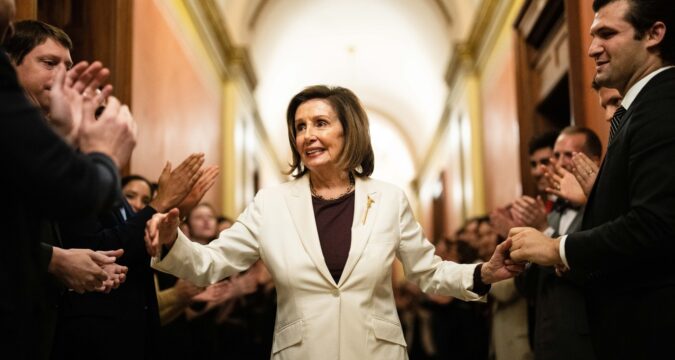
John T. Shaw: Nancy Pelosi has distinguished herself as a history-making stateswoman
“The difference between a politician and a statesman,” said James Freeman Clarke, a 19th century American theologian and writer, “is that the politician thinks about the next election while the statesman thinks about the next generation.”
Nancy Pelosi, a Democratic congresswoman from California and former speaker of the U.S. House of Representatives, has inhabited the rarefied worlds of both formidable politician and history-making stateswoman.
During her nearly four-decade career in Congress, Pelosi has forged a complex and consequential legacy. Vilified on the right, lionized on the left, and a full participant in a myriad of contentious legislative battles, Pelosi’s legacy is difficult to clearly discern.
Few dispute that Pelosi, who announced she will retire in 2027, has been a skilled and successful politician. She led her party in the House for 20 years, raised $1.3 billion for Democratic candidates, was twice elected speaker, and championed significant health care, environmental, economic and civil rights legislation. She is often referred to as one of the House’s most successful modern speakers.
I believe that history will also depict Pelosi as an impressive stateswoman. Three aspects of her statesmanship are compelling and worthy of reflection.
First, she’s been a visionary leader. For a practical politician, Pelosi has frequently looked to the future and fought for policies with long-term consequences. This was most evident in her lengthy and tenacious quest for comprehensive health care reform. Clearly Pelosi did not achieve this reform on her own, but she played an essential role in crafting the Affordable Care Act and a singular role in securing its passage in Congress.
When faced with extraordinary legislative obstacles, she responded with utter determination. At a news conference when health care reform appeared on the brink of failure, Pelosi presented her way forward: “We go through the gate. If the gate’s closed, you go over the fence. If the fence is too high, we’ll pole vault in. If that doesn’t work, we’ll parachute in. But we’re going to get health care reform passed for the American people.”
The ACA is a landmark law but also an imperfect one. In a better functioning political system, such as one we used to have, Democrats and Republicans would have spent the last 15 years improving the law. Instead, the program has been ensnared in partisan warfare, with the GOP calling for its repeal and replacement but never getting around to offering an alternative. Democrats, in response, have been defensive in protecting their historic accomplishment.
Continuing skirmishes over the law do not minimize the scope of Pelosi’s achievement. “Nothing in any of the years that I was there compares to the Affordable Care Act — expanding health care to tens of millions more Americans. That, for me, was the highlight,” she said.
Second, while Pelosi is an unabashed partisan, she has been willing to set aside partisanship for the national good. When the American economy began to unravel in 2008, the final year of George W. Bush’s presidency, Pelosi had every short-term political incentive to stand back, watch the crisis intensify, and encourage the American public to blame Bush and his Republican colleagues for the meltdown.
Instead, she stepped forward and helped assemble and pass a politically toxic but substantively sound package that stabilized the economy. It’s worth noting that several months later, with the economy still fragile, the newly inaugurated president, Barack Obama, reached out to Senate Republican leader Mitch McConnell and House GOP leader John Boehner and asked for their support for a follow-up package. Both declined to help. McConnell later said that his chief legislative priority was to make Obama a one-term president.
Molly Ball, a Pelosi biographer, summarizes Pelosi’s 2008 financial crisis statesmanship succinctly: “She bailed a Republican president out of a mess of his own making, for the good of the country, at enormous political risk.”
Third, Pelosi has been a voice of caution, forbearance and wisdom. America’s decision to go to war in Iraq in 2003 is widely regarded as one of the worst foreign policy mistakes in the nation’s history. The war and its aftermath gravely damaged the reputation of the United States and disrupted the Middle East. Yet, most of the American foreign policy establishment initially supported the war.
When Congress considered a “use of force” resolution for Iraq in the fall of 2002, Pelosi vehemently opposed it. Speaking on the floor of the House, Pelosi pleaded with fellow lawmakers and the Bush administration to slow down and think clearly. Strikingly prescient, Pelosi warned that an American war in Iraq would be bloody, costly, divert the nation from its battle against terrorism and damage U.S. global prestige. “If we go in, we can certainly show our power to Saddam Hussein,” she said. “If we resolve this issue diplomatically, we can show our strength as a great country. Let us show our greatness.”
Her warnings were dismissed by Republicans and ignored by many congressional Democrats, including Sens. Hillary Clinton, Joe Biden, Tom Daschle and John Kerry and U.S. Rep. Richard Gephardt, all of whom were weighing 2004 presidential campaigns. In subsequent years, Pelosi tried valiantly — and in vain — to force the Bush administration to end the war and withdraw American troops. She was rebuffed, and the nation suffered.
An authoritative study of the costs of the Iraq War by the Watson School at Brown University calculates that the U.S. spent $2 trillion in Iraq over 20 years. About 8,500 American troops and contractors were killed, 300,000 soldiers suffered debilitating injuries and nearly half a million Iraqi civilians were killed.
As her political career winds down, Pelosi is urging us to be vigilant and to protect our system of government and way of life.
“American democracy is majestic,” she said in 2022. “But it is fragile.”
This is a wise warning from a gifted politician and a stellar stateswoman.
John T. Shaw is director of the Paul Simon Public Policy Institute. Shaw’s columns, exclusive to the Tribune, appear the last Monday of each month. His most recent book is “The Education of a Statesman: How Global Leaders Can Repair a Fractured World.”
Submit a letter, of no more than 400 words, to the editor here or email letters@chicagotribune.com.
https://www.chicagotribune.com/2025/12/29/column-nancy-pelosi-legacy-shaw/

2025 food favorites: The most memorable dishes and drinks we had across Chicago
With 2026 just around the corner, the writers and editors of the Tribune food section have taken some time to reflect on our favorite bites and drinks from 2025. From pizza to pasta salad to pie, here are the dishes that stood out.
— Kayla Samoy, food editor
Short rib hummus from Avec
The short rib hummus from Avec in the West Loop neighborhood of Chicago on Feb. 9, 2025. (Kayla Samoy/Chicago Tribune)
The combination of silky chickpea hummus with tender and juicy yet crispy short rib atop a pillowy and warm piece of pita ($24) was a standout of the meal at this restaurant in the West Loop. The creaminess of the hummus balanced out the indulgent savory flavors of the sumac-glazed short rib perfectly. — K.S.
615 W. Randolph St., 312-377-2002, and 141 W. Erie St., 877-298-0592, avecrestaurant.com
Dying The Honey Pink pie slice from Blame Butter
A slice of Dying The Honey Pink pie has burnt honey, sumac and an orange blossom glaze from Blame Butter in Chicago, Nov. 21, 2025. (Terrence Antonio James/Chicago Tribune)
Baker and chief pie officer Asa Balanoff Naiditch created not just one of the best things I ate this year, but an artful and poetic experience. Dying The Honey Pink ($13) at Blame Butter in River North, a pop-up residency at the back of a poke shop, was the title of her signature pie. Each slice held a compelling salty and sweet burnt honey custard, infused with tart sumac, under a dark pink floral orange blossom glaze finished with edible petals and leaves, plus a flourish of Maldon sea salt. Balanoff Naiditch used fragrant, organic, handpicked Palestinian sumac from Middle East Bakery & Grocery in Andersonville. “This pie is a tribute to Palestine,” she said. “To call resistance through food.” — Louisa Kung Liu Chu
168 W. Huron St., blamebutter.com (Note that the residency is set to close at the end of December, but a pie supper club is planned for January.)
Paratha “smash burger” from Cafe Bethak
I had seen an Instagram clip of the “viral Dubai paratha smash burger” (Dubai certainly has a knack for virality) — a beef patty smashed between two roti rounds instead of a burger bun. It’s an interesting fusion of Indian and American fast food, popularized by a few spots in Dubai, including Klay by Karak House.
A paratha is a flaky, layered flatbread made daily in many Indian and Pakistani households. The parathas my mom makes are thin, flat and soft, which wouldn’t work well in a smash concept. You need an extra flaky variety where the flakiness is achieved through a specific layering and folding technique similar to puff pastry.
At Cafe Bethak in Lombard, the parathas are made in-house, and you can tell because each seam of the flattened dough is stretchy, chewy and crispy. The burger patty itself is flavored with warm South Asian spices and topped with caramelized onions, a piece of crunchy romaine lettuce and the cafe’s version of an orange and pink-hued “secret sauce.” It’s a really satisfying bite. The burger ($10) wasn’t just one of the best bites flavor-wise I’ve had this year, but also the most interesting combination of two of my favorite foods. — Zareen Syed
471 E. Roosevelt Road, Lombard, 630-656-1481, cafebethak.com.
Summer Sucker cocktail from Central Park Bar
The Summer Sucker cocktail from Central Park Bar in the Avondale neighborhood of Chicago, July 24, 2025. (Kayla Samoy/Chicago Tribune)
I’m fighting off the firm cold grasp of winter by thinking back on all the great warm summer nights we had this year, and nothing screams summer more than this seasonal cocktail from Central Park Bar in Avondale, topped with a gummy peach ring. Made with El Jimador Blanco Tequila, prickly pear and strawberry liqueur, Gabriel Boudier Crème de Pêches de Vigne, lemon juice and agave nectar, it was my favorite sweet cocktail to sip this summer. — K.S.
2924 N. Central Park Ave., 773-698-6063, centralparkbarchicago.com
That Jerk sandwich from The Corned Beef Hideout
“That Jerk” sandwich is a sliced jerk-infused corned beef sandwich on rye bread at The Corned Beef Hideout in Romeoville. March 7, 2025. (Audrey Richardson/Chicago Tribune)
Chef and owner India Jenkins makes a sandwich packed with meat, heat and history. That Jerk ($18) at The Corned Beef Hideout in Romeoville infuses her house-made jerk spice into not only the meat, but a secret sauce too. My memory burns from that first bite, despite hundreds of sandwiches in nearly 10 years on the corned beef beat. Its intensity will surprise you, given the dramatic draping of layers made with the care of a couturier. When it comes to corned beef sandwiches, Jenkins is that girl. — L.K.L.C.
175 Highpoint Drive, Romeoville; 815-743-2603; thecornedbeefhideout.com
Calamansi chamomile bun from Del Sur Bakery
The calamansi chamomile bun with calamansi curd at Del Sur Bakery & Cafe on Oct. 16, 2025, in Chicago. (Stacey Wescott/Chicago Tribune)
As a Filipina, calamansi is one of my favorite flavors — I even have a small calamansi tree in my office. When I bit into this calamansi chamomile bun ($8.50) from Del Sur in Lincoln Square, I was transported back to my childhood, picking calamansi from my great aunt’s trees with my cousins. These buns, a cross between a croissant and a muffin, are generously filled with a delicious curd that beautifully captures the tartness of my favorite citrus. The pastry is flaky with a lovely crisp on the outside and the perfect amount of sweetness with the light sprinkling of sugar. — K.S.
4639 N. Damen Ave., delsurchicago.com
Trini doubles from Diaspora
Chasing down chef Rob Carter III’s progressive, Black fusion cuisine pop-up across Chicago was one of my highlights of this year. His Caribbean street food-inspired doubles ($12) are fried flaky flatbreads topped with curried chickpeas, cucumber salad, cilantro and mango scotch bonnet sauces, with an additional topping of rum-braised oxtail that was sold out when I first tried to get them. Of course, I made it my mission to go back to get them with the oxtail. These handheld pockets of flavor deserve more love in Chicagoland. Though the pop-ups get me out to alluring, creative spaces that are new to me in Chicago, I selfishly wish he’d open a brick-and-mortar so I can sample his thoughtful, delicious creations any time. — Lauryn Azu
@diaspora_chicago on Instagram
Dill pickle pasta salad side from Funeral Potatoes
The dill pickle pasta salad accompanies the New Moon burger from Funeral Potatoes chef Alexis Rice at Moonflower in Chicago, April 17, 2025. (John J. Kim/Chicago Tribune)
Chef Alexis Rice named what began as a virtual restaurant after the cheesy potato casserole that’s brought comfort and carbs to generations of Midwestern potlucks marking life and death milestones. The dill pickle pasta salad ($6) at Funeral Potatoes, now at Moonflower bar in Portage Park, is its cool, crunchy cousin. Designed as a side dish, it’s a main character as far as I’m concerned. “It’s basically a ranch pasta salad with Vargo pickles, cheddar cheese and cheese curds,” said Rice. There’s nothing basic about it, though, with fat al dente shells, golden chunks of cheese and crisp briny bites of garlic dill pickles, G. Dilla by Vargo Brother Ferments. — L.K.L.C.
4359 N. Milwaukee Ave., 773-647-1942, moonflowerbar.com
Twice-cooked garlic with senbei crackers at Gaijin
I’m of the opinion that there is no such thing as “too much garlic,” especially when handled with care. The twice-cooked garlic ($10) from Gaijin in River North is a popular appetizer for good reason. Whole garlic cloves are roasted and then deep-fried lightly until sweet and caramelized. It’s served alongside a umami-rich soy sauce and crunchy, house-made rice crackers. I loved the whole experience texturally and flavor-wise: snappy and sweet, mellow, savory, creamy and tastebud-tingly. — Z.S.
950 W. Lake Street, Chicago, 312-265-1348, gaijinchicago.com
Duck “Out of the Jar” from Longman and Eagle
The “Duck Out of the Jar” from Longman and Eagle in the Logan Square neighborhood of Chicago on Jan. 10, 2025. (Kayla Samoy/Chicago Tribune)
One of my favorite plates of 2025 came early in the year, at Longman and Eagle’s 15th anniversary dinner in January. Chefs Brian Motyka and Alex Swieton created a 10-course tasting menu that revisited classic dishes served at the Logan Square spot. This reimagined take on a 2014 dish presented each element — heart, rillette, liver mousse and pastrami — in a different manner and highlighted the restaurant’s various menu offerings over the years. — K.S.
2657 N. Kedzie Ave., 773-276-7110, longmanandeagle.com
Lillet Pad cocktail from North Pond
The Lillet Pad cocktail is made with Lillet, a passionfruit liqueur, and sparkling wine at North Pond in on Sept. 10, 2025. (Eileen T. Meslar/Chicago Tribune)
Bartender Kat Alexandria creates the drinks for chef César Murillo’s highly local and seasonal menu. The Lillet Pad ($16) at North Pond in Lincoln Park has to be the cutest complex cocktail anywhere. Alexandria floats a teeny nasturtium leaf lily pad dotted with a tiny clear glucose water droplet for your own personal Alfred Caldwell Lily Pool in a coupe. They mix a strong yet balanced drink with sweet Lillet Blanc, sparkling wine and passion fruit liqueur that’s an echo of summer. — L.K.L.C.
2610 N. Cannon Drive, 773-477-5845, northpondrestaurant.com
Half pepperoni, hot honey and jalapeño with half cheese pizza from Pizz’amici
The pepperoni and Mike’s hot honey drizzle pizza in a takeout box at Pizz’amici on Grand Avenue in Chicago, Sept. 25, 2025. (Chris Sweda/Chicago Tribune)
Cecily Federighi co-owns what’s become a cultural center for the new movement of Chicago-style thin-crust tavern cut pizza in the city. It’s still the toughest table to book in town, so takeout from Pizz’amici in West Town may be the best and easiest way to score a coveted pie. Federighi’s favorite toppings marry delicately cupped pepperoni, whisper-thin jalapeño, a drizzle of Mike’s Hot Honey and a feathery finish of pecorino romano. I highly recommend getting a half pepperoni, jalapeño and hot honey with a half lovely cheese only ($28) to best appreciate the crackling masterpiece. — L.K.L.C.
1215 W. Grand Ave., 312-285-2382, pizz-amici.com
Mexican everything bagel from Rosca
The Mexican everything bagel is served at Rosca in Chicago’s Pilsen neighborhood, Dec. 4, 2025. (Dominic Di Palermo/Chicago Tribune)
When Friday bagel sales at my elementary school rolled around, I remember pilfering my dad’s wallet for $2 to buy a poppyseed bagel that came out of a giant brown bag, along with a squeeze tube of Philadelphia cream cheese. As a bagel-loving adult today, these memories come flooding back at Rocsa in Pilsen, where chef Felix Zepeda’s dough creations are gems to behold. Try the Mexican everything bagel ($5) with labneh, a tart, strained yogurt, for a unique twist. I’ve never had labneh on a bagel before, but it totally works here. Zepeda’s bagels are fluffy on the inside and crisp on the outside, and packed with flavor and spice. The everything bagel was described as “everything you’d find in our cabinets,” with a touch of heat. Rosca shows that 2025 was the year the bagel got its groove back in Chicago, which is definitely something worth waking up for. — L.A.
1857 W. 16th St. (inside Hoste event venue), bkdrosca.com
Capirotada from Santa Masa Tamaleria
Capirotada, or Mexican bread pudding, is topped with seared bananas, pepita crumble, salted caramel and Mandarin oranges at Santa Masa Tamaleria on July 25, 2025. (Lauryn Azu/Chicago Tribune)
At the start of 2025, I wrote about how Santa Masa Tamaleria, the Dunning neighborhood labor of love from chefs Jhoana Ruiz and Daniel Espinoza, exposed me to new methods of enjoying Mexican comfort food. Their capirotada ($13), which is a Lenten treat in Mexico, leans into Ruiz’s background as a pastry chef, and totally exceeded my expectations with its flavor, creativity and presentation this summer. The dish is small yet mighty and beautifully executed. Three neat cubes of seared banana pudding were topped with caramelized bananas, pepitas, mandarin oranges, powdered sugar and drizzled with salted caramel. My sister and I battled for every bite when we split the dish. — L.A.
7544 W. Addison St., santamasa.com, 312-982-9306
Chaotic Good nonalcoholic drink at void
The Chaotic Good nonalcoholic drink with No-Lort is made with cold brew espresso, grapefruit and demerara at Void in Chicago, June 25, 2025. (Brian Cassella/Chicago Tribune)
Bartender Amanda Figueroa somehow concocted one of the most delicious nonalcoholic drinks I had this year with an ode to the bitter booze we love to hate. The Chaotic Good ($12) at Void in Avondale is a sippable snow cone with cold brew espresso, grapefruit, Demerara sugar and house-made No-Lört. That is, in fact, a Malört-inspired creation no one asked for, yet available by the shot and bottle, with the warning or assurance, “We have successfully removed Malört’s only redeeming feature.” — L.K.L.C.
2937 N. Milwaukee Ave., 872-315-2199, voidchicago.com
Big screen or home stream, takeout or dine-in, Tribune writers are here to steer you toward your next great experience. Sign up for your free weekly Eat. Watch. Do. newsletter here.
https://www.chicagotribune.com/2025/12/29/best-things-we-ate-drank-2025/
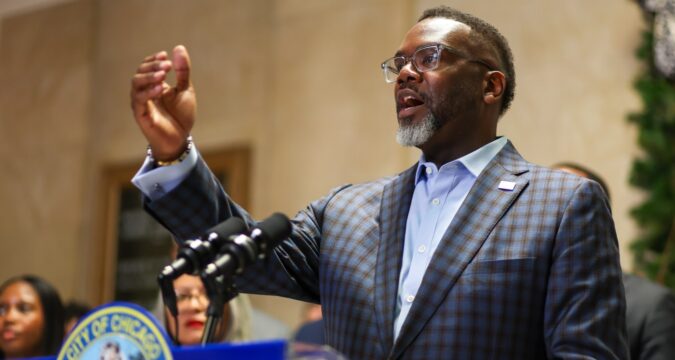
Letters: This is why Mayor Brandon Johnson has proved to be disappointing
I have mixed feelings about Mayor Brandon Johnson. I voted for him, and if faced with the same choice against someone like Paul Vallas, I would likely do it again. But I will also say plainly that he is not what I had envisioned. That disappointment comes not from ideology, but from execution and experience.
What has always puzzled me about Chicago politics is that we rarely elevate leaders who come from the City Council and actually understand how things get done here. Governing Chicago is not theoretical. It requires fluency in budgets, departments, unions, zoning and the political tradeoffs that shape real outcomes.
Crime has become the shorthand criticism of this administration. Labeling Johnson as “soft on crime” because he acknowledges that environments shape criminal behavior ignores decades of data. I have lived in Baltimore, Atlanta, Washington and Orlando, Florida. Across cities, leaders routinely promise to revitalize economically challenged areas and then fail to deliver. Rhetoric without policy is the true failure.
I live in Bronzeville, which on paper should be thriving. It has lake access, transit and proximity to the Loop. Yet much of the development is organic, not driven by intentional city policy. Crime is down, but largely because rising costs have pushed poorer residents elsewhere, not because of smarter policing or thoughtful public safety strategies.
Race still shapes whose pain is visible. I grieve for the woman who was set on fire on the “L.” But I know that if the same tragedy happened on the South Side and the victim was Black, it would not receive the same attention. For decades, much of the North Side was willing to ignore crime as long as it stayed elsewhere.
Johnson is not a great mayor. Some of his policies, such as the head tax, are misguided. But so were policies under Mayor Richard M. Daley, who held office for more than 20 years and is still held up as a pillar of the city because many white Chicagoans felt he represented them.
What I want is simple. A mayor with experience who governs for everyone. Someone who prioritizes growing areas that still need incentives to thrive. Someone willing to say the city may not have a revenue problem, but a spending problem, with bloated departments, including the Police Department and Chicago Public Schools, that need audits and reform.
Chicago does not need ideology. It needs balance.
— Joseph Harrod, Chicago
Put layoffs on table
DePaul University recently announced that it was laying off more than 100 staff members because of financial pressures. Private companies frequently lay off employees for the same reason.
The city of Chicago recently experienced its nearly annual budget crisis, but I didn’t read anywhere that layoffs were being considered for city workers. Mayor Brandon Johnson has said that he opposes such layoffs.
Maybe it’s time to reduce some of the city’s workforce bloat by some substantial layoffs.
— Brian C. Owen, Chicago
Safety on the CTA
The headline and subheadline “High-profile incidents belie CTA crime rates: Riders rattled by violent events, but chances of becoming victim are very small” (Dec. 26) are insulting to anyone who uses public transportation.
Encouraging people to use the transit system because “most of the criminal activity that takes place on CTA trains, buses or system property is comparatively minor” does not reassure riders. One victim was described as being physically unharmed “besides a bloody nose and a bruised face.”
Of the 4,116 reported crimes on the CTA this year through Dec. 10, the most common was for unarmed batteries, which include “getting slapped, shoved, punched or otherwise hit in a way that doesn’t lead to serious injury.” These facts are not encouraging.
People expect to use public transportation and reach their destination unharmed. That is not asking too much.
— Cathleen Bylina, Chicago
Alienating experiences
Since the COVID-19 pandemic, I don’t use the CTA nearly as much as I used to. It’s not because I feel unsafe. It’s because there’s no more enforcement of rules to prevent common annoyances on the trains like smoking, people listening to music without headphones and people stretched out across seats taking naps. Riding the CTA is not fun anymore.
On a recent Red Line trip from North/Clybourn to Granville at approximately 9 p.m., I encountered many unpleasant things. Mind you, I rarely just sit there and take it. I’ll switch cars at the next stop.
When I boarded the train, the first car reeked of cigarette smoke. I switched cars at Fullerton, only to have another car smell of cigarette smoke. I switched again at Belmont. That car smelled of marijuana smoke. I switched again at Addison to find a car with three people stretched out sleeping, and at least one of them clearly needed a bath. Yet again, I switched at Sheridan. That car was fine until someone got on at Wilson having a loud phone conversation on speaker.
At this point, I finally gave in and stayed in the car. At Argyle, another person got on playing loud music on their phone, competing with the other person still screeching into their phone. Since Granville wasn’t too far away, I just sat there and swore I would never ride the CTA again.
I realize that some people might find the CTA unsafe, but personally, I just find it unmanned, extremely aggravating and out of control.
— Michael Dunghe, Chicago
What Old Town needs
The recent Business section front-page story from the Miami Herald about a Florida barrier island community that pushed back against overdevelopment (“Paradise not lost,” Dec. 25) struck a familiar chord here in Chicago.
The article does not describe angry neighbors, nor people opposed to change. It describes citizens who took the time to understand their zoning laws, attend hearings, request documents and ask hard but reasonable questions — especially when the pace of approvals seemed to outrun the public’s understanding of the consequences.
That lesson matters in Old Town today.
Our neighborhood is not fighting growth or progress. But when major projects — such as the Fern Hill Canvas proposal and the redevelopment around the former Treasure Island site — arrive with complex zoning, private parking arrangements and evolving retail promises, residents deserve clarity. Traffic impacts, access changes and long-term land use decisions should be openly examined before they reshape daily life.
The Florida residents discovered that patience, organization and respect for process can still improve outcomes. Development continued — but it did so more thoughtfully, with the community’s voice included instead of sidelined.
Old Town is asking for the same thing: transparency, accountability, and planning that strengthens, rather than overwhelms, the neighborhoods we love.
— Tim Carew, Chicago
Catholicism steadfast
Pope Leo XIV reminds me of why I became Catholic. When the Democrats and Republicans argue over issues such as immigration, assisted suicide, LGBTQ issues and abortion, the Catholic Church does not adjust its views to align with either. It is consistent from year to year rather than yielding to whichever party is in power.
— Phillip Seeberg, Naperville
Senate race is a yawn
The very simple reason that the race to replace U.S. Sen. Dick Durbin has started slow is that the candidates on offer are just not interesting. Yawn!
Candidates who garner attention are offering something beyond the same old rhetoric. Yes, prices are too high, immigration raids are terrible and President Donald Trump needs to be held accountable. But who are the people with new ideas to deal with these and all the other issues confronting our country?
Perhaps one of the reasons that a candidate such as Zohran Mamdani in New York was able to get national attention is the fact that he offered new solutions to old problems. Even if people didn’t always agree with his proposals, it gave us and the media something to discuss and consider.
— Carole Merl, Aurora
Submit a letter, of no more than 400 words, to the editor here or email letters@chicagotribune.com.
https://www.chicagotribune.com/2025/12/29/letters-122925-brandon-johnson/
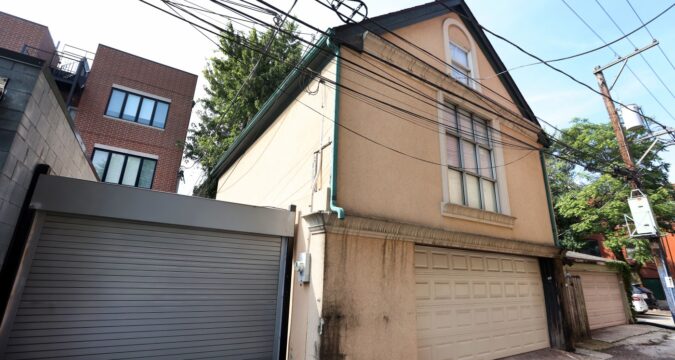
2025 in review: A look back at Chicago’s affordable housing debate through op-eds
Chicago does not have enough affordable housing. In fact, the area needs 142,000 units, and one report released in June said the region must build 227,000 in the next five years to keep pace with demand.
Mayor Brandon Johnson kicked off a stormy battle in the City Council this summer and presided over the passage of two ordinances that act as first steps in chipping away at Chicago’s problem. First, he revived an ordinance to make “granny flats,” or accessory dwelling units, legal again throughout Chicago — albeit with some compromises. Second, the mayor championed a ban on parking space minimums in buildings near public transit.
Contributors to our op-ed section wrote thoughtfully on how Chicago can quickly develop the amount of housing needed while respecting the realities and demands of life in a city. We also published innovative development ideas and what Chicago can learn from cities such as Austin, Texas, and New York.
Here is a look back in excerpts.
May 1: Micky Horstman, “Austin, Texas, figures out affordable housing while Chicago postures”
Houses that are under construction are seen in a neighborhood on April 17, 2025, in Austin, Texas. (Brandon Bell/Getty)
Chicago’s leaders must abandon their self-strangling, restrictive approach to affordable housing. Regulation coupled with market manipulation is not working. Just this year, average one-bedroom rents have grown to more than $1,900 per month in Chicago.
They should look toward another blue city, Austin, Texas. Austin has shown you can only build your way to affordable housing. You can’t regulate it.
This year, rents in Austin dropped again to $1,436 per month. How?
In 2019, the city eased zoning restrictions and provided incentives for higher density in affordable and mixed-income developments.
In May of last year, the city boosted its commitment to housing affordability by passing local ordinances to allow single-family homes to be built on smaller lots.
Last month, the City Council voted to expand single-stair housing developments to provide more affordable options for families. Buildings no longer are required to have two staircases per floor when taller than three stories, which eliminates the need for a central hallway and allows compact designs.
Austin leaders spent time dismantling red tape instead of pursuing headlines. The result? Austin has been building well above the national average for new units, while Chicagoland ranks last of the top 10 urban areas for issuing new housing permits per 100,000 residents, according to an Illinois Policy Institute analysis.
Chicagoans can see this trend in thinner wallets. Median rents in Austin declined 22%, or $400 a unit, since their peak in August 2023, Bloomberg reported in February. In Chicago, rents increased 11% from 2023 to 2024, the Tribune reported.
If nothing changes, rents in Chicago will continue to increase. But there are commonsense, pro-growth reforms city leaders can implement quickly to repair the problems.
May 13: Danny Villalobos, “The Southwest Side isn’t a suburb. Stop zoning it like one.”
Lily Aceves, Ari Romero and Sergio Romero trick-or-treat on Kilbourn Avenue in the West Lawn neighborhood on Oct. 31, 2023. (E. Jason Wambsgans/Chicago Tribune)
Zoning and land use on the Southwest Side haven’t kept up with the people who live here. They restrict growth, block new housing options and prioritize cars over community. Despite clear signs of demand and density, most of these neighborhoods remain locked into low-density, single-family zoning.
In the West Lawn neighborhood, 41% of households have four or more people, yet 72% of all housing is single-family detached. Meanwhile, in the Lakeview neighborhood on the North Side, half of all households are one person, but half of the housing consists of buildings with 20 or more units. The “missing middle” couldn’t be more absent. It’s a mismatch that stifles quality of life — and it’s time for the Southwest Side to be part of Chicago’s broader planning conversation.
I’m not asking for radical transformation. I’m asking the city to let us grow in ways that reflect who we already are. Families on the Southwest Side are living in more crowded conditions — not because they want to, but because the zoning code doesn’t allow them to expand. Accessory dwelling units (ADUs), two-flats and four-flats are basic forms of housing in many parts of the city. But here, they’re often illegal or heavily restricted. The result is a lack of options for extended families, working-class renters or seniors aging in place.
People want to stay — but policy is pushing them out. These neighborhoods have become a lifeline for people priced out of the North Side and the increasingly unaffordable outer Loop neighborhoods. Yet city policies — from mandatory parking minimums to outdated lot coverage rules — make it harder to build the housing we need or support the businesses that make neighborhoods thrive. There’s opportunity here, but we’re blocking it.
May 19: Alicia Pederson, “Chicago’s affordable housing plan demands a courtyard block blueprint”
Let’s face it: Chicago is losing children and thus jeopardizing its demographic sustainability and home-grown connection to the future. Cook County’s under-5 population plunged 15% from 2020 to 2024. Chicago Public Schools has lost more than 100,000 students in the past 20 years, with more than 40,000 leaving in just the last five. Yes, housing affordability influences where parents choose to live and raise their children. However, other elements — such as school quality, outdoor access and neighborhood amenities — play crucial roles in these decisions. Every parcel is an opportunity to build amenity-rich blocks and neighborhoods, creating the high-value housing that will help Chicago retain the families it needs to flourish in the 21st century.
Courtyard blocks are the epitome of pro-social housing, and the city’s developers can use courtyard block designs to create mixed-use, mixed-income neighborhoods that appeal to households of all ages, stages and income levels.
In the time-tested courtyard typology found throughout Europe, city blocks are framed with wall-to-wall, mixed-use buildings, going up three to six stories. The building floor plates are wide and shallow (rather than narrow and deep like the standard North American urban floor plate), leaving room in the block interior for a large, semi-private courtyard. Each building in the block has commercial space and garage stalls on the ground floor, very large units on the lower levels, and smaller, more affordable units on upper levels. While the gracious, dual-aspect layouts appeal to households of all ages and stages, the family-oriented units on the lower levels create the “big house with a yard” that targets families with young children.
Balancing density with green space, courtyard blocks are a simple and effective way of rapidly increasing the supply of affordable, family-inclusive housing in the cities.
July 20: Steve Weinshel, “Cutting parking requirements while upzoning Broadway will create a crisis”
The 6000 block of Broadway looking north in the 48th Ward of Chicago on July 9, 2025. This area is being considered for a change in zoning that would affect density and local businesses. (Stacey Wescott/Chicago Tribune)
The Chicago Department of Planning and Development’s proposed framework for Broadway is predicated on the wishful thinking that people living near mass transit are substantially less likely to own cars. But that is simply not borne out by the facts.
Car ownership rate for homeowners in Edgewater is 1.3 cars per owner-occupied household, according to City-Data.com. Ownership rates for renters in the community are somewhat lower but are still 0.9 vehicles per household. Those figures are similar for the Uptown and Rogers Park communities adjacent to Edgewater.
Even data provided by the city as part of its case for the Broadway upzoning framework demonstrates the point that it’s creating a parking nightmare. That means more cars will be coming to Edgewater if its “visions” are realized. Where these vehicles will go is anyone’s guess, but city bureaucrats and their housing density mouthpieces try to deny this reality.
Many new residents will likely aggravate current practices of illegally parking in front of fire hydrants, in handicapped zones, blocking alley entrances and corner tow zones that are essential for the passage of school buses and emergency vehicles.
As a major artery for traffic coming off of DuSable Lake Shore Drive, Broadway is already a busy, relatively narrow corridor. It currently has metered parking and numerous business loading zones, but these may soon be disappearing with increasingly dense residential development. Intensified residential development will inevitably bring even more double parking for ride-share and delivery vehicles, which have already exploded in recent years.
Aug. 25: Miguel Chacon, “Chicago aldermen are making the housing shortage worse”
The city’s own policies, such as the Affordable Requirements Ordinance, which mandates that developers include affordable units, are grossly limited by aldermanic control over zoning. Developers are mandated to meet affordability requirements, but their projects are then stymied by the very same officials who set the rules. This contradictory approach forces builders to abandon larger, more inclusive projects in favor of smaller, luxury developments that require no zoning changes, bypass community review and often provide zero affordable homes.
Mayor Brandon Johnson has publicly acknowledged the need to build more housing. He claims that he’s creating “the safest, most affordable big city in America,” but his administration and his closest allies seem to be working against those stated goals. Last summer, the mayor announced his “Cut the Tape” initiative to boost housing construction. Among the recommendations listed: streamlining the design and construction requirements. A few days later, then-Ald. Carlos Ramirez-Rosa passed a “special character zoning overlay” for a corridor on Milwaukee Avenue for developers to follow specific design guidelines.
While our housing shortage didn’t start overnight, today’s elected officials are making it only worse. Instead of bringing solutions, they continue to pass ordinances that cause delays, increase costs and deliver little to no real benefit. Instead of streamlining the development process, they create additional hurdles. Instead of working alongside developers, they publicly vilify them for political gain. The results are clear: Chicago’s housing supply crisis is a direct product of the City Council’s failure to acknowledge that building more housing creates jobs and increases our tax base to pay for our schools, parks and ever-increasing city debt.
Nov. 13: Marisa Novara and Daniel Kay Hertz, “New York nixes veto power over housing while Chicago unwisely doubles down”
Chicago is one of the most geographically unequal cities in the country. As decades of research have found — including the Shriver Center and Chicago Area Fair Housing Alliance’s 2019 report on zoning and the Metropolitan Planning Council’s “Cost of Segregation” — a significant contributor to this imbalance is our long tradition of allowing any neighborhood with loud dissenters to opt out of providing affordable housing, whether that means subsidized homes or simply more modest apartments or condos. While each individual rejection might seem insignificant, over time, these opt-outs have created disparities as big as the Grand Canyon across Chicago neighborhoods.
In the past, the federal Department of Housing and Urban Development, or HUD, agreed that this pattern is problematic. Responding to a complaint filed by a coalition of advocates from Chicago, in 2023 HUD found that the City Council’s practice of deference to hyperlocal rejections of new housing violated federal fair housing law and created illegal impacts on Chicagoans of color and other protected classes.
One of their reported demands to resolve the finding? A citywide ADU expansion.
So how did the City Council get away with something that falls so far short of that? HUD dropped the suit in August, and the very next month, the council passed the ADU ordinance that falls back on the exact practice that was found to be a violation of federal fair housing law.
It may be time to take this question into the hands of Chicago voters. Would Chicago voters support measures, as New York City’s just did, to fast-track publicly financed affordable housing everywhere and any affordable housing in areas that produce the least of it; to create an expedited review process for smaller projects, going from seven months to 90 days; and to create an appeals board when affordable housing is rejected by the council?
Submit a letter, of no more than 400 words, to the editor here or email letters@chicagotribune.com.
https://www.chicagotribune.com/2025/12/29/opinion-chicago-affordable-housing-debate-2025/
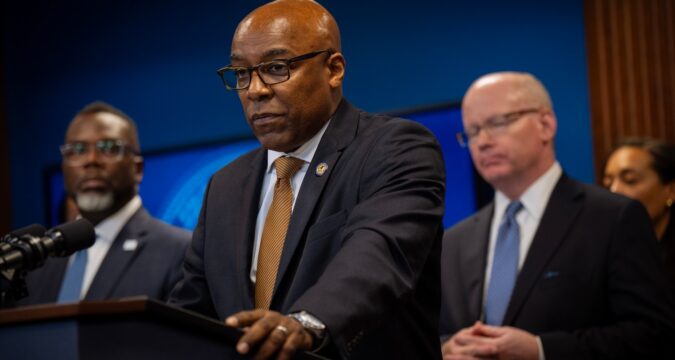
Illinois attorney general ends year filled with lawsuits against the Trump administration with one more challenge
When Illinois Attorney General Kwame Raoul last week sued the U.S Department of Health and Human Services over its push to curtail gender-affirming care for young people, it put a bow on a year of legal actions against the Trump administration.
The AG’s office has signed onto 48 lawsuits against the administration since President Donald Trump’s term began in January, according to a breakdown provided by the office.
Overall, states, nonprofits, local governments and unions have filed hundreds of lawsuits against the Trump administration, according to an Associated Press tracker. Not all of them have been successful: 149 resulted in executive actions partially or fully blocked, while the court left the action in effect in 102 cases with more than 100 still pending.
Here’s where things stand with four high-profile legal actions taken by Illinois this year.
Gender-affirming care
Raoul as part of a coalition of 19 states and the District of Columbia on Tuesday sued HHS, its inspector general and Secretary Robert F. Kennedy Jr. over proposals that warned providers they could lose funding from programs like Medicare and Medicaid if they provide treatments like puberty blockers or hormone therapy to children and adolescents, The Associated Press reported.
The department issued a declaration saying those gender-affirming treatments were ineffective and unsafe for kids.
“Secretary Kennedy does not have the authority to undermine medical standards of care or set conditions on participation in Medicaid and Medicare through a so-called declaration,” Raoul said in a statement accompanying the lawsuit. “The Trump administration is once again circumventing the law to cruelly target transgender youth and their medical providers.”
Some Chicago-area hospital systems already scaled back their gender-affirming care for kids amid the threat of losing federal funding, the Tribune previously reported: University of Chicago Medicine stopped providing gender-affirming pediatric care this summer, and Advocate Health Care said in August it would no longer provide gender-affirming medications to patients younger than 19.
“Under my leadership, and answering President Trump’s call to action, the federal government will do everything in its power to stop unsafe, irreversible practices that put our children at risk,” Kennedy said in a statement supporting the administration’s move.
The American Academy of Pediatrics supports access to gender-affirming care for minors.
The rules on funding haven’t gone into effect, and the public has until mid-February to comment on them, according to Raoul’s office.
National Guard
Also last week, the conservative-majority U.S. Supreme Court denied a request from the Trump administration to allow him to deploy National Guard troops in Illinois while a court battle continues.
Both Gov. JB Pritzker and Raoul, whose legal team argued the case against federal deployment of Illinois National Guard troops during Trump’s immigration enforcement surge this fall, celebrated the ruling.
Over Pritzker’s objections, hundreds of Illinois National Guard troops remain under Trump’s control to support the Department of Homeland Security’s immigration enforcement efforts in the Chicago area, even though the guard members have carried out no significant operational missions and have spent most of their time stationed at a northern Illinois base. The Trump administration’s stated purpose for federalizing the Illinois National Guard members was to protect federal officers and assets during the administration’s ramped-up immigration enforcement efforts.
With last week’s Supreme Court ruling, it remains to be seen how much longer those troops will truly remain under the president’s purview.
White House spokesperson Abigail Jackson previously said that nothing in the ruling detracts from the president’s “core agenda” of activating the National Guard to protect federal law enforcement and federal property.
Americorps funding
After a monthslong legal battle, a coalition of states and attorneys general announced in August that the White House Office of Management and Budget and AmeriCorps planned to release $184 million that the OMB had previously withheld.
In April, a coalition sued to challenge the administration’s move to terminate nearly $400 million worth of Americorps programs. The administration had eliminated state-administered grants for 28 AmeriCorps programs in Illinois, affecting more than 630 members statewide.
The sprawling programming at AmeriCorps, an agency with an operating budget of $1 billion, was a target of critics who cited it as an example of government bloat.
A preliminary injunction in June reinstated hundreds of programs, but “OMB continued to withhold over $184 million,” according to Raoul’s office. After the coalition including Illinois filed a motion to stop OMB from withholding the funds, OMB announced it “would release all withheld AmeriCorps funds,” Raoul’s office said.
OMB didn’t immediately respond to a request for comment.
Consumer protections funding
Illinois Attorney General Kwame Raoul addresses attendees at a town hall to discuss recent federal actions as Minnesota Attorney General Keith Ellison, from left, Rhode Island Attorney General Peter Neronha, Washington Attorney General Nick Brown and New York Attorney General Letitia James listen at Plumbers’ Local 130 Hall in Chicago on July 29, 2025. (John J. Kim/Chicago Tribune)
Among the more recent actions from Illinois against the Trump administration was a multistate lawsuit to force the Trump administration to fund the Consumer Financial Protection Bureau, the watchdog agency intended to safeguard consumers.
The Trump administration has argued CFPB can only be funded by profits from the Federal Reserve, which has been running at a loss since 2022, the AP reported.
The acting director of CFPB, Russell Vought, is also the director of the Office of Management and Budget, where he has led many of the administration’s efforts to slash federal funding and bureaucracy.
Raoul earlier this year said he sees a greater workload for his office on the horizon as leadership at federal agencies, including the CFPB and others, have signaled a reduced enforcement in certain areas.
“They’re not going to be there, right, to fight for consumers, to fight for civil rights of citizens,” he said at the time.
The Associated Press contributed.
https://www.chicagotribune.com/2025/12/29/illinois-donald-trump-lawsuits-raoul/

Hundreds of public employees investigated by the state of Illinois improperly took millions in PPP loans
About 400 government employees investigated by the state of Illinois improperly tapped a federal pandemic relief fund program meant to keep small businesses afloat — part of a nationwide wave of Paycheck Protection Program fraud that siphoned tens of billions of dollars from taxpayers during the COVID-19 pandemic.
While more than 200 have lost their jobs or voluntarily resigned, some have been referred for criminal prosecution for fraudulently obtaining the taxpayer-funded forgivable business loans, according to an Illinois Office of the Executive Inspector General report.
As of June 30, the end of fiscal year 2025, the OEIG found “reasonable cause” in 378 investigations, concluding that many state employees acquired PPP loans “based on falsified information,” the watchdog’s annual report released earlier this month said.
Without naming individuals, the report listed more than 100 employees from Illinois state government departments, including Human Services, Juvenile Justice, Corrections and Children and Family Services, who received more than $2.8 million in PPP loans. Many loans were in the $20,000 range, while a few exceeded $41,000. The investigations date back to 2022.
“Regardless of the ease of procuring these PPP funds, this was not free money for the taking,” the inspector general’s office wrote. “These loans, as with any other, required truthful information as a basis for approval. State employees are expected, at minimum, to maintain the public’s trust and confidence. Misappropriating such funds is far from being ethical, professional, acting with integrity, or conducting oneself in a manner that reflects favorably upon the State.”
The Paycheck Protection Program was created during President Donald Trump’s first term under the Coronavirus Aid, Relief and Economic Security Act, or the CARES Act. It was administered by the U.S. Small Business Administration to support small businesses negatively affected by the pandemic. Sole proprietorships and self-employed people were eligible for the loans to help cover payroll, insurance, rent, utilities and other business expenses as the economy slowed significantly during the pandemic.
Applicants had to submit tax records or other documentation to establish eligibility, including proof of qualifying payroll or, later, gross income. Loans could be forgiven if at least 60% of the funds were used for payroll and for qualifying expenses.
The speed and scale of the program, however, made it vulnerable to abuse. An SBA inspector general report a few years ago estimated that as much as $64 billion in PPP loans nationwide may have been improperly paid.
State watchdog records detail a range of misconduct. One Department of Healthcare and Family Services employee falsely obtained more than $20,000, claiming she misunderstood the loan as a form of debt consolidation. A Department of Labor employee admitted receiving more than $20,000 using fabricated business information and paying a stranger $2,000 for help to complete the application — handing over her Social Security number, bank statements and a copy of her driver’s license in the process.
Another employee at the Department of Human Services obtained a $20,833 loan in 2021 after claiming to run a side catering business. Investigators found no documentation that the business existed, the records also show.
Workers found to have committed wrongdoing were recommended for termination, and many also failed to disclose outside businesses as required. Many employees resigned from their state jobs. Others were either fired “or the disciplinary actions are still ongoing,” the watchdog said.
The 378 substantiated cases account for approximately 75% of the 501 PPP fraud-related cases that the executive inspector general’s office completed by the end of the 2025 fiscal year.
The Illinois attorney general’s office has criminally prosecuted several individuals for receiving fraudulent PPP loans based on referrals from the OEIG. Some defendants have pleaded guilty, generally receiving probation, community service or agreeing to repay the improperly received loans, the OEIG said.
In February, Attorney General Kwame Raoul’s office announced a guilty plea from a Human Services employee convicted of felony theft by deception. Prosecutors said she obtained two PPP loans totaling about $49,000 for a nonexistent catering business. Both loans were forgiven. A Cook County judge sentenced her to 30 months of probation.
“Paycheck Protection Program loans were intended for struggling business owners during the COVID-19 pandemic, and it is unacceptable that anyone would take advantage of this crucial assistance program,” Raoul said in a statement in November in reference to another PPP loan fraud case. “I will continue to hold individuals, especially government workers, accountable if they exploited critical aid programs for their own financial benefit.”
The misconduct extended beyond state government.
Cook County’s independent inspector general has reported 65 PPP-related findings through September, spanning offices from Cook County Health to the Forest Preserves and the public defender. Most employees were terminated or resigned; some applied for positions on behalf of fictitious businesses, while others failed to disclose dual employment.
At the Cook County sheriff’s office, internal investigators examined 163 cases. Forty-nine employees resigned or retired before their cases concluded, and two died. All cases were referred to federal or state prosecutors, with 29 active criminal investigations underway, according to Cook County sheriff’s office spokesman Matt Walberg. The office sustained policy violations against 62 employees, firing 12 and moving to terminate dozens more.
The inspector general’s office for the Cook County Circuit Court clerk, under then-Clerk Iris Martinez, investigated 78 cases in four waves that concluded by July 2024. Of the first wave, 55 cases were referred for prosecution; 39 were sustained, three were not sustained, and the remaining cases were closed administratively when an employee resigned, retired, died or was otherwise terminated. In sustained cases, workers were let go. Current Clerk Mariyana Spyropoulos said her office is correcting failures to place some of the names of terminated employees on the office’s do-not-hire list.
At an unrelated news conference this month, Cook County Board President Toni Preckwinkle noted that of the roughly 22,000 Cook County employees, only a small percentage had been targeted over PPP loan irregularities.
“Any group of 22,000 people, there’s going to be the few people who aren’t going to play by the rules,” she said. “(An) overwhelming majority of our county employees work hard every day on behalf of the citizens of Cook County and I’m proud of them.”
In Chicago, Inspector General Deborah Witzburg said her office initially identified nearly 1,000 potentially problematic PPP loans involving city employees. The office has narrowed its focus, citing limited resources, and has reported nine findings so far. Sixty investigations have been open for more than a year, and two have been referred for criminal prosecution.
Her office has prioritized employees of the Chicago Police Department “whose credibility and truthfulness in statements is crucial,” and city workers “who occupy positions that make their financial circumstances of interest” — generally, employees who have to fill out statements of financial interest.
“We can say with some confidence that there were inadequate controls around the PPP loan program and widespread fraud,” Witzburg told the Tribune. “And I suppose it is not entirely surprising that a widespread problem would reach government employees. What is a little bit surprising is that people who have committed to working in public service and government would engage in defrauding the government.”
https://www.chicagotribune.com/2025/12/29/ppp-loan-fraud-illinois-cook-county/

Fox Valley car dealers have high hopes amid ‘busiest week of the year’
Antonette Joson of Naperville and her husband Jesse were visiting a Honda dealer in St. Charles recently hoping to buy a car, something that she and her husband “had been working on the past two months.”
“We’re been shopping a couple of months. We’re hoping to get a good deal,” she said while looking over the showroom at McGrath Honda of St. Charles filled with vehicles adorned with red bows. “We’re here now because it happened that I had ridden in a Honda car – my friend’s car – and I find, like, it’s a good car so we’re here. We want to try it out. Buying a car is a little bit difficult, but we have our own preferences. But we’re looking for a deal.”
One of the best times, traditionally, to buy a car is upon us as dealers look to liquidate inventory and meet end-of-year quotas.
The National Retail Federation, which focuses more on smaller consumable products, still notes according to its website that “auto-specific factors like inventory and EV market shifts are driving significant end-of-year deals, making late December a great time for car purchases.”
Fox Valley dealers like Emir Abinion, CEO of the Fox Valley Auto Group in St. Charles which includes Volkswagen, GMC and a Buick dealership, are adamant that some of the best deals seen in years are now awaiting customers.
“It’s interesting. This is probably now four years since we’ve had this kind of inventory and where things are at. We have more vehicles and the selection is better than I’ve seen in nearly half-a-dozen years where the customers can come in and actually have choices to get the exact vehicle they want,” Abinion said. “Another factor is the factories are back extending the incentives that they used to offer in the past, things we didn’t have during COVID where it was more of a sellers’ market.”
December has been a good month for the dealership, he said, noting that “the week after Christmas is usually the busiest week of the year.”
Doug Gerald, who owns half a dozen dealerships in North Aurora and many others throughout the western suburbs, agrees that the current selection of vehicles and options for buyers “is as good as it has ever been since COVID.”
“There’s more energy going into making cars affordable from the dealer and the manufacturer’s standpoint and it’s a great time to buy a car. Much better than the last few years for sure,” Gerald said. “There are great incentives out there, great product out there and new models that all these brands have. There are more safety, more active driving features than ever. The technology advancement this year has been tremendous.”
In terms of value, Gerald said he believes consumers “are going to get more for the dollars than they’ve seen the last six years” as we head into the final days of 2025.
Nearly all area car dealers interviewed said the last quarter has not entirely met expectations which again bodes well for end-of-the-season deals.
Dustin Johnson, platform general manager for McGrath auto group, said that “the last quarter has been a struggle for our business and industry altogether.”
Dustin Johnson, platform general manager for the McGrath auto group, shows off a couple of Hondas at McGrath Honda of St. Charles. (David Sharos/For The Beacon-News)
“We have seen traffic pick up the past couple weeks at all our stores,” he said. “In terms of inventory – every manufacturer is different. Some brands are well-stocked and other have inventory on the lot that are not as good as others. This year, we have more cars – we’re sitting good. It’s better than it was the last four or five years, that’s for sure.”
Johnson said that better pricing at the current time is being driven by “a lot of people sitting on inventory, but it’s where the industry is as far as a sales thing.”
“This quarter has not been good to auto manufacturers so what we have to do – we’ve got to move metal because we’re paying interest on cars sitting on lots,” Johnson said. “Your inventory costs are mounting, and so you’re trying to put people in new seats and try to create that also with the used car trade-ins.”
Abinion said Johnson’s perspective is on-point.
“He’s not wrong. November was a little less that what we have usually seen, and September and October are kind of funky months because it’s back-to-school and there are a lot of other things going on with the customer,” Abinion noted. “Usually, the second and third quarter are good for us, and in the fourth quarter – December is the month that helps us make up everything in the quarter.”
The current high value of used cars also figures to play a role in regards to end-of-the-year sales.
Johnson said in all he has been in the auto business over 20 years and that “used car values are higher than they’ve ever been.”
“The used car market is higher and the reason is if you look at the 2023 and under vehicle, that’s the ticket everyone is looking for,” he said. “If you have a nice 2021 $18,000 car – with low miles and good shape, you’re going to sell it fast. But in a perfect world, we’d rather sell the cars on the lot and get rid of the inventory.”
David Sharos is a freelance reporter for The Beacon-News.


