Category: News

DOJ pushed to prosecute Kilmar Abrego Garcia only after mistaken deportation, judge’s order says
NASHVILLE, Tenn. — A newly unsealed order in the criminal case against Kilmar Abrego Garcia reveals that high-level Justice Department officials pushed for his indictment, calling it a “top priority,” only after he was mistakenly deported and then ordered returned to the U.S.
Abrego Garcia has pleaded not guilty in federal court in Tennessee to charges of human smuggling. He is seeking to have the case dismissed on the grounds that the prosecution is vindictive — a way for President Donald Trump’s administration to punish him for the embarrassment of his mistaken deportation.
To support that argument, he has asked the government to turn over documents that reveal how the decision was made to prosecute him in 2025 for an incident that had occurred nearly three years earlier. On Dec. 3, U.S. District Judge Waverly Crenshaw filed an order under seal that compelled the government to provide some documents to Abrego Garcia and his attorneys. That order was unsealed on Tuesday and sheds new light on the case.
Earlier, Crenshaw found that there was “some evidence” that the prosecution of Abrego Garcia could be vindictive. He specifically cited a statement by Deputy Attorney General Todd Blanche on a Fox News program that seemed to suggest that the Department of Justice charged Abrego Garcia because he had won his wrongful deportation case.
Rob McGuire, who was the Acting U.S. Attorney for the Middle District of Tennessee until late December, argued that those statements were irrelevant because he alone made the decision to prosecute, and he has no animus against Abrego Garcia.
https://www.chicagotribune.com/2025/12/30/kilmar-abrego-garcia-mistaken-deportation/

Silver Coins: Memories Of Sound Money
Silver Coins: Memories Of Sound Money
Authored by Jeffrey Tucker via The Epoch Times,
The financial press reports that people are swarming the coin shops these days, grabbing as much as possible. This is exactly what one would expect given the wild and parabolic increases in the silver price over the last month, moving from $30 to $75 in the period of one year.
Such increases tend to focus the mind and incentivize regular people to join in the fun.
Silver tends toward these wild manias, suffering from neglect for years before taking off out of seemingly nowhere. That said, I did call it in these pages. “Now Is the time for silver,” I wrote in June of 2025.
The wild bull market seems to reflect new levels of demand from AI and solar panels. There is no better conductor of electricity or temperature. Nothing from the lab can come close. There is also the perception that supplies are dwindling. Put it together—supply and demand—and the magic just happens.
If you are among those who are stocking up on coins—not merely calling your broker about silver ETFs—you might take a few minutes to look more carefully at the dates of these coins.
The year was 1965, the great turning point. The last 90 percent silver circulating coins (dimes, quarters, half-dollars) were dated 1964, and everyday “silver coinage” ended with that date for most denominations.
How significant was this? It was huge.
Silver coins were about real money in the hands of real people, not bankers and not politicians. They were a guarantor of freedom, one even mentioned in the U.S. Constitution “No State shall… coin Money; emit Bills of Credit; make any Thing but gold and silver Coin a Tender in Payment of Debts,” says Article I, Section 10, Clause 1.
The Founders knew the meaning of sound money, and made it a mandatory matter that any state that is part of the great union had to adhere to the silver standard. Much later, all money and coinage power were transferred to the federal government, making the point mute. But then of course the federal government made an enormous error.
Why did this happen? Lyndon Johnson had taken over the Presidency after the assassination of John F. Kennedy. Kennedy had hoped to impose a nationwide silver standard as a means of restraining the central bank. After he was killed, the goal was sidelined. The money in our pockets was wrecked. From being made of the real deal, they all eventually became what is known as “baloney sandwich” coins—nothing but tokens.
The rest of the world followed. Why? There is really only one reason. Governments, banks, and corporate finance did not like the restraints imposed by precious metals. It was seen as too costly and restrictive whereas coining mere symbols seemed to be a savings. There was a welfare state to create and fund, plus a big war building in Southeast Asia. In such times, governments need resources that hard money simply does not allow.
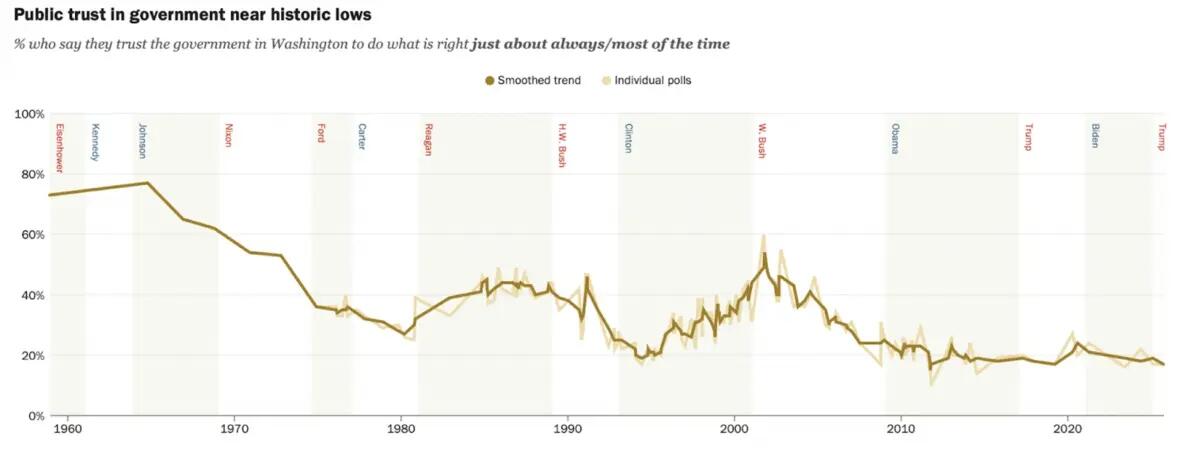
Another critical point about these times: this was the turning point in public confidence in government. The assassination of Kennedy was a devastating blow, especially in the way that so few actually ever believed the official story about how and why it happened. Government never recovered its credibility. The destruction of the money was the telltale sign that something had gone seriously wrong.
Confidence in government peaked at 77 percent in 1964 and then began its long slide. It sits at 17 percent today.
Chart source: Pew Research
This is an astonishing and undeniable trend about which few will publicly speculate. The bigger government gets, the more it takes on, the less the public trusts it to do the right thing. This is because the people are not stupid. They follow the evidence of their senses. And keep in mind that the main trends happened long before independent media was hard at work to pull back the curtain on power, as it is today.
Daily we discover more depths of corruption, thanks mostly to independent reporters and scrupulous reporting from The Epoch Times. A video detailing the mind-blowing corruption in Minnesota has reached more than 100 million views, making the legacy media irrelevant by comparison. The COVID period was also another decisive turning point: scientists with power ruled your life in the name of health while taking away the means to obtain health.
The slide can only continue in the future, and it is likely that the only kind of politician who stands a chance of getting elected is one who promises to overthrow the system as it is. This is our lives now, just the way things work in a society of low trust.
The beauty in holding and jangling pre-1965 silver is nostalgia for a time when government was somewhat restrained, corporate finance was built by hard work and real capital, people were highly educated, and freedom itself was baked into our coinage. Plus, silver just feels great in one’s hand, adopting the temperature of the room and the holder as if a magic trick is happening right before you.
I long for the days of real money and probably you do too. And it raises the question: how can we get it back? I wish I had the answer but plenty of people are not waiting for government to make it happen. Much of the demand for silver these days stems from what’s called “safe haven” demand. You just know that even if or when fiat money fails, this silver will still be accepted in payment.
Who doesn’t feel safer and more secure with a few large bags of pre-1965 dimes and quarters on hand? This was the last period in which the United States minted real money as opposed to symbols made of paper and tin. That was more than half a century ago, and public nostalgia for this period of our national life has reached new highs.
Someone just asked me of the chances that government will in the future demand that we all turn in our silver, the same way they did in 1933 for gold. One supposes it is possible, and you can imagine the rationale: industry needs supply to make the AI revolution and the energy transition possible. Certainly they have the power to do so.
That said, how many will comply? In 1933, plenty of people did not assent with the demand to turn in gold and instead found other safe havens for it. The same would be true today for silver. Plus, I seriously doubt that any president or Congress would risk what remains of credibility by undertaking such an action. There would be real risk of revolution.
We aren’t likely going back to a silver standard but people are adopting it in their own lives, even choosing the old-world money over crypto currency certainly over fiat which is only falling in value. Remember that one version of the history of the world dollar comes from the Spanish coin “thaler.” That memory is alive and well in every coin shop in this country, and in the bags of silver you might be accumulating now, just in case.
Tyler Durden
Tue, 12/30/2025 – 14:20
https://www.zerohedge.com/precious-metals/silver-coins-memories-sound-money

In the NBA, 2025 might go down as the year of the injured — and now Nikola Jokić has joined that club
MIAMI — Indiana Pacers guard Tyrese Haliburton will miss the entire season because of the torn Achilles he suffered in Game 7 of the NBA Finals.
Boston Celtics forward Jayson Tatum — who hopes otherwise — also might miss the whole season after tearing his Achilles in the playoffs last spring.
The Milwaukee Bucks’ Giannis Antetokounmpo, Los Angeles Lakers’ LeBron James and Oklahoma City Thunder’s Jalen Williams all have missed big chunks of time this season with various injuries.
And now Denver Nuggets center Nikola Jokić will miss some time as well.
Nobody — not even those six All-NBA players from last season — is immune from the injury bug this season. The final day of 2025 is Wednesday, and from an NBA health perspective, it might be time to say good riddance to these 12 months.
Some of the league’s biggest names have dealt with significant injury issues in this calendar year, and in many cases those woes are carrying over into 2026.
“It sucks,” Nuggets coach David Adelman said after Jokić was hurt.
He’s not wrong.
Jokić got hurt Monday night in Miami on a play with about three seconds left in the first half in which he would have been better off just doing nothing.
It seemed like he was trying to help a teammate defend a drive, got his foot stepped on in the process, hyperextended his left knee and will be reevaluated in four weeks.
In the NBA, with games coming every other day on average, even missing just one month could mean missing 15 or more games.
It feels like a ton of guys are hurt. The NBA says the actual numbers say otherwise.
“The data we have so far this season is we have the lowest number of injuries in the last three years,” NBA Commissioner Adam Silver said this month. “I’ll stop there and say, regardless where the level of injuries stands versus prior years, of course the soft-tissue injuries concern us. All injuries concern us, for that matter. The most frustrating issue right now, and the one that we have seemingly the least control over, is keeping star players on the floor.
“I think we have made progress. We’ve made adjustments in scheduling. We’ve made adjustments in the sharing of information among teams. We’ve made adjustments in the care of players.”
All of that is true. This is also true: The NBA, even with all its power, can’t control luck. Sometimes a guy gets stepped on and his knee doesn’t move the way it’s supposed to move.
“Next man up,” Nuggets guard Jamal Murray said.
That phrase is heard in probably every locker room in the world when a player gets injured, but the reality is there’s no way the Nuggets can replace Jokić because three-time MVPs aren’t exactly easy to find.
Here are only some of the big names — the award-candidate, All-Star-level names — who missed a lot of games in 2025, whether this season or last or both:
Joel Embiid and Paul George, Philadelphia 76ers
Kyrie Irving and Anthony Davis, Dallas Mavericks
Victor Wembanyama, San Antonio Spurs
Domantas Sabonis, Sacramento Kings
Tyler Herro, Miami Heat
Bradley Beal, Los Angeles Clippers
Aaron Gordon, Nuggets
Trae Young, Atlanta Hawks
Zion Williamson, New Orleans Pelicans
And remember, they are added to the roster of injured that already includes Haliburton, Tatum, Antetokounmpo, James, Williams and now Jokic.
“It’s frustrating,” Silver said. “It’s frustrating for our teams. It’s frustrating for our fans. But I do think we have to be true to what the evidence is, as opposed to saying there’s a narrative out there that injuries are up or injuries are up because of scheduling. They’re not.
“But we continue to slice and dice the data in every way we can, plus we look at qualitative information. People who have been around this game for a long time, what are they seeing? Are players training differently? Are there better techniques out there to keep players healthier?”
It will be a great day when the NBA and other leagues can get some answers. Maybe some clues will come in 2026.
https://www.chicagotribune.com/2025/12/30/nba-2025-year-of-injuries/
December interest rate cut was a close call for some Fed officials, minutes show
WASHINGTON — Some Federal Reserve officials who supported cutting a key interest rate earlier this month could have instead backed keeping the rate unchanged, minutes released Tuesday show, underscoring the divisions and uncertainty permeating the central bank.
At their December 9-10 meeting Fed officials agreed to cut their key interest rate by a quarter point for the third time this year, to about 3.6%, the lowest in nearly three years. Yet the move was approved by a 9-3 vote, an unusual level of dissent for a committee that typically works by consensus. Two Fed officials supported keeping the rate unchanged, while one wanted a larger, half-point reduction.
The minutes underscored the deep split on the 19-member policymaking committee over what constitutes the biggest threat to the economy: weak hiring or stubbornly-elevated inflation. If a sluggish job market is the biggest threat, then the Fed would typically cut rates more. But if still-high inflation is the bigger problem, then the Fed would keep rates elevated, or even raise them. Just 12 of the 19 members vote on rate decisions, though all participate in discussions.
The minutes showed that even some Fed officials who supported the rate cut did so with reservations. Some Fed officials wanted to wait for more economic data before making any further moves, the minutes said. Key economic data on jobs, inflation, and growth were delayed by the six-week government shutdown, leaving Fed officials with only outdated information at their meeting earlier this month.
When the Fed reduces its key rate, over time it can lower borrowing costs for homes, cars, and credit cards, though market forces also affect those rates.
https://www.chicagotribune.com/2025/12/30/december-interest-rate-cut/

Elgin councilman, Kane state’s attorney in running for Kane circuit judgeship
Elgin City Councilman John Steffen and Kane County State’s Attorney Jamie Mosser are among the 11 candidates who have applied to complete the term of 16th Circuit Court Judge Kevin Busch when he retires next month.
Steffen is a senior council member and an attorney with Steffen & Kelly, a law firm located in downtown Elgin. Born and raised in Elgin, he is a 1982 graduate of Larkin High School and the University of Illinois. He received his law degree from the John Marshall Law School and has been an attorney since 1989.
Among the local organizations he belongs to are the Elgin Noon Kiwanis Club, the Downtown Neighborhood Association of Elgin, and the Kane and Illinois State bar associations.
Steffen could not be reached for comment.
Mosser was elected state’s attorney in 2020 and reelected last year.
“It would be a privilege to serve the people of Kane County as a judge just as it has been to be their state’s attorney,” Mosser said in her application.
“I am grateful for the opportunity to be considered amongst highly qualified and experienced individuals. I am confident that whoever is selected will be the right choice for the position. In whatever role I am serving, my focus will always be on keeping our communities safe and making Kane County the best place in Illinois to raise a family.”
She didn’t have further comment.
Kane County State’s Attorney Jamie Mosser has applied to fill the vacancy being created by the January retirement of Kane County Circuit Judge Kevin Busch. (Jamie Mosser)
Mosser joined the state’s attorney’s office in 2006, where she prosecuted felony, domestic violence and drunken driving cases and worked in the Drug Rehabilitative Court and the Special Prosecution Unit.
She left the office in 2015 for private practice, and five years later was elected state’s attorney.
Circuit court judicial vacancies are filled by the Illinois Supreme Court, which solicited applicants to complete Busch’s term earlier this month.
Besides Steffen and Mosser, the other candidates under consideration are:
Junaid Mustafa Afeef, an administrative law judge for the Illinois Department of Public Health;
Nicholas Catizone, supervising assistant for the DuPage County state’s attorney’s office;
Alan Garrow, with the Nealis & Garrow law firm;
Randy K. Johnson, sole practitioner;
Timothy Martin, senior regional counsel for the Illinois Department of Children and Family Services;
Julie M. Pirtle, partner with the Peskind Law Firm;
Christopher Solfa, partner with the Cunningham, Meyer & Vedrine law firm;
Kane County Associate Judge Julia Ann Yetter, who named a judge in 2018;
Andrea Zenker, partner with the Higgins, Zenker & Coyle law firm.
Busch’s term ends December 2028. The winner of an election in November 2028 will serve a six-year term.
Busch is a former Kane County assistant state’s attorney, where he was chief of the criminal division, and later went into private practice before being appointed as an associate judge in 2008. He was elected circuit judge in 2010.
Before making its selection, the Supreme Court is taking written comments about the applicants. They can be sent to Stacie Ryan at sryan@illinoiscourts.gov by 4 p.m. Friday, Jan. 9. Letters will not be made public and anonymous letters will not be accepted.
Gloria Casas is a freelance reporter for The Courier-News.
https://www.chicagotribune.com/2025/12/30/kane-judge-vacancy-mosser-steffen/

Chesterton Town Council raises building permit fees
Chesterton’s building permit fees will be rising in the new year, as the town looks for ways to address financial challenges posed by the state legislature’s changes to property tax law.
The Town Council unanimously approved the new rates Monday.
Associate Town Attorney Charles Parkinson said that the new fee schedule should take effect in 90 days, which allows for the proper legal notification about the increase.
Town Engineer Mark O’Dell had noted that Chesterton charged significantly lower building fees compared to surrounding communities.
Clerk-Treasurer Courtney Udvare told the council in October that the town needed to consider finding new revenue sources because of the loss of property tax funds, due to reforms enacted by Senate Enrolled Act 1.
For a new home construction, the fee will increase to 32 cents a square foot from 22 cents per square foot. That means Chesterton will charge for a 2,625 square foot house $2,116.32, compared to $1,114,72 in fees under the current schedule.
Some of the other increases include the commercial new construction costs increasing from 27 cents to 40 cents per square foot. Residential remodeling permits will rise from 15 cents to 25 cents per square foot.
In other business, the council heard a report from Sustainability Commission President Emily Bretl about the commission’s first year.
The commission was created by the council in March and had its first meeting in May. The commission has six members, and eventually will have seven.
Bretl said the commission conducted a survey in the community and drafted a vision statement, based upon its findings.
The vision statement settled on by the commission is: A safe, healthy and thriving Chesterton where environmental stewardship, community involvement, and innovative planning safeguard natural, human and financial resources for the benefit of current and future generations.
Some of the major survey themes included the desire for green space preservation, where smart, connected and community-driven development is preferred. Bretl said another major survey point was the desire for Chesterton to protect its small town identity while modernizing responsibly.
The commission, during the past year, conducted two fall beach cleanup events at the Indiana Dunes State Park. Bretl said there were 20 participants each time. There were 5,000 pounds of compost materials collected in Chesterton as part of a Porter County-wide project.
Next year, the commission plans to apply for the Indiana Department of Environmental Management (IDEM) Clean Community Program designation.
Council agreed that it will support the commission in a statewide movement to change the state flower to the Butterfly Milkweed from the Peony. The town of Porter recently agreed to a similar resolution proposed by its Environmental Sustainability Commission.
“People in this town are very much interested in the environment,” said Councilman James Ton, R-1st.
Ton said that the town has had a Tree City designation for years, and a citizen effort led to the town being designated a Bird Town USA.
The Town Council also decided that Councilwoman Erin Collins, D-2nd, would serve as the council president for the new year with Councilman Dane Lafata, D-3rd, as vice president.
Jim Woods is a freelance reporter for the Post-Tribune.
https://www.chicagotribune.com/2025/12/30/chesterton-town-council-raises-building-permit-fees/

FOMC Minutes Confirm ‘Most’ Fed Officials Expect More Rate-Cuts, Divisions Remain
FOMC Minutes Confirm ‘Most’ Fed Officials Expect More Rate-Cuts, Divisions Remain
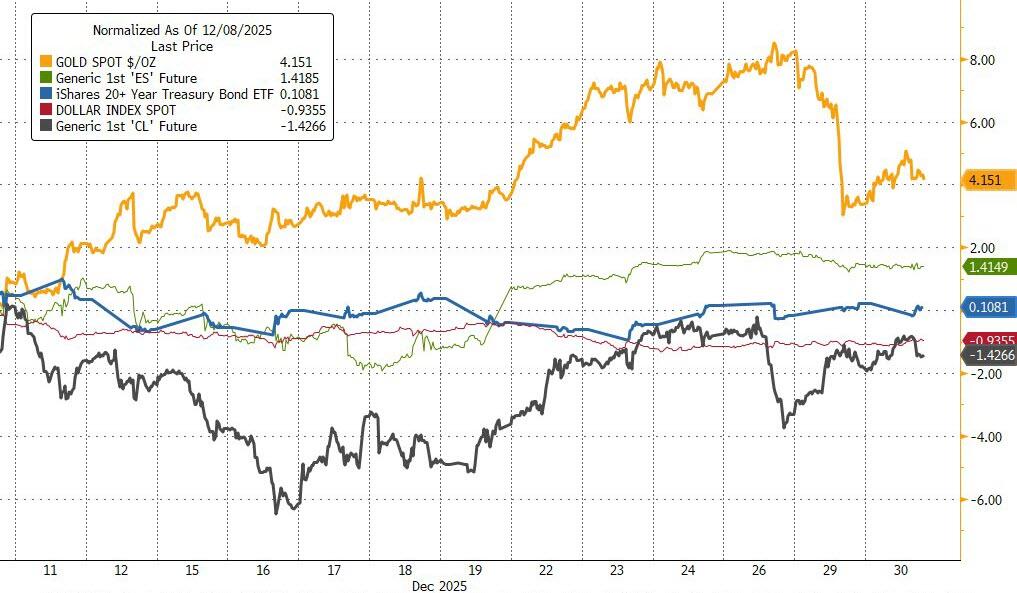
Since the last FOMC meeting on Dec 10th (which resulted in a more-dovish-than-expected 25bps rate cut along with 3 dissents), precious metals have been the biggest gainers (as the dollar weakened) while crude oil has been a laggard. Stocks small bid, bonds unch…
Source: Bloomberg
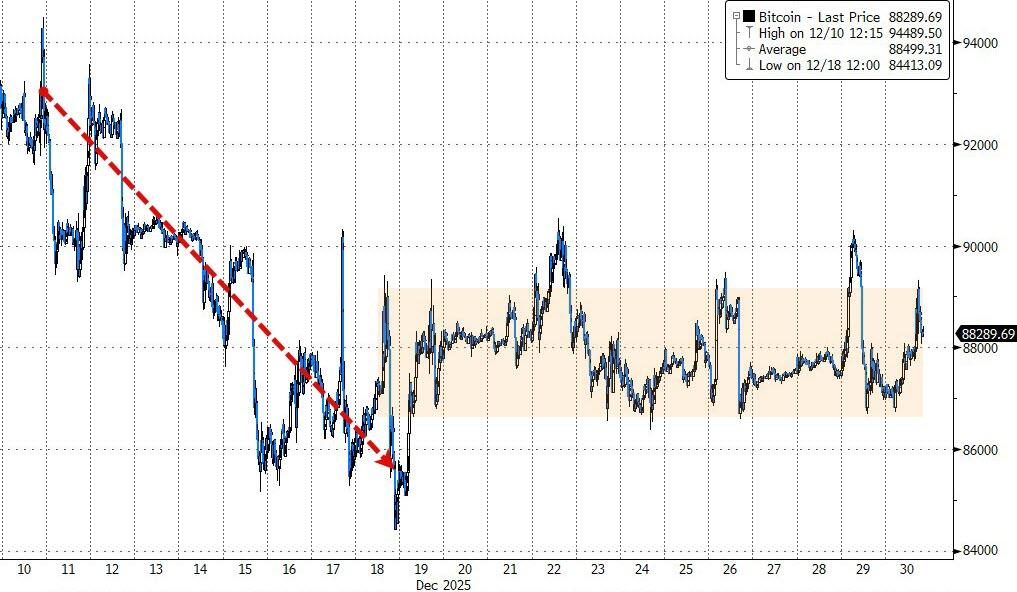
Crypto has notably decoupled from gold and stocks…
Source: Bloomberg
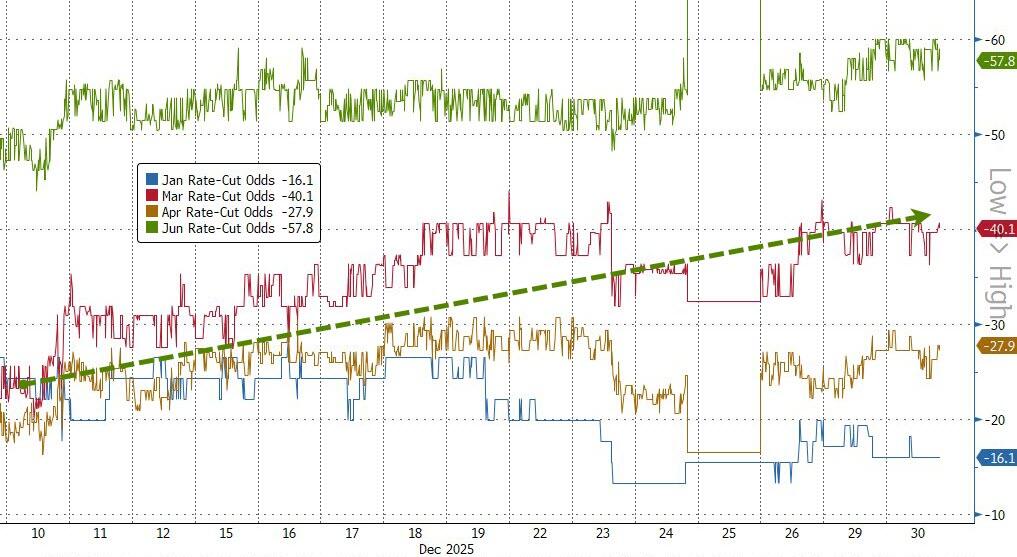
Rate-cut odds have risen significantly, most notably March…
Source: Bloomberg
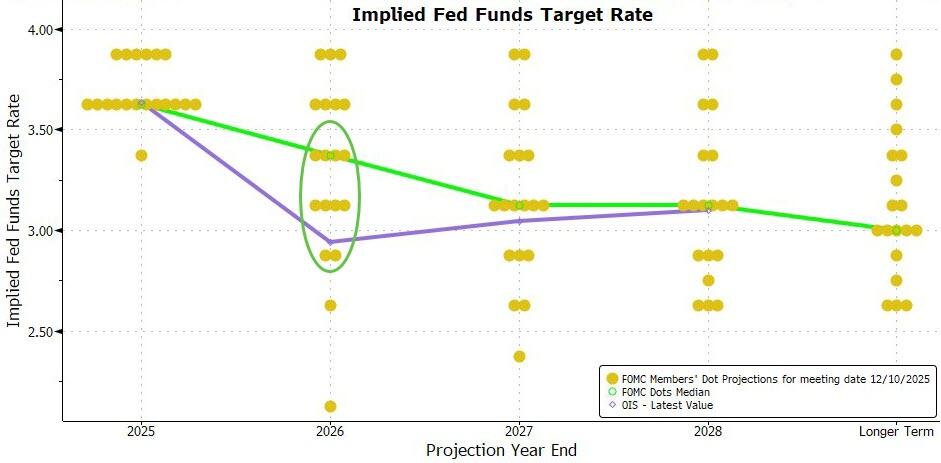
With a very divided Fed having been exposed (the most dissents in 37 years), the outlook is unclear, but the demanding markets are not…
“I joke that the equity market is like a kid in a candy store, braving a sugar high for more policy accommodation, a more dovish Fed — but it doesn’t know what’s good for it,” said Amanda Agati, PNC Asset Management Group’s chief investment officer said on Bloomberg Television on Tuesday.
“The bond market is the adult in the room taking away the last lollipop. It is maybe the first time in observable market history that we’re seeing the market react to the deficit and debt level concern. I think there’s continued upward pressure on long yields, for sure.”
Given the lack of major catalysts and with news flow and trading volumes generally low, investors will focus on the Fed’s release of meeting minutes as the market remains notably more dovish than The Fed’s Dots…
“Markets are looking to the minutes for clearer signals on the Federal Reserve’s policy trajectory in 2026, at a time when year-end liquidity is thin, and price action may be amplified,” Tickmill Group’s Joseph Dahrieh says in a note.
If the minutes lean decisively towards further interest-rate cuts in 2026, this could weigh on the dollar and Treasury yields, he added.
A more balanced or cautious tone about rate cuts could provide near-term support.
“How divided?” and “What about ‘Not QE’?”
So what did The Fed want us to know?
The minutes underscored the deep split on the 19-member policymaking committee over what constitutes the biggest threat to the economy: weak hiring or stubbornly-elevated inflation.
Most officials see additional interest rate cuts as appropriate if inflation declines over time as expected.
Yet, some officials made clear they believe rates should remain on hold “for some time” after the December gathering.
The minutes showed that even some Fed officials who supported the rate cut did so with reservations.
“A few of those who supported lowering the policy rate at this meeting indicated that the decision was finely balanced or that they could have supported keeping the target range unchanged,” the minutes said.
But, that statement suggests the division was not as deep as some have suggested.
The minutes continued to point to considerable differences among policymakers over whether inflation or unemployment posed the greater peril to the US economy.
“Most participants noted that a move toward a more neutral policy stance would help forestall the possibility of a major deterioration in labor market conditions,” the minutes noted.
At the same time, it continued, “several participants pointed to the risk of higher inflation becoming entrenched and suggested that lowering the policy rate further in the context of elevated inflation readings could be misinterpreted as implying diminished policymaker commitment to the 2% inflation objective.”
Finally, the Minutes confirmed that participants judged that reserve balances had “declined to ample levels” – making it appropriate to initiate purchases of shorter-term Treasury securities to maintain an ample supply of reserves over time.
For now, the markets are unmoved by any of this with rate-cut odds unchanged and stocks aggressively going nowhere.
Read the full FOMC Minutes below:
Tyler Durden
Tue, 12/30/2025 – 14:05

Stefon Diggs faces strangulation charges; the New England Patriots WR ‘categorically denies’ the allegations
BOSTON — New England Patriots star wide receiver Stefon Diggs is facing strangulation and other criminal charges in connection with an incident that happened earlier this month, police said.
News of the charges emerged after a court hearing Tuesday in Dedham, Mass. It’s unclear what led to the charges, which include felony strangulation or suffocation and misdemeanor assault and battery.
Diggs’ lawyer, David Meier, said in an emailed statement that Diggs “categorically denies these allegations.”
Meier said the allegations never occurred, describing them as unsubstantiated and uncorroborated.
“The timing and motivation for making the allegations is crystal clear: They are the direct result of an employee-employer financial dispute that was not resolved to the employee’s satisfaction,” Meier wrote.
In a statement, the Patriots said they are standing by Diggs: “We support Stefon.”
Diggs, 32, established himself as one of the NFL’s best wide receivers during a run with the Minnesota Vikings and Buffalo Bills from 2018 to 2023, when he had six consecutive 1,000-yard receiving seasons and was selected to the Pro Bowl four times.
After a lackluster stint in Houston last year, Diggs ended up in New England, signing a three-year, $69 million deal in free agency that guaranteed him $26 million.
Diggs has proved to be a reliable target for second-year quarterback Drake Maye and is a big reason the team has clinched the AFC East title and is headed to the playoffs.
Off the field, though, Diggs’ tenure with the Patriots got off to a rocky start when a video surfaced on social media in May showing him passing what appeared to be a bag of pink crystals to women on a boat.
It wasn’t clear what the substance was, and an NFL spokesperson said the league would not comment. Patriots coach Mike Vrabel said the team would handle that matter internally.
https://www.chicagotribune.com/2025/12/30/stefon-diggs-strangulation-charges/

Orland Park police to begin using cruise lights during patrols
The Orland Park Police Department is launching a program to boost squad vehicle visibility with hopes of deterring crime through use of nonflashing lights.
In contrast to flashing red and blue emergency strobes, cruise lights are steady and used without police sirens. Police Chief Eric Rossi told the Orland Park Village Board this month the department started using the lights in retail areas ahead of the holidays. The board unanimously approved the pilot program Dec. 15.
“They’re out there, they’re a little more visible with their lights on,” Rossi said of patrolling officers. “The object is to deter crime, in case we have criminals looking to prey on any victims coming out of the retail shops.”
Rossi said the pilot program will expand use of cruise lights, which unlike flashing lights do not signal an emergency, to residential areas.
“If somebody needs us, is lookin for us, they can see us,” Rossi said.
Trustee Cynthia Katsenes asked whether use of lights might be mistaken for flashing lights. Rossi said the department is working to communicate the differences to residents and will start out using the lights late at night to avoid traffic disruptions.
Cruise lights on an Orland Park police vehicle. (Orland Park)
Police vehicles are already equipped with cruise lights, Rossi said, so the program will not incur additional expenses for the village.
“We want to see how it works,” Rossi said. “Again, this is a pilot program — if it’s successful, I believe we’ll move forward, we’d like to move forward.”
Mayor Jim Dodge said he supports the initiative but pushed communications to residents, saying he’s witnessed another vehicle improperly stop in the middle lane of traffic after seeing a squad car’s flashing lights.
Drivers are only required to pull over when a police vehicle displays flashing red and blue lights, especially when sirens sound.
“I just think we need to be mindful of how this plays,” Dodge said. “If this works well for us, let’s not be afraid to share this with other towns that might ask our experience with it.”
The Police Department over the past year has looked to expand other programs, including plans to add another therapy dog for department use in 2026 and deploy more emergency response drones.
The six drones in the department’s arsenal are deployed to improve response times when emergency situations arise, such as missing person cases and traffic crashes, allowing officers to assess situations from above.
A drone used by the Orland Park Police Department hovers above its docking pad. Drones can travel up to 2 miles away from the docking station and 200 feet off the ground. (Olivia Stevens/Daily Southtown)
The village signed a three-year contract with Brinc, a company that provides drones designed to help police officers, in September. Orland Park pays $75,000 per year to operate the drones that, due to federal regulations, are able to travel up to 2 miles and hover 200 feet off the ground.
“We’re always trying to be a progressive Police Department and trying to think about new ideas and how to make the department better and keep the officers safer and the community safer,” Rossi told the Daily Southtown in October.
ostevens@chicagotribune.com
https://www.chicagotribune.com/2025/12/30/orland-park-police-cruise-lights/
Trump Admin Launches $50 Billion Rural Health Transformation Program
Trump Admin Launches $50 Billion Rural Health Transformation Program
Authored by Kimberley Hayek via The Epoch Times,
The Trump administration plans to distribute between $147 million and $281 million to each U.S. state in 2026 through a widespread rural health program designed to provide better access to medical care in rural areas.
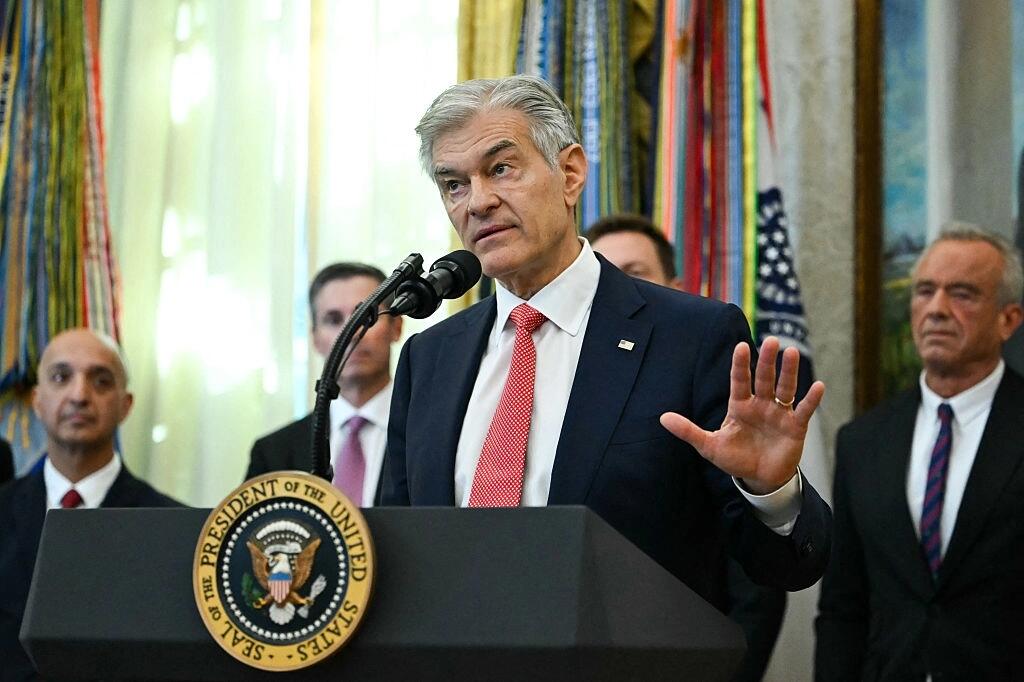
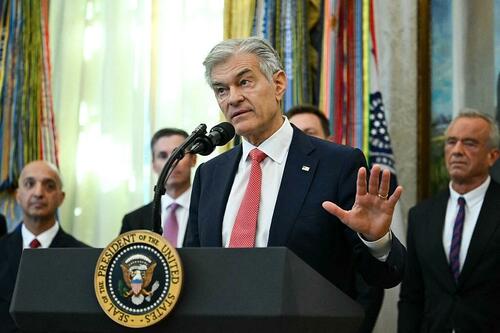
The effort, which is one aspect of the One Big Beautiful Bill Act, earmarks $50 billion across five fiscal years, making available $10 billion annually from 2026 to 2030 to all 50 states. Centers for Medicare & Medicaid Services Administrator Mehmet Oz revealed the plan Monday, underscoring its goal to reverse the trend of long-term declines in rural health metrics while avoiding building out costly new infrastructure.
“This is a massive effort to change the unfortunate reality that has overtaken rural healthcare in America, which is that your ZIP code has started to predict your life expectancy,” Oz told reporters. He said the money will also go toward other pilot projects across the country.
Administration officials said that half the funds will be divided evenly between the states, with the other $25 billion apportioned according to rural healthcare infrastructure, state-led reforms, and application-based proposals. Funds could be reclaimed if states fail to meet benchmarks or neglect their committed reforms.
“The purpose of this $50 billion investment in rural healthcare is not to pay off bills,” Oz said.
“The purpose of this $50 billion investment is to allow us to right-size the system and to deal with the fundamental hindrances of improvement in rural healthcare.”
The announcement comes as rural hospitals have been at the center of Medicaid overhaul discussions.
“We have an unstable market that is causing lots of potential peril to Americans who need our help the most,” Oz told reporters in June.
This rural push aligns with Trump’s fiscal 2026 “skinny budget“ for the Department of Health and Human Services, cutting discretionary spending by 33 percent to $80.4 billion and axing 20,000 jobs.
Those reforms combine multiple agencies into a new Administration for a Healthy America, which integrates rural programs and redirects any savings from the streamlining to HHS Secretary Robert F. Kennedy Jr.’s priorities, including environmental health, mental health services, and chronic disease prevention.
The administration has also highlighted $14 billion in identified Medicaid fraud, waste, and abuse through the Department of Government Efficiency, as highlighted by Oz earlier this year.
“There’s about $14 billion we’ve identified with DOGE, of folks who are duly enrolled wrongly in multiple states for Medicaid,” Oz told Fox News’s “Sunday Morning Futures” in May.
Complementary measures include agreements with nine pharmaceutical firms to cut drug costs and expanded coverage models for select weight-loss medications in a bid to help rural patients.
Tyler Durden
Tue, 12/30/2025 – 13:45