Category: News

The Trump Administration’s Fight To Fund Scientists
The Trump Administration’s Fight To Fund Scientists
Authored by Paul D. Thacker via RealClearInvestigations,
The panic and outrage were palpable last February when President Trump announced plans to trim reimbursement rates for government-funded scientific research.
“This is going to decimate U.S. scientific biomedical research,” Northwestern University biologist Carole Labonne told Bloomberg. “The lights will go out, people will be let go, and these [medical] advances will not occur,” David Skorton, CEO of the Association of American Medical Colleges, told PBS. “The goal,” University of Washington biologist Carl Bergstrom warned on BlueSky, “is to destroy U.S. universities.”
The sky has not fallen on American research in the 10 months since. The National Institutes of Health (NIH) is still paying the same 50% to 70% in indirect costs – the premium added on top of grants meant to reimburse universities for providing labs and other research infrastructure – because lawsuits have frozen the president’s proposed policy. One Trump official admits this is unlikely to change because the administration will almost certainly lose in court. The current system, which provides the lion’s share of billions of dollars each year for often-unspecified overhead costs to universities, has the backing of Congress. As it stands, there appears to be no momentum, even among Republicans, to reform the practice.
“It’s basically a slush fund,” one NIH official told RealClearInvestigations. “We just don’t like to call it that.”
A RealClearInvestigations analysis of these indirect payments reveals a long, largely forgotten history of concern about taxpayer-sponsored research. Although many researchers have cast Trump’s proposal as an attack on science, this issue isn’t the need to fund research activities that sometimes lead to beneficial discoveries, but whether some of the billions that support the necessary infrastructure and equipment are actually being shifted to purposes such as staffing and buildings that have little or no direct connection to the actual research.
In the late ’80s, Stanford faculty revolted against the university’s high overhead charges for diverting research dollars to a bloated administration and a campus building frenzy. Those concerns are still voiced by some.
“If the universities truly believe that it takes 60-70% of a research grant to provide facilities, utilities, and other basic support, then that is easy to prove by opening the books,” said Sanjay Dhall, a research physician at the University of California, Los Angeles. “I suspect however, that opening the books would reveal that a significant chunk of these funds, or even the majority, are paying an army of unnecessary administrators.”
At a time when the value of college is being challenged because of exorbitant tuition and fees, and the federal government is struggling to rein in debt, the story of indirect funding offers a window into the history of runaway costs and the growing power of college officials. RCI has also learned that NIH Director Jay Bhattacharya has been selling a new plan that makes the grant process more competitive for institutions that were overlooked in the past.
Indirect Costs Hard To Define
Distributing over $37 billion in grants every year, NIH is the largest funder of biomedical research on the planet, far exceeding the European Commission, which spends around $12 billion, and dwarfing the Gates Foundation’s $1 billion.
Every NIH grant a university researcher receives provides two categories of funding: direct and indirect costs. The direct costs include all items the researcher submitted as part of the project’s budget, from laboratory equipment to a percentage of salaries.
Indirect costs are harder to define. The funding goes to administrators, and how they use it is shrouded in mystery. What’s more, indirect rates vary from university to university for reasons that few understand and can explain.
While institutions charge private foundations like Gates a mere 10% and Rockefeller 15% for indirect costs, they charge the NIH much higher rates – 69% for Harvard, 67.5% for Yale, and 63.7% for Johns Hopkins.
“How do you think Harvard built all those buildings?” one NIH official, a graduate of Harvard Medical School who insisted on anonymity, told RCI. “NIH indirect costs paid for that.”
When Trump first proposed the 15% cap in 2016, Harvard president Drew G. Faust told the student newspaper in late 2017 that she flew to Washington, D.C., to lobby Republicans in both the House and the Senate to stop it. “We’re bringing in quite a bit of money through federal contracts which provide money for a lot of buildings and other infrastructure that makes possible what we do going forward,” a Harvard dean told the student newspaper. “So if that was to all go away, we’d have to sit down and look at that.”
The Trump administration’s proposal to cap overhead at 15% would cost university administrators billions of dollars that they control. Among the many critics was Holden Thorp, editor-in-chief of the flagship journal Science and a former university administrator. He wrote an editorial last February titled “A Direct Hit” that described the cap as a “ruthless takedown of academia.”
“The scientific community must unite in speaking out against this betrayal of a partnership that has enabled American innovation and progress,” he wrote.
In response to questions from RCI, Thorp said any change to NIH overhead funding should be done in partnership with the scientific community. “Indirect costs are used to secure debt on research facilities and were treated as very secure by banks and the rating agencies,” Thorp said. “Pulling all of that abruptly – without following processes with decades of precedent – is certainly betraying a partnership by putting the universities in difficulty with their lenders and bond ratings.”
Inexorable Rise in Charges
It turns out that concerns over universities possibly misusing federal grant money date back more than half a century, according to Thorp’s own publication. In 1955, the federal government almost doubled the 8% premium paid for university overhead. A decade later, Science reported that Congress lifted the overhead ceiling to 20%, maintaining a flat rate to assure more taxpayer dollars were targeted at scientific research, and less spent on constructing new buildings. Some members of Congress believed that “the universities need not accept the grants if they can’t afford them.” Elected officials also worried that indirect costs would not go to research but to support other university efforts.
“You might be surprised if you read the list of money being spent for research in various universities,” one senator said in a 1963 Science news story. “Not only to pay the teachers, but also to construct buildings and facilities around the school.”
Despite these concerns, lobbyists convinced the government in 1966 to remove all caps, empowering universities to negotiate directly with federal agencies to set their own overhead rates. In 1966, overhead consumed 14% of NIH grant expenditures. By the late 1970s, it consumed 36.4%. When the federal government attempted to backpedal in 1976 to bring “spiraling indirect cost rates under control,” it failed.
Both Republicans and Democrats have long championed increasing NIH budgets, partly because grants for research land in congressional districts scattered across the nation. Republicans have often been the NIH’s biggest supporters. Fifteen years ago, Congress launched investigations into the NIH’s poor monitoring of grants that were awarded to research physicians with undisclosed ties to the pharmaceutical industry. Despite the unfolding scandal, Republican Sen. Arlen Specter pushed through a 34% increase in the NIH’s budget in 2009. During the 2013 government shutdown, the NIH was one of the few agencies that Republicans pushed President Obama to keep open. Two years later, Republicans cut many parts of Obama’s proposed 2015 budget, yet gave the president even more money than the increase he requested for the NIH.
Like some elected officials, academics have also long complained that high overhead harms academic scientists by diverting NIH funding to administrators. In 1981, a University of California researcher published a study in Science, which showed how “Funding has thus been markedly reduced, and this has become a critical factor limiting research support in the United States.”
By 1983, indirect costs accounted for 43% of the NIH grant budget. In response, then-NIH Director James B. Wyngaarden pushed to make more money available for scientists by paying administrators only 90% of what they claimed in overhead.
“[L]egislators tend to sympathize with the investigators who are more interested in seeing federal money spent for equipment and researchers’ salaries in their labs than for light and heat and the services of typists and bookkeepers,” reported Science at the time.
However, Science reported that Wyngaarden was met with stiff opposition from university officials and their allies in Congress.
When Wyngaarden tried to deal with the matter by sending a report to Congress, Science reported, officials from several university lobby groups shut the report down, calling it not “acceptable.”
One of Wyngaarden’s biggest critics was Stanford President Donald Kennedy, whose school was then charging one of the highest rates for indirect costs. Kennedy convened a group to attack cost-saving proposals, stating in a letter, “The NIH proposals to reduce reimbursement of those costs … will directly damage the research effort as a whole.”
This effort appeared to succeed until Kennedy himself became ensnared in a scandal that showed Stanford’s indirect costs charged to the NIH paid for a bevy of personal goods and upkeep on a yacht.
Stanford’s Taxpayer-Funded Yacht
Stanford’s yacht, the Victoria, was valued at $1.2 million and became a symbol of excess, with walnut and cherry paneling, brass lamps, marble counters, and lavish woodwork. Administrators used the yacht as a fundraising venue to wine and dine campus bigwigs. NIH money had paid for overhead to maintain it.
As Congress and federal investigators dug into Stanford’s accounting, they discovered that administrators had also redirected NIH research overhead to pay $2,000 a month for flowers at President Kennedy’s home, $7,000 for his bed linens, and $6,000 to provide him with cedar-lined closets. Another college official had hosted Stanford football parties and charged the NIH $1,500 for booze.
Humiliated in the media, Stanford was forced to lower the indirect rate it charged the NIH from 78% to 55.5%, and federal agencies launched audits of overhead charges at dozens of other universities, resulting in millions of dollars returned to the NIH.
With the politics and the media on his side, Michigan Congressman John Dingell launched reforms to indirect charges. Stanford and other institutions were forced to halt expensive building campaigns. President Clinton proposed a cap on indirect costs in a “concerted effort to shift national spending from overhead to funding research.” As in the past, universities opposed the change, and the White House buckled.
“One way or another, I’ve been involved in controversy about indirect cost rates for about 30 years,” a chancellor at the University of Maryland told The Baltimore Sun in 1994.
Kennedy resigned from the Stanford presidency, as did several of his administrators. Kennedy later joined Science as editor-in-chief – a predecessor to Thorp – while universities’ charges for indirect costs to the NIH eventually snapped back to their former pricing, which continues to this day.
RCI spoke with several academic researchers at institutions scattered across the U.S., working at both private and public-funded universities. None wished to be named about their concerns about how their administrators spend NIH indirect funding, with one professor noting that administrators determine your career, so it makes no sense to criticize their spending habits.
While university presidents say administrators strictly account for NIH indirect funds, the reality appears to be different. Professors who bring in large sums of NIH money, sometimes referred to as heavy hitters, can complain and get some of the indirect costs back from the administrators for their own research and even personal use. At some institutions, department heads can get a cut of the indirect costs to set up slush funds, monies they can dole out to favored professors, or even divert to their own labs.
Professor Dhall said that after he published a March letter in the Wall Street Journal that supported Trump’s cap on indirect rates, he was contacted by colleagues across the country. “They congratulated me on going public and vehemently agreed, in private,” he said.
A congressional staffer who has spent decades investigating problems at the NIH said that nobody truly understands how universities negotiate their NIH overhead rates. And once that money gets to the university, it disappears into a byzantine accounting system that seems designed to confuse government auditors, who rarely inspect university books.
“It’s a complete black box,” he said. “I wish someone could explain it to me.”
Trump’s Play To Change the Game
The Trump administration will lose the fight to cap indirect costs at 15%, a senior HHS official told RCI, because of the universities’ outsize influence. During the first Trump administration, universities caught wind that Trump planned to cap overhead rates. As they had done for over half a century, university lobbyists ran to Congress to complain, only now they sought an alliance with the pharmaceutical industry.
Responding to lobbying pressure, Republicans in the House and Senate inserted a provision into the appropriations bill in 2018 to block Trump’s attempt to change universities’ indirect cost rates. That provision has been included in every succeeding appropriations bill.
While it does not seem likely that Congress will strip the schools in their states and districts of billions of dollars in funding, NIH Director Bhattacharya has been floating his own proposal to revamp indirect payments to make them more equitable in private talks with members of Congress and university leaders. Shortly before Thanksgiving, Bhattacharya gave a dinner talk to the Republican Main Street Caucus, a group of 85 GOP members of Congress who are critical behind-the-scenes players among Republicans now running the House.
A dinner participant recounted to RCI that Bhattacharya noted that more than half of the NIH’s money goes to 20 universities located on both coasts. These elite universities win a lion’s share of the grant money, including indirect costs, because they have the money to attract excellent scientists, in part because NIH money helped them build great infrastructure.
This creates a vicious cycle that guarantees NIH will continue to fund institutions that have already won past NIH money – and which charge high indirect costs. To end this cycle, Bhattacharya wants to break off indirect costs into a separate category of infrastructure grants that universities can compete to win.
During the talk, Bhattacharya said that all the universities in the entire state of Florida now get as much money as Stanford. Yet, there’s no reason Florida could not become a hub for scientific research if the federal government invested in its scientific infrastructure.
If Florida can provide lab space at a lower cost than Stanford, he said, they should get the money. Bhattacharya also wants to make it easier for academics to take their grant to different universities. If a Harvard researcher is offered more space or better facilities at a university in Kansas, because building costs there are cheaper, that professor should be able to transfer his grant.
The NIH already provides specific grants for infrastructure, and the hope is that spreading the billions in indirect costs across the country will gain political support.
“He wants to get this money out to the middle of the country, not just the coasts,” said Congresswoman Mariannette Miller-Meeks, Republican from Iowa. Dr. Miller-Meeks is one of the few physicians in Congress and said she was impressed with Bhattacharya’s talk at the Main Street Caucus dinner. However, she is uncertain whether Democrats would embrace the new proposal in today’s polarized environment.
“I would think there are members from the center of the country that would like to see more money in their district,” she said.
A spokesperson told RCI that NIH remains focused on ensuring that funding is used efficiently and that direct and indirect costs contribute to scientific productivity. “Bhattacharya’s proposal represents one of several ideas being discussed publicly about how to structure federal support for research infrastructure,” the spokesperson said. “NIH looks forward to continuing to work constructively with Congress on this issue.”
Tyler Durden
Wed, 12/31/2025 – 13:20
https://www.zerohedge.com/political/trump-administrations-fight-fund-scientists

The Trump Administration’s Fight To Fund Scientists
The Trump Administration’s Fight To Fund Scientists
Authored by Paul D. Thacker via RealClearInvestigations,
The panic and outrage were palpable last February when President Trump announced plans to trim reimbursement rates for government-funded scientific research.
“This is going to decimate U.S. scientific biomedical research,” Northwestern University biologist Carole Labonne told Bloomberg. “The lights will go out, people will be let go, and these [medical] advances will not occur,” David Skorton, CEO of the Association of American Medical Colleges, told PBS. “The goal,” University of Washington biologist Carl Bergstrom warned on BlueSky, “is to destroy U.S. universities.”
The sky has not fallen on American research in the 10 months since. The National Institutes of Health (NIH) is still paying the same 50% to 70% in indirect costs – the premium added on top of grants meant to reimburse universities for providing labs and other research infrastructure – because lawsuits have frozen the president’s proposed policy. One Trump official admits this is unlikely to change because the administration will almost certainly lose in court. The current system, which provides the lion’s share of billions of dollars each year for often-unspecified overhead costs to universities, has the backing of Congress. As it stands, there appears to be no momentum, even among Republicans, to reform the practice.
“It’s basically a slush fund,” one NIH official told RealClearInvestigations. “We just don’t like to call it that.”
A RealClearInvestigations analysis of these indirect payments reveals a long, largely forgotten history of concern about taxpayer-sponsored research. Although many researchers have cast Trump’s proposal as an attack on science, this issue isn’t the need to fund research activities that sometimes lead to beneficial discoveries, but whether some of the billions that support the necessary infrastructure and equipment are actually being shifted to purposes such as staffing and buildings that have little or no direct connection to the actual research.
In the late ’80s, Stanford faculty revolted against the university’s high overhead charges for diverting research dollars to a bloated administration and a campus building frenzy. Those concerns are still voiced by some.
“If the universities truly believe that it takes 60-70% of a research grant to provide facilities, utilities, and other basic support, then that is easy to prove by opening the books,” said Sanjay Dhall, a research physician at the University of California, Los Angeles. “I suspect however, that opening the books would reveal that a significant chunk of these funds, or even the majority, are paying an army of unnecessary administrators.”
At a time when the value of college is being challenged because of exorbitant tuition and fees, and the federal government is struggling to rein in debt, the story of indirect funding offers a window into the history of runaway costs and the growing power of college officials. RCI has also learned that NIH Director Jay Bhattacharya has been selling a new plan that makes the grant process more competitive for institutions that were overlooked in the past.
Indirect Costs Hard To Define
Distributing over $37 billion in grants every year, NIH is the largest funder of biomedical research on the planet, far exceeding the European Commission, which spends around $12 billion, and dwarfing the Gates Foundation’s $1 billion.
Every NIH grant a university researcher receives provides two categories of funding: direct and indirect costs. The direct costs include all items the researcher submitted as part of the project’s budget, from laboratory equipment to a percentage of salaries.
Indirect costs are harder to define. The funding goes to administrators, and how they use it is shrouded in mystery. What’s more, indirect rates vary from university to university for reasons that few understand and can explain.
While institutions charge private foundations like Gates a mere 10% and Rockefeller 15% for indirect costs, they charge the NIH much higher rates – 69% for Harvard, 67.5% for Yale, and 63.7% for Johns Hopkins.
“How do you think Harvard built all those buildings?” one NIH official, a graduate of Harvard Medical School who insisted on anonymity, told RCI. “NIH indirect costs paid for that.”
When Trump first proposed the 15% cap in 2016, Harvard president Drew G. Faust told the student newspaper in late 2017 that she flew to Washington, D.C., to lobby Republicans in both the House and the Senate to stop it. “We’re bringing in quite a bit of money through federal contracts which provide money for a lot of buildings and other infrastructure that makes possible what we do going forward,” a Harvard dean told the student newspaper. “So if that was to all go away, we’d have to sit down and look at that.”
The Trump administration’s proposal to cap overhead at 15% would cost university administrators billions of dollars that they control. Among the many critics was Holden Thorp, editor-in-chief of the flagship journal Science and a former university administrator. He wrote an editorial last February titled “A Direct Hit” that described the cap as a “ruthless takedown of academia.”
“The scientific community must unite in speaking out against this betrayal of a partnership that has enabled American innovation and progress,” he wrote.
In response to questions from RCI, Thorp said any change to NIH overhead funding should be done in partnership with the scientific community. “Indirect costs are used to secure debt on research facilities and were treated as very secure by banks and the rating agencies,” Thorp said. “Pulling all of that abruptly – without following processes with decades of precedent – is certainly betraying a partnership by putting the universities in difficulty with their lenders and bond ratings.”
Inexorable Rise in Charges
It turns out that concerns over universities possibly misusing federal grant money date back more than half a century, according to Thorp’s own publication. In 1955, the federal government almost doubled the 8% premium paid for university overhead. A decade later, Science reported that Congress lifted the overhead ceiling to 20%, maintaining a flat rate to assure more taxpayer dollars were targeted at scientific research, and less spent on constructing new buildings. Some members of Congress believed that “the universities need not accept the grants if they can’t afford them.” Elected officials also worried that indirect costs would not go to research but to support other university efforts.
“You might be surprised if you read the list of money being spent for research in various universities,” one senator said in a 1963 Science news story. “Not only to pay the teachers, but also to construct buildings and facilities around the school.”
Despite these concerns, lobbyists convinced the government in 1966 to remove all caps, empowering universities to negotiate directly with federal agencies to set their own overhead rates. In 1966, overhead consumed 14% of NIH grant expenditures. By the late 1970s, it consumed 36.4%. When the federal government attempted to backpedal in 1976 to bring “spiraling indirect cost rates under control,” it failed.
Both Republicans and Democrats have long championed increasing NIH budgets, partly because grants for research land in congressional districts scattered across the nation. Republicans have often been the NIH’s biggest supporters. Fifteen years ago, Congress launched investigations into the NIH’s poor monitoring of grants that were awarded to research physicians with undisclosed ties to the pharmaceutical industry. Despite the unfolding scandal, Republican Sen. Arlen Specter pushed through a 34% increase in the NIH’s budget in 2009. During the 2013 government shutdown, the NIH was one of the few agencies that Republicans pushed President Obama to keep open. Two years later, Republicans cut many parts of Obama’s proposed 2015 budget, yet gave the president even more money than the increase he requested for the NIH.
Like some elected officials, academics have also long complained that high overhead harms academic scientists by diverting NIH funding to administrators. In 1981, a University of California researcher published a study in Science, which showed how “Funding has thus been markedly reduced, and this has become a critical factor limiting research support in the United States.”
By 1983, indirect costs accounted for 43% of the NIH grant budget. In response, then-NIH Director James B. Wyngaarden pushed to make more money available for scientists by paying administrators only 90% of what they claimed in overhead.
“[L]egislators tend to sympathize with the investigators who are more interested in seeing federal money spent for equipment and researchers’ salaries in their labs than for light and heat and the services of typists and bookkeepers,” reported Science at the time.
However, Science reported that Wyngaarden was met with stiff opposition from university officials and their allies in Congress.
When Wyngaarden tried to deal with the matter by sending a report to Congress, Science reported, officials from several university lobby groups shut the report down, calling it not “acceptable.”
One of Wyngaarden’s biggest critics was Stanford President Donald Kennedy, whose school was then charging one of the highest rates for indirect costs. Kennedy convened a group to attack cost-saving proposals, stating in a letter, “The NIH proposals to reduce reimbursement of those costs … will directly damage the research effort as a whole.”
This effort appeared to succeed until Kennedy himself became ensnared in a scandal that showed Stanford’s indirect costs charged to the NIH paid for a bevy of personal goods and upkeep on a yacht.
Stanford’s Taxpayer-Funded Yacht
Stanford’s yacht, the Victoria, was valued at $1.2 million and became a symbol of excess, with walnut and cherry paneling, brass lamps, marble counters, and lavish woodwork. Administrators used the yacht as a fundraising venue to wine and dine campus bigwigs. NIH money had paid for overhead to maintain it.
As Congress and federal investigators dug into Stanford’s accounting, they discovered that administrators had also redirected NIH research overhead to pay $2,000 a month for flowers at President Kennedy’s home, $7,000 for his bed linens, and $6,000 to provide him with cedar-lined closets. Another college official had hosted Stanford football parties and charged the NIH $1,500 for booze.
Humiliated in the media, Stanford was forced to lower the indirect rate it charged the NIH from 78% to 55.5%, and federal agencies launched audits of overhead charges at dozens of other universities, resulting in millions of dollars returned to the NIH.
With the politics and the media on his side, Michigan Congressman John Dingell launched reforms to indirect charges. Stanford and other institutions were forced to halt expensive building campaigns. President Clinton proposed a cap on indirect costs in a “concerted effort to shift national spending from overhead to funding research.” As in the past, universities opposed the change, and the White House buckled.
“One way or another, I’ve been involved in controversy about indirect cost rates for about 30 years,” a chancellor at the University of Maryland told The Baltimore Sun in 1994.
Kennedy resigned from the Stanford presidency, as did several of his administrators. Kennedy later joined Science as editor-in-chief – a predecessor to Thorp – while universities’ charges for indirect costs to the NIH eventually snapped back to their former pricing, which continues to this day.
RCI spoke with several academic researchers at institutions scattered across the U.S., working at both private and public-funded universities. None wished to be named about their concerns about how their administrators spend NIH indirect funding, with one professor noting that administrators determine your career, so it makes no sense to criticize their spending habits.
While university presidents say administrators strictly account for NIH indirect funds, the reality appears to be different. Professors who bring in large sums of NIH money, sometimes referred to as heavy hitters, can complain and get some of the indirect costs back from the administrators for their own research and even personal use. At some institutions, department heads can get a cut of the indirect costs to set up slush funds, monies they can dole out to favored professors, or even divert to their own labs.
Professor Dhall said that after he published a March letter in the Wall Street Journal that supported Trump’s cap on indirect rates, he was contacted by colleagues across the country. “They congratulated me on going public and vehemently agreed, in private,” he said.
A congressional staffer who has spent decades investigating problems at the NIH said that nobody truly understands how universities negotiate their NIH overhead rates. And once that money gets to the university, it disappears into a byzantine accounting system that seems designed to confuse government auditors, who rarely inspect university books.
“It’s a complete black box,” he said. “I wish someone could explain it to me.”
Trump’s Play To Change the Game
The Trump administration will lose the fight to cap indirect costs at 15%, a senior HHS official told RCI, because of the universities’ outsize influence. During the first Trump administration, universities caught wind that Trump planned to cap overhead rates. As they had done for over half a century, university lobbyists ran to Congress to complain, only now they sought an alliance with the pharmaceutical industry.
Responding to lobbying pressure, Republicans in the House and Senate inserted a provision into the appropriations bill in 2018 to block Trump’s attempt to change universities’ indirect cost rates. That provision has been included in every succeeding appropriations bill.
While it does not seem likely that Congress will strip the schools in their states and districts of billions of dollars in funding, NIH Director Bhattacharya has been floating his own proposal to revamp indirect payments to make them more equitable in private talks with members of Congress and university leaders. Shortly before Thanksgiving, Bhattacharya gave a dinner talk to the Republican Main Street Caucus, a group of 85 GOP members of Congress who are critical behind-the-scenes players among Republicans now running the House.
A dinner participant recounted to RCI that Bhattacharya noted that more than half of the NIH’s money goes to 20 universities located on both coasts. These elite universities win a lion’s share of the grant money, including indirect costs, because they have the money to attract excellent scientists, in part because NIH money helped them build great infrastructure.
This creates a vicious cycle that guarantees NIH will continue to fund institutions that have already won past NIH money – and which charge high indirect costs. To end this cycle, Bhattacharya wants to break off indirect costs into a separate category of infrastructure grants that universities can compete to win.
During the talk, Bhattacharya said that all the universities in the entire state of Florida now get as much money as Stanford. Yet, there’s no reason Florida could not become a hub for scientific research if the federal government invested in its scientific infrastructure.
If Florida can provide lab space at a lower cost than Stanford, he said, they should get the money. Bhattacharya also wants to make it easier for academics to take their grant to different universities. If a Harvard researcher is offered more space or better facilities at a university in Kansas, because building costs there are cheaper, that professor should be able to transfer his grant.
The NIH already provides specific grants for infrastructure, and the hope is that spreading the billions in indirect costs across the country will gain political support.
“He wants to get this money out to the middle of the country, not just the coasts,” said Congresswoman Mariannette Miller-Meeks, Republican from Iowa. Dr. Miller-Meeks is one of the few physicians in Congress and said she was impressed with Bhattacharya’s talk at the Main Street Caucus dinner. However, she is uncertain whether Democrats would embrace the new proposal in today’s polarized environment.
“I would think there are members from the center of the country that would like to see more money in their district,” she said.
A spokesperson told RCI that NIH remains focused on ensuring that funding is used efficiently and that direct and indirect costs contribute to scientific productivity. “Bhattacharya’s proposal represents one of several ideas being discussed publicly about how to structure federal support for research infrastructure,” the spokesperson said. “NIH looks forward to continuing to work constructively with Congress on this issue.”
Tyler Durden
Wed, 12/31/2025 – 13:20
https://www.zerohedge.com/political/trump-administrations-fight-fund-scientists
The Trump Administration’s Fight To Fund Scientists
The Trump Administration’s Fight To Fund Scientists
Authored by Paul D. Thacker via RealClearInvestigations,
The panic and outrage were palpable last February when President Trump announced plans to trim reimbursement rates for government-funded scientific research.
“This is going to decimate U.S. scientific biomedical research,” Northwestern University biologist Carole Labonne told Bloomberg. “The lights will go out, people will be let go, and these [medical] advances will not occur,” David Skorton, CEO of the Association of American Medical Colleges, told PBS. “The goal,” University of Washington biologist Carl Bergstrom warned on BlueSky, “is to destroy U.S. universities.”
The sky has not fallen on American research in the 10 months since. The National Institutes of Health (NIH) is still paying the same 50% to 70% in indirect costs – the premium added on top of grants meant to reimburse universities for providing labs and other research infrastructure – because lawsuits have frozen the president’s proposed policy. One Trump official admits this is unlikely to change because the administration will almost certainly lose in court. The current system, which provides the lion’s share of billions of dollars each year for often-unspecified overhead costs to universities, has the backing of Congress. As it stands, there appears to be no momentum, even among Republicans, to reform the practice.
“It’s basically a slush fund,” one NIH official told RealClearInvestigations. “We just don’t like to call it that.”
A RealClearInvestigations analysis of these indirect payments reveals a long, largely forgotten history of concern about taxpayer-sponsored research. Although many researchers have cast Trump’s proposal as an attack on science, this issue isn’t the need to fund research activities that sometimes lead to beneficial discoveries, but whether some of the billions that support the necessary infrastructure and equipment are actually being shifted to purposes such as staffing and buildings that have little or no direct connection to the actual research.
In the late ’80s, Stanford faculty revolted against the university’s high overhead charges for diverting research dollars to a bloated administration and a campus building frenzy. Those concerns are still voiced by some.
“If the universities truly believe that it takes 60-70% of a research grant to provide facilities, utilities, and other basic support, then that is easy to prove by opening the books,” said Sanjay Dhall, a research physician at the University of California, Los Angeles. “I suspect however, that opening the books would reveal that a significant chunk of these funds, or even the majority, are paying an army of unnecessary administrators.”
At a time when the value of college is being challenged because of exorbitant tuition and fees, and the federal government is struggling to rein in debt, the story of indirect funding offers a window into the history of runaway costs and the growing power of college officials. RCI has also learned that NIH Director Jay Bhattacharya has been selling a new plan that makes the grant process more competitive for institutions that were overlooked in the past.
Indirect Costs Hard To Define
Distributing over $37 billion in grants every year, NIH is the largest funder of biomedical research on the planet, far exceeding the European Commission, which spends around $12 billion, and dwarfing the Gates Foundation’s $1 billion.
Every NIH grant a university researcher receives provides two categories of funding: direct and indirect costs. The direct costs include all items the researcher submitted as part of the project’s budget, from laboratory equipment to a percentage of salaries.
Indirect costs are harder to define. The funding goes to administrators, and how they use it is shrouded in mystery. What’s more, indirect rates vary from university to university for reasons that few understand and can explain.
While institutions charge private foundations like Gates a mere 10% and Rockefeller 15% for indirect costs, they charge the NIH much higher rates – 69% for Harvard, 67.5% for Yale, and 63.7% for Johns Hopkins.
“How do you think Harvard built all those buildings?” one NIH official, a graduate of Harvard Medical School who insisted on anonymity, told RCI. “NIH indirect costs paid for that.”
When Trump first proposed the 15% cap in 2016, Harvard president Drew G. Faust told the student newspaper in late 2017 that she flew to Washington, D.C., to lobby Republicans in both the House and the Senate to stop it. “We’re bringing in quite a bit of money through federal contracts which provide money for a lot of buildings and other infrastructure that makes possible what we do going forward,” a Harvard dean told the student newspaper. “So if that was to all go away, we’d have to sit down and look at that.”
The Trump administration’s proposal to cap overhead at 15% would cost university administrators billions of dollars that they control. Among the many critics was Holden Thorp, editor-in-chief of the flagship journal Science and a former university administrator. He wrote an editorial last February titled “A Direct Hit” that described the cap as a “ruthless takedown of academia.”
“The scientific community must unite in speaking out against this betrayal of a partnership that has enabled American innovation and progress,” he wrote.
In response to questions from RCI, Thorp said any change to NIH overhead funding should be done in partnership with the scientific community. “Indirect costs are used to secure debt on research facilities and were treated as very secure by banks and the rating agencies,” Thorp said. “Pulling all of that abruptly – without following processes with decades of precedent – is certainly betraying a partnership by putting the universities in difficulty with their lenders and bond ratings.”
Inexorable Rise in Charges
It turns out that concerns over universities possibly misusing federal grant money date back more than half a century, according to Thorp’s own publication. In 1955, the federal government almost doubled the 8% premium paid for university overhead. A decade later, Science reported that Congress lifted the overhead ceiling to 20%, maintaining a flat rate to assure more taxpayer dollars were targeted at scientific research, and less spent on constructing new buildings. Some members of Congress believed that “the universities need not accept the grants if they can’t afford them.” Elected officials also worried that indirect costs would not go to research but to support other university efforts.
“You might be surprised if you read the list of money being spent for research in various universities,” one senator said in a 1963 Science news story. “Not only to pay the teachers, but also to construct buildings and facilities around the school.”
Despite these concerns, lobbyists convinced the government in 1966 to remove all caps, empowering universities to negotiate directly with federal agencies to set their own overhead rates. In 1966, overhead consumed 14% of NIH grant expenditures. By the late 1970s, it consumed 36.4%. When the federal government attempted to backpedal in 1976 to bring “spiraling indirect cost rates under control,” it failed.
Both Republicans and Democrats have long championed increasing NIH budgets, partly because grants for research land in congressional districts scattered across the nation. Republicans have often been the NIH’s biggest supporters. Fifteen years ago, Congress launched investigations into the NIH’s poor monitoring of grants that were awarded to research physicians with undisclosed ties to the pharmaceutical industry. Despite the unfolding scandal, Republican Sen. Arlen Specter pushed through a 34% increase in the NIH’s budget in 2009. During the 2013 government shutdown, the NIH was one of the few agencies that Republicans pushed President Obama to keep open. Two years later, Republicans cut many parts of Obama’s proposed 2015 budget, yet gave the president even more money than the increase he requested for the NIH.
Like some elected officials, academics have also long complained that high overhead harms academic scientists by diverting NIH funding to administrators. In 1981, a University of California researcher published a study in Science, which showed how “Funding has thus been markedly reduced, and this has become a critical factor limiting research support in the United States.”
By 1983, indirect costs accounted for 43% of the NIH grant budget. In response, then-NIH Director James B. Wyngaarden pushed to make more money available for scientists by paying administrators only 90% of what they claimed in overhead.
“[L]egislators tend to sympathize with the investigators who are more interested in seeing federal money spent for equipment and researchers’ salaries in their labs than for light and heat and the services of typists and bookkeepers,” reported Science at the time.
However, Science reported that Wyngaarden was met with stiff opposition from university officials and their allies in Congress.
When Wyngaarden tried to deal with the matter by sending a report to Congress, Science reported, officials from several university lobby groups shut the report down, calling it not “acceptable.”
One of Wyngaarden’s biggest critics was Stanford President Donald Kennedy, whose school was then charging one of the highest rates for indirect costs. Kennedy convened a group to attack cost-saving proposals, stating in a letter, “The NIH proposals to reduce reimbursement of those costs … will directly damage the research effort as a whole.”
This effort appeared to succeed until Kennedy himself became ensnared in a scandal that showed Stanford’s indirect costs charged to the NIH paid for a bevy of personal goods and upkeep on a yacht.
Stanford’s Taxpayer-Funded Yacht
Stanford’s yacht, the Victoria, was valued at $1.2 million and became a symbol of excess, with walnut and cherry paneling, brass lamps, marble counters, and lavish woodwork. Administrators used the yacht as a fundraising venue to wine and dine campus bigwigs. NIH money had paid for overhead to maintain it.
As Congress and federal investigators dug into Stanford’s accounting, they discovered that administrators had also redirected NIH research overhead to pay $2,000 a month for flowers at President Kennedy’s home, $7,000 for his bed linens, and $6,000 to provide him with cedar-lined closets. Another college official had hosted Stanford football parties and charged the NIH $1,500 for booze.
Humiliated in the media, Stanford was forced to lower the indirect rate it charged the NIH from 78% to 55.5%, and federal agencies launched audits of overhead charges at dozens of other universities, resulting in millions of dollars returned to the NIH.
With the politics and the media on his side, Michigan Congressman John Dingell launched reforms to indirect charges. Stanford and other institutions were forced to halt expensive building campaigns. President Clinton proposed a cap on indirect costs in a “concerted effort to shift national spending from overhead to funding research.” As in the past, universities opposed the change, and the White House buckled.
“One way or another, I’ve been involved in controversy about indirect cost rates for about 30 years,” a chancellor at the University of Maryland told The Baltimore Sun in 1994.
Kennedy resigned from the Stanford presidency, as did several of his administrators. Kennedy later joined Science as editor-in-chief – a predecessor to Thorp – while universities’ charges for indirect costs to the NIH eventually snapped back to their former pricing, which continues to this day.
RCI spoke with several academic researchers at institutions scattered across the U.S., working at both private and public-funded universities. None wished to be named about their concerns about how their administrators spend NIH indirect funding, with one professor noting that administrators determine your career, so it makes no sense to criticize their spending habits.
While university presidents say administrators strictly account for NIH indirect funds, the reality appears to be different. Professors who bring in large sums of NIH money, sometimes referred to as heavy hitters, can complain and get some of the indirect costs back from the administrators for their own research and even personal use. At some institutions, department heads can get a cut of the indirect costs to set up slush funds, monies they can dole out to favored professors, or even divert to their own labs.
Professor Dhall said that after he published a March letter in the Wall Street Journal that supported Trump’s cap on indirect rates, he was contacted by colleagues across the country. “They congratulated me on going public and vehemently agreed, in private,” he said.
A congressional staffer who has spent decades investigating problems at the NIH said that nobody truly understands how universities negotiate their NIH overhead rates. And once that money gets to the university, it disappears into a byzantine accounting system that seems designed to confuse government auditors, who rarely inspect university books.
“It’s a complete black box,” he said. “I wish someone could explain it to me.”
Trump’s Play To Change the Game
The Trump administration will lose the fight to cap indirect costs at 15%, a senior HHS official told RCI, because of the universities’ outsize influence. During the first Trump administration, universities caught wind that Trump planned to cap overhead rates. As they had done for over half a century, university lobbyists ran to Congress to complain, only now they sought an alliance with the pharmaceutical industry.
Responding to lobbying pressure, Republicans in the House and Senate inserted a provision into the appropriations bill in 2018 to block Trump’s attempt to change universities’ indirect cost rates. That provision has been included in every succeeding appropriations bill.
While it does not seem likely that Congress will strip the schools in their states and districts of billions of dollars in funding, NIH Director Bhattacharya has been floating his own proposal to revamp indirect payments to make them more equitable in private talks with members of Congress and university leaders. Shortly before Thanksgiving, Bhattacharya gave a dinner talk to the Republican Main Street Caucus, a group of 85 GOP members of Congress who are critical behind-the-scenes players among Republicans now running the House.
A dinner participant recounted to RCI that Bhattacharya noted that more than half of the NIH’s money goes to 20 universities located on both coasts. These elite universities win a lion’s share of the grant money, including indirect costs, because they have the money to attract excellent scientists, in part because NIH money helped them build great infrastructure.
This creates a vicious cycle that guarantees NIH will continue to fund institutions that have already won past NIH money – and which charge high indirect costs. To end this cycle, Bhattacharya wants to break off indirect costs into a separate category of infrastructure grants that universities can compete to win.
During the talk, Bhattacharya said that all the universities in the entire state of Florida now get as much money as Stanford. Yet, there’s no reason Florida could not become a hub for scientific research if the federal government invested in its scientific infrastructure.
If Florida can provide lab space at a lower cost than Stanford, he said, they should get the money. Bhattacharya also wants to make it easier for academics to take their grant to different universities. If a Harvard researcher is offered more space or better facilities at a university in Kansas, because building costs there are cheaper, that professor should be able to transfer his grant.
The NIH already provides specific grants for infrastructure, and the hope is that spreading the billions in indirect costs across the country will gain political support.
“He wants to get this money out to the middle of the country, not just the coasts,” said Congresswoman Mariannette Miller-Meeks, Republican from Iowa. Dr. Miller-Meeks is one of the few physicians in Congress and said she was impressed with Bhattacharya’s talk at the Main Street Caucus dinner. However, she is uncertain whether Democrats would embrace the new proposal in today’s polarized environment.
“I would think there are members from the center of the country that would like to see more money in their district,” she said.
A spokesperson told RCI that NIH remains focused on ensuring that funding is used efficiently and that direct and indirect costs contribute to scientific productivity. “Bhattacharya’s proposal represents one of several ideas being discussed publicly about how to structure federal support for research infrastructure,” the spokesperson said. “NIH looks forward to continuing to work constructively with Congress on this issue.”
Tyler Durden
Wed, 12/31/2025 – 13:20
https://www.zerohedge.com/political/trump-administrations-fight-fund-scientists
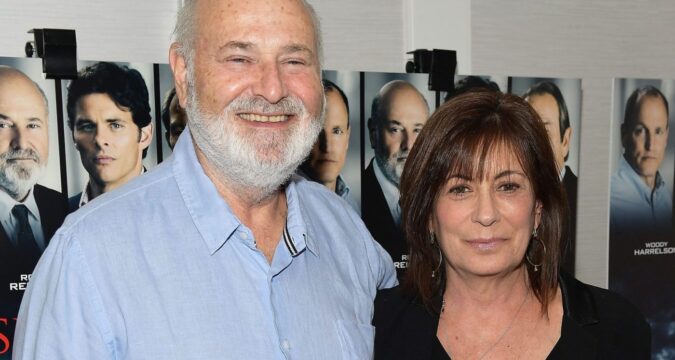
LAPD places security hold on medical examiner’s report in Reiner murders
The Los Angeles Police Department has placed a security hold on information relating to the grisly double murder of Rob Reiner and wife Michele Singer Reiner, for which their son Nick stands charged.
The department confirmed to NBC4 that though the Reiners’ causes of death “have already been made public,” LAPD wanted “to ensure detectives from Robbery-Homicide Division learned of important information surrounding their deaths before the media and the public. The order was not sought to undermine transparency.”
The Los Angeles County Office of Medical Examiner told the outlet that the medical examiner’s report is among the information now subject to the hold, which indefinitely prevents its release.
“The Department understands the public’s interest in these cases and remains committed to transparence when possible,” said the M.E.’s office. “Information will be made available once the court order is lifted.”
The “When Harry Met Sally” director, 78, and 70-year-old photographer — who also shared son Jake, 34, and 28-year-old daughter Romy — were fatally stabbed in their Brentwood home on Dec. 14. Son Nick, 32, was quickly taken into custody and charged with two counts of first-degree murder. He faces life in prison without parole or the death penalty, if convicted.
A police source confirmed to People earlier this month that Nick, who has long battled substance abuse, was in solitary confinement and on suicide watch, which might last for “a long time depending on his mental health.”
While Nick reportedly suffers from schizophrenia — medication for which is said to have made his “alarming” behavior more “erratic and dangerous” — he also admitted on a podcast in 2016 to having faked being “crazy” so he could get access to the antidepressant Wellbutrin.
https://www.chicagotribune.com/2025/12/31/reiner-murders-medical-examiner-report-security-hold/
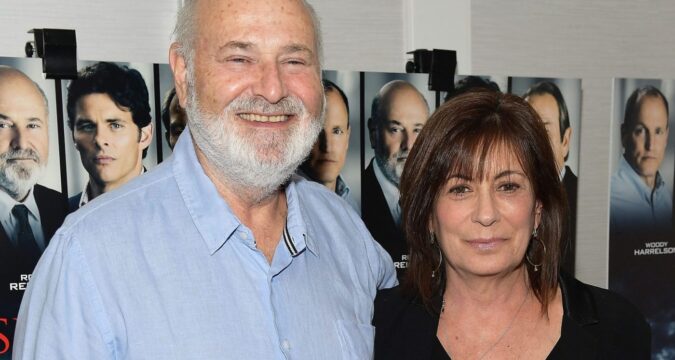
LAPD places security hold on medical examiner’s report in Reiner murders
The Los Angeles Police Department has placed a security hold on information relating to the grisly double murder of Rob Reiner and wife Michele Singer Reiner, for which their son Nick stands charged.
The department confirmed to NBC4 that though the Reiners’ causes of death “have already been made public,” LAPD wanted “to ensure detectives from Robbery-Homicide Division learned of important information surrounding their deaths before the media and the public. The order was not sought to undermine transparency.”
The Los Angeles County Office of Medical Examiner told the outlet that the medical examiner’s report is among the information now subject to the hold, which indefinitely prevents its release.
“The Department understands the public’s interest in these cases and remains committed to transparence when possible,” said the M.E.’s office. “Information will be made available once the court order is lifted.”
The “When Harry Met Sally” director, 78, and 70-year-old photographer — who also shared son Jake, 34, and 28-year-old daughter Romy — were fatally stabbed in their Brentwood home on Dec. 14. Son Nick, 32, was quickly taken into custody and charged with two counts of first-degree murder. He faces life in prison without parole or the death penalty, if convicted.
A police source confirmed to People earlier this month that Nick, who has long battled substance abuse, was in solitary confinement and on suicide watch, which might last for “a long time depending on his mental health.”
While Nick reportedly suffers from schizophrenia — medication for which is said to have made his “alarming” behavior more “erratic and dangerous” — he also admitted on a podcast in 2016 to having faked being “crazy” so he could get access to the antidepressant Wellbutrin.
https://www.chicagotribune.com/2025/12/31/reiner-murders-medical-examiner-report-security-hold/
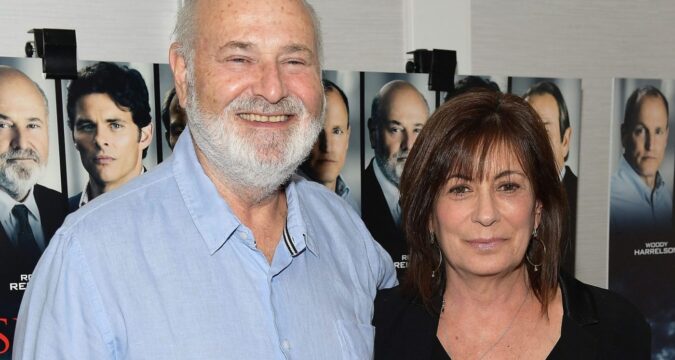
LAPD places security hold on medical examiner’s report in Reiner murders
The Los Angeles Police Department has placed a security hold on information relating to the grisly double murder of Rob Reiner and wife Michele Singer Reiner, for which their son Nick stands charged.
The department confirmed to NBC4 that though the Reiners’ causes of death “have already been made public,” LAPD wanted “to ensure detectives from Robbery-Homicide Division learned of important information surrounding their deaths before the media and the public. The order was not sought to undermine transparency.”
The Los Angeles County Office of Medical Examiner told the outlet that the medical examiner’s report is among the information now subject to the hold, which indefinitely prevents its release.
“The Department understands the public’s interest in these cases and remains committed to transparence when possible,” said the M.E.’s office. “Information will be made available once the court order is lifted.”
The “When Harry Met Sally” director, 78, and 70-year-old photographer — who also shared son Jake, 34, and 28-year-old daughter Romy — were fatally stabbed in their Brentwood home on Dec. 14. Son Nick, 32, was quickly taken into custody and charged with two counts of first-degree murder. He faces life in prison without parole or the death penalty, if convicted.
A police source confirmed to People earlier this month that Nick, who has long battled substance abuse, was in solitary confinement and on suicide watch, which might last for “a long time depending on his mental health.”
While Nick reportedly suffers from schizophrenia — medication for which is said to have made his “alarming” behavior more “erratic and dangerous” — he also admitted on a podcast in 2016 to having faked being “crazy” so he could get access to the antidepressant Wellbutrin.
https://www.chicagotribune.com/2025/12/31/reiner-murders-medical-examiner-report-security-hold/
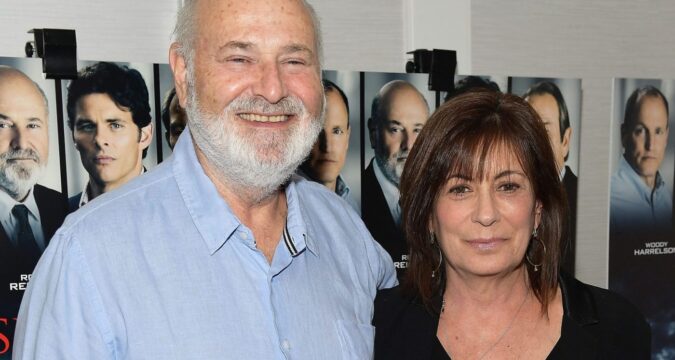
LAPD places security hold on medical examiner’s report in Reiner murders
The Los Angeles Police Department has placed a security hold on information relating to the grisly double murder of Rob Reiner and wife Michele Singer Reiner, for which their son Nick stands charged.
The department confirmed to NBC4 that though the Reiners’ causes of death “have already been made public,” LAPD wanted “to ensure detectives from Robbery-Homicide Division learned of important information surrounding their deaths before the media and the public. The order was not sought to undermine transparency.”
The Los Angeles County Office of Medical Examiner told the outlet that the medical examiner’s report is among the information now subject to the hold, which indefinitely prevents its release.
“The Department understands the public’s interest in these cases and remains committed to transparence when possible,” said the M.E.’s office. “Information will be made available once the court order is lifted.”
The “When Harry Met Sally” director, 78, and 70-year-old photographer — who also shared son Jake, 34, and 28-year-old daughter Romy — were fatally stabbed in their Brentwood home on Dec. 14. Son Nick, 32, was quickly taken into custody and charged with two counts of first-degree murder. He faces life in prison without parole or the death penalty, if convicted.
A police source confirmed to People earlier this month that Nick, who has long battled substance abuse, was in solitary confinement and on suicide watch, which might last for “a long time depending on his mental health.”
While Nick reportedly suffers from schizophrenia — medication for which is said to have made his “alarming” behavior more “erratic and dangerous” — he also admitted on a podcast in 2016 to having faked being “crazy” so he could get access to the antidepressant Wellbutrin.
https://www.chicagotribune.com/2025/12/31/reiner-murders-medical-examiner-report-security-hold/

Team Canada completes its Olympic roster — with Macklin Celebrini but no Connor Bedard
CALGARY, Alberta — Macklin Celebrini, the 19-year-old San Jose Sharks star, is going to the Winter Olympics.
Celebrini was among 19 players named to Canada’s 25-player men’s hockey roster Wednesday ahead of the NHL’s return to the Olympics in February in Milan, Italy.
Celebrini, who is third in the league in scoring behind fellow Canadians Connor McDavid of the Edmonton Oilers and Nathan MacKinnon of the Colorado Avalanche, is one of six additions to the group that won the 4 Nations Face-Off tournament last February. Other newcomers at forward: Nick Suzuki of the Montreal Canadiens, Bo Horvat of the New York Islanders and Tom Wilson of the Washington Capitals.
Canada, which plays its first game at the Olympics on Feb. 12 against Czechia, is keeping its 4 Nations defensive corps intact but is switching out two of the three goaltenders. The Capitals’ Logan Thompson and the Los Angeles Kings’ Darcy Kuemper join Jordan Binnington of the St. Louis Blues. They replace Adin Hill of the Vegas Golden Knights and the Canadiens’ Sam Montembeault.
The 4 Nations forwards who didn’t make the Olympic team: Sam Bennett of the Florida Panthers, Travis Konecny of the Philadelphia Flyers and Seth Jarvis of the Carolina Hurricanes.
McDavid, MacKinnon, Pittsburgh Penguins captain Sidney Crosby, Avalanche defenseman Cale Makar, Tampa Bay Lightning center Brayden Point and Panthers winger Sam Reinhart were named to the Olympic roster in June.
They will be joined by returning forwards Anthony Cirelli and Brandon Hagel of the Lightning, Brad Marchand of the Panthers and Mitch Marner and Mark Stone of the Golden Knights. The blue line led by Makar includes Drew Doughty (Kings), Thomas Harley (Dallas Stars), Josh Morrissey (Winnipeg Jets), Colton Parayko (Blues), Travis Sanheim (Flyers), Shea Theodore (Golden Knights) and Devon Toews (Avalanche).
The 38-year-old Crosby and 36-year-old Doughty are the only players with past Olympic experience.
Notable omissions included Chicago Blackhawks center Connor Bedard — currently out with a shoulder injury — Jets forward Mark Scheifele, Capitals defenseman Jacob Chychrun and Islanders rookie defenseman Matthew Schaefer.
Despite missing eight games because of the injury, Bedard leads the Hawks in goals (19), assists (25) and points (44). With 172 career points, he trails only Eddie Olczyk (180) for the most in team history before turning 21 and has the entire season to pass Olczyk before his July 17 birthday.
“Connor (has) played great hockey through the course (of the season), up until the point he got hurt,” Hawks coach Jeff Blashill said Tuesday. “He’s showing that he can be a world-class player.
“They have a lot of great players available to them in Canada, like we do in the U.S. and like a lot of other countries do. I know Connor was focused on his play more than anything else.”
Connor Bedard of Team Canada celebrates after receiving his gold medal at the 2023 IIHF World Junior Championship on Jan. 5, 2023, in Halifax, Nova Scotia. (Minas Panagiotakis/TNS)
Bedard played for Team Canada in the 2022 and 2023 IIHF World Junior Championships and was named the tournament’s top forward and most valuable player in 2023 as he led Canada to its second straight gold medal. He broke Team Canada records for points (23) and assists (14) in a single junior tournament.
Bedard is Canada’s career leader in points (36) and goals (17) in World Junior play, recording those numbers over 16 games, including two in the 2021-22 tournament that was canceled and rescheduled for August 2022 because of COVID-19.
The NHL is returning to the Olympics for the first time since 2014. Blashill gushed over the importance of the games to hockey as a whole, despite the scheduling conflicts they produce for the league.
“It’s awesome (that) they get to go to the Olympics,” Blashill said. “You’re allowing guys to play out their dreams and have opportunities to represent their country.
“I’ve had the opportunity to do it as a coach at the World Championships and the World Juniors and it’s an unbelievable thing. To see the best hockey as we saw last year is awesome. It’s great for the sport.”
Chicago Tribune reporter Kalen Lumpkins contributed.
https://www.chicagotribune.com/2025/12/31/winter-olympics-team-canada-hockey-roster/

DOJ’s Inventory Of Unreleased Epstein Files Soars To 5.2 Million Pages
DOJ’s Inventory Of Unreleased Epstein Files Soars To 5.2 Million Pages
Already in violation of a statutory deadline and accused of engaging in rampant, unlawful redactions, it’s been revealed that the US Department of Justice has about 5.2 million pages of documents related to convicted sex offender Jeffrey Epstein that still need to be reviewed, according to a document reviewed by Reuters and inside sources cited by the New York Times.
The Epstein Files Transparency Act, which was enacted in November, gave the DOJ a Dec. 19 deadline for releasing “all unclassified records, documents, communications, and investigative materials” relating to Epstein and his convicted co-conspirator Ghislaine Maxwell. It released some 100,000 pages on the due date, but now we learn that first batch represented a tiny 1.9% of the total inventory — before accounting for duplicates.
With Republican Rep. Thomas Massie and Democratic Rep. Ro Khanna in discussions with other members of Congress about potentially holding Attorney General Pam Bondi in contempt, the DOJ is scrambling to amass a legion of 400 lawyers to work on the enormous task. Those lawyers will come from the DOJ’s Criminal Division, the National Security Division, the FBI and the US Attorney’s office in Manhattan, according to Reuters, with a goal of hammering out the mass-review between January 5 and 23. Until now, the DOJ has had almost 200 lawyers from the National Security Division reviewing the files.
Of course, these extra lawyers being recruited into the project have other responsibilities, so the expectation is that they’ll allocate three to five hours a day to the Epstein files. Volunteers will be enticed with time-off awards along with the option to work the Epstein project remotely.
.@AGPamBondi’s most egregious violation of the Epstein Files Transparency Act is not that she ignores the deadline…
it’s that she’s redacting names of accused sex offenders AND internal communications about decisions, wrongly citing old rules that are overridden by new law. pic.twitter.com/LDOmC2emho
— Thomas Massie (@RepThomasMassie) December 28, 2025
Last week, DOJ said it had discovered more than a million more documents with potential links to the Epstein cases. Seeking to fend off criticism, the DOJ said:
“We have lawyers working around the clock to review and make the legally required redactions to protect victims, and we will release the documents as soon as possible. Due to the mass volume of material, this process may take a few more weeks.”
The threat of contempt isn’t the only form of heat Bondi and the Trump administration are facing. On Christmas Eve, a group of 12 senators sent a letter to DOJ Acting Inspector General Don Berthiaume demanding an audit of the DOJ’s handling of the Epstein files.
Beyond pointing to the failure to meet the Dec. 19 deadline, the senators said the huge number of redactions in the released documents have raised “serious questions as to whether the Department is properly applying the limited exceptions for redaction that are permitted under the Act. Any withholding or redaction beyond those specified circumstances is against the law.”
Does anyone really believe that Epstein and Maxwell were the only wrongdoers in this vast, sordid saga?
Tyler Durden
Wed, 12/31/2025 – 13:00
https://www.zerohedge.com/political/dojs-inventory-unreleased-epstein-files-soars-52-million-pages

DOJ’s Inventory Of Unreleased Epstein Files Soars To 5.2 Million Pages
DOJ’s Inventory Of Unreleased Epstein Files Soars To 5.2 Million Pages
Already in violation of a statutory deadline and accused of engaging in rampant, unlawful redactions, it’s been revealed that the US Department of Justice has about 5.2 million pages of documents related to convicted sex offender Jeffrey Epstein that still need to be reviewed, according to a document reviewed by Reuters and inside sources cited by the New York Times.
The Epstein Files Transparency Act, which was enacted in November, gave the DOJ a Dec. 19 deadline for releasing “all unclassified records, documents, communications, and investigative materials” relating to Epstein and his convicted co-conspirator Ghislaine Maxwell. It released some 100,000 pages on the due date, but now we learn that first batch represented a tiny 1.9% of the total inventory — before accounting for duplicates.
With Republican Rep. Thomas Massie and Democratic Rep. Ro Khanna in discussions with other members of Congress about potentially holding Attorney General Pam Bondi in contempt, the DOJ is scrambling to amass a legion of 400 lawyers to work on the enormous task. Those lawyers will come from the DOJ’s Criminal Division, the National Security Division, the FBI and the US Attorney’s office in Manhattan, according to Reuters, with a goal of hammering out the mass-review between January 5 and 23. Until now, the DOJ has had almost 200 lawyers from the National Security Division reviewing the files.
Of course, these extra lawyers being recruited into the project have other responsibilities, so the expectation is that they’ll allocate three to five hours a day to the Epstein files. Volunteers will be enticed with time-off awards along with the option to work the Epstein project remotely.
.@AGPamBondi’s most egregious violation of the Epstein Files Transparency Act is not that she ignores the deadline…
it’s that she’s redacting names of accused sex offenders AND internal communications about decisions, wrongly citing old rules that are overridden by new law. pic.twitter.com/LDOmC2emho
— Thomas Massie (@RepThomasMassie) December 28, 2025
Last week, DOJ said it had discovered more than a million more documents with potential links to the Epstein cases. Seeking to fend off criticism, the DOJ said:
“We have lawyers working around the clock to review and make the legally required redactions to protect victims, and we will release the documents as soon as possible. Due to the mass volume of material, this process may take a few more weeks.”
The threat of contempt isn’t the only form of heat Bondi and the Trump administration are facing. On Christmas Eve, a group of 12 senators sent a letter to DOJ Acting Inspector General Don Berthiaume demanding an audit of the DOJ’s handling of the Epstein files.
Beyond pointing to the failure to meet the Dec. 19 deadline, the senators said the huge number of redactions in the released documents have raised “serious questions as to whether the Department is properly applying the limited exceptions for redaction that are permitted under the Act. Any withholding or redaction beyond those specified circumstances is against the law.”
Does anyone really believe that Epstein and Maxwell were the only wrongdoers in this vast, sordid saga?
Tyler Durden
Wed, 12/31/2025 – 13:00
https://www.zerohedge.com/political/dojs-inventory-unreleased-epstein-files-soars-52-million-pages