Category: News

Iran Protest Deaths Rise As Trump Warns Tehran It Could “Get Hit Very Hard” By US
Iran Protest Deaths Rise As Trump Warns Tehran It Could “Get Hit Very Hard” By US
Over the weekend as the world watched Trump’s Venezuela intervention unfold, the Iran protests reached a full week. While AFP and others have reported in some locales clashes between demonstrators and police, which have after entering day nine have left 12 people dead, including members of security forces, it is clear that this wave of largely economic-driven protests have yet to reach the size of the 2022 ‘anti-hijab’ protests.
Protests have hit 26 of Iran’s 31 provinces, leading to around 1,000 arrests – and there have been some signs of the usual mayhem: in some instances cars or buildings burned, governors’ offices broken into, and sporadic reports of live fire. Still mainstream Western press has admitted the following in reference to the prior 2022 ‘anti-hijab’ protests: “While smaller in scale, the latest protests pose a fresh challenge to the 86-year-old Supreme Leader Ayatollah Ali Khamenei, following a brief war with Israel in June that damaged nuclear facilities.”
Deutsche Welle cites Norway-based rights groups Hengaw and Iran Human Rights who newly report that four Kurdish protesters were killed on Saturday in Malekshahi county (in Ilam province), with dozens more injured.
Iranian media has been focused on the killing of at least one member of the security forces by “rioters” – and details surrounding the deaths and injuries of other protesters remain murky. While there have clearly been some isolated instances of violence, it must be remembered that the Islamic Republic is geographically large for the region and has 90+ million people.
The lingering big question of whether the protests will be sustained or spread, amid a collapsing currency and soaring prices, has not stopped President Trump from reiterating tough threats directed at Tehran leaders. He told reporters aboard Air Force One that Iran will get “hit very hard” by the United States if further protesters were killed.
“We’re watching it very closely. If they start killing people like they have in the past, I think they’re going to get hit very hard by the United States,” he said without providing further details.
This time, the warning hinted more strongly in the direction of a military response, after last week he said something similar but somewhat vague – that he would come to the protesters “rescue” if they start being killed. Big on everyone’s mind following Venezuelan President Maduro’s capture is: will Iran be next?
There’s little question that Israel’s Netanyahu hopes so, after reports that in last month’s Mar-a-Lago meeting, the Israeli prime minister lobbied Trump to go after Iran’s ballistic missile program. For this reason and others, Tehran authorities continue to allege a foreign hidden hand which seeks to exploit the current crisis.
Iran’s head of the judiciary has released a fresh statement warning of no leniency to “rioters” while saying that peaceful individuals have a right to air their grievances in public.
“I instruct the attorney general and prosecutors across the country to act in accordance with the law and with resolve against the rioters and those who support them… and to show no leniency or indulgence,” Gholamhossein Mohseni Ejei was cited in the judiciary’s Mizan news agency as saying.
At the same time authorities have cast a cloud of suspicion over the protests, linking them to the US and Israel:
Spokesperson Esmail Baghaei said statements by some American and Israeli officials amounted to interference in Iran’s internal affairs and incitement to violence under international norms and rejected what he described as foreign efforts to present themselves as supportive of the Iranian public.
“Actions or statements by figures such as the Israeli prime minister or certain radical and hardline US officials regarding Iran’s internal affairs amount, under international norms, to nothing more than incitement to violence, terrorism, and killing.”
But interestingly this type of ‘foreign influence’ accusation has been somewhat softened (compared to in prior waves of protests that rocked Iran) – perhaps given Iranian leaders’ fearing more backlash from Trump.
After all, they have have watched Maduro get taken out of power (and whisked out of the country) by the US in rapid fashion, and have to be careful not to provoke Washington.
* * *
Hawks now salivating over regime change options in Iran?…
Look at Lindsey Graham. He looks like a little boy at Christmas. He can’t hide his neocon orgasm when he hears Trump about Cuba. When he looks at the other guy he’s thinking “See. I told ya I would get him to do it, I told ya.”
pic.twitter.com/R8QIxSqoAx
— Kim Dotcom (@KimDotcom) January 5, 2026
Tyler Durden
Mon, 01/05/2026 – 09:45
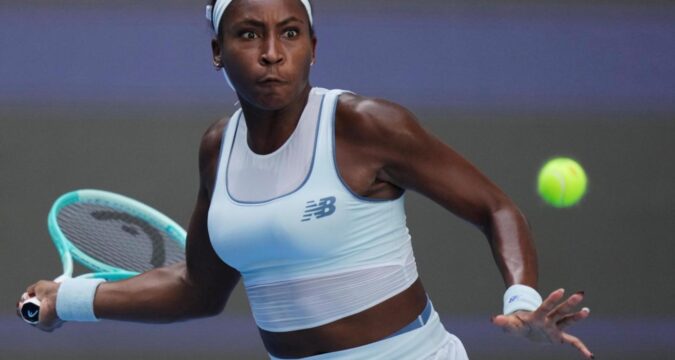
Coco Gauff clarifies comments on American tennis fans before surprising loss
PERTH, Australia — Coco Gauff dropped a post on social media just before she started her United Cup singles match Monday, hoping to add context to her recent comments about American tennis fans.
The match didn’t go well for the No. 4-ranked Guaff, who lost the first five games and struggled in a 6-1, 6-7 (3), 6-0 loss to No. 42 Jessica Bouzas Maneiro in Perth.
It gave Spain a 1-0 lead over the defending champion U.S. team in the Group A contest. But then Taylor Fritz saved a match point on the way to winning the men’s singles match and Gauff combined with Christian Harrison in the mixed doubles to clinch victory for the Americans.
“I‘m going to clarify because people are dragging this out of context,” Gauff said in the pre-match morning social media post, referring to the “worst” comment she made earlier at the tournament when comparing support for players from smaller countries with the kind of support American players receive on foreign soil.
“Those from smaller countries come with their colors and flags and it is clear on who they are supporting.” Gauff said in her post. “I was just speaking from my perspective. I understand the financial aspect of things and know tennis is not accessible for everyone, it was more of a comment for those who are already attending and how I wish they were as passionate as those from other countries.”
The 21-year-old Gauff, a two-time major winner, said her initial comments were in response to a question at a news conference.
“I was asked and it was simply an observation I noticed about other countries vs. mine that is all,” she said. “Nevertheless I am grateful for any support no matter how big or small it is.”
In a clip of the news conference posted on X, Gauff said: “I feel like we’re definitely in the tennis department the worst when it comes to that.”
She added that at previous team events she’d noticed that players from other countries get more animated support from their fans than the American tennis players do, but attributed that to the U.S. sports fans having so many successful teams and athletes to support.
Guaff said there was always good support for the Americans from fans who travel to the Australian Open in Melbourne, “but I would like to see some more Americans if we make it to Sydney (United Cup finals) in Sydney than there were last year.”
Quarterfinals
The U.S. team is 2-0 after wins over Spain and Argentina and has clinched a spot in the quarterfinals.
It was close call against Spain. Fritz, struggling with knee pain, produced a 7-6 (4), 3-6, 7-6 (6) win over No. 38 Jaume Munar. He missed two match points on Munar’s serve in the 12th game of the third set and then saved one in the tiebreaker before sealing the win to level the contest.
Gauff and Harrison won the doubles 7-6 (5), 6-0 and finished the session signing autographs and posing for photographs with fans, including some waving the American flags.
At a later news conference Gauff was asked if the reaction to her comments on social media had put her off her game.
“No,” she said. “And I don’t think it was piling on. I was just trying to clarify what I meant. I wrote everything that I had to say on that.”
Fritz supported Gauff, saying the reaction to his teammate’s comments were an example of people wanting to “assume the absolute worst.”
“I was here and I know exactly what she meant,” Fritz said. “And she said nothing wrong.”
https://www.chicagotribune.com/2026/01/05/coco-gauff-american-tennis-fans/
The “Don-Roe Doctrine” Has Already Set The Tone For 2026
The “Don-Roe Doctrine” Has Already Set The Tone For 2026
By Bas van Geffen, Senior Macro Strategist at Rabobank
Happy New Year! Brace yourselves, we’re in for a rough ride.
In our last Monthly Outlook for 2025, we looked ahead to this year. We warned that it would be foolish to assume that this year would be any calmer. President Trump wasted no time to make that prediction accurate.
You will undoubtedly have seen the headlines. This weekend, President Trump launched a military operation in Venezuela and in a matter of hours, Venezuelan President Maduro was in US custody. He faces charges for “pushing drugs into the United States.”
It is the first time the US moves to oust a Latin American leader since Bush moved against Noriega in 1989. Coincidentally, the Panamanian leader was also wanted for drug trafficking, but the US had other geopolitical reasons to dethrone him. Drug trafficking charges may be Trump’s official reason for this weekend’s operation in Venezuela, as his voter base did not elect him on a platform of active foreign policy. Still, the move fits with a modern-day Monroe Doctrine.
Throughout 2025, Trump had already taken an interest in politics in other Latin American countries. He has been a supporter of Argentina’s Milei, who largely shares Trump’s ideas. And Trump has not shied away from punitive tariffs on Brazil, as retribution for a criminal investigation against former president and Trump-ally Bolsonaro and arguably Brazil’s deepening ties with Russia and China.
Is this a warning of more to come? Recall that last year, Trump threatened to take control of the Panama Canal and he said “something could happen with Greenland.” This weekend, the US president repeated that the country “needs Greenland from the standpoint of national security.” And, Trump warned that Colombia could be next after Venezuela. He accused the Colombian president of making and selling drugs to the United States, adding that “he’s not going to be doing it very long, let me tell you.”
Unsurprisingly, several Latin American leaders condemned the move. Brazil’s Lula said that an unacceptable line had been crossed, just as relations between the two presidents had started to defrost. Mexico strongly rejected the attack, and Chile and Colombia expressed their concerns.
The capture of Maduro also puts another strain on US relations with Russia and China, who both supported Venezuela. In fact, Maduro had met with Chinese envoys just hours before his capture.
Meanwhile, the response of US allies was divided as leaders weigh politics and international law. French President Macron chose the political route of commending Trump’s achievement: “Venezuelan people are rid of Maduro’s dictatorship and can only rejoice.” His German counterpart noted that the legal assessment is “complex.” But, above all, Merz called for a transition to a government that is legitimised by elections, warning against political instability.
Opinions vary how Venezuela may get there. Macron suggested that Maduro’s main political opponent –and presumed winner of the previous elections– could lead this transition: “President Edmundo González Urrutia, elected in 2024, can swiftly ensure this transition.” Venezuelan opposition leaders have called for the same.
But President Trump has other plans. According to the US president, the opposition leaders lack the “respect” of the country to govern effectively. Instead, Trump suggested that Maduro’s vice president would be the best candidate for the job: “She is essentially willing to do what we think is necessary to make Venezuela great again.” Trump added that the US would “run” Venezuela until a “safe, proper and judicious” transition of power can be done.
Rodríguez initially showed defiance of US intervention, arguing that “the US attack only had one objective: regime change and the capture of Venezuelan natural resources”. Yet that could be a façade as she juggles US demands with those of Maduro’s supporters. Indeed, on Sunday, she extended an invitation to “work together on a cooperation agenda,” as Trump threatened her with a fate worse than Maduro’s “if she doesn’t do what’s right.” For now, everything remains in flux.
It is equally unclear how Trump will ensure a smooth transition of power, or how he exactly plans to lead Venezuela in the interim. The US does not have a military presence or even an embassy, but it has blockaded the country for about a month now. So, Trump may have some economic pressure over any new leader. And he has warned that follow up strikes could still happen, if necessary.
If the US administration manages to impose its power over Venezuela, that could reshape the world. The country’s oil reserves could ensure low energy prices for US consumers and secure fuel for US shipping and military, whilst undercutting geopolitical rivals’ abilities to fund themselves with energy sales and/or disrupting flows to China. However, Venezuelan oil production is a fraction of what it was, and our energy strategists estimate that it would take at least five to ten years before capacity can be restored to what it once was.
Geopolitically, it shows that Trump means what his administration wrote in its National Security Strategy: a greater focus on the Western Hemisphere; a “Donroe Doctrine.” Control over Venezuela reinforces that message, and would make it easier for the US to then lean on resource-rich countries in the region.
But none of this is without risks. Imposing a stable, pro-US regime is much more difficult than toppling the former. And how will China and other geopolitical rivals respond? Has Trump set a precedent with his claim that the attack was legitimate because Maduro had been indicted in the US?
We’re just a couple of days into 2026 and the tone has been set. Buckle up!
Tyler Durden
Mon, 01/05/2026 – 09:25
https://www.zerohedge.com/geopolitical/don-roe-doctrine-has-already-set-tone-2026
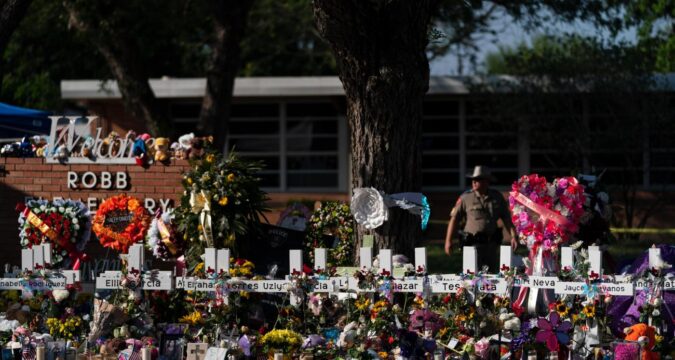
Trial begins for officer accused of failing to protect children during Uvalde school shooting
CORPUS CHRISTI, Texas — One of the first police officers to respond to the 2022 school shooting in Uvalde, Texas, goes on trial Monday on charges that he failed to protect children during the attack, when authorities waited more than an hour to confront the gunman.
Adrian Gonzales, a former Uvalde schools officer, faces 29 counts of child abandonment or endangerment in a rare prosecution of an officer accused of not doing more to stop a crime and protect lives.
The teenage gunman killed 19 students and two teachers at Robb Elementary in one of deadliest school shootings in U.S. history.
Nearly 400 officers from state, local and federal law enforcement agencies responded to the school, but 77 minutes passed from the time authorities arrived until a tactical team breached the classroom and killed the shooter, Salvador Ramos. An investigation later showed that Ramos was obsessed with violence and notoriety in the months leading up to the attack.
Gonzales and former Uvalde schools police chief Pete Arredondo were among the first on the scene, and they are the only two officers to face criminal charges over the slow response. Arredondo’s trial has not yet been scheduled.
The charges against Gonzales carry up to two years in prison if he is convicted. The trial, which is expected to last up to three weeks, begins with jury selection.
Gonzales pleaded not guilty. His attorney has said Gonzales tried to save children that day.
Police and Texas Gov. Greg Abbott initially said swift law enforcement action killed Ramos and saved lives. But that version quickly unraveled as families described begging police to go into the building and 911 calls emerged from students pleading for help.
The indictment alleges Gonzales placed children in “imminent danger” of injury or death by failing to engage, distract or delay the shooter and by not following his active shooter training. The allegations also say he did not advance toward the gunfire despite hearing shots and being told where the shooter was.
State and federal reviews of the shooting cited cascading problems in law enforcement training, communication, leadership and technology, and questioned why officers waited so long.
According to the state review, Gonzales told investigators that once police realized there were students still sitting in other classrooms, he helped evacuate them.
Some family members of the victims have said more officers should be indicted.
“They all waited and allowed children and teachers to die,” said Velma Lisa Duran, whose sister Irma Garcia was one of the two teachers who were killed.
Prosecutors will likely face a high bar to win a conviction. Juries are often reluctant to convict law enforcement officers for inaction, as seen after the Parkland, Florida, school massacre in 2018.
Sheriff’s deputy Scot Peterson was charged with failing to confront the shooter in that attack. It was the first such prosecution in the U.S. for an on-campus shooting, and Peterson was acquitted by a jury in 2023.
At the request of Gonzales’ attorneys, the trial was moved about 200 miles (320 kilometers) southeast to Corpus Christi. They argued Gonzales could not receive a fair trial in Uvalde, and prosecutors did not object.
Uvalde, a town of 15,000, still has several prominent reminders of the shooting. Robb Elementary is closed but still stands, and a memorial of 21 crosses and flower sits near the school sign. Another memorial sits at the downtown plaza fountain, and murals depicting several victims can still be seen on the walls of several buildings.
Jesse Rizo, whose 9-year-old niece Jackie was one of the students killed, said even with three-hour drive to Corpus Christi, the family would like to have someone attend the trial every day.
“It’s important that the jury see that Jackie had a big, strong family,” Rizo said.
https://www.chicagotribune.com/2026/01/05/trial-officer-uvalde-school-shooting/
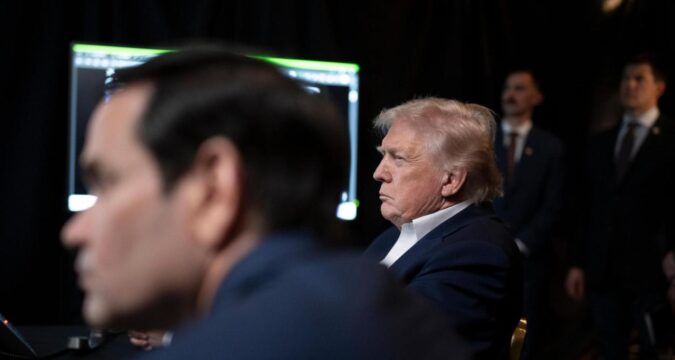
Trump spurs speculation about his plans for Greenland, Cuba and Colombia after capture of Venezuelan President Nicolás Maduro
WASHINGTON — A day after the audacious U.S. military operation in Venezuela, President Donald Trump on Sunday renewed his calls for an American takeover of the Danish territory of Greenland for the sake of U.S. security interests and threatened military action on Colombia for facilitating the global sale of cocaine, while his top diplomat declared the communist government in Cuba is “in a lot of trouble.”
The comments from Trump and Secretary of State Marco Rubio after the ouster of Venezuela’s Nicolás Maduro underscore that the U.S. administration is serious about taking a more expansive role in the Western Hemisphere.
With thinly veiled threats, Trump is rattling hemispheric friends and foes alike, spurring a pointed question around the globe: Who’s next?
“It’s so strategic right now. Greenland is covered with Russian and Chinese ships all over the place,” Trump told reporters as he flew back to Washington from his home in Florida. “We need Greenland from the standpoint of national security, and Denmark is not going to be able to do it.”
Asked during an interview with The Atlantic earlier on Sunday what the U.S.-military action in Venezuela could portend for Greenland, Trump replied: “They are going to have to view it themselves. I really don’t know.”
Trump, in his administration’s National Security Strategy published last month, laid out restoring “American preeminence in the Western Hemisphere” as a central guidepost for his second go-around in the White House.
Trump has also pointed to the 19th century Monroe Doctrine, which rejects European colonialism, as well as the Roosevelt Corollary — a justification invoked by the U.S. in supporting Panama’s secession from Colombia, which helped secure the Panama Canal Zone for the U.S. — as he’s made his case for an assertive approach to American neighbors and beyond.
Trump has even quipped that some now refer to the fifth U.S. president’s foundational document as the “Don-roe Doctrine.”
Causing unease in Denmark
Saturday’s dead-of-night operation by U.S. forces in Caracas and Trump’s comments on Sunday heightened concerns in Denmark, which has jurisdiction over the vast mineral-rich island of Greenland.
Danish Prime Minister Mette Frederiksen in a statement that Trump has “no right to annex” the territory. She also reminded Trump that Denmark already provides the United States, a fellow member of NATO, broad access to Greenland through existing security agreements.
“I would therefore strongly urge the U.S. to stop threatening a historically close ally and another country and people who have made it very clear that they are not for sale,” Frederiksen said.
President Donald Trump’s plan to seize and revitalize Venezuela’s oil industry faces major hurdles
Denmark on Sunday also signed onto a European Union statement underscoring that “the right of the Venezuelan people to determine their future must be respected” as Trump has vowed to “run” Venezuela and pressed the acting president, Delcy Rodriguez, to get in line.
Social media posting angers Danes
Trump on Sunday mocked Denmark’s efforts at boosting Greenland’s national security posture, saying the Danes have added “one more dog sled” to the Arctic territory’s arsenal.
Greenlanders and Danes were further rankled by a social media post following the raid by a former Trump administration official turned podcaster, Katie Miller. The post shows an illustrated map of Greenland in the colors of the Stars and Stripes accompanied by the caption: “SOON.”
“And yes, we expect full respect for the territorial integrity of the Kingdom of Denmark,” Amb. Jesper Møller Sørensen, Denmark’s chief envoy to Washington, said in a post responding to Miller, who is married to Trump’s influential deputy chief of staff Stephen Miller.
During his presidential transition and in the early months of his return to the White House, Trump repeatedly called for U.S. jurisdiction over Greenland, and has pointedly not ruled out military force to take control of the mineral-rich, strategically located Arctic island that belongs to an ally.
The issue had largely drifted out of the headlines in recent months. Then Trump put the spotlight back on Greenland less than two weeks ago when he said he would appoint Republican Gov. Jeff Landry as his special envoy to Greenland.
The Louisiana governor said in his volunteer position he would help Trump “make Greenland a part of the U.S.”
A stern warning to Cuba
Meanwhile, concern is simmering in Cuba, one of Venezuela’s most important allies and trading partners, as Rubio issued a new stern warning to the Cuban government. U.S.-Cuba relations have been hostile since the 1959 Cuban revolution.
Rubio, in an appearance on NBC’s “Meet the Press,” said Cuban officials were with Maduro in Venezuela ahead of his capture.
“It was Cubans that guarded Maduro,” Rubio said. “He was not guarded by Venezuelan bodyguards. He had Cuban bodyguards.” The secretary of state added that Cuban bodyguards were also in charge of “internal intelligence” in Maduro’s government, including “who spies on who inside, to make sure there are no traitors.”
The Cuban government said in a statement read on state television on Sunday evening that 32 officers were killed in the U.S. military operation.
Trump said that the Cuban economy, battered by years of a U.S. embargo, is in tatters and will slide further now with the ouster of Maduro, who provided the Caribbean island subsidized oil.
“It’s going down,” Trump said of Cuba. “It’s going down for the count.”
Warning delivered to Colombia
Trump, as he made his way back to Washington on Sunday evening, also put Venezuela’s neighbor, Colombia, and its leftist president, Gustavo Petro, on notice.
Trump in a back-and-forth with reporters said Colombia is “run by a sick man who likes making cocaine and selling it to the United States.”
The Trump administration imposed sanctions in October on Petro, his family and a member of his government over accusations of involvement in the global drug trade. Colombia is considered the epicenter of the world’s cocaine trade.
Trump began his monthslong pressure campaign on Maduro by ordering dozens of lethal strikes on alleged drug smuggling boats launched from Venezuela in the Caribbean. He eventually expanded the operations to also target suspected vessels in the eastern Pacific that came from Colombia.
The U.S. in September also added Colombia, the top recipient of American assistance in the region, to a list of nations failing to cooperate in the drug war for the first time in almost 30 years. The designation led to a slashing of U.S. assistance to the country.
“He’s not going to be doing it for very long,” Trump said of Petro on Sunday. “He has cocaine mills and cocaine factories. He’s not going to be doing it.”
Asked whether he might order the U.S. to conduct an operation against Colombia, Trump replied, “It sounds good to me.”
https://www.chicagotribune.com/2026/01/05/maduro-greenland-cuba-colombia/
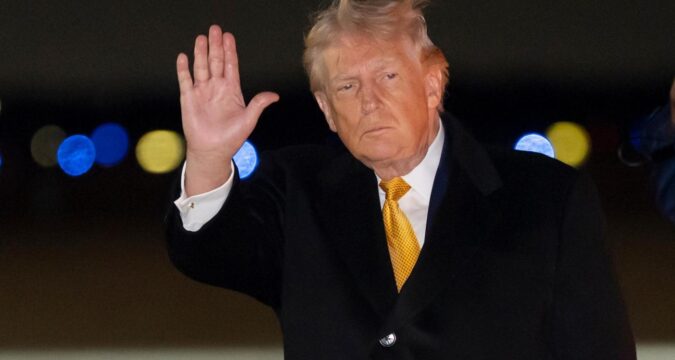
US capture of Venezuelan President Nicolás Maduro divides a changed region, thrilling Trump’s allies and threatening his foes
MEXICO CITY — In his celebratory news conference on the U.S. capture of Venezuelan strongman leader Nicolás Maduro, President Donald Trump set out an extraordinarily forthright view of the use of U.S. power in Latin America that exposed political divisions from Mexico to Argentina as Trump-friendly leaders rise across the region.
“American dominance in the Western Hemisphere will never be questioned again,” Trump proclaimed just hours before Maduro was perp-walked through the offices of the U.S. Drug Enforcement Administration in New York.
The scene marked a stunning culmination of months of escalation in Washington’s confrontation with Caracas that has reawakened memories of a past era of blatant U.S. interventionism in the region.
Since assuming office less than a year ago — and promptly renaming the Gulf of Mexico as the Gulf of America — Trump has launched boat strikes against alleged drug traffickers in the Caribbean, ordered a naval blockade on Venezuelan oil exports and meddled in elections in Honduras and Argentina.
Through a combination of tariffs, sanctions and military force, he has pressured Latin American leaders to advance his administration’s goals of combating drug trafficking, halting immigration, securing strategic natural resources and countering the influence of Russia and China.
The new, aggressive foreign policy — which Trump now calls the “Donroe Doctrine,” in reference to 19th-century President James Monroe’s belief that the U.S. should dominate its sphere of influence — has carved the hemisphere into allies and foes.
“The Trump administration in multiple different ways has been trying to reshape Latin American politics,” said Gimena Sanchez, Andes director for the Washington Office on Latin America, a think tank. “They’re showing their teeth in the whole region.”
Reactions to US raid put regional divisions on display
Saturday’s dramatic events — including Trump’s vow that Washington would “run” Venezuela and seize control of its oil sector — galvanized opposite sides of the polarized continent.
Argentine President Javier Milei, Trump’s ideological soulmate, characterized one side as supporting “democracy, the defense of life, freedom and property.”
President Donald Trump’s plan to seize and revitalize Venezuela’s oil industry faces major hurdles
“On the other side,” he added, “are those accomplices of a narco-terrorist and bloody dictatorship that has been a cancer for our region.”
Other right-wing leaders in South America similarly seized on Maduro’s ouster to declare their ideological affinity with Trump.
In Ecuador, conservative President Daniel Noboa issued a stern warning for all followers of Hugo Chávez, Maduro’s mentor and the founder of the Bolivarian revolution: “Your structure will completely collapse across the entire continent.”
In Chile, where a presidential election last month marked by fears over Venezuelan immigration brought down the leftist government, far-right President-elect José Antonio Kast hailed the U.S. raid as “great news for the region.”
But left-wing presidents in Latin America — including Brazil’s Luiz Inácio Lula da Silva, Mexico’s Claudia Sheinbaum, Chile’s Gabriel Boric and Colombia’s Gustavo Petro — expressed grave concerns over what they saw as U.S. bullying.
Lula said the raid set “an extremely dangerous precedent.” Sheinbaum warned it “jeopardizes regional stability.” Boric said it “violated an essential pillar of international law.” Petro called it “aggression against the sovereignty of Venezuela and of Latin America.”
Trump has previously punished or threatened all four leaders for failing to fall in line with his demands, while boosting and bailing out allies who show loyalty.
The attack recalls a painful history of US intervention
For Lula — among the last surviving icons of the so-called “pink tide,” the leftist leaders who dominated Latin American politics from the turn of the 21st century — Trump’s military action in Venezuela “recalls the worst moments of interference in the politics of Latin America.”
Those moments range from American troops occupying Central American and Caribbean nations to promote the interests of U.S. companies like Chiquita in the early 1900s to Washington supporting repressive military dictatorships in Argentina, Brazil, Chile, Paraguay and Uruguay to fend off Soviet influence in the 1970s.
The historical echoes in Maduro’s downfall fueled not only harsh condemnations and street protests among Trump’s left-wing opponents but also uneasy responses from some of his close allies.
Usually effusive in his support for Trump, President Nayib Bukele was oddly quiet in El Salvador, a nation still scarred by a brutal civil war between a repressive U.S.-allied government and leftist guerillas. He posted a meme mocking Maduro after his capture Saturday, but expressed none of the jubilation seen from regional counterparts.
In Bolivia, where old anti-American dogmas die hard due to memories of the bloody U.S.-backed war on drugs, new conservative President Rodrigo Paz praised Maduro’s removal insomuch as it fulfilled “the true popular will” of Venezuelans who tried to vote the autocrat out of office in a 2024 election widely seen as fraudulent.
“Bolivia reaffirms that the way out for Venezuela is to respect the vote,” Paz said.
His message didn’t age well. Hours later, Trump announced he would work with Maduro’s loyalist vice president, Delcy Rodríguez, rather than the opposition that prevailed in the 2024 election.
“The Trump administration, it appears at this point, is making decisions about the democratic future of Venezuela without referring back to the democratic result,” said Kevin Whitaker, former deputy chief of mission for the State Department in Caracas.
When asked Sunday about when Venezuela will hold democratic elections, Trump responded: “I think we’re looking more at getting it fixed.”
As the right rises, Trump puts enemies on notice
The Trump administration’s attack on Venezuela extends its broader crusade to assemble a column of allied — or at least acquiescent — governments in Latin America, sailing with the political winds blowing in much of the region.
Recent presidential elections from Chile to Honduras have elevated tough, Trump-like leaders who oppose immigration, prioritize security and promise a return to better, bygone eras free of globalization and “wokeness.”
“The president is going to be looking for allied and partner nations in the hemisphere who share his kind of broader ideological affinity,” said Alexander Gray, a senior fellow at the Atlantic Council, a Washington research institute.
Those who don’t share that ideology were put on notice this weekend. Trump said Cuba’s Communist government “looks like it’s ready to fall.” He slammed Sheinbaum’s failure to root out Mexican cartels, saying that “something’s going to have to be done with Mexico.” He repeated allegations that Petro “likes making cocaine” and warned that “he’s not going to be doing it very long.”
“We’re in the business of having countries around us that are viable and successful, where the oil is allowed to really come out,” he told reporters Sunday on Air Force One. “It’s our hemisphere.”
https://www.chicagotribune.com/2026/01/05/capture-nicolas-maduro-trump/
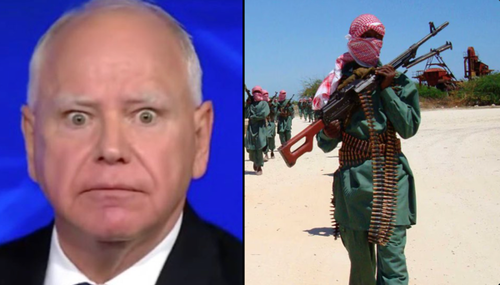
Tim Walz Reportedly Dropping Out Of MN Governor Race
Tim Walz Reportedly Dropping Out Of MN Governor Race
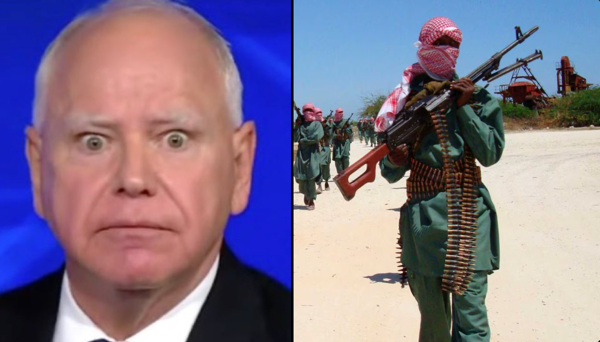
A Minnesota-based political analyst reported late Sunday night on X that embattled Gov. Tim Walz is expected to make a major announcement Monday morning regarding the future of his political career, as national scrutiny intensifies over an alleged multi-billion-dollar Somali-linked welfare fraud scheme involving daycare centers and autism clinics in the state.
“BREAKING: Sources: Gov. Tim Walz will make an announcement about his political future Monday. He’s likely to drop out of the 2026 mngov race,” Minnesota political analyst Blois Olson wrote on X.
🚨 BREAKING: Sources: @govtimwalz will make announcement about his political future Mon. He’s likely to drop out of the 2026 #mngov race.
He met w/ @SenAmyKlobuchar on Sun. Full analysis in tmrw https://t.co/4zJJytH4Aw + live on @wccoradio at 6:20AM w/ @vsawkar
— Blois Olson (@bloisolson) January 5, 2026
Olson has been a political analyst and longtime contributor to WCCO Radio in the Twin Cities area, making him a seasoned political observer who appears to have some inside information on Walz’s likely decision later this morning.
Local TV station KARE 11 reports that Walz plans to hold a press briefing at 11:00 a.m. local time. However, the outlet noted that Walz’s office has not confirmed the briefing’s topic.
Hamline University political science professor David Schultz told the outlet that Walz faces a massive uphill battle in winning a third term.
“It’s possible, but it’s going to be very difficult,” Schultz said, adding that no Minnesota governor has managed to secure a third term.
The timing of Walz’s news briefing comes as the nation has been shocked by the alleged Somali-linked welfare fraud that has occurred under leftist Walz and the Democratic Party in the state.
In 2021, Tim Walz awarded Ayan Abukar the “Outstanding Refugee Award.”
In 2023, Abukar was INDICTED for fraud.
And yet, Walz still wants to blame President Trump for the massive fraud scheme in Minnesota. pic.twitter.com/wXmpBRllwx
— Christian Collins (@CollinsforTX) January 2, 2026
Assistant U.S. Attorney Joe Thompson said last month that he believes the total amount defrauded from 14 Medicaid programs in Minnesota could exceed $9 billion.
“What we see in Minnesota is not a handful of bad actors committing crimes,” Thompson told reporters. “It’s a staggering industrial-scale fraud. It’s swamping Minnesota and calling into question everything we know about our state.”
Recall that Walz, Rep. Ilhan Omar (D-Minn.), and other Democrats attempted to combat welfare fraud accusations with the “racist” card against anyone investigating daycares and autism clinics in the state. That strategy is no longer working. The era in which the Democratic Party could shield itself behind race to deflect corruption is over.
More importantly, as Christopher Rufo’s reporting indicates, the welfare fraud scheme has escalated into a national security concern, given allegations that some of these taxpayer funds ultimately flowed to a terrorist group in Somalia.
Related:
MSM Panics After Nick Shirley Bombshell As CBS Pledges To Start Reporting Real News
SBA Suspends 7,000 Minnesota Borrowers Over “Suspected Fraudulent Activity”
Front Companies? Bombshell Report Exposes Network Of Somali-Linked “Empty” Daycares Across Minnesota
Furthermore, shame on the corporate media for downplaying and even attempting to discredit Nick Shirley’s reporting. MSM was exposed as acting more like a PR operation than a news organization, with CBS reportedly panicking as the story went viral.
Tyler Durden
Mon, 01/05/2026 – 09:05

Always smiling, Kymora Baker ‘has that light’ to lead the way for Morton. Wins become much easier to find.
Morton coach JaMesha Harris was quick to point out junior forward Kymora Baker’s facial expression during a sequence at a recent practice.
“Look at her smiling — she’s smiling on a layup,” Harris said. “She just does it. I ask her, ‘What are you smiling about?’ She’s just smiling. She doesn’t know.”
After all, the 5-foot-7 Baker and the Governors have plenty of reasons to smile. She has made significant strides, and Morton (11-1) is in position to increase its win total for the fourth time in as many seasons under Harris.
Baker was averaging 7.1 points, 5.2 rebounds, 1.3 assists and 2.6 steals before Morton’s two victories over the weekend during a tournament in Chicago, solidifying her spot as a key player alongside star junior guard/forward Kylah Patterson.
Harris took another moment during practice to highlight Baker’s development.
“She literally just made a three,” Harris said. “Her freshman year, she wouldn’t even shoot that three. Barely her sophomore year would she shoot that three. She didn’t have that much confidence in her game. She didn’t have as much confidence in her game as I had in her game.
“Overall, her coming in every day in the summer and offseason, she’s improved so much. The offseason was her best season. She worked on her game, and she just got more confident.”
Indeed, Baker’s elevated skill and self-assurance are products of the time she has invested. She averaged 4.1 points and 6.3 rebounds last season, when the Governors went 16-6.
“Freshman year, I was just out there,” Baker said. “I really started taking it seriously my sophomore year and really junior year. I’ve just been in the gym doing whatever I can to get better.
“It’s confidence and just pushing myself as far as I can without giving up. I’ve improved tremendously. My mindset changed, my dribbling changed, my shot changed.”
The Governors, whose only loss this season came against Marquette and who have victories against the likes of Crown Point, Lowell and Andrean, aim to change their recent postseason history. They last won a sectional title in 1983 and haven’t won any sectional games since 2017.
But Harris downplayed talk of those possibilities.
“I’m focused on short-term goals,” she said. “I don’t want to get out to the big picture yet. Our big goal is defense. We want to play the best defense that we can. Last year, we were going to outscore you. But this year, we don’t have to do that. We don’t want to do that.
“Our focus has to be on playing defense and stopping teams. People want to see you score a lot. But it’s about solid defense, doing the basics. Offense sells tickets, but defense wins games.”
Morton’s Kymora Baker, right, guards Crown Point’s Ava Richie during a nonconference game in Crown Point on Wednesday, Dec. 18, 2024. (Andy Lavalley / Post-Tribune)
Baker contributes mightily in that area.
“Kymora is a go-getter,” Harris said. “For her first two years, she was learning. She was giving me defense — defense only. But she worked really hard over the summer on her offensive game, getting her confidence in her dribbling and her shooting, shooting her threes.
“Overall, her game is better. But she’s still going to be that one if I need a defensive stop, she’s going to give it to me.”
Harris and Baker continued to build that relationship and trust in the fall. Baker was the quarterback for Morton’s flag football team, which Harris also coached. In the inaugural season of the Indiana High School Athletic Association’s emerging sport, the Governors went undefeated until losing to Munster in the sectional.
“I always wanted to play,” Baker said of football. “I love sports. I was like, ‘Why not?’”
Baker also was a regional qualifier in the long jump last spring, and she’s part of Morton’s cheerleading team.
But basketball tops Baker’s pecking order.
“I knew I wanted to play,” she said. “I like to play aggressive sports. That’s why I knew basketball was for me.”
Baker’s passion has translated on the court.
“She’s a great leader,” Morton senior forward/center Dalanie Jones said. “She gives us our energy.”
Baker also puts a lot of energy into attending the Area Career Center on school days. Studying cosmetology, she’s gaining hands-on experience. She has a particular interest in hair styling and aspires to own a salon.
Harris believes Baker has the personality to excel in such a people-driven business.
“She’s really funny,” Harris said. “If we’re having a bad day, she’s going to make us laugh. She’s going to laugh regardless. No matter the situation, Kymora is going to laugh. She’s going to find the humor.
“She has that light that we need when we’re having a bad game or a bad practice.”
https://www.chicagotribune.com/2026/01/05/basketball-hammond-morton-kymora-baker/
Meet Mamdani’s Biden Expats
Meet Mamdani’s Biden Expats
Authored by David Dayen via prospect.org,
Last week, Zohran Mamdani was sworn in as the 111th mayor of New York City. This would have been scarcely thought possible just one year ago. The spirit with which Mamdani organized and beat an avatar of the state political establishment—twice—sustained progressives during the long winter of 2025 and provided some hope that charisma, expert use of modern communications, and a laser focus on the cost of living could produce a winning formula.
But as campaigning shifts to governing, those skills in isolation are unlikely to enable Mamdani to solidify public goodwill. The experience of the past several years, with presidents of both parties, has reinforced that delivering tangible results that people can feel is the only thing that earns chief executives lasting support. Taking on fights and naming villains and demonstrating who you care about can get you far, but that must be accompanied by follow-through.
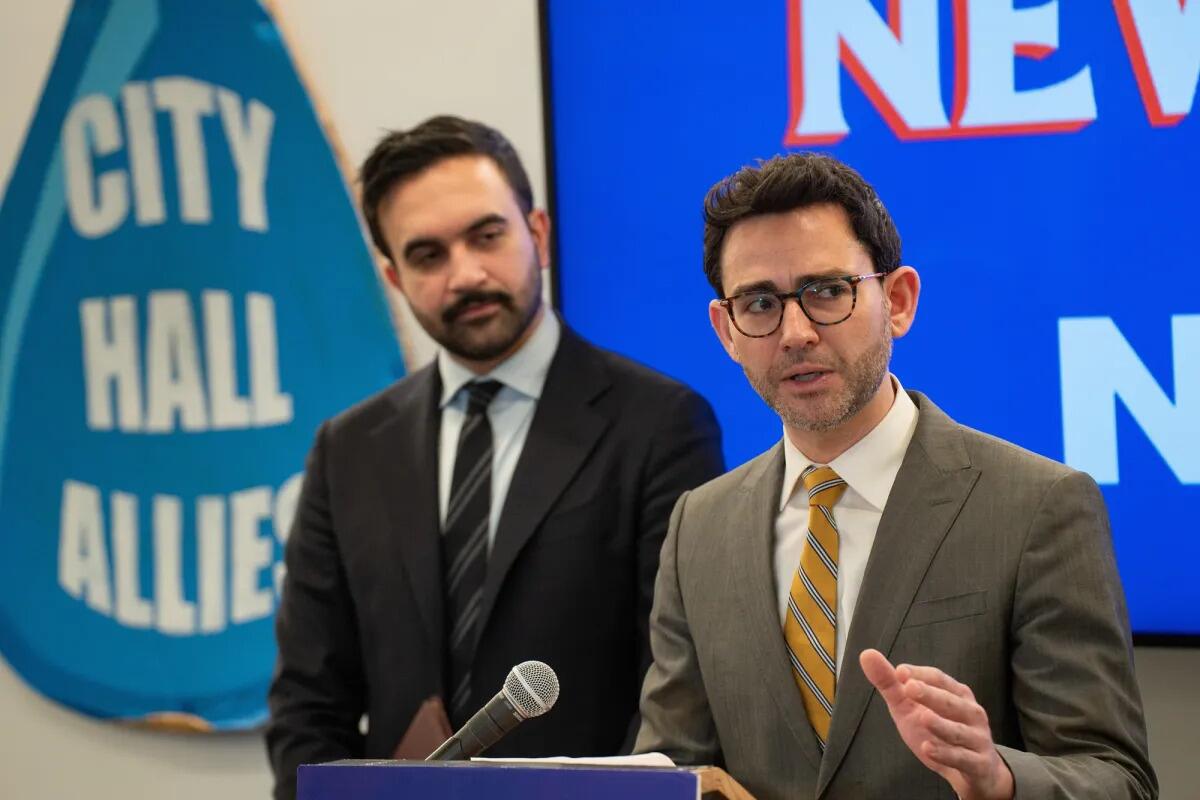
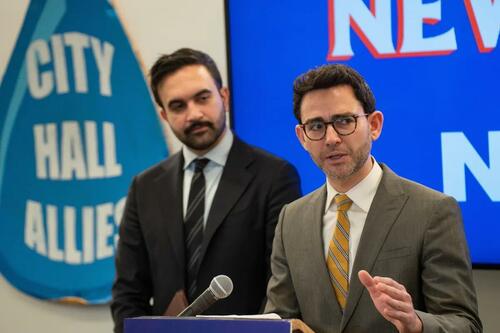
That reality makes Mamdani’s choices of people implementing his agenda quite interesting. Increasingly, he has turned to refugees from the Biden administration who (too quietly) carried out some of the more effective pieces of the former president’s agenda. New York City will have a Biden cabinet member in a deputy mayor role, and a top consumer protection official leading a local agency. Lina Khan, the former Federal Trade Commission chair, co-chaired Mamdani’s transition team and may have a role in his government; that is to be determined, sources tell the Prospect.
The more conventional trajectory for these kinds of public officials after a presidential term is congressional or statewide elected office, or in the worst-case scenario, a high-paying position at one of the entities they used to regulate. That these individuals would step down from the U.S. executive branch to municipal management speaks to how much left-wing populists want to help Mamdani succeed and are thrilled by a government that leads with concern for its working-class constituents.
“It’s something I really felt like I had to do,” said Julie Su, the acting labor secretary for nearly two years under Biden, who will serve in the new position of deputy mayor for economic justice, something she relished. “Not economic development, not economic growth. Justice! The idea that you can care about just outcomes is huge, and that it’s the responsibility of government to make that happen.”
The Biden expats have an important role in the Mamdani administration. Much of his first-term agenda, from universal child care to faster fare-free bus service, hinges on getting the necessary funding through higher taxes on the wealthy. Functionally speaking, that battle will be fought in Albany, against a skeptical governor and the bureaucracy of the legislature. But existing laws on the books give Mamdani the opportunity to make immediate progress through rigorous enforcement, buying time and building momentum for the bigger fights to come.
Take Sam Levine’s new role as head of the Department of Consumer and Worker Protection (DCWP). Levine was the lead consumer protection official at Khan’s FTC, and since that ended he has engaged in research about the increasing sophistication of technology-fueled pricing, including an excellent report about how companies use loyalty cards to entice customers and scrape their data to use in maximizing profits.
Tyler Durden
Mon, 01/05/2026 – 08:45
https://www.zerohedge.com/political/meet-mamdanis-biden-expats
Stocks, Gold, Bitcoin All Jump As Venezuela Concerns Outweighted By AI Optimism
Stocks, Gold, Bitcoin All Jump As Venezuela Concerns Outweighted By AI Optimism
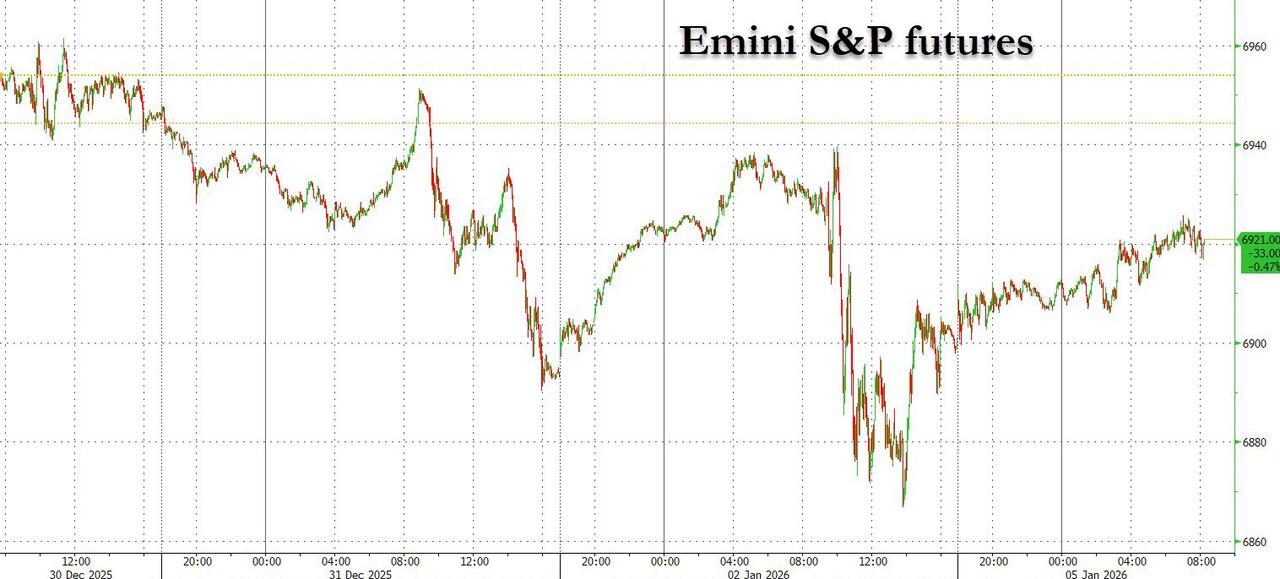
Global stocks, US futures, gold, the dollar and bitcoin all rose after the purge of Venezuela’s President Nicolas Maduro fanned geopolitical risk, while renewed momentum in the AI trade powered tech heavyweights in Asian hours. As of 8:15am ET, S&P futures were up 0.3% while Nasdaq futures gained 0.6%, with chip stocks such as AMD, Micron Technology and Intel gaining more than 3% in premarket trading. . In Europe, the Stoxx 600 rose 0.4% and was on course for a record close with most of the upside coming from a handful of sectors. Tech stocks are leading, as they did in Asia overnight. Spot gold advanced nearly 2% to climb above $4,410 an ounce, while silver jumped more than 3%. A gauge of the dollar headed for its biggest gain in two weeks. The US economic calendar includes December ISM manufacturing at 10am; ahead this week are S&P Global US services PMI, ADP employment change, ISM services index, JOLTS job openings, factory orders and December employment. No Fed speakers are scheduled for Monday; Richmond Fed’s Barkin is set to speak on the economic outlook on Tuesday.
In premarket trading, Mag 7 stocks are mostly green (Tesla +1.5%, Nvidia +1.5%, Amazon +0.4%, Alphabet +0.2%, Microsoft +0.1%, Apple -0.2%, Meta -0.1%).
Energy names including Chevron (CVX +6%) and Baker Hughes (BKR +6%) are rallying after President Donald Trump said a team of US officials will “run” Venezuela and that Washington requires “total access” to the country, including its oil reserves.
Gold stocks, including Newmont (NEM +1.7%) and Barrick Mining (B +1.8%) are higher as precious metals advance while investors weigh elevated geopolitical risks.
Memory and semiconductor equipment stocks rise amid continued optimism over the rollout of AI. Micron (MU) +3%, and Sandisk (SNDK) +4%
Centene (CNC) rises 1.8% and Oscar Health (OSCR) gains 3% after Barclays upgraded both health insurance names. Barclays writes that Centene has “attractive” margin upside from the Affordable Care Act exchange, while Oscar is “priced attractively and the market is currently over-discounting the negative outcomes from expiring subsidies.”
Estee Lauder (EL) gains 4% after Raymond James analyst Olivia Tong raised her recommendation on the beauty company to strong buy. Her price target of $130 is the highest of all analysts tracked by Bloomberg.
Fortive Corp. (FTV) falls 1.5% premarket after Mizuho Securities analyst Brett Linzey cut the recommendation on the industrial technology company to underperform, expecting “a slow start to ‘26 across more than half of its portfolio (government, medical, retail/consumer) as funding delays and uncertainty persists.”
GH Research (GHRS) soars 36% after saying that the FDA has lifted the clinical hold on its investigational new drug application for GH001, allowing US subject enrollment and advancing the company toward initiating its global Phase 3 program in 2026.
Mobileye (MBLY) rises 7% after saying an unnamed US-based automaker has chosen its EyeQ6H chip powered solution as standard across mass-market to premium vehicles.
QXO (QXO) climbs 4% after the company confirmed that funds managed by Apollo Global and other investors agreed to invest $1.2 billion through a new series of convertible perpetual preferred stock to strengthen the company’s financial flexibility for acquisitions.
Zenas Biopharma (ZBIO) slumps 49% after detailing results from a Phase 3 trial of obexelimab in immunoglobulin G4-related disease.
In corporate news, Musk’s Grok is facing mounting criticism and threats of government action around the world. The AI chatbot created sexualized images, including of minors, on the social media platform X in response to user prompts. Saks is said to be in talks for a $1 billion bankruptcy loan to keep the business running.
Trump’s assertion that the US will run Venezuela, at least temporarily, means the country has a shot at restoring democracy and prosperity, according to Latin America Geo-economics analyst Jimena Zuniga. Hedge Fund Tribeca eyes a “massive gold rush” of investment opportunities in the country. On the geopoltical front, Secretary of State Rubio said the US will use leverage over oil to force further change in Venezuela and demanded it sever ties with Iran, Hezbollah and Cuba. Social media users in China are pointing to the US attack as providing a template for a possible move against Taiwan.
Brent crude swung between gains and losses as oil traders weighed the fallout from the developments in Caracas. Chevron Corp. rose more than 6% in early trading, alongside sharp gains across US oil majors, after President Donald Trump floated plans for a US-led revival of Venezuela’s industry.
“The economic impact of what happened in Venezuela is too small to weigh on equity markets,” said Christopher Dembik, senior investment adviser at Pictet Asset Management. “That’s also true when it comes to oil: people have had the time to take a look at the data and in the most optimistic scenario, it will take two or three years to have a significant impact.”
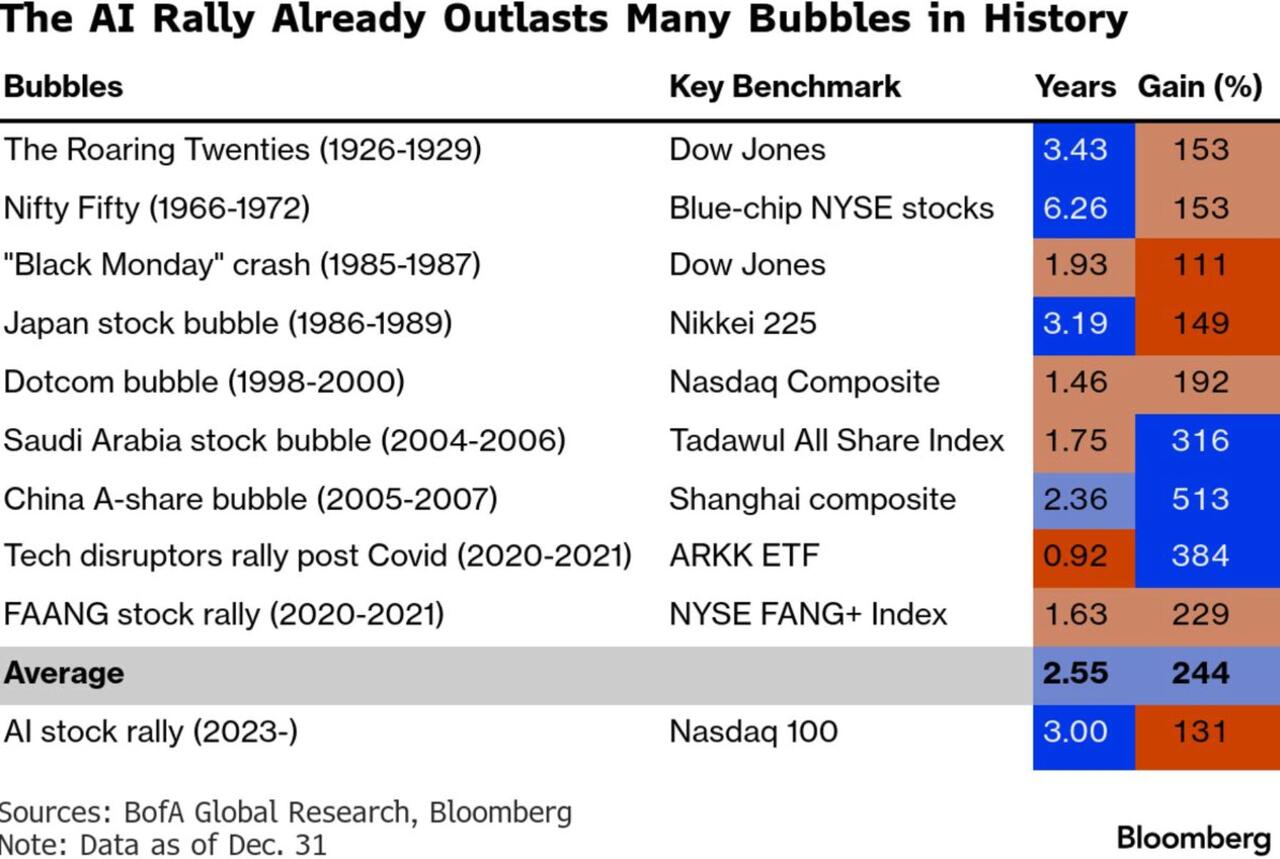
Meanwhile, AI remains the hot topic for equity traders this Monday. Nvidia partner Hon Hai’s quarterly sales beat estimates after global tech firms accelerated their build-out of data centers, TSMC jumped after Goldman analysts lifted their price target by 35% and a Chinese national investment fund raised its stake in SMIC. And while some investors are asking if the AI boom is a bubble waiting to pop, history suggests the answer isn’t easy to gauge as the following table from Bloomberg shows.
The buoyant mood in big tech stocks was most prevalent in Asia, where a regional gauge hit an all-time high. Technology and mining equities led gains in Europe.
AI “absolutely stays the most dominant factor in the markets right now,” Charu Chanana, chief investment strategist at Saxo Markets, told Bloomberg TV. “Tech optimism continues to overpower any of the other narratives.”
Elsewhere, the Fed’s Paulson said modest additional rate cuts could be appropriate later this year, but conditioned that outcome on a benign outlook for the economy. Former Treasury Secretary and Fed Chair Yellen warned of a growing “fiscal dominance” threat to the US economy when she spoke at the AEA’s weekend meeting.
In Europe, the Stoxx 600 is up 0.4% and on course for a record close with most of the upside coming from a handful of sectors. Tech stocks are leading, as they did in Asia overnight. And defense stocks have benefited from the US capture of Venezuela’s President Nicolás Maduro. Oil prices erased an earlier fall to trade slightly higher. Sentiment around artificial intelligence got another boost after a broker upgrade for ASML. Miners also outperform, tracking gains across the metals complex. Here are some of the biggest movers on Monday:
Ashmore shares surge as much as 14%, the steepest gain in more than three years, as analysts expect the emerging-market fund manager’s Venezuelan assets to benefit following the capture by US forces of President Nicolas Maduro.
Saab shares climb as much as 7.1% to a record high as US military strikes on Venezuela lift European defense stocks.
Syensqo shares climb as much as 4.7% after the chemical manufacturer announced a new CEO, and Morgan Stanley seperately said the stock was a top chemicals pick.
Johnson Matthey shares rise as much as 8.1%, hitting their highest level since early 2023, after the chemicals company was upgraded at Berenberg on potential for earnings consensus to rise this year.
ASML shares rally as much as 4.5% to a record high after Bernstein upgraded its rating to outperform from market perform, saying the AI-driven memory-chip super cycle will benefit the chip-equipment firm.
Eurofins shares rise as much as 6.8%, the most since April, after the laboratory-testing company was double upgraded to outperform at BNP Paribas on receding governance concerns.
Next shares drop as much 2.4%, the most since November, as Barclays analysts warn updated guidance due to be issued in Tuesday’s Christmas trading update may be cautious, weighing on sentiment for the stock.
Earlier in the session, Asian equities rose to a record high, supported by gains in tech-heavy markets such as Taiwan and Japan, as investors look past geopolitical risks surrounding Venezuela. The MSCI Asia Pacific Index advanced for a third session, rising as much as 1.7%. TSMC was the major contributor to the index’s gains, after Goldman Sachs raised its price target by 35% on AI opportunities. Samsung Electronics and Alibaba also led gains. Japan’s Nikkei 225 stock gauge jumped nearly 3%, while benchmarks in South Korea and Taiwan notched new record highs. China’s onshore benchmark CSI 300 Index rose 1.9% on its first trading day of 2026, marking its strongest start to a year in over a decade, as technology shares gain. Asian traders brushed off geopolitical risks sparked by US’ capture of Venezuelan President Nicolas Maduro due to the perception of their limited impact to global supply chains. Attention is shifting back to fundamentals, including earnings, while interest in the artificial intelligence theme remains strong.
Emerging-market stocks are on track to hit a record, buoyed by persistent strength in Asian technology shares and a broad rally globally. The MSCI Emerging Markets Index rose as much as 1.5% Monday, poised to surpass a peak notched five years ago.
In FX, the Bloomberg Dollar Spot Index is up 0.1%, having pared gains, with the yen now top of the G-10 FX leaderboard. The pound has also turned positive against the greenback.
In rates, treasury futures hold small gains accumulated during London morning as gilts advanced, with yields near session lows as US day begins. US yields are 2bp-3bp richer across tenors with belly-led gains steepening 5s30s spread by about 1bp. 10-year near 4.165% is 2.6bp richer on the day with UK counterpart outperforming marginally. Coupon auctions resume next week. IG dollar bond issuance slate contains several offerings to begin a week anticipated to be among the year’s busiest; Treasury coupon supply resumes next week with 3-, 10- and 30-year auctions.
“There are too many uncertainties to contend with,” wrote Mohit Kumar, chief economist and strategist for Europe at Jefferies. “Near-term drivers are likely to shift back to macro – the AI debate, unemployment and inflation picture and the large supply in government and corporate bonds in January.”
In commodities, spot silver climbs 3%, having briefly topped $76/oz. Gold and most base metals are also in the green. Oil prices are up slightly after paring losses, showing muted impact from weekend US capture of Venezuela’s president. US session includes December ISM manufacturing gauge. Bitcoin climbs 1.8% to about % $93,000.
Today’s US economic calendar includes December ISM manufacturing at 10am; ahead this week are S&P Global US services PMI, ADP employment change, ISM services index, JOLTS job openings, factory orders and December employment. No Fed speakers are scheduled for Monday; Richmond Fed’s Barkin is set to speak on the economic outlook on Tuesday
Market Snapshot
S&P 500 mini +0.3%
Nasdaq 100 mini +0.7%
Russell 2000 mini little changed
Stoxx Europe 600 +0.4%
DAX +0.8%
CAC 40 little changed
10-year Treasury yield -2 basis points at 4.17%
VIX +0.6 points at 15.13
Bloomberg Dollar Index +0.2% at 1206.8
euro -0.3% at $1.1687
WTI crude little changed at $57.33/barrel
Top Overnight News
Venezuela’s deposed leader Nicolas Maduro was due in a New York court on Monday to face drug charges while the U.N. was to scrutinize the legality of U.S. President Donald Trump’s extraordinary operation to capture him. After first denouncing Maduro’s capture as a colonial oil-grab and “kidnapping”, Venezuela’s acting president Delcy Rodriguez changed her tune on Sunday, saying it was a priority to have respectful relations with Washington. RTRS
Trump on Sunday predicted Cuba’s government could soon collapse and threatened Colombia’s president, a stark warning that underscored his administration’s increasingly aggressive posture toward leftist governments across Latin America. Trump reiterated his desire to annex Greenland, as well. Politico
White House is considering giving Homeland Security Adviser Stephen Miller a greater role in overseeing operations in post-Maduro Venezuela, according to Washington Post.
China asked its policy banks and other major lenders to report their lending exposure to Venezuela, people familiar said. BBG
Moscow accused Kyiv on Monday of trying to strike a residence of Putin in Russia’s northern Novgorod region with 91 long-range attack drones, and said Russia would review its negotiating position in ongoing talks with the U.S. on ending the Ukraine war. Trump said he did not believe that an alleged Ukrainian strike on President Vladimir Putin’s residence took place as claimed by Russia. RTRS
Volodymyr Zelenskiy said the US will join the EU for talks in Paris tomorrow on security guarantees for Ukraine. Meanwhile, Trump said he’s “not thrilled” with Russian leader Vladimir Putin because he’s “killing too many people.” BBG
Chinese social media users suggest Maduro’s capture as a potential template for Beijing to handle Taiwan. But Taiwanese officials expect the US action will act as a deterrent against China attacking the island, a person familiar said. BBG
Bank of Japan Governor Kazuo Ueda said on Monday the central bank will continue to raise interest rates if economic and price developments move in line with its forecasts. BBG
The Fed’s Anna Paulson said modest rate cuts may be appropriate later in 2026. She expects inflation to continue easing, the labor market to stabilize and growth to run near 2%. BBG
OPEC+ agreed to pause supply increases through the first quarter amid a looming surplus. Delegates said Venezuela was not discussed at the brief meeting yesterday. BBG
Fed’s Paulson (2026 voter) said she sees inflation moderating, the labour market stabilising and growth coming around 2% this year, while she added that if all of that happens, then some further adjustments to the Fed Funds Rate would likely be appropriate later in the year. Paulson said she views the current level of rates as still restrictive and sees a decent chance that they will end the year with inflation that is close to 2% on a run-rate basis, as tariff-related price adjustments will likely be completed. Furthermore, she stated that while the labour market is bending, it is not breaking and that the baseline outlook for the economy is pretty benign.
Nomura CEO sees the Fed cutting rates twice this year.
Trade/Tariffs
US President Trump said could raise tariffs on India if they don’t help on Russian oil issue.
US President Trump blocked HieFo Corp’s USD 3mln acquisition of assets in New Jersey-based aerospace and defence specialist Emcore on Friday and ordered HieFo to divest all interests and rights in Emcore assets due to national security and China-related concerns, according to Reuters.
Irish PM Martin arrived in Beijing as part of a five-day visit aimed at boosting trade between the two countries, according to Chinese state media. There were later reports that Chinese President Xi said in a meeting with Ireland’s PM that China and the EU should take a long-term view and adhere to the positioning of partnership, while Xi also commented that unilateral bullying is undermining the international order.
A more detailed look at global markets courtesy of Newsquawk
APAC stocks were mostly higher as the region shrugged off the US strike on Venezuela and resumed last year’s semiconductor-led rally which lifted the KOSPI to a record high, while TSMC shares also notched firm gains after Goldman Sachs raised its price target by 35% and its ADR’s jumped late last week to become the sixth-largest company in the world by market cap. ASX 200 was flat as gains in mining and material stocks were counterbalanced by losses in the tech and consumer sectors.
Nikkei 225 rallied on its first trading session of 2026 with notable strength in the heavy industries and semiconductor stocks. Hang Seng and Shanghai Comp traded mixed as the Hong Kong benchmark lagged and with the mainland buoyed on return from the New Year holiday closure, which saw the Shanghai Comp reclaim the 4,000 status, while participants digested the latest RatingDog Services PMI, which matched estimates at 52.0 (prev. 52.1) and the Composite figure slightly accelerated to 51.3 (prev. 51.2).
Top Asian News
Japanese PM Takaichi said will pursue economic growth relentlessly.
Japanese PM Takaichi said 2026 can be a major turning point for Japan, adds Rapidus holds key to Japan’s chip revival.
Chinese President Xi said unilateral bullying is undermining international order, according to Bloomberg.
European bourses (STOXX 600 +0.4%) are broadly on a stronger footing this morning (ex-SMI), with sentiment seemingly boosted by the US strike on Venezuela. A move which has pressured energy prices, and perhaps boosts optimism surrounding cheaper oil for global firms. European sectors are mixed, with Tech, Industrials and Basic Resources forming the top three; Tech lifted by ASML, Industrials by defence names and Basic Resources benefits from stronger copper prices. Food Beverage & Tobacco lags, hampered by Nestle. ASML (+3%) has been boosted after Bernstein named the Co. as its top pick for 2026, citing a combination of accelerating memory investment and a more attractive valuation backdrop; its updated PT of EUR 1300/shr (prev. EUR 800/shr), implies a circa 30% gain from current levels.
Top European News
UK PM Starmer said the UK should move to closer alignment with the European single market on an “issue-by-issue” basis if it is in the national interest, according to Reuters.
Chinese President Xi said in a meeting with Ireland’s PM that China and the EU should take a long-term view and adhere to the positioning of partnership and view, according to Xinhua.
FX
Dollar benefitted overnight from the mild losses in its major peers and with some haven appeal following the US intervention in Venezuela, with President Trump stating that the US will ‘run’ Venezuela and ‘fix oil infrastructure’, while he also signalled potentially widening their focus in the region to Cuba and Colombia.
“Given the uncertainty about how the next few days will pan out, investors will probably prefer the liquidity of the dollar”, suggests the analysts at ING, whilst adding that “Away from Venezuela, the dollar could also be enjoying some delayed buying interest after the blow-out 4.3% quarter-on-quarter annualised US third quarter GDP figure released on 23 December.”
Aside from that, little to mention on FX during the European session thus far. JPY sees shallower losses than other peers on haven appeal, although the CHF has plumbed the depths, although no obvious catalysts to explain the downside. GBP narrowly outperforms the as the cross fell under 0.8700 for the first time since Oct 2025. AUD and NZD are both subdued by the Buck, although the AUD/NZD cross remains above 1.1600 amid firmer copper prices.
Fixed Income
A slightly firmer start for Bunds and USTs. All focus on the geopolitical situation re. Venezuela, with newsflow otherwise a little light.
Bunds up to a 127.31 peak with gains of 20 ticks at best. However, the benchmark has since trimmed to unchanged but remains clear of the overnight 126.98 low. Within Europe, focus on Dutch pension reform as while the switch in the pension system has been long flagged, the full scale of the impact is not yet known.
USTs similar, hit a 112-12 peak with strength of six ticks at best before fading to just above unchanged but above the 112-05 base.
JGBs sold overnight as the 10yr yield hit another multi-year high amid outperformance in domestic stocks.
Ahead, US ISM Manufacturing is the main scheduled event. However, any fresh updates on the geopolitical situation will undoubtedly take centre stage.
Commodities
Crude benchmarks was choppy in APAC trade, but then moved lower in the early portion of this morning, as traders digest the US strike on Venezuela and the capturing of President Maduro. US President Trump commented that they are going to run Venezuela and “get oil flowing like it should be”. This hints of further addition of oil into an already-oversupplied market, causing Brent to fall below USD 60/bbl. Since, the complex has trimmed earlier losses to now trade around unchanged; Brent Mar in a USD 59.75-61.24/bbl parameter.
Spot XAU gapped higher, opening at USD 4357/oz, and continued to trend higher to an APAC session high of USD 4420/oz. Currently, XAU is trading at session highs of USD 4432/oz, with demand for safe havens rising, following the Venezuela strike, but also potential further rate cuts by the Fed and continued concerns over US fiscal debt
3M LME Copper gapped above the range formed in the past 2 trading sessions, opening at USD 12.68k/t and driving to a high of USD 12.88k/t as the APAC session got underway. The red metal consolidated before briefly extending to a new session high of USD 12.91k/t. However, price pulled back but 3M LME Copper remains above USD 12.8k/t and just shy of ATHs at USD 12.97k/t.
OPEC+ agreed to keep the group’s output unchanged as expected following a brief meeting on Sunday.
Venezuela’s oil exports, which had dropped to a minimum amid the US blockade of sanctioned tankers, are said to now be paralysed as port captains have not received requests to authorise loaded ships to set sail, according to four sources close to operations cited by Reuters.
Former top Chevron executive is raising USD 2bln for Venezuelan oil projects as investors race to heed Trump’s call to pour “billions of dollars” into the country, according to FT.
Goldman Sachs said Venezuela’s oil production could increase in the long term and that scope for higher Venezuelan oil output could eventually pressure prices, according to Bloomberg.
Geopolitics
US President Trump announced on Saturday that the US successfully carried out a large-scale strike against Venezuela, while he added that President Maduro and his wife were captured and flown out of Venezuela. Trump also commented that they are going to run Venezuela until such a time that they can do a safe, proper and judicious transition, while he added they are going to run Venezuela with a group and will get oil flowing like it should be, with Trump anticipating US oil producers spending billions in Venezuela.
US President Trump said they are ready to stage a second strike if necessary and had assumed a second wave was needed, but now probably not. Furthermore, he said the US is not afraid of boots on the ground in Venezuela, and commented that they will be ‘reimbursed’ and will be selling large amounts of oil to other countries. It was separately reported that President Trump signalled the US could widen its focus in the region to Cuba, and he will be meeting with House Republicans in a closed-door meeting on Tuesday, following mixed reactions to the Venezuela attack including praise from top Republicans regarding the operation and questions by some lawmakers regarding the legal authority.
US President Trump said it sounds good to him regarding whether there will be an operation in Colombia, while he added that Colombia is very sick as the country is being run by a sick man, but he won’t be doing it very long. Trump also commented that Cuba looks like it is ready to fall and looks like ‘its going down for the count’. Furthermore, Trump said if Venezuela doesn’t behave, the US will do a second strike on Venezuela and noted that troops on the ground in Venezuela depend on how they act, while it was separately reported that Trump warned of dire consequences if Venezuela fails to meet US demands.
Venezuela’s VP Rodriguez was granted temporary presidential powers, while she called for the return of Maduro and said the capture of Maduro has a ‘Zionist tint’. Furthermore, she said that they will not be anyone’s colony and that what is being done to Venezuela is barbaric.
US Secretary of State Rubio and Defense Secretary Hegseth are among the Trump administration officials to brief some lawmakers regarding Venezuela on Monday, according to Punchbowl and The Hill.
US Transportation Secretary Duffy said original restrictions around the Caribbean airspace were expiring and flights could resume.
World leaders responded to the situation in Venezuela and largely called for restraint and an orderly transition to a legitimate government. Furthermore, German Chancellor Merz said the legal assessment of US strikes in Venezuela was complex, while Spanish PM Sanchez said they will not recognise a US intervention in Venezuela that violates international law, and UK PM Starmer said the UK sheds no tears about the end of Maduro’s regime.
China said the US should immediately release Venezuela’s Maduro and his wife and resolve the situation in Venezuela through dialogue and negotiation, according to Reuters. It was separately reported by Bloomberg that China was deeply shocked and strongly condemned the hegemonic acts by the US and that threaten peace and security in Latin America and the Caribbean region, while other allies of Venezuela’s allies including Brazil denounced the US attack, and Russia also criticised it as an ‘unacceptable violation of the sovereignty of an independent state’.
UN Security Council is to convene an emergency meeting on Monday to discuss the US operation in Venezuela.
US President Trump said he is not thrilled with Russian President Putin regarding the war in Ukraine and said that too many people are dying, according to Bloomberg. Trump separately commented that there is no deadline on a Russia-Ukraine deal, while he thinks they will have a deal on Russia and Ukraine in the not-too-distant future.
Moscow claims Ukraine is escalating drone attacks on Russia and has targeted Moscow with drones every day of 2026 so far, according to The Guardian.
US President Trump said could raise tariffs on India if they don’t help on Russian oil issue.
US President Trump said it sounds good to him regarding whether there will be an operation on Colombia, adds Colombia is very sick as the country is being run by a sick man… but he won’t be doing it very long. said:. If they don’t behave, we will do a second strike on Venezuela, also noted that troops on the ground in Venezuela depend on how they act. No deadline on Russia-Ukraine deal. Think we’ll have a deal on Russia and Ukraine in the not-too-distant future. Cuba looks like it is ready to fall and looks like ‘its going down for the count’.
Large-scale fire broke in the area of the “Energiya” plant in Russia’s Lipetsk region following a drone attack.
Iran’s Supreme Leader Khamenei labelled protestors ‘enemy mercenaries’, while he approved a crackdown and said that rioters must be put in their place, according to Iran International. It was separately reported by Reuters that US President Trump warned Iran on Friday that the US would come to the aid of protesters in Iran if security forces fired on them and said that the US is ‘locked and loaded and ready to go’. In relevant news, Iran’s Revolutionary Guards began a military exercise including missile launches and testing of air defence systems, according to correspondent Amichai Stein on X.
US Event Calendar
Dec Wards Total Vehicle Sales, est. 15.75m, prior 15.6m
10:00 am: Dec ISM Manufacturing, est. 48.44, prior 48.2
10:00 am: Dec ISM Prices Paid, est. 58.7, prior 58.5
DB’s Jim Reid concludes the overnight wrap
As we return for the first full week of 2026, the main story this morning remains the weekend developments in Venezuela, whose President Nicolás Maduro was captured by US forces and taken to New York. To bring you quickly up to speed, events moved rapidly from Saturday morning when reports came through of explosions in the Venezuelan capital Caracas. Then shortly after, President Trump posted that Maduro had been “captured and flown out of the country”. And later on, at a Saturday news conference, Trump said that the US would “run Venezuela” until there was a transition.
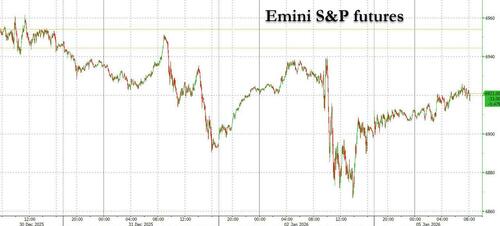
This morning there’s still a lot of uncertainty, and for markets, there’s a debate about the extent to which any short-term oil supply disruption from the upheaval will end up being outweighed by a longer-term supply boost from higher Venezuelan production. After all, the US Energy Information Administration have said that Venezuela has the world’s largest proven crude oil reserves, at 17% of the global total. But despite those reserves, production has declined significantly over recent years, with crude oil production in 2023 down 70% from its 2013 levels. So the prospect of a long-term supply recovery would serve to lower oil prices, and Trump himself said over the weekend that US oil companies would “go in, spend billions of dollars, fix the badly broken infrastructure, the oil infrastructure, and start making money for the country”. Indeed, those expectations have already brought down oil prices this morning, with Brent crude falling -0.43% to $60.49/bbl, whilst WTI is down -0.54% to $57.01/bbl. Meanwhile, US equity futures have risen slightly, with those on the S&P 500 up +0.12%.
In terms of Venezuela itself, it’s also not entirely clear what’s happening next in terms of potential US involvement in the country’s administration. Venezuela’s Supreme Court have granted the VP Delcy Rodríguez presidential powers on an acting basis, and Trump said that Secretary of State Marco Rubio had spoken with her. But although there hasn’t been direct US administration over Venezuela thus far, Rubio said on CBS that there was “an oil quarantine that allows us to exert tremendous leverage over what happens next”. And Trump said he was “not afraid” for there to be US boots on the ground in the future. Overnight, acting President Rodríguez said in a statement that they “extend an invitation to the US government to work together on a cooperation agenda, aimed at shared development, within the framework of international law, and to strengthen lasting community coexistence”.
From the perspective of global markets, it’s worth noting that geopolitical shocks historically don’t tend to have much of a lasting impact. That might seem surprising, but that’s because markets generally trade on macro variables like growth and inflation, rather than geopolitical shocks per se. We’ve seen this pattern again this morning, with US and European equity futures both higher, whilst US Treasuries have rallied slightly across the curve. Another recent example of this pattern have been events in the Middle East in the last few years, where markets outside the Middle East have seen a consistent pattern of quick recoveries from initial selloffs. For instance, at each point when tensions between Israel and Iran escalated, in April 2024, October 2024, and most recently in June 2025, the wider impact was limited outside of commodities and Middle Eastern equities.
This isn’t to say that geopolitics can’t have a lasting market impact, but when it’s done so, it’s been those events which affected key macro variables. Examples of that include the stagflation shocks after the 1970s oil crises, the Gulf War in 1990, and Russia’s invasion of Ukraine in 2022. In each case, they had a big impact because they caused a sufficiently big oil price shock that led to a sustained rise in inflation, whilst also having a meaningfully negative impact on growth outside the areas directly affected. By contrast today, we haven’t seen those kind of effects yet.
Otherwise this morning, Asian equity markets have risen sharply across the board. For instance, the KOSPI (+3.17%) is up to another record high, alongside gains for the Nikkei (+3.09%), the CSI 300 (+1.53%), the Shanghai Comp (+1.11%) and the Hang Seng (+0.09%). Tech stocks have done particularly well, with Samsung Electronics (+6.03%) as one of the top performers in the KOSPI this morning. But Japanese government bonds have continued to struggle, with the 10yr yield (+6.4bps) up to 2.12%, its highest level since 1999. Separately in China, the RatingDog Services PMI fell to a 6-month low in December at 52.0, although the composite PMI ticked up slightly to 51.3, a tenth higher than November.
In terms of the week ahead, clearly geopolitical developments will be top of mind. But otherwise, one of the main highlights will be the US jobs report for December on Friday. That’s an important one because there’s been more weakness in the labour market over recent months, with the unemployment rate rising to a 4-year high of 4.6% in November. So that’s seen the Fed deliver 3 consecutive rate cuts since their September meeting, and futures are still pricing in a 53% chance of another cut by the March meeting. So investors still think a Q1 rate cut is in the balance, and Friday’s report will go some way to determining if that happens. In terms of what to expect, our US economists think that nonfarm payrolls will rise by +50k in December, with the unemployment rate declining a tenth to 4.5%.
Over in Europe, the main highlight will be the flash CPI prints for December, with Germany and France reporting on Tuesday, ahead of the Euro Area-wide print on Wednesday. This isn’t a print expected to have too many implications for near-term ECB policy, with markets expecting them to keep rates on hold for the rest of the year. However, headline inflation is expected to fall below the 2% target early this year, largely driven by energy base effects. And our economists think that if the decline for headline inflation is large enough, that could spill over to weaken core and inflation expectations too, which would lower the bar for further policy easing. So that’ll be a key theme for H1. In terms of this print for December though, our economists expect Euro Area headline inflation to fall back to +2.0% thanks to those falling energy prices, down from +2.1% in November. And for core CPI, they expect that to remain at +2.4%.
Finally, before the weekend developments in Venezuela, markets had got the year off to a steady start last Friday, with a risk-on move on both sides of the Atlantic. Indeed, the S&P 500 (+0.19%) had its first positive start to a year since 2022, whilst Europe’s STOXX 600 (+0.67%) closed at an all-time high. Admittedly, there were some points of weakness, and the Mag 7 (-0.95%) posted a further decline after Tesla (-2.59%) reported Q4 deliveries that missed analyst estimates. But as we mentioned on Friday, we really shouldn’t extrapolate the day one moves, as the first trading day has often been a reverse indicator for the rest of the year. Indeed, 2023-25 all saw a negative start for the S&P before it then recorded a double-digit annual gain. By contrast, the last time we had a positive start in 2022, that year then saw a bear market and the index’s worst performance since 2008.
Meanwhile, the selloff among long-end bonds also continued last Friday, with yields hitting new milestones across several countries. That was particularly notable in Europe, where the 10yr bund yield (+4.5bps) closed at 2.90%, its highest level since October 2023, whilst the 30yr German yield (+6.4bps) moved up to its highest since 2011, at 3.54%. Similarly in the US, the 10yr Treasury yield (+2.4bps) moved up to 4.19%, and the 30yr yield (+2.7bps) rose to 4.87%, which in both cases was their highest since early September. And it also that meant the US 2s10s yield curve closed above 70bps on Friday for the first time since January 2022.
Those moves capped off a mixed week for financial markets, with lots of key assets struggling to gain much traction. For instance, the S&P 500 was still down -1.03% for the week, despite Friday’s recovery. In large part, that was driven by weakness among the Mag 7, which fell -2.46%, with other cyclical sectors also struggling. Sovereign bonds also struggled, with the 10yr Treasury yield up +6.3bps last week, whilst the 10yr bund yield was up +3.9bps. European equities were a key outperformer however, with the STOXX 600 up +1.26% over the week to a new high, whilst the FTSE 100 was up +0.82% and even crossed the 10,000 mark on an intraday basis for the first time. Finally in credit, US HY spreads (-3bps) and Euro HY spreads (-2bps) both tightened last week. But US IG spreads (+2bps) moved wider, whilst Euro IG spreads were unchanged.
Tyler Durden
Mon, 01/05/2026 – 08:38