Category: News

Chicago Bears likely to lean on Theo Benedet at left tackle after Ozzy Trapilo’s season-ending knee injury
Coming out of the two-minute warning in the fourth quarter of Saturday’s wild-card round win, Chicago Bears left tackle Ozzy Trapilo stepped backward in pass protection against Green Bay Packers edge rusher Rashan Gary. When Gary engaged with Trapilo, the Bears rookie fell in a heap.
Coach Ben Johnson later announced that Trapilo suffered a season-ending patellar tendon injury in his left knee. But in the moment, there was no time to assess anything.
In the seconds immediately after the injury, Trapilo — all 6-foot-8 and 312 pounds of him — pushed himself off the ground and hopped on his good leg to the sideline.
The Prime Video broadcasters noted Trapilo exiting the field, but what Al Michaels and Kirk Herbstreit didn’t mention was how quickly Trapilo hobbled off at a crucial point. Per NFL rules, if a player goes down with an injury inside the final two minutes of a half, the team is charged a timeout. If it has no timeouts remaining, 10 seconds are run off the clock.
Wild-card playoff game photos: Chicago Bears 31, Green Bay Packers 27
Players can’t help it if they go down on the field, of course, depending on the severity of the injury. The Packers, in fact, were penalized a 10-second run-off for just this reason a short while later when one of their offensive linemen was injured in the final minute.
At the time of Trapilo’s injury, Johnson and the Bears had only one timeout remaining. Trailing by three points with less than two minutes to play, holding on to that timeout was paramount at the time. As Trapilo hopped off on one foot, backup Theo Benedet entered the game in a flash.
“So much credit to Ozzy for getting off the field there,” Benedet said. “From a young player like that to have the awareness of the situation with obviously more than a bump, just so impressed by him for that.”
Benedet had played several snaps Saturday as a sixth offensive lineman. But getting thrown in at left tackle with the season on the line in the final two minutes of a playoff game is a different animal.
“Obviously it’s a bit of a whirlwind,” he said.
The Bears needed him for only two more snaps, the second being DJ Moore’s game-winning touchdown catch. Benedet didn’t even have to touch anybody on the go-ahead pass.
“I just ran out there and did my job,” he said. “I didn’t (do much) — droppers really on both plays. So it wasn’t a ton asked of me, but glad it worked out in the end.”
That might’ve been the case on those two plays, but the Bears need Benedet now. Johnson announced after the game that Trapilo is out for the remainder of the postseason. The Bears also lost linebacker T.J. Edwards to a broken fibula.
Bears left tackle Ozzy Trapilo leaves the field against the Packers during the fourth quarter of an NFC wild-card game Jan. 10, 2026, at Soldier Field. (Patrick McDermott/Getty Images)
Benedet is no stranger to the starting role. He started eight games during the regular season, one at right tackle and seven at left tackle.
During training camp in August, the former undrafted free agent from the University of British Columbia emerged as a surprise contender when the Bears were looking for their starting left tackle. Braxton Jones won the job out of camp, but Benedet wound up replacing him during the Week 4 win in Las Vegas and then started the next six games there.
Trapilo, a second-round draft pick last spring, took over the job after Benedet went down with a quadriceps injury in Week 12. Trapilo started the next six games before sitting out the regular-season finale with knee and quad injuries. After resting up in Week 18, Trapilo returned to the starting lineup against the Packers.
“It’s unbelievably hard to step in as a rookie and play, particularly at left tackle,” center Drew Dalman said when asked about Trapilo. “Him handling that, I feel like it was a really good piece for the O-line and kind of good for the culture.”
In training camp, Johnson said the left tackle job would be fluid. Whoever won the job coming out of camp wasn’t guaranteed to be the starter all season. In the NFL, that’s always true at any position. But for the Bears in 2025, it has been especially true at left tackle.
In some ways, all of that juggling over the months has prepared several players to handle the role. That could prove key as the Bears now must move forward without Trapilo.
Related Articles
Rams QB Matthew Stafford (finger sprain) expected to play vs. Bears, but CB Ahkello Witherspoon out for season
‘Just scratching the surface.’ Chicago Bears rookie Colston Loveland is making big games look routine.
NFL playoffs: Bears, Patriots, 49ers, Bills and Rams advance to the divisional round
Chicago Bears’ opponent is set for NFC divisional-round playoff game at Soldier Field
Column: On a memorable night for the Bears and Cubs, keeping the faith was easier said than done
“We’ve got tackles that have played a number of snaps over the course of the season, so your comfort level does go up,” Johnson said. “There’s a reason why Theo was out there, though. We felt really good about the ball that he was playing the second half of the season.
“And so, yeah, it’s another one of those stories where it’ll be next man up for us. We’ve had a number of those over the course of the year. And Theo, if it’s his number that’s called upon, he’ll be ready to go.”
Even after losing the starting job to Trapilo, Benedet remained a part of the game plan. He played on special teams and frequently served as a sixth offensive lineman in a package Johnson likes to use from time to time.
The sixth lineman is an eligible pass catcher, and that gives Johnson a chance to flex his creativity. On Saturday, Benedet even lined up wide and ran a route up the middle of the field.
“We’re football players at the end of the day,” Benedet said. “(On Saturday) I lined up at tight end, receiver, left tackle. At the end of the day that’s what you’re doing, what we’ve been doing since high school.”
His route at wide receiver was probably a way to get a bigger body downfield to block rather than a genuine pass-catching threat, but it showed the type of athleticism the Bears require from their linemen.
“He hit 16 miles an hour, didn’t he?” Johnson said when asked about the play. “Yeah, that’s pretty good.”
Benedet probably won’t be running any routes Sunday against the Los Angeles Rams. The Bears will need him at left tackle.
https://www.chicagotribune.com/2026/01/12/chicago-bears-theo-benedet-ozzy-trapilo/

Aurora marks record number of animal transfers from shelter
After launching the Aurora Animal Rescue Network in 2025, the city of Aurora’s Animal Care and Control Division marked a record number of animals transferred out of the city’s shelter, officials said.
A transfer, which is different than a direct adoption, is when a different organization takes an animal from a shelter to adopt out on its own. The goal of transferring out is to lower the number of animals the shelter needs to keep itself, opening up kennel space for new ones to come in, according to Animal Control Manager Kameron DeBoer.
Plus, other rescue organizations often have foster programs, so the animals can live in homes instead of in cages like they do at the shelter, which makes them happier and healthier, DeBoer said. These organizations also often have an easier time getting the animals adopted, she said.
“It’s great for the animal, and it’s great for us,” DeBoer said. “It keeps everything running smoother here.”
Animal transfers from Aurora’s shelter have nearly doubled since 2021, and last year it helped 630 animals find new homes through transfers, which is a new record, a city news release announced last week. Transfers in 2025 surpassed 2024’s total by 90 animals, officials said in the news release.
DeBoer told The Beacon-News that the recent jump in transfers is “kind of unheard of,” which is why the city is so proud of it.
The city’s shelter currently has about equal rates of transfers and adoptions, but adoption rates have stayed about the same over the past several years, DeBoer said. It is going to be difficult to raise the number of adoptions the shelter sees each year, she said, so transfers are how the city is making up for that.
When DeBoer joined Aurora’s Animal Care and Control Division near the end of 2023, she recognized that the city lacked transfer partnerships with outside organizations. These types of partnerships were a big part of her previous job, so she reached out to these groups, but she faced a lot of pushback, she said.
After having an open house to discuss some of the issues organizations had in the past, many rescue groups began to work with the city in 2024, according to DeBoer. She said that, as these organizations had good stories to tell about their partnership with the city, more joined in.
The Aurora Animal Control and Care facility is located at 600 S. River St. in Aurora. (Steve Lord/The Beacon-News)
Last July, the city launched the Aurora Animal Rescue Network to formalize the partnership process and make it more “mutually beneficial” for all involved, DeBoer said. Not only are those organizations taking animals from the shelter, she said, but they are also becoming resources the city can point people towards.
For example, Aurora’s animal shelter doesn’t do fostering, but if someone is interesting in fostering an animal, the Animal Care and Control Division can direct them to partner organizations that do offer it, she said.
A list of the roughly 20 organizations that make up the network, alongside the programs and services those organizations offer, is featured on the city’s website at: animalcontrol.aurora.il.us/Get-Involved/Rescue-Partners
DeBoer said the network has a range of organizations big and small, old and new. And while roughly 95% of the organizations are from Illinois, some are from out of state, she said.
These organizations often have an easier time adopting out animals than the Aurora shelter does, according to DeBoer. That’s not only because some people may have negative views of the shelter, or may not know it even adopts out animals, but also because these organizations already have great reputations, communities and resources, she said.
Two cats interact at the city of Aurora’s animal shelter at 600 S. River St. on Jan 12, 2026. (R. Christian Smith/The Beacon-News)
Going forward, the city is looking to continue expanding the Aurora Animal Rescue Network and to improve it. Aurora’s Animal Care and Control Division just wants to streamline and expedite the process of getting animals out the door, DeBoer said, whether that’s through transfers or adoptions.
While Aurora’s shelter still loves to do direct adoptions, it is a lot more difficult to reach individual people as opposed to organizations, DeBoer said. Still, it is “kind of a shift” and is hard to watch animals go to rescue groups, she said, rather than see the family the animal is actually going home with.
More information about adopting pets directly from Aurora’s shelter can be found at: animalcontrol.aurora.il.us/Adoption
rsmith@chicagotribune.com
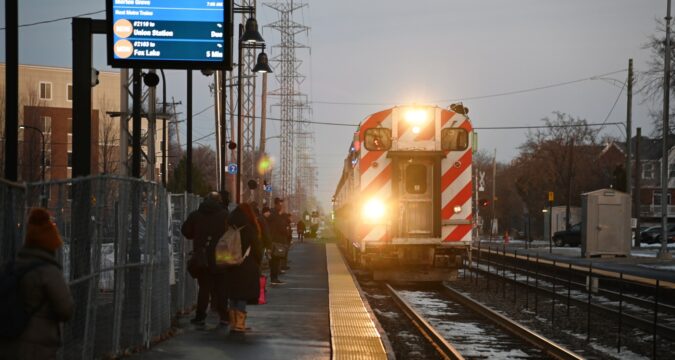
New Morton Grove Metra station opens but more work on the $4M project still to be done: ‘It was a big deal for us’
The new Metra station in Morton Grove has opened to commuters, but village officials say additional improvements at the site are not expected to be fully completed until spring.
Morton Grove Village Administrator Chuck Meyer told Pioneer Press that the Metra station, at 8501 Lehigh Ave., opened on Dec. 15. The station stop is on the commuter rail station’s Milwaukee District North line.
A sign at the Morton Grove Metra station on Dec. 17, 2025 in Morton Grove indicates that construction continues on the station as it opens to commuters. (Karie Angell Luc/for Pioneer Press)
A new building where commuters may wait inside for trains was build at the updated Metra station in Morton Grove, pictured Dec. 17, 2025. (Karie Angell Luc/for Pioneer Press)
“With the weather, we wanted to button up the site for early winter but also make it available for the public,” Meyer said. “We have a full, functional station. We’ve heard a lot of positive comments.”
Work on the new train station will continue through winter.
“Over the winter, we’re going to be dismantling the former train station and installing additional utility lines for the new station or some additional support structures of the new station and then expanding the parking lot into what used to be the old train station,” Meyer said.
Work slated for spring includes adding another layer of asphalt to the parking lot and doing some final work on the aesthetics while Metra will do platform work, which Meyer said will fully connect the platform to the new station.
Morton Grove is the first suburban stop on the line, which runs from Union Station in downtown Chicago to the far north suburb of Fox Lake.
“It was a big deal for us to show the community and show the Chicagoland region and put our best foot forward,” Meyer said about redoing the Morton Grove station. “We thought the time was right to make this improvement and we’re fortunate enough to be able to design it and construct it.”
Previously located just south of the new one, the former building at the station offered a couple of uses before it was demolished.
“Our fire department used it for training in the interim. We were able to use that for on-the-job training with our firefighters,” Meyer said. “We actually got some work safety training out of it as well.”
Meyer said the village announced intentions to replace its lone Metra station in July 2023.
According to Meyer, the budget for the project is just over $4 million, which is being covered by a $300,000 grant from Metra, $500,000 in Illinois funding and money from the village’s Lincoln/Lehigh tax increment financing district.
“We’ve restored a majority of the parking on-site so there is a brand new facility that allows people to wait for the train and to have some nice updates,” Meyer said.
The updates include tracking signs that Meyer said offer real-time arrival information and announcements.
“If you’re in the station or anywhere near the station, you’ll know when the trains are coming,” he Meyer said.
In an October 2024 news release announcing the Metra station groundbreaking, village officials said the former station was built in 1976 and project phasing for the new 1,280-square-foot one was designed to maintain uninterrupted Metra service through all construction phases.
“It’s really going to be a welcome to the community,” Meyer said. “Our former station was a single-floor building. This (new one) is a two-story building that really catches the eye. It is beautifully constructed.”
The team working on the new station includes Lake Forest-based project architect RM Swanson Architects and Libertyville-based general contractor Efraim Carlson and Son Inc., according to the release.
“There’s some very nice artistic features to it, so it’s a nice wood design inside,” Meyer said about the new station. “(It) has a clock tower as part of a feature, but it’s also a much more welcoming environment and is one that I think is a nice place to wait for a train.”
Rider amenities include covered outdoor waiting areas, a heated waiting area that will be open after-hours, a unisex restroom and accommodations for ticket vending machines throughout, the release explains.
There is also the possibility for future retail.
“In the north end of it, we have built out a space that we’ll be looking to issue a request for proposal for potential vendors that might potentially want to have a shop in there as well,” Meyer said.
According to Meyer, the new Metra station already has affected development of its surrounding area.
“Just south of that is a townhome development called Metro on Main,” Meyer said about a project by Lexington Homes. “It’s 89 townhomes that started being built after we announced the train station. A selling point for them is having the proximity to the trains and train station.”
Meyer said the village is also looking forward to improving the property it owns right across the street from the commuter station.
“We did a request for proposal and are working on a developer for a multifamily unit to go across the street,” the village administrator said. “I know they have emphasized the new train station as a drawing point.”
Jessi Virtusio is a freelancer.
https://www.chicagotribune.com/2026/01/12/morton-grove-metra-open-on-milwaukee-north-line/

On The Lefty-Left’s Largely Female Hysteria
On The Lefty-Left’s Largely Female Hysteria
Authored by James Howard Kunstler,
Permission Granted: Go Kill Yourself
“A mascrosocial cluster B crisis is ripping this nation apart because Leftism has hijacked the minds of progressive females who then LARP out dangerous Gnostic heroic delusions.”
– JD Haltigan
Historians of the future, grilling beaver-tail paninis over their campfires, will look back in wonder and nausea at the madness of America — and other regions of Western Civ — in the raging 2020s. It will be clear by then that it was largely a female hysteria, like other departures from social sanity in the annals of the Homo sapiens, such as the outbreak of witchery in the Massachusetts Colony, 1692, the Dancing Plague of Strasbourg, 1518, and the lunacy of Meowing and Biting Nuns that spread through the convents of Europe in the 1400s.
Renee Nicole Good moments before she was shot to death
The Lefty-left has devised what’s called a “permission structure” for women to take the lead in acting-out the concocted grievances of their show-runners in the Democratic Party who, in times gone by, once had a coherent political program, but are now chiefly concerned with staying out of jail. I speak of those two orbiting moons, Hillary Clinton and Barack Obama, and their many subalterns, such as John Podesta, Lisa Monaco, Norm Eisen, Adam Schiff. . . you know the huge cast of characters.
In 2020, they put their African-American clients in the vanguard, hoping to provoke Mr. Trump into a bloody suppression of the George Floyd riots. Didn’t really work, though the riots were a grand distraction from Marc Elias’s behind-the-scenes nefarious setup to queer the balloting process in that year’s election — a thumping success! All that mischief propelled brain-dead “Joe Biden” into the Oval Office, the perfect stooge to front for Hillary and Obama in their campaign to disorder the US body politic.
None of that worked for them in 2024, though, and only, apparently, because Elon Musk got wind of some election-hacking signals from a bunker in Serbia, and somehow managed to put the kibosh on its functionality. . . but that’s another story not quite yet spun for the public. Anyway, Mr. Trump got back into the Oval Office and now there is — forgive the cliché – hell to pay. Folks looking at jail time, famous folks, folks previously inoculated against such a fate. And it’s driving them batshit crazy. What on earth to do?
As it happens, enough Americans are sick and tired of the race hustle that its antics no longer avail the Democratic Party in stirring up animus against order, so now the party sends its women out onto the front lines to bang on police car windows, scream at the officers to perform sex acts on themselves, and impede their duties. In the course of all that action, one of them, Renee Nicole Good, got shot last week gunning her Honda Pilot at officer Jonathan Ross.
Ms. Good’s female wife, Becca Good, wailed in the aftermath, “I made her come down here, it’s my fault.” Come down to do what? To play a part in the show. To use Renee’s Honda Pilot to block the street so that ICE agents couldn’t do their job (which is removing illegal immigrants for processing and deportation). Who told Becca that was a good idea? The Lefty-left’s permission structure told her. So, Becca played her part in the show, ostentatiously recording a video of the scene, yelling taunts at the officers, telling her wife, Renee, to disobey the officer’s command to “get out of the car” and instead to drive away. Becca will have that on her conscience forever, alas. Bet you wouldn’t want to be her.
What is it in American women these days that makes them susceptible to such a demonic permission structure that the Lefty-left uses to make them pawns in this game? Most obviously, American women are less and less inclined to enter healthy relations with men. Why is that? Probably several reasons. American men are less and less good husband material — except at society’s tippy-top where they make obscene amounts of money in activities that are, frankly, pretty antisocial when you look hard — like, running monopolies, inducing the entire population into ill health, and selling out their country. The great wad of men in the classes below the tippy-top face ever-reduced opportunities to make a living, let alone support a wife and children.
Both American men and women are working pretty hard to make themselves sexually unappealing. Obesity is epidemic now that the national diet consists almost entirely of pizza and soda pop. You have to wonder how the idea of facial piercings, nose-rings, and massive tattoos caught on. Half the women in this country look like they could be harpooneers on the whaler Pequod. Meanwhile, the tubby men with no prospects can occupy themselves with free porn on their phones — which, you might admit, kind of cuts down on their motivation to even try to meet real women, let alone protect and care for them.
The result of all this dysfunction is a society with deeply disrupted relations between men and women, people who can’t produce children — or, by happenstance, as in the case of Renee Nicole Good, two children who did not live with her — people of both sexes who can’t enact the basic roles of human adulthood, people of both sexes who can hardly find gainful employment, and you end up with a land of broken people, broken families, and behavior that verges into madness.
And these broken people are egged on to self-destruction by the cynical managers of a criminal political party desperate to hide its crimes and avoid prosecution. When the arraignments begin, the derangements will ebb. Just watch and see.
Views expressed in this article are opinions of the author and do not necessarily reflect the views of ZeroHedge.
Tyler Durden
Mon, 01/12/2026 – 16:25
https://www.zerohedge.com/political/permission-granted-go-kill-yourself

Socialism, Not Sanctions, Is Responsible For The Destruction Of Venezuela
Socialism, Not Sanctions, Is Responsible For The Destruction Of Venezuela
Venezuela is not poor due to sanctions. It is poor because the Chavez-Maduro regime stole hundreds of billions of dollars and demolished the productive fabric of the economy.
Venezuela had 12,700 private companies when Chávez came to power, according to Conindustria. Only about 3,800 manufacturing industries are still operating, of which around 3,200 are privately owned and 600 are state‑owned.
The assault on private property culminated with the expropriation of more than 690 companies in twelve years. Government-run businesses failed, and large state-owned companies in Venezuela are technically insolvent or heavily loss-making.
Socialism of the XXI century, they called it: government expropriations, price controls, capital controls, and complete absence of legal and investor security.
The socialist regime arrived in a period of rising oil prices and squandered one of the largest oil bonanzas in history while destroying the national oil company, which was one of the most efficient when Chavez arrived in power and is now riddled with debt of more than $41.6 billion, and production has plummeted to less than a third of what it was.
The extraordinary oil revenues of more than 960 billion dollars under Hugo Chávez and Nicolás Maduro were stolen, squandered, and wasted.
Government spending was out of control, and the state ran double-digit fiscal deficits in the period of oil price-linked economic boom.
A deep structural crisis years before U.S. oil sanctions
You may have read the lie that the reason behind Venezuela’s suffering is US sanctions. This is false.
Sanctions did not start until 2019, and the economy was already in deep recession and hyperinflation. Venezuela’s economy had already entered a deep structural crisis years before the U.S. oil sanctions were imposed.
Furthermore, those sanctions were targeted against leaders of the dictatorship, not the broad economy.
Real GDP started to slump in 2013, and by 2017 the economy had already lost a large share of its output
The collapse in output, triple‑digit and then hyperinflation, and widespread shortages all began when the country had full access to global markets and international finance.
Real GDP started to slump in 2013, and by 2017 the economy had already lost a large share of its output. Hyperinflation roared into 2017, when monthly price rises exceeded 50%, well before the 2019 sanctions.
The human rights violations, institutionalised murder, and lack of legal and personal rights highlighted by Amnesty International were there years before any sanction.
Trade with major powers, collapse at home
Venezuela has trade agreements with the world’s major powers. The United States is one of its main trading partners, along with the European Union, China, Russia, Turkey, India, and Brazil, among others, according to the Venezuelan government’s own data.
Moreover, Venezuela has been one of the largest beneficiaries of soft loans and debt restructurings in the entire region since 2013.
In fact, the first person to acknowledge that there is no embargo whatsoever is dictator Maduro, who boasts of the large exports and trade deals and proudly announced $18 billion dollars from exports in 2024.
By 2023–2024 Venezuela was producing barely one-fifth to one-quarter of what it did around 2012–2013
Despite receiving more than 78 billion in financial support and investment from China and Russia, according to CRS figures, Venezuela’s economy has been demolished, its oil industry has almost collapsed, and the economy has lost most of its GDP, with one of the worst hyperinflation and migration crises in modern peacetime history.
The IMF estimates that real GDP contracted by about 75% between 2013 and 2021, while other studies show an 80% fall in GDP in less than a decade, which implies that by 2023–2024 Venezuela was producing barely one-fifth to one-quarter of what it did around 2012–2013 and not much more than half of its 1998–1999 level in real terms.
The assault on the private sector
At the start of the Chávez era, Venezuela produced around 3.3–3.5 million barrels per day, an efficient and professional oil company respected worldwide.
In 2003, the Socialist government fired about 20,000 PDVSA workers, including most of the technical and managerial professionals, and replaced them with political appointments, destroying the company in one strike.
The company was converted into a political machine used to finance the government’s “missions” to spread its political influence. PDVSA became a direct funder of obscure off-budget projects and political spending.
Underinvestment, corruption, and politicised management caused a continuous collapse in production, which fell from 3.5 million barrels per day to less than a million by 2025, even though the country has the world’s largest proven oil reserves. This is not a story of scarcity but of deliberate decapitalisation of the productive asset.
Price controls, exchange controls, and import licensing completed the destruction of the economy
The assault on the private sector extended far beyond energy. The Chávez and Maduro governments expropriated or nationalised firms in steel, cement, electricity, telecommunications, agriculture, banking, retail, and food distribution.
Constant threats of seizure, legal uncertainty, and discretionary punishment pushed many local and foreign firms to exit operations.
Meanwhile, politicisation made the state-owned companies and the expropriated businesses collapse under inept management and direct political theft of resources.
Price controls, exchange controls, and import licensing completed the destruction of the economy. When inflation soared, the government’s answer was to impose more controls and forced sales, which emptied shelves, cut production, and accelerated capital flight, deepening the economic collapse.
From oil wealth to a prison
From 1998 to 2025, government spending tied to political “missions” multiplied, financed directly from PDVSA and special funds controlled by the presidency.
The social consequences have been catastrophic. Poverty in Venezuela has risen to 80–90%; millions have fled the country, creating one of the largest displacement crises in the world, while the domestic banking system and credit intermediation have been dismantled.
The Maduro regime is usurping power, has rigged all elections and keeps hundreds of political prisoners. Maduro’s forces killed 9,465 people in 10 years, according to Provea. “They institutionalised state killings,” reads a 2024 report.
Venezuela’s collapse is not the inevitable fate of an oil‑rich country or the result of external sanctions; it is the product of deliberate policies, theft, and squandering.
A historic oil windfall was wasted, PDVSA was systematically decapitalised from within, and the institutionalised robbery was completed through expropriations and capital controls, leaving an economy unable to grow even when the global peers thrive.
The lesson from Venezuela is that socialism has made a rich and prosperous nation one of the poorest in the world and converted the country into a prison.
Tyler Durden
Mon, 01/12/2026 – 15:45
https://www.zerohedge.com/geopolitical/socialism-not-sanctions-responsible-destruction-venezuela

Bradshaw: Preparing for interviews when you’re still figuring things out
Many college students go into interviews with the same unspoken concern. They haven’t chosen a career path yet. They’re applying to different kinds of roles not because they’re unfocused, but because they’re still learning what fits. Career advice often assumes clarity. In reality, uncertainty is common.
Interviews still happen anyway.
What usually hurts undecided students is not the uncertainty itself, but the attempt to hide it. Interviewers are quick to notice rehearsed enthusiasm or borrowed language. What tends to work better is something simpler: showing how someone approaches unfamiliar problems and learns from them.
That approach often shows up most clearly in academic work.
In an upper-level economics course, a student was assigned a 25-page term paper on a broad question: do tariffs help or hurt consumers? The initial framing was standard. Tariffs raise prices, reduce consumer surplus, and protect domestic producers, with employment effects offered as a counterweight. It was a familiar structure, and the paper could have followed it straight through.
Instead, AI was used early in the research process to expand the scope of inquiry. Not to write the paper, but to find ideas the student had not considered. The system raised questions about how tariffs affect consumers differently by income level, how short-term price effects differ from long-term outcomes, how reduced product variety factors into consumer welfare, and how retaliatory tariffs affect export-heavy regions.
Those prompts shifted the direction of the work. The paper moved away from a binary answer and toward a conditional analysis: which consumers are affected, under what circumstances, and over what time horizon. Some AI-suggested ideas turned out to be too general or unsupported and were dropped. Others became starting points for deeper research using academic journals and government data. The final paper relied entirely on verified sources, but its structure reflected a wider set of possibilities than the original outline.
That experience translates cleanly to interviews, especially for students who are still exploring.
In customer-facing roles, the hardest part of the job is rarely speed or friendliness — it is interpretation. Customers often describe symptoms rather than causes. Someone trained to widen a question before narrowing it is more likely to ask what else might be driving the issue instead of responding to the first explanation that appears. The habit developed during research — asking what’s missing, what varies by context, and what assumptions might not hold — applies directly to real interactions.
In back-office roles, the same habit shows up differently. Internal projects often start with incomplete or overly simple instructions. A student who learned to explore multiple explanations in an economics paper is more likely to flag edge cases, propose alternative approaches, or notice when a conclusion depends too heavily on one assumption. The tariffs paper is not relevant because of its topic, but because of how the problem was framed and reframed.
This is where undecided students often undersell themselves. When asked about past work, they describe tasks rather than decisions. They say what they produced, not how their thinking changed. In the tariffs paper, the most important moment was not the final conclusion, but the realization that the original question was too narrow. That shift in framing is what interviewers listen for, even when they don’t ask about it directly.
Behavioral questions tend to expose the same difference. They are not personality tests. They are ways of understanding how someone reacts when expectations don’t hold. Students who have changed majors, abandoned early assumptions, or revised a project halfway through often have strong material without realizing it. What matters is explaining what triggered the change and what was learned from it.
The questions students ask at the end of an interview can reinforce this signal. Generic questions about daily routines or growth opportunities rarely add much. More revealing questions focus on ambiguity: where assumptions tend to break down, how success is measured when outcomes are mixed, or what surprised the team about the work. These questions show engagement with the substance of the role rather than certainty about the title.
Throughout the process, clarity matters more than polish. Interviews are not the place for inflated language or overconfident claims. Clear sentences, concrete examples, and honest descriptions of learning tend to build more trust than pretending to have everything figured out.
For most employers, interviews are less about identifying a finished professional and more about reducing uncertainty. They are trying to understand whether someone can take on responsibility without creating problems, adapt when initial assumptions fail, and learn quickly from feedback.
The tariffs paper is a small example, but it illustrates something more fundamental: the ability to explore a problem fully before committing to an answer. For students who are still figuring out possible careers, that habit often matters more than having one already chosen.
Gerald Bradshaw is an international college admissions consultant with Bradshaw College Consulting in Crown Point.
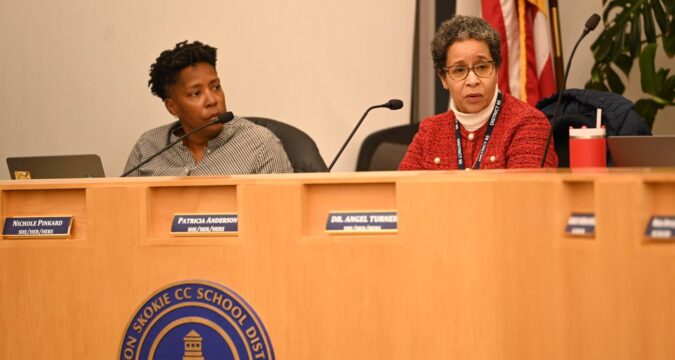
Evanston-Skokie D65 votes to close Kingsley School, puts off Lincolnwood decision
It took three tries in as many months, but the financially troubled Evanston-Skokie School District 65 finally landed Friday on a school closure plan.
Unanimously adopted by the district’s Board of Education, the plan calls for the process of closing Kingsley Elementary School to begin.
The Board also adopted a wait-and-see stance on whether to close Lincolnwood Elementary School. If the district fails to meet certain conditions by October, the plan calls on the Board to “recognize that proposing to close Lincolnwood Elementary is needed.”
Both schools serve the northwest corner of Evanston. And both became focal points in the successive but unsuccessful previous votes on how many and which schools to close.
“I have to say to the community, thank you for your patience,” Board President Patricia Anderson said. “And to the district, thank you for your work. Because it’s just been a very difficult process.”
Hannah Dillow, D65 communications manager, noted that the Board did not make a decision to close the school but to formally begin the process. Illinois law requires that three public hearings be held, and after those, the Board will vote on the potential school closure at a separate meeting.
Friday’s markedly subdued discussion culminated the winding path to a school closure plan.
The district had just ended 2025 hurtling toward the prospect of having to cut up to 78 positions, because the Board could not agree on a school closure plan. That District 65 would make another attempt at closures so soon had seemed unlikely.
Years of under-enrollment and, more recently, deep financial woes led District 65 to consider shuttering schools by the end of the 2025-26 school year as part of its ongoing Structural Deficit Reduction Plan. During the fall, as the district narrowed its goal to closing two schools, some families looked askew at the proposals.
Those options first came to a vote in November — soon after the resignation of a board member. The Board deadlocked 3-3 on a plan to close Kingsley and Lincolnwood, as well as on shuttering Kingsley alone.
In December the Board tried again to decide on a plan but voted the same way, despite warnings that inaction would lead to scores of eliminated staff positions.
With only one option on the table Friday, the Board centered much of its discussion on the criteria for considering a Lincolnwood closure. And with public comment focused on the district’s decision to end Willard Elementary School’s Two-Way Immersion language program, the closure of Kingsley seemed a foregone conclusion.
The resolution spelled out three requirements for achieving “financial sustainability”: keeping a balanced budget, having at least 90 days of cash “on hand through the course of the fiscal year” and having at least $2.7 million “set aside for capital expenditures related to building maintenance.”
If District 65 has not achieved those benchmarks nor increased its kindergarten through fifth grade “school building utilization rate” to 75% by October, then the Board will consider closing Lincolnwood School. That utilization rate drew some concerns.
“It’s a very specific number that I’m not 100% comfortable with,” board member Maria Opdycke said.
The budget, not the utilization rate, should be the district’s central metric, Opdycke argued, because schools often have more flexible uses for classrooms than reflected in the utilization rate.
Board member Andrew Wymer, meanwhile, called the 75% rate “a step in the right direction.”
The Board will consider “alternative approaches” to reducing the deficit, according to Anderson, who recommended that Board members Opdycke and Nichole Pinkard direct those efforts. It’s unclear what exactly that role would entail.
District 65 will host the three public hearings on the Kingsley closure at the Joseph E. Hill Early Childhood Center in Evanston: Jan. 21 at 6 p.m. and Jan. 22 at 9:30 a.m. and 7:15 p.m. Kingsley would join the Dr. Bessie Rhodes School of Global Studies in closing at the end of the school year.
Financial problems aside, the district still has an empty seat on its Board. Since the Board could not come to a decision on appointing a new member, the choice has fallen to the regional superintendent of schools, who has until early February to decide.
The district also continues to grapple with the shadow of ex-superintendent Devon Horton, who faces federal charges of fleecing District 65 through a kickback scheme. He and his three accused associates have pleaded not guilty.
Still, ahead of the Board’s unanimous vote in favor of the closure plan, Anderson struck an optimistic note.
“I also know we have a moment now when we can do something pretty spectacular by pooling all these resources and thinking of a way that we can make this happen,” Anderson said. “So let’s get it done.”
https://www.chicagotribune.com/2026/01/12/evanston-skokie-d65-to-close-kingsley-school/

Afternoon Briefing: Man charged in fatal Pink Line shooting
Good afternoon, Chicago.
City attorneys are recommending aldermen approve a $22 million settlement for the family of a 25-year-old man killed in a car crash that occurred as police chased somebody else. Lawyers representing the estate of Angel Eduardo Alvarez Montesinos say police recklessly broke department rules as they pursued a fleeing car that fatally struck him in North Lawndale.
Aldermen will weigh the costly settlement Wednesday, among the first they will consider this year after approving a record sum in such deals last year that, paired with court verdicts, approached $500 million.
Here’s what else is happening today. And remember, for the latest breaking news in Chicago, visit chicagotribune.com/latest-headlines and sign up to get our alerts on all your devices.
Subscribe to more newsletters | Asking Eric | Horoscopes | Puzzles & Games | Today in History
Chicago police and fire personnel bring a victim down from the CTA Pink Line station at Washington/Wells, Dec. 23, 2025. According to police one person was fatally wounded and one injured during a confrontation that happened around 1:30 a.m. (Network Video Productions)
Garfield Park man charged in fatal Pink Line shooting, police say
A man is facing charges in the fatal shooting of 44-year-old Raymond Harrison and the serious injury of a second, 23-year-old man about three weeks after a fight aboard the CTA Pink Line escalated to gunfire, Chicago police said. Read more here.
More top news stories:
Chicago man charged in Ohio killing of his ex-wife and her husband, a dentist
Skokie woman and friend sue Chicago Botanic Garden, citing injuries from falling Lightscape gear
Faithful gather to bid farewell to Bishop Ronald Hicks in Joliet, as he heads to New York
Space 519, a designer clothing boutique in Wilmette’s revitalized Plaza del Lago shopping center, opened in August 2025, and many more high-end boutiques and shops are due to open in the spring. Space 519 contains a coffee bar, daytime lunchroom and evening cocktail space. (Joshua Irvine/for Pioneer Press)
At Wilmette’s revitalized Plaza del Lago, boutique Space 519 says holiday sales robust
Space 519’s new location is among the latest in a string of upscale businesses to open at Plaza Del Lago in recent months. Read more here.
More top business stories:
Thousands of nurses go on strike at several major New York City hospitals
Nicor Gas seeks $221 million rate increase for suburban Chicago customers
Emery Lehman, right, celebrates with his parents, David and Marcia, after winning the men’s 1500-meter competition and qualifying for the Milan Olympics on Jan. 4, 2026, during the U.S. Olympic Team Trials Long Track at the Pettit National Ice Center in Milwaukee. (Brian Cassella/Chicago Tribune)
Entering his 4th Olympics, Oak Park speedskater Emery Lehman nears the finish line
Since winning a Bronze medal in speedskating at the 2022 Olympics, Oak Park’s Emery Lehman has spent most of the past four years working toward an ending. The Milan Cortina Games will be his last, he says. Read more here.
More top sports stories:
Column: On a memorable night for the Bears and Cubs, keeping the faith was easier said than done
Notre Dame says battery allegations against football coach Marcus Freeman are ‘totally unfounded’
Chicago Cubs and 3rd baseman Alex Bregman agree to a reported 5-year, $175 million deal
Emma Stone arrives at the 83rd Golden Globes on Jan. 11, 2026, at the Beverly Hilton in Beverly Hills, California. (Jordan Strauss/Invision/AP)
Inside the Golden Globes: The reunions and moments the telecast didn’t show
At the Golden Globes, Emma Stone held court with a rotating cast of companions, from Kirsten Dunst to Jennifer Lawrence — not in the main ballroom, but in a much smaller side room. Read more here.
More top Eat. Watch. Do. stories:
‘Avatar: Fire and Ash’ tops box office for fourth straight week with newcomer ‘Primate’ second
Grateful Dead founding member Bob Weir dies at 78
This image released by Vatican Media shows Pope Leo XIV meeting with Nobel Peace Prize laureate María Corina Machado of Venezuela, right, inside his private library at the Vatican, Jan. 12, 2026. (Vatican Media via AP, HO)
Pope Leo XIV meets with Venezuelan opposition leader María Corina Machado in surprise audience
Pope Leo, the first American pontiff, has called for Venezuela to remain an independent country after U.S. forces captured former Venezuelan President Nicolás Maduro from his compound in Caracas and flew him to New York to face federal charges of drug-trafficking. Read more here.
More top stories from around the world:
Trump says Iran wants to negotiate as the death toll in protests rises to at least 544
Minnesota braces for what’s next amid immigration arrests and in the wake of Renee Good shooting
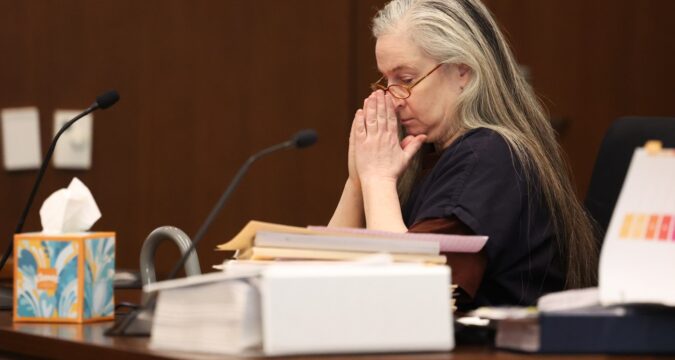
Expert testifies Marni Yang too short to have fired fatal shots at girlfriend of ex-Chicago Bear
A defense expert witness testified Monday that Marni Yang is too short to have fired the bullets that killed the pregnant girlfriend of a former Chicago Bear in 2007.
Arthur Borchers, a forensic expert, testified in Lake County Court that bullet trajectory analysis excluded Yang as the killer of Rhoni Reuter, who was shot to death in October 2007 at her Deerfield condominium.
Yang was convicted of Reuter’s first-degree murder in 2011 and is serving a life sentence. However, her attorney has successfully argued that new evidence supports Yang’s claim of innocence.
Lake County Judge Christopher Stride has set aside three days this week to hear the new evidence claim.
Borchers, who worked as an evidence technician for the Oak Park Police Department before joining a private forensics company, was the sole witness Monday morning as the hearing began, telling that court that Yang, who is 5 feet tall, could not be the shooter based on the path the bullets that hit Reuter, who was pregnant with the child of former Bear Shaun Gayle.
“We believe the shooter involved in this incident is 5-foot, 10-inches, give or take two inches,” Borchers testified.
Lake County Assistant State’s Attorney Scott Hoffert spent much of his cross-examination of Borchers pointing to possible alternate scenarios, given the dynamic situation of the shooting.
Reuter was shot multiple times at the threshold and inside the kitchen of her condo.
At Yang’s trial, authorities asserted that Yang, who had previously been involved with Gayle, killed Reuter out of jealousy.
Yang listened intently to Borchers during his court appearance.
https://www.chicagotribune.com/2026/01/12/marni-yang-hearing-chicago-bears/

No charges will be filed against Notre Dame coach Marcus Freeman from incident at wrestling tournament
Notre Dame football coach Marcus Freeman won’t face criminal charges stemming from an incident at his son’s high school wrestling event this month, the St. Joseph County (Ind.) prosecutor’s office announced Monday.
The prosecutor’s office said in a statement that it determined no criminal battery occurred after reviewing video evidence and conducting interviews with witnesses from the Jan. 3 wrestling tournament at Mishawaka High School.
The office said an assistant wrestling coach, identified by the South Bend Tribune as New Prairie High School’s Chris Fleeger, told police that someone he didn’t know approached him, said something he couldn’t recall and gave him a “two-handed push,” which caused him to stumble backward.
The assistant coach said he learned later from someone else that the person was Freeman. In a later interview, the coach told officers he immediately recognized Freeman and said “that he believed Mr. Freeman was ‘rich’ and that he planned to hire an attorney,” the statement said.
The prosecutor’s office said video evidence of Freeman leaving the gym with his son, Vinny, did not support the wrestling coach’s assertions. It said the complainant approached Freeman, who paused for one second before walking out of the gym.
The statement said one of Freeman’s hands remained in his pocket the entire time and “the head and body movements of both the complainant and Mr. Freeman do not support the supposition that any violent physical contact occurred.”
An off-duty law enforcement officer and two Mishawaka High School employees were among the witnesses who refuted the claim that Freeman forcefully pushed the coach. Detectives also interviewed acquaintances of the wrestling coach, and they alleged that Freeman pushed the coach with one hand or struck him.
In an interview with detectives, Freeman said he had previously met the assistant coach. As he was leaving the gym with his son, a Penn High School senior who has signed to wrestle at Cornell, Freeman told the coach to stop talking about his son to other wrestlers.
Freeman told detectives he didn’t recall making physical contact but didn’t know whether he inadvertently touched the coach as he walked past.
Notre Dame said in a statement Sunday that a local wrestling coach “verbally accosted” Vinny Freeman during and after his match and that Vinny’s parents intervened to remove him from the situation. The university called the accusations that Marcus Freeman committed battery “totally unfounded.”
https://www.chicagotribune.com/2026/01/12/notre-dame-marcus-freeman-no-charges/