Category: News
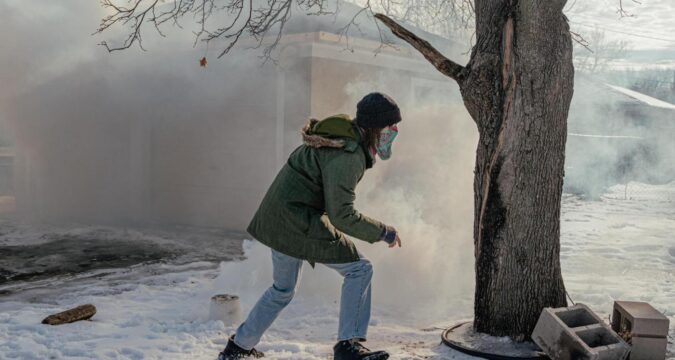
3 prosecutors quit after push to investigate ICE shooting victim’s widow
Three Minnesota federal prosecutors resigned over the Justice Department’s push to investigate the widow of a woman killed by an Immigration and Customs Enforcement agent and its reluctance to investigate the shooter, according to people with knowledge of their decision.
Joseph H. Thompson, who was second in command at the U.S. attorney’s office and oversaw a sprawling fraud investigation that has roiled Minnesota’s political landscape, was among those who quit Tuesday, according to three people with knowledge of the decision.
Thompson’s resignation came after senior Justice Department officials pressed for a criminal investigation into the actions of the widow of Renee Nicole Good, the Minneapolis woman killed by an ICE agent last Wednesday.
Thompson, 47, a career prosecutor, objected to that approach as well as to the Justice Department’s refusal to include state officials in investigating whether the shooting itself was lawful, the people familiar with his decision said.
Two other senior career prosecutors, Harry Jacobs and Melinda Williams, also resigned Tuesday. Jacobs had been Thompson’s deputy overseeing the fraud investigation, which began in 2022. Thompson, Jacobs and Williams declined to discuss the reasons they resigned.
The fraud cases — which involve schemes to defraud safety net programs managed by state agencies — were the chief reason the Trump administration launched an immigration crackdown in the state. The vast majority of defendants charged in the cases are of Somali origin.
Tuesday’s resignations followed tumultuous days at the U.S. attorney’s office in Minnesota as prosecutors struggled to manage the outrage over Good’s killing, which set off angry protests in Minnesota and across the nation.
This article originally appeared in The New York Times.

California Restricts Free Speech
California Restricts Free Speech
Authored by Kenin M. Spivak via RealClearPolitics,
California’s far-left Supreme Court has ordered restrictions on the speech and expressive conduct of California’s lawyers “at all times,” including during their unrelated business activities, political endeavors and personal lives.
Just before Christmas, the even more radical California State Bar imperiously advised the state’s 200,000 lawyers “Read it, declare it, mean it.” That ominous warning introduced the California Supreme Court’s Orwellian Rule 9.7 which requires every lawyer to attest that: “As an officer of the court, I will strive to conduct myself at all times with dignity, courtesy and integrity.” The license of any lawyer who fails or refuses to acquiesce will be invalidated, and any lawyer who violates the oath is subject to “appropriate fees and penalties” to be set by the Bar.
For a nanosecond, that’s an appealing concept. But, under the First Amendment, no instrumentality of government may condition an individual’s livelihood on complying with its view of “dignity” or “courtesy,” in their political or personal endeavors. Invalidating the licenses of non-compliant lawyers also violates procedural due process under the Fifth and 14th Amendments. Tying the oath to meaningless pap about a lawyer being an “officer of the court” exposes the premeditated overreach.
As a threshold problem, even in traditional usage, “strive,” “dignity” and “courtesy” are so vague that no lawyer could know what is required, violating substantive due process. Presumably, cross-dressing is now considered dignified and proper; but, what about blackface? Or using invective, mentioning a transgender person’s “deadname,” employing grammatically and biologically correct pronouns, opposing abortion on demand, wearing a MAGA hat or T-shirt, referring to the homeless as vagrants, rather than “unhoused,” or illegal aliens as invaders, rather than non-citizens? How about singing off-key?
These statements and symbols are protected by the First Amendment, and yet, aside from singing off-key, each has been used by the far left to suppress social media posts and articles, suspend and expel students, and fire employees on grounds that their traditional beliefs and expressive conduct are discourteous and undignified. In Europe, which has no First Amendment, criminal prosecutions for speech and symbols progressives find odious are rapidly increasing. Britain made more than 12,000 arrests last year, more than 30 each day, for offensive online posts.
At last year’s Munich Security Conference, Vice President JD Vance called out elites in Europe for threatening to shut down social media to combat “hateful content,” and German police for raiding “citizens suspected of posting anti-feminist comments.” The Europeans retorted that they are preserving courtesy and dignity, and then most uncourteously fined X $140 million for failing to comply.
Despite the First Amendment, the Biden administration weaponized its opposition to free discourse with a whole-of-government enterprise that censored, demonetized and deplatformed conservatives, prosecuted pro-life activists, and investigated parents who opposed DEI and kowtowing to transgender militants.
It has taken considerable litigation to protect students, faculty, and other employees targeted by state and local governments for their so-called “offensive” speech and symbols, including prayer, refusal to call biological men “she,” and wearing pro-choice, pro-faith, and MAGA hats and T-shirts.
Merely regulating tone, comportment, and politeness violates the Constitution. But the threat implied by Rule 9.7 is more perniciously intended to chill free speech, and there is every reason to expect that the California Supreme Court and Bar will use Rule 9.7 to destroy the livelihoods of conservative and America First lawyers who run afoul of the left’s ever-expanding canon of dos and don’ts. Invalidating a law license can cascade into loss of other licenses, financing, and business and social opportunities.
Just last year, the California Bar proclaimed that “attorneys have an ethical duty to provide competent and diligent representation to clients, regardless of how unpopular or controversial their causes may be,” yet it concurrently suspended, and demanded the disbarment of Claremont Institute constitutional attorney John Eastman for giving legal advice to President Trump in the run-up to Jan. 6, 2021. Bar prosecutors characterized his willingness to advise Trump on his alternatives as “moral turpitude.”
The California Bar zealously promotes DEI, which unconstitutionally allocates opportunities by race and gender orientation. DEI’s advocates duplicitously label their opponents as racists, effectively a claim of undignified and discourteous conduct, two grounds for disciplinary action.
The United States Supreme Court has clearly explained that the First Amendment prohibits government from restricting speech, symbols or expressive conduct because of the message, ideas, subject matter, or content. There are no exceptions for hate speech, courtesy, dignity, or court officers.
The California Supreme Court and State Bar know this. They are counting on their power over the state’s lawyers to coerce compliance. Supporters of free speech must not let that happen.
Kenin M. Spivak is founder and chairman of SMI Group LLC, an international consulting firm and investment bank. He is the author of fiction and non-fiction books and a frequent speaker and contributor to media, including RealClearPolitics, The American Mind, National Review, television, radio, and podcasts.
Tyler Durden
Tue, 01/13/2026 – 13:05
https://www.zerohedge.com/political/california-restricts-free-speech

US Holiday Spending Jumped In December, Signaling Consumer Strength Into 2026
US Holiday Spending Jumped In December, Signaling Consumer Strength Into 2026
American consumers closed out the holiday season with a strong December spending surge, adding to evidence that household demand remains resilient even as confidence surveys show lingering unease about the economy.
Retail sales during the final two months of 2025 rose 4.1 percent from a year earlier, according to a Jan. 12 report from the National Retail Federation (NRF), pointing to total spending of just more than $1 trillion.
Retail sales excluding automobiles and gasoline stations rose 1.26 percent in December from November on a seasonally adjusted basis and increased 3.54 percent from 2024.
Core retail sales—excluding restaurants in addition to auto dealers and gas stations—climbed 1.6 percent month over month in December and rose 3.58 percent year over year.
As Tom Ozimek reports for The Epoch Times, NRF President and CEO Matthew Shay described the retail sales growth numbers as a “sharp surge” that showed consumers continued to spend eagerly on friends and family over the holidays.
“Continued economic momentum helped land 2025 holiday sales near the top of NRF’s forecast, reaffirming that consumers remain on solid footing,” Shay said.
The acceleration was broad, with sales up across all nine retail categories on a monthly basis and higher in six of nine categories on a yearly basis. Clothing, sporting goods, and digital products led year-over-year gains.
The December figures, which paint a picture of economic resilience and consumer strength heading into 2026, are based on anonymized credit and debit card purchase data. Official government data on retail spending, released monthly by the U.S. Census Bureau, are not yet available for December.
In November, NRF predicted that retail spend would reach just above $1 trillion over the holiday season, despite some gloomier sentiment surveys suggesting a possible consumer retrenchment.
“American consumers may be cautious in sentiment, yet remain fundamentally strong and continue to drive U.S. economic activity,” Shay said in November, while NRF chief economist Mark Mathews described the U.S. economy as showing “surprising resilience” in a year marked by persistent inflationary pressures and trade-related uncertainty.
Other measures also pointed to a strong holiday season. Adobe said recently that U.S. consumers spent a record $257.8 billion online from Nov. 1 through Dec. 31, up 6.8 percent from a year earlier and above its forecast of $253.4 billion.
Visa Consulting & Analytics likewise reported a solid season, estimating that U.S. holiday spending rose 4.2 percent from Nov. 1 through Dec. 23 across all payment types, including cash and check.
Mastercard also pointed to steady demand, reporting that U.S. holiday retail sales—both in-store and online—rose by nearly 4 percent from Nov. 1 through Dec. 21. The company said shoppers bought earlier in the season, took advantage of promotions, and blended brick-and-mortar purchases with online spending.
“Consumers demonstrated flexibility and confidence this season,” Michelle Meyer, chief economist at the Mastercard Economics Institute, said in a statement.
Consumer spending powers the U.S. economy, accounting for roughly two-thirds of output. Real gross domestic product (GDP) rose at a forecast-beating pace of 4.3 percent year over year in the third quarter, driven by higher exports and strong consumption.
Consumer Strength Underpins Growth Outlook
The strong holiday-season spending data comes as forecasters have grown more upbeat about U.S. growth, while continuing to flag consumer spending as the decisive factor for 2026.
Bank of America Chairman and CEO Brian Moynihan said in a recent interview that consumer demand remains steady even as some confidence readings have softened.
“At the end of the day, people are spending. They have good credit quality. They are employed … it’s pretty solid right now,” Moynihan said on CBS’s “Face the Nation” on Dec. 28.
Moynihan said Bank of America’s internal transaction data showed consumer spending rose more than 4 percent year over year during the Thanksgiving-to-early-December period. He said the key risk going forward is whether consumers remain engaged.
“The real question is—will the consumer keep spending in the U.S.?” he said, adding that Bank of America economists have upgraded their economic growth forecasts for 2026 sharply, now projecting a 2.4 percent pace of growth, far higher than the 1.5 percent prediction just four months ago.
This month, the Atlanta Federal Reserve’s GDPNow model raised its estimate of fourth-quarter real GDP growth to 5.4 percent on Jan. 8 from 2.9 percent a day earlier after incorporating fresh data on trade, consumer spending, and services activity.
A day later, the Atlanta Fed lowered the forecast slightly to 5.1 percent after the U.S. Census Bureau released data showing that fourth-quarter real residential investment growth contracted by 5.8 percent.
Fitch Ratings also upgraded its outlook, saying delayed government data showed firmer momentum in the second half of 2025 than previously assumed. Fitch now estimates U.S. GDP will grow by 2 percent in 2026, up from a previous projection of 1.9 percent.
Still, sentiment signals remain mixed. The Conference Board’s Consumer Confidence Index fell to 89.1 in December from 92.9 in November, but expectations for future household finances improved to their most positive level since January 2025, while inflation expectations eased.
The labor market has cooled but remains stable. The economy added 50,000 jobs in December, down from 56,000 in November, while the unemployment rate ticked down to 4.4 percent, according to the Bureau of Labor Statistics.
With consumers finishing 2025 on a strong note, economists now look to future data releases to see whether that spending momentum carried into 2026 and continued to power the U.S. economy.
Tyler Durden
Tue, 01/13/2026 – 12:45

Salvation Army Elgin still needs $35,000 to make its Red Kettle fundraising goal
The Salvation Army Elgin Corps has fallen $35,000 short of its $235,000 Red Kettle campaign goal, but Lt. Allison Rodriguez said she is hopeful they can make up the difference by month’s end.
“We trust in the Lord’s provision as we seek to serve his people in our community,” said Rodriguez, who leads the Elgin Corps with her husband, Lt. Scott Rodriguez. “We are still receiving donations toward that goal until the end of the month. I think with support from community members, we will hopefully get close to the goal.”
The local organization’s fiscal budget is dependent on what is raised through the end-of-the-year Red Kettle fundraiser, which is always held during the Christmas holidays.
“We would really like to raise this goal so we don’t have to make (budget) adjustments,” Rodriguez said.
If they don’t make it to $235,000, the nonprofit will be forced to reduce the amount of emergency financial assistance it can provide to people who need help with things like rent and utilities, she said. Other services or programs could be affected as well.
“Our whole budget depends on the funds we raise and affects the quality of services we provide as well as the quantity,” Rodriguez said.
The Elgin Corps hired 23 bell ringers to man kettles every day during the campaign, which started Nov. 3. More than 50 volunteers also provided 2,372 hours of bell ringing, Rodriguez said.
“We were excited about that total number. Volunteer hours are so important for us,” she said.
Volunteers tend to generate more donations per hour than hired bell ringers, she said. And kettles that a manned receive more donations than those that are not.
While people can make donations online, a majority of the funds they collect come from kettles that are set up outside stores and other locations, Rodriguez said.
They have a few unique programs to encourage volunteers to ring bells. One is a high school challenge, sponsored by Otto Engineering, in which students from Larkin, Elgin, Dundee-Crown, Jacobs and Hampshire high schools compete to raise the most donations, Rodriguez said.
The winner will be announced soon.
“We feel very supported by the community,” Rodriguez said.
In 2025, the Elgin Salvation Army helped 1,700 people by providing emergency financial assistance and a home goods pantry, she said. At Christmas, 498 families participated in a toy distribution through which 1,117 children received presents.
“Our gymnasium turned into a beautiful toy shop, and parents could pick out gifts themselves,” Rodriguez said. “We like this approach because it gives parents some dignity and the experience of Christmas shopping.”
Volunteers, including a large group from Advocate Sherman Hospital in Elgin, assisted, she said. “It was a big undertaking but such a privilege to see parents receive Christmas gifts for their children,” she said
Rodriguez has helped during fundraising effort at different corps locations over the years, but this was the first time she and her husband coordinated one, she said.
“This year we were in the unique position of being able to see the generosity of the community up close and personally,” she said. “It’s really amazing how kind and generous people are. This year, the quantity per donation was much higher. People were really providing a lot.”
Rodriguez also noted that their agency is one of 10 to benefit from the Elgin Fox Trot. The Salvation Army provides volunteers to help with the race and in return receives a portion of the money raised. This year the charity run will be held May 31; registration is already underway.
Their agency is always looking for corporate sponsorships and ways to collaborate with the community, Rodriguez said. They’d also like to do other fundraisers throughout the year to supplement the Red Kettle campaign, she said.
“If people are interested in donating, there is an online way to do it at elginredkettle.org. They can also either mail checks or drop them off,” Rodriguez said. The Salvation Army’s address is 316 Douglas Ave., Elgin.
Gloria Casas is a freelance reporter for The Courier-News.
https://www.chicagotribune.com/2026/01/13/salvation-army-shortfall-elgin-kettle/

¿Cómo afectará el cambio climático a los Juegos Olímpicos de Invierno? Menos sedes posibles
Por JENNIFER McDERMOTT y PAT GRAHAM
La biatleta belga Maya Cloetens no puede evitar pensar en el futuro de los deportes de invierno mientras se entrena para los Juegos Olímpicos del próximo mes en Milán y Cortina, Italia.
La evidencia del cambio climático está por todas partes en las montañas sobre Grenoble, Francia, donde la joven de 24 años se enamoró del deporte que combina el esquí de fondo y el tiro.
Grenoble fue sede de los Juegos Olímpicos de Invierno de 1968, pero sus inviernos son ahora más cortos, sin tanto frío y con menos nevadas intensas constantes. Cuando los Juegos regresen a los Alpes franceses en 2030, Grenoble no será el punto focal.
“Crecí allí, y realmente veo la diferencia en la nieve. En 15 años, ha cambiado completamente”, indicó Cloetens.
Con la Tierra calentándose a un ritmo récord, la lista de lugares que podrían albergar de manera confiable unos Juegos de Invierno se reducirá sustancialmente en los próximos años, según los investigadores. La situación es lo suficientemente seria como para que el Comité Olímpico Internacional esté considerando rotar los juegos entre un grupo permanente de ubicaciones adecuadas y celebrarlos antes en la temporada porque marzo se está volviendo demasiado cálido para los Juegos Paralímpicos, dijo Karl Stoss, quien preside la Comisión de Futuros Anfitriones de los juegos.
Anfitriones menguantes
De las 93 ubicaciones montañosas que actualmente tienen la infraestructura para albergar competiciones de deportes de invierno de élite, apenas 52 deberían tener la profundidad de nieve y las temperaturas suficientemente frías para poder albergar unos Juegos Olímpicos de Invierno en la década de 2050, según una investigación realizada por el profesor de la Universidad de Waterloo, Daniel Scott, y el profesor asociado de la Universidad de Innsbruck, Robert Steiger, que el COI está utilizando. El número podría reducirse a 30 para la década de 2080, dependiendo de cuánto reduzca el mundo la contaminación por dióxido de carbono.
Además, el COI prioriza ubicaciones con al menos el 80% de los lugares existentes, lo que hace que el grupo de posibles anfitriones sea significativamente más pequeño.
La situación es más sombría para los Juegos Paralímpicos de Invierno, que generalmente se celebran en los mismos lugares dos semanas después de que concluyen los Juegos Olímpicos de Invierno. Sin embargo, Scott dijo que él y Steiger encontraron que comenzar ambos conjuntos de juegos unas tres semanas antes casi duplicaría el número de ubicaciones confiables para los Juegos Paralímpicos. Su modelado presume un avanzado sistema de fabricación de nieve, encontrando que casi no hay ubicaciones que puedan albergar de manera confiable los deportes de nieve sin fabricación de nieve a mediados de siglo.
Grenoble no es el único anfitrión anterior que los investigadores creen que no será lo suficientemente “confiable climáticamente” para hacerlo nuevamente para la década de 2050. Chamonix, Francia; Garmisch-Partenkirchen, Alemania; y Sochi, Rusia, tampoco pasaron el corte, mientras que lugares anteriores en Vancouver, Canadá; Palisades Tahoe, California; Sarajevo, Bosnia-Herzegovina; y Oslo, Noruega, serían “climáticamente arriesgados”.
“El cambio climático va a cambiar la geografía de dónde podemos celebrar los Juegos Olímpicos de Invierno y los Paralímpicos. No hay duda”, dijo Scott. “La única pregunta es, ¿cuánto?”
Dependiendo de la fabricación de nieve, por ahora
La nieve fabricada se utilizó por primera vez para los Juegos de Invierno en 1980 en Lake Placid, Nueva York. Beijing fue la primera en depender casi por completo de la fabricación de nieve en 2022.
Para estos Juegos Olímpicos, el comité organizador planea fabricar casi 2,4 millones de metros cúbicos (3,1 millones de yardas cúbicas) de nieve. En contraste, cuando Cortina fue sede de los Juegos Olímpicos de 1956, no se utilizó nieve fabricada, aunque el ejército italiano transportó camiones de nieve desde los Dolomitas.
La empresa italiana que suministra casi todos los nuevos sistemas de fabricación de nieve, TechnoAlpin, desarrolló tecnología para hacer nieve a temperaturas muy por encima del punto de congelación. La empresa dijo que envió su “SnowFactory” a Antholz, el sitio de biatlón, para garantizar una cobertura de nieve suficiente.
Davide Cerato supervisa las operaciones de fabricación de nieve en varios lugares olímpicos. Con los sistemas más nuevos, dijo, pueden hacer mucha nieve, de manera eficiente, incluso a temperaturas marginales para la fabricación de nieve, por el momento.
“Pero no sé en el futuro”, comentó.
El norte de Italia es conocido por sus inviernos fríos y nevados. Pero las nevadas estacionales se han reducido considerablemente en toda la región alpina, con los descensos más pronunciados principalmente en los últimos 40 años debido al aumento de la temperatura.
El climatólogo italiano Luca Mercalli recuerda mirar los Alpes desde su casa en Turín, Italia, hace 50 años y ver las montañas blancas de nieve desde finales de octubre hasta junio. Ahora, a menudo las ve grises.
La fabricación de nieve tiene sus límites
Uno de los principales expertos en la construcción de una pista de carreras de esquí es Tom Johnston, ranchero de Wyoming. Para él, la nieve fabricada es preferible a lo que la Madre Naturaleza puede ofrecer, con una salvedad.
“Necesito sus temperaturas más frías”, dijo Johnston.
El equipo tradicional de fabricación de nieve requiere temperaturas frías y baja humedad. Europa es el continente que se calienta más rápido.
Se necesita una inmensa cantidad de energía y agua para fabricar nieve. Eso puede empeorar el cambio climático si la electricidad se suministra quemando combustibles fósiles, y puede agravar los problemas de agua en regiones donde es escasa. Para Milán-Cortina, el socio eléctrico Enel garantiza electricidad completamente renovable y certificada.
El comité organizador estima necesitar 250 millones de galones (946 millones de litros) de agua, el equivalente a casi 380 piscinas olímpicas, para la fabricación de nieve. Se excavaron nuevos embalses de agua a gran altitud, o lagos, para almacenarla.
“Sin agua, no hay Juegos”, dijo Carmen de Jong, profesora de hidrología de la Universidad de Estrasburgo.
Ella critica la construcción de embalses que alteran el ecosistema natural, aunque no ve solución: el apetito por la nieve artificial solo aumentará debido al cambio climático.
Planificando para el futuro
Eventos como los Juegos Olímpicos atraen a participantes y fanáticos de todo el mundo y siempre han contribuido al cambio climático. Muchas personas vuelan allí, se construyen nuevos lugares y se utiliza mucha electricidad para alimentarlos, emitiendo grandes cantidades de contaminación por carbono.
Reconociendo esto, el COI está exigiendo a los anfitriones que minimicen su uso de agua y electricidad y eviten construcciones innecesarias. Eventualmente, podría necesitar reducir el número de deportes, atletas y espectadores que asisten, dijo Stoss, presidente de la Comisión de Futuros Anfitriones.
Como la organización líder en deportes, Stoss dijo que es responsabilidad del COI mostrar cómo proteger los deportes de invierno a largo plazo.
El COI eligió los Alpes franceses para los Juegos Olímpicos de Invierno de 2030 y Salt Lake City, Utah, para 2034. Está negociando exclusivamente con Suiza sobre 2038. Stoss dijo que le gusta Suiza por su infraestructura existente y excelente transporte público.
Dijo que este es el futuro, elegir países con buenas condiciones y altos estándares para proteger el clima. Elogió a Milán-Cortina por usar principalmente lugares existentes y reducir el impacto ambiental de los juegos.
Diana Bianchedi, directora de estrategia, planificación y legado del comité organizador, dijo que desde el principio buscaron modelar un futuro más sostenible, tanto para el movimiento olímpico como para una transformación social más amplia.
“Este es el punto donde tenemos que cambiar”, remarcó.
___
La cobertura climática y ambiental de Associated Press recibe apoyo financiero de múltiples fundaciones privadas. AP es la única responsable de todo el contenido. Encuentre los estándares de AP para trabajar con filantropías, una lista de patrocinadores y áreas de cobertura financiadas en AP.org.
Deportes AP: https://apnews.com/hub/deportes

Chicago among 5 Athletes Unlimited Softball League franchise locations announced for 2026 season
The Athletes Unlimited Softball League has announced the locations of five franchises that will start playing in their assigned locations this season.
The teams announced Tuesday are the Carolina Blaze, Chicago Bandits, Portland Cascade, Texas Volts and Utah Talons. The Oklahoma City Spark had been previously announced as a new addition to the league. The season will start June 9.
“These host cities represent the next major chapter of the AUSL’s growth,” Kim Ng, AUSL commissioner, said. “We are building on the momentum of an historic inaugural season by establishing franchises in markets with strong softball traditions, proven fan engagement, and the infrastructure to support a world-class professional experience.”
The Blaze, Bandits, Volts and Talons played last season as part of the league’s touring format. The Cascade and Spark are new to the league.
On opening night, Utah will host Chicago, Carolina will host Portland and Oklahoma City will host Texas.
The Bandits will play home games at The Stadium at the Parkway Bank Sports Complex in Rosemont, Chicago. The Chicago Bandits name goes back to 2005.
“It was something of a no-brainer,” Ng said. “The Bandits were going to end up in Chicago. Such an incredible historic significance to the softball world.”
The Cascade will play home contests at Hillsboro Ballpark in Hillsboro, Oregon. Ng said women’s sports are a significant part of the Portland area’s culture. The city previously hosted the Little League Softball World Series for more than 20 years.
“Portland has been in the midst of this great women’s sports movement that has swept the country and has been making a real push to be the center of women’s sports,” Ng said.
The Talons will play at Dumke Family Stadium at the University of Utah in Salt Lake City, Utah. Ng said the league had success visiting there last season.
“It was just a great experience,” she said. “Facilities are great, major metro area. So it made a lot of sense for us.”
The Blaze will play at Duke University Softball Stadium in Durham, North Carolina. The Little League Softball World Series is currently played in North Carolina. Ng said Duke coach Marissa Young has built a strong program that has spurred interest in the sport there.
The Volts will play at Dell Diamond in Round Rock, Texas. The Austin suburb drew the largest crowds when the league toured last year. Ng said the infrastructure from youth softball on up made putting a team in that area an easy decision.
The Spark will play home contests at Tom Heath Field at Oklahoma Christian University in Oklahoma City. Oklahoma City hosts the annual Women’s College World Series and is the home of USA Softball and the Softball Hall of Fame.
Ng said she sees more expansion in the future, and sites that have been visited in the past remain under consideration.
https://www.chicagotribune.com/2026/01/13/chicago-bandits-softball-athletes-unlimited/

Chicago video gambling legalization in flux as aldermen, Mayor Brandon Johnson weigh changes
Chicago’s new plan to legalize video gambling terminals — finally passed last month as part of the 2026 budget after years of debate — is not a done deal as Mayor Brandon Johnson and key aldermen say negotiations must continue.
The ongoing discussions between Johnson’s administration and aldermen over the gambling terminals mark the first major efforts to amend the budget passed by the City Council against the mayor’s wishes in late December.
Top Johnson advisor Jason Lee said the legalization of gambling machines in bars and restaurants across the city “requires more time and some judicious collaboration,” the clearest sign yet that it’s not a settled matter at City Hall.
“There are a number of aldermen who are uncomfortable with the VGT expansion, particularly in the way it was done,” Lee told the Tribune.
At the time the budget passed, all sides agreed the unprecedented aldermen-backed plan quickly passed to avert a city government shutdown would be a “living document.” And as talks emerge, millions of dollars are on the line.
Aldermen counted on the legalization to bring in $6.8 million this year when they passed the budget, a miniscule sum in the city’s $16.6 billion spending plan. Johnson holds broad power over the policy’s implementation, giving him leverage to force state officials and vendors eager to get the machines online back to the table.
Lee cited a number of concerns about the current plan, including a lack of vendor diversity and little input from the operators of the downtown Bally’s Casino and labor groups. Aldermen need more discretion over where machines are allowed in their wards, he added.
“I think there’s a right way to do it, and then there’s a way to do it that’s suboptimal, and that if it is going to be done it should be done in the right way,” he said.
But the biggest issue looming over the legalization push is the city’s need for a better split in tax revenue with the state, he said.
As it stands, Chicago would receive just 5% of the revenue from the machines, while state government would get a 30% split. The city’s video gambling machine share is far below the around 20% it receives from casino slot machines.
Even the optimistic timeline aldermen relied on in their estimates predicted terminal licenses would only first be issued in July. Alderman projected machines would open at 1,800 locations this year, though state regulators only issued 790 such licenses across Illinois last year and have a backlog of almost 500 more establishments to vet, according to the Illinois Gaming Board.
All Johnson needs to do to finish legalization and allow businesses to enter the licensing process is give the state notice of the city’s plans, Ald. Anthony Beale said. Beale, 9th, a chief legalization supporter, accused Johnson of “Trump-like tactics” for not moving ahead.
“There’s other ways to negotiate this other than trying to always pour sour milk on everything,” he said. “Do your job, and that is to carry out the duties of the budget that was passed, not to pick and choose on what you want to do, that is not the role of the executive branch.”
Beale argued that Chicago should pursue change to the statewide revenue sharing formula only after legalization. The machines would be “a lifeline for a lot of small businesses,” he said.
Melvin Brooks, owner of Grand Crossing’s President’s Lounge, agreed the money from the machines is “much needed.”
When he first bought owned the bar two decades ago, his spot had one jukebox, one dartboard and three video gaming machines. But he took down the machines, which he said did not offer payouts, when city regulators warned they could not be properly licensed and could preclude him from getting approval for the now-at-question gambling machines.
“We just sat back and waited,” Brooks said. “That was our form of entertainment during the day.”
But insurance costs are rising, property taxes are spiking and the cost of doing business just won’t stop going up, he said. He wants to finally add video gambling machines to his bar.
“You’ve got to find a way to subsidize these hikes, and you don’t want to keep raising your prices,” Brooks said. “We’re paying all types of fees as it is. Are we in business for the city and the city only?”
John Canham, chief revenue officer for Gold Rush Gaming, a Hoffman Estates-based video gambling machine vendor, estimated Chicago has lost out on $500 million in revenue since terminals first came to the state around 2011. “They’ve left a lot of money on the table. They continue to leave a lot of money on the table,” he said.
He estimated that, once up and in running, Chicago would bring in around $36.5 million in tax revenue annually from the machines, assuming 2,000 different locations put in an average of five machines each that earn $200 a day.
Though Johnson’s administration has warned such a massive haul — $730 million in revenue, by Canham’s estimates — would cannibalize the revenue at the Bally’s Casino, Canham blasted the concern as “squawking.” The casino is already being undercut by legally-questionable “sweepstakes” machines common across South and West Side gas stations that dodge laws by avoiding cash payouts, plus the video gambling terminals that are ubiquitous in suburban establishments just across the city’s border.
“The minimal impact Bally’s will receive is more than outweighed by how much the VGT revenue will add. It’s asinine that they’re actually going back and forth on whether they should allow this after it’s proven that it’s a revenue producer. It makes no sense to anybody with half a brain,” he said.
Asked if he worried that the estimated loss of nearly $1 billion by customers in Chicago neighborhoods would harm city residents, Canham pointed to ongoing sweepstakes and suburban gambling. Video gambling in Chicago would bring an “economic multiplier effect” by creating thousands of new jobs — collectors, technicians, sales people and more — while supporting small-business bars, he said.
“I see it as people with discretionary income,” he said. “They’re going to gamble. That’s just the nature of people, they like to gamble.”
But several aldermen have already moved to ban video gambling terminals, citing addiction concerns.
“I don’t personally want mini casinos on every corner of my ward,” Ald. Jessie Fuentes, 26th, said of her ward-level ban. “Gambling addiction harms families. It harms the mental health of individuals in our communities. And it can destroy lives.”
Lee did not make similar arguments opposing neighborhood gambling by arguing it harms poor or working-class Chicagoans, a sign Johnson — a harsh critic of regressive taxes — will not label video gambling terminals as one. Alds. Walter “Red” Burnett, 27th, and Rossana Rodriguez-Sanchez, 33rd, also banned the gambling machines in their wards.
Asked by the Tribune if he views video gambling as a regressive tax last week, Johnson did not directly answer, but said working people want the ultra-rich and corporations to pay more in taxes.
“There are a number of taxes that are not necessarily taxes I promote,” he said.
Fuentes also shared concerns that labor groups and Bally’s leaders were not brought in to discuss the video gambling legalization. She added that she does not believe the revenue projections used for the machines when the budget passed.
Beale told the Tribune the budget projections estimated only the income from licensing fees and left out the 5% revenue split, making his estimate a likely undercount in the long run.
Johnson’s administration has also noted legalizing the machines would mean the almost certain end of a $4 million annual payment made by Bally’s as part of the host agreement they reached with the city to land a casino. Without that money, video gambling legalization could end up costing the city money this year and would at best generate only a small sum, the administration has argued.
Ald. Brian Hopkins, a vocal supporter of the aldermen-backed budget, told the Tribune there is a “considerable amount of discussion going on” regarding the video gambling terminals.
“We recognize that, in our haste to finalize a budget, there were some details regarding video gaming that were overlooked that can be cleaned up,” he said.
Like Lee, he said it is possible that terminal licensing might not begin this year. But he said he senses legalization could be “inevitable” and added that he does not think the matter should be “studied to death.”
“Go down I-55 on your way to Springfield, you can’t stop at a gas station that isn’t loaded with these things,” he said. “That horse left the barn a long time ago. It’s highly likely we’ll do something in Chicago… what we don’t want to do is cannibalize the casino gaming industry.”
Definancialisation Doesn’t Mean Peace, It Means Prep For War
Definancialisation Doesn’t Mean Peace, It Means Prep For War
By Michael Every of Rabobank
For years, some analysts talked about the problems associated with ‘financialization’ and only a small subset talked about a looming backlash ‘definancialization’. What did you think it meant? Vibes? Papers? Essays? “Because markets”?
In the big picture, an FT op-ed notes that Trump’s new ‘Great Game’ is “mining, mapping, and mercantilism,” where “the contest for resources between the US and China will continue after the president is gone and affect us all.” All true, and flagged here for over a decade now – recall 2017’s ‘The Great Game of Global Trade’? Yet as think tanks and global media notice that Venezuela and Beyond: Trump’s ‘America First’ Rhetoric Masks a Neo-Imperialist Streak, which we warned of in November 2024, markets are still brushing it all off. Apparently, they think this is all just Marco Rubio memes.
NATO Secretary General Rutte is likewise portrayed by Politico as the dog-with-coffee-in-a-house-on-fire meme for saying ‘Chill out, this is fine’ re: Greenland and that the alliance is “not at all” in crisis. Actually, he’s right given NATO is NO without the US.
But if Greenland is not a crisis, Iran could be. We don’t know if the regime will survive; if the US or Israel will strike it; if it will strike Israel and US bases; if something could happen with the remnants of its nuclear programme; who comes next if the regime collapses; if the country will hold together if it does; and what that unleashes as Great Powers abhor a vacuum: Turkey – Israel tensions are already rising. And note this is all MUCH closer to Europe than the US.
What one can say is that Venezuela and Iran are precisely what was flagged in the 2026 Financial Markets Outlook titled ‘Who Has the Cards?’: disruption of upstream commodity supplies heading to China to mirror China’s hold on rare earths, mid-stream processing, and downstream industrial and consumer goods. Much more of this is yet to come as the Great Game goes on.
For Europe (and the UK and Australia/NZ and Canada), this backdrop is beyond ‘challenging’. Via Greenland, Trump is pointing out that ‘rules-based’ sovereignty doesn’t mean a thing if you can’t defend said territory – which they can’t; and the UK government is trying to give away the geostrategic Chagos Islands, prompting a rare House of Lords rebuke… will Trump do more if the actual Chagossians, who oppose this deal, offer to name an island after him?
If it wants to get serious about defense, Europe is said to need a 100,000 strong army. The EU defense spending boost penciled in by 2035 is not enough, and it’s against moving targets – Trump wants to boost his military budget by 50% in 2027, China is forging ahead, Russia is ‘all in’ Moreover, you can’t have 27 armies acting as one, so who runs it? Even assuming it gets there, in an age of maps, mining, and mercantilism, where is Europe going to be getting its raw materials from *cheaply*, as the US is aiming for in the Western Hemisphere, at least?
Australia and the UK don’t sit prettier despite political unity. Indeed, we just saw a warning that the Brits are so short of the ability to deliver on the military front that AUKUS is potentially at risk; that’s as the UK is looking to China to build the Falsane base tugboats it will need for the new nuclear submarines it might not be able to help deliver to Australia. Taken like this, it’s the status quo ante of financialisation and neoliberal free trade that is arguably running on vibes, papers, and essays rather than any kind of hard power.
Moreover, as Politico notes, “In Venezuela, Trump expands his anti-climate empire: The U.S. president’s fossil fuel-powered world vision is a bet on the energy transition failing.”
But let’s bring this down to markets:
The US just imposed a 25% tariff on all the countries who do business with Iran, mostly aimed at China and Russia; it just invited Qatar, the UAE, and India, to join its “Pax Silica’ to create a non-China tech supply chain; it is also to hold a G7 meeting about rare earth supply chains, as Japan latter begins underwater mining for them at a test site. The US is also reportedly close to a trade deal with Taiwan, which is more a geopolitical signal than an economic one.
On the other hand, the Hong Kong press underline that China will prioritise export controls and supply-chain security to shield its economy in 2026. It has also said it’s going to double down on its current model.
Europe is apparently close to signing an FTA with India, and may have reached an agreement with China over EV tariffs that will perhaps enable minimum prices to be set instead. Indeed, the different worlds the EU and US now inhabit are best summarized by Europe celebrating the conclusion of an FTA with Mercosur that took 45 years to achieve just as the Donroe Doctrine tore up 45 years of neoliberalism and effectively trumped that achievement on the ground in Latin America. (As hedge funds prowl for Donroe Doctrine bargains.)
Within the US itself, we have now seen President Trump attack multiple targets from the meat-packing industry, to health insurance companies, to defense firms; ban Wall Street from buying single family homes; force credit card companies to cap interest at 10%; take stakes in Intel, US steel, rare earths producers, and nuclear power; and now threaten to take stakes in oil companies (presumably to get them to invest in Venezuela). On top of that, the FTC has stated that it will block M&A deals that raise the cost of living for consumers – an anti-Borkian trend that the Biden White House also favored. Moreover, Trump just told AI firms they are not allowed to pass on their soaring costs of electricity to consumers, and must “pay their own way.”
And so, to the Fed. As the Wall Street Journal warns ‘Trump’s Investigation of Powell Is Also a Warning to the Next Fed Chair’, three past Fed chairs decry the “unprecedented” assault, some media warn of the risks of a 1970’s-style inflation crisis, and even the Treasury Secretary reportedly says it’s created “a mess” (says Axios), the FT states: ‘The next Fed chair is… Donald Trump.’ Very few media are asking if it’s possible if Powell is actually guilty: is this presumption of innocence or a reflex reaction that central banks aren’t capable of sin?
Of course, as Reuters summarizes it today, ‘Trump crosses Fed Rubicon, market shrugs.’ And that is logical to the extent that we are clearly in a world where the US is going to ‘run things hot’ in some sectors. Effectively, it is what I have dubbed as using legacy US financial fartcraft to prepare for a near-future world of warcraft.
Yet at the same time gold is tipped by some to crack $5,000 ahead, as the latest exceptionally-small US trade deficit helping to see the Atlanta Fed GDPNow estimate hit 5.4%(!) was helped by bullion exports (showing the US is not accumulating it), and an Italian parliamentary panel approved the “people’s” claim on its central bank’s bullion with the ECB, which may crack other things people now tip. Silver is also up to a new record near $86, and copper is near a record high at $13,273. By contrast, oil is at $64, up significantly in the past week over Iran, even if the geostrategic play is clearly lower due to US action in Venezuela.
So, definancialisation doesn’t mean peace – it means prep for war. It doesn’t mean free trade – it means trade blocs. It doesn’t mean free markets – it means freeing markets from a focus on short-term profits. It doesn’t mean higher rates and lower fiscal spending – it means lower rates and higher fiscal spending for different things: consumers, and ‘maps, mining, and mercantilism.’ It doesn’t mean legacy correlations – it means new ones.
Tyler Durden
Tue, 01/13/2026 – 12:25
https://www.zerohedge.com/markets/definancialisation-doesnt-mean-peace-it-means-prep-war

Los Clinton se niegan a testificar en investigación de Epstein; republicanos amenazan con acusarlos
Por STEPHEN GROVES
WASHINGTON (AP) — El expresidente Bill Clinton y la exsecretaria de Estado Hillary Clinton afirman que se negarán a cumplir con una citación del Congreso para testificar en una investigación sobre Jeffrey Epstein.
Los Clinton criticaron los intentos de un comité controlado por republicanos como “legalmente inválidos” mientras los legisladores preparan procedimientos de desacato al Congreso contra ellos.
El proceso está “literalmente diseñado para resultar en nuestro encarcelamiento”, dicen los Clinton en una carta publicada en las redes sociales el martes, dirigida al presidente del Comité de Supervisión de la Cámara de Representantes, el representante republicano James Comer.
Comer afirma que comenzará los procedimientos de desacato al Congreso la próxima semana. Potencialmente, esto inicia un proceso complejo al que el Congreso rara vez ha recurrido.
“Nadie está acusando a los Clinton de ningún delito. Solo tenemos preguntas”, comentó Comer a los periodistas después de que Bill Clinton no se presentara para una declaración programada en las oficinas de la Cámara el martes.
Agregó: “Cualquiera admitiría que pasaron mucho tiempo juntos”.
Clinton nunca ha sido acusado de ningún delito en relación con Epstein, pero tuvo una amistad bien documentada con Epstein, un acaudalado financiero, a lo largo de los años 90 y principios de los 2000. Los republicanos se han centrado en esa relación en medio de pedidos de un recuento completo de las fechorías de Epstein.
Epstein fue arrestado en 2019 por cargos federales de tráfico sexual y conspiración. Se suicidó en la cárcel de Nueva York mientras esperaba juicio.
Varios expresidentes han testificado voluntariamente ante el Congreso, pero ninguno ha sido obligado a hacerlo.
Comer también indicó que el comité no intentaría obligar al presidente Donald Trump, un compañero republicano, a testificar, diciendo que no se puede forzar a un presidente en funciones a testificar.
___________________________________
Esta historia fue traducida del inglés por un editor de AP con ayuda de una herramienta de inteligencia artificial generativa.

La Grange OKs demolition of historic Jackson Square building for condo development
Over persistent community opposition, the La Grange Board of Trustees Monday unanimously approved a 5-story, 39-unit condo complex on the site of the Jackson Square Antique Mall building at 112 E. Burlington Ave.
Several issues raised by residents have dogged the proposal, including the height of the building, the possibility of parking problems in an already crowded downtown area, and setbacks variances nearby residents feel encroach on their living spaces.
Also prominent in the discussion was the historic status of the Jackson Square building. Built in 1903 and expanded in 2023, it is an example of Egyptian art deco revival, designed by noted warehouse architect George Kingsley.
Village officials granted developer, Dan Spain, who also owns The Elm Restaurant, several amendments, including allowing the building’s 74-foot height to exceed the 70-foot maximum set by village code and changing the property’s zoning from commercial to multiple family residential. The project also received a special use permit and site plan approval.
The project has generated controversy in La Grange for months.
After a four hour meeting in October, the village’s Plan Commission approved the proposal to bring to the Village Board, but it fell short of being unanimous with a 5-2 vote.
The development will consist of 15 two bedroom, two bath units with a den, 18 three bedroom, 2.5 bath units, and 16 three bedroom, 2.5 bathroom with a den units. The condos will range in cost from $750,000 to $1.3 million.
Residents showed up Monday night to offer their opinions on the plan before the vote, with 21 speaking out against the condo development and four speaking in favor of it.
Hank Beckman is a freelance reporter for Pioneer Press.
https://www.chicagotribune.com/2026/01/13/la-grange-demolition-jackson-square-condos/