
Category: News
Where will Barack Obama’s chairs from the Illinois Senate go? Not his presidential center.
SPRINGFIELD — The Obama Presidential Center in Chicago plans to proudly include artifacts from throughout the former president’s life and early career in the city, exploring the role his adopted home played in shaping his rise to the White House.
But officials are saying thanks, but no thanks, to evidence of his earliest electoral triumph, turning down a chance to display two chairs he sat in on the floor of the Illinois Senate while serving in Springfield.
Former President Barack Obama’s red Illinois Senate chamber chair on display at the Illinois State Museum’s “Presidential Illinois” exhibit. The chair was accompanied by two tan chairs and a desk Obama used in his Illinois Senate office. (Illinois Department of Natural Resources)
The stately leather chairs have largely sat in storage for two decades, awaiting the chance to remind people about the nearly eight years the young South Side community organizer, lawyer and University of Chicago law professor worked on ethics legislation, bills aimed at curbing racial profiling and other matters as part of the Democratic majority in the state Senate.
But those aspirations are being dashed at the moment as officials at the Obama Presidential Center, now just months from opening in Chicago, say they aren’t interested in adding the duo to their collection. The center currently has “no plans to include the chairs in our exhibit,” Obama Foundation spokesperson Erin Elzo said recently.
The result: Illinois remains the proud owner of two historically verified, Obama-era chairs with nowhere obvious to go.
The first chair is a particularly distinguished executive-style seat, upholstered in maroon and stamped with the Illinois state seal. It was Obama’s state Senate floor seat from 1997 to 2001. Following a renovation project kicked off in part by falling plaster from the Senate chamber’s ceiling, Obama’s and the other senators’ red seats were swapped for simpler brown ones.
After Obama left Springfield — having first been elected to the U.S. Senate in 2004 and elected president in 2008 — the brown chair was moved to storage, according to Illinois Secretary of the Senate Tim Anderson, who oversees Illinois Senate records. He added that since all chamber chairs are tagged underneath the cushion, they can be sure it cushioned Obama’s posterior.
Under state law, these chairs would have eventually been auctioned off or destroyed had Illinois lawmakers not had the foresight to pass a 2014 law allowing the secretary of the senate to donate objects used by Obama to museums or the presidential museum.
“Basically, I think it would be a good idea for us to donate the furniture we have from former Sen. Obama to the presidential library rather than sell his seat. Someone tried that, and it didn’t work out so well for him,” the bill’s sponsor, then-Democratic Senate President John Cullerton, said at the time, invoking former Gov. Rod Blagojevich’s infamous attempt to sell Obama’s vacated U.S. Senate seat.
Anderson said the Senate saved the chairs and other Obama-era items specifically in the hope that the Obama center in Chicago would want them. The center, located in Jackson Park on the South Side, will include a Chicago Public Library branch, an auditorium, a media suite, an athletic center and the museum with exhibits from Obama’s past.
On its website, the Obama center details an “artifact wish list” of materials it is seeking to acquire for consideration and potential display, including “materials related to the President’s career as a community organizer,” “documents related to the President and First Lady’s early legal careers, including their time together at the Sidley Austin law firm” in Chicago and “materials related to the President’s time as a professor at the University of Chicago, including syllabi, assignments, graded papers, etc.”
The site even notes the center is seeking “campaign memorabilia and other material related to Barack Obama’s career as a state and U.S. Senator.”
But, at least for now, that doesn’t include the two chairs.
With the chairs officially ghosted, Illinois Senate President Don Harmon’s spokesperson, John Patterson, said the state has to figure out what comes next.
That’s more than can be said for some of Obama’s former furniture, which didn’t survive long enough to face rejection.
The desk Obama used alongside his chambers chairs met a gruesome end when it, along with other desks in the Senate, was destroyed after remodeling in late 2006. According to a 2008 Galesburg Register-Mail article, the desks were not worth saving because they functioned more like long workbenches used by several senators than a desk, and were not made of high-quality wood.
If the chairs are ultimately declared surplus, they could follow the usual state property path: first offered to other agencies, then to local governments and certain nonprofits, and finally auctioned to the public on the state’s iBid website. In other words, your living room could one day host a piece of legislative history.
The chairs haven’t spent all these years in isolation.
Obama’s red Senate chair was displayed at the Illinois State Museum in Springfield as part of the “Presidential Illinois” exhibit in 2024 and early 2025. The exhibit celebrated four men who lived in Illinois for substantial periods in their lives — Obama, Ronald Reagan, Ulysses S. Grant and Abraham Lincoln — and reached the White House.
Former President Barack Obama’s red Illinois Senate chamber chair on display in the Illinois State Museum’s “Presidential Illinois” exhibit. The chair was accompanied by two tan chairs and a desk Obama used in his Illinois Senate office. (Illinois Department of Natural Resources)
Outside of Obama’s red chamber chair, the exhibit also displayed two tan chairs and a desk Obama used in his Illinois Senate office. Since the exhibit’s conclusion, the Illinois State Museum has stored those objects while the Illinois Capitol building has undergone construction that continues.
The museum is also storing the brown chair as well as a love seat, couch, small table, red office chair, credenza, three laptops, tan leather caucus chair and a box of files from Obama on behalf of the Senate for the time being, according to a loan agreement between Anderson and the museum.
Patterson, who covered Obama as a state government reporter back in the day, said even without the chairs, the Obama Presidential Center will still be worth visiting.
“We’re all confident the Obama Presidential Library will be a tremendous experience regardless,” Patterson said.
https://www.chicagotribune.com/2026/01/24/barack-obama-state-senate-chairs-presidential-center/

Will trees ‘explode’ during this cold snap? Illinois arborists weigh in
Chicago residents are weathering a dangerous cold snap this week — but so are the trees.
After a post on X warning of “exploding trees” went viral on social media ahead of this week’s polar vortex, many people are asking: What’s happening to our trees during this severe Arctic blast?
EXPLODING TREES are possible in the Midwest and Northern Plains on Friday and Saturday, as temperatures are forecasted to fall 20 degrees BELOW zero! pic.twitter.com/nqnoqsbHNU
— Max Velocity (@MaxVelocityWX) January 21, 2026
Experts are setting the record straight. Illinois trees rarely explode, but they can crack.
“Some of that’s been blown out of proportion a little bit, the idea of the so-called exploding tree,” said Sharon Yiesla, plant knowledge specialist at Morton Arboretum in Lisle.
Yiesla has been a horticulturist for over 40 years and she said she’s never seen an exploding tree, although it does happen in brutal climates in northern Minnesota and Wisconsin.
In Illinois, she said, trees are more likely to experience what’s called “frost crack,” a vertical fissure in tree trunks that occurs during extreme temperature changes.
In rapid shifts between warm and cold conditions, trees can shrink and expand quickly, and that stress can create vertical cracks in their bark, Yiesla said.
If temperatures are cold enough, sap can freeze and further expand the tree’s bark, leading to a vertical fissure.
This tree injury is “very violent in nature,” said Lake Bluff arborist David Horvath at Davey Tree Expert Co., and will result in loud noises that can sound like a vehicle backfiring or a gunshot.
“If you don’t see it, you’d think something exploded,” Horvath said.
But not all trees are created equal when it comes to the risk of frost cracking, Horvath said. Young trees and those with thin, smooth bark are most vulnerable.
Sycamores, beech, maple, and fruit trees are especially susceptible because of their smooth bark, which can absorb sunlight more quickly. Cracks are also more likely to happen on the southwest-facing sides of a trunk, where the sun’s energy is the strongest, Horvath said.
This week’s polar vortex is creating the perfect conditions for frost cracking, said Horvath. When it’s sunny during the day and temperatures plunge at night, that causes increased stress on trees.
A frost crack on a tree in Mount Prospect in February 2014. Frost cracks can sometimes appear in a tree’s trunk if there is a sudden cold snap to below 15 degrees or a big temperature difference between day and night in winter, according to experts at the Morton Arboretum. (The Morton Arboretum)
The drastic temperature change can affect the water levels of tree cells as well as the alcohol and sugar levels of sap, said Horvath, which can weaken a tree overall.
“If that temperature drops rapidly, the tree just doesn’t have time to change those levels,” Horvath said. “Then that’s what you can get where a cell just ruptures.”
The good news is that trees typically heal these cracks, said Yiesla. But increased stress from fluctuating and unpredictable weather patterns makes it more difficult for trees to recover.
“It’s very common now, with all the stress we’ve had over the last 10 to 20 years of weather, so any kind of crack ought to be watched carefully,” Yiesla said. “All that stress builds up over time.”
December’s untimely freeze, followed by an abnormally mild and warm early January, and now a severe cold plunge, can disrupt the hormones of trees, Yiesla said. Once a frost crack occurs, the opening can allow insects such as earwigs, which break down material for decomposition, to enter the tree and cause long-term damage.
Other fungal diseases, such as cankers, can develop under an injured bark, which causes permanent damage to the tree.
If a tree has already had a frost crack, those injuries can reopen during another cold spell and cause further damage, Horvath said.
But experts agree that proper tree watering prior to winter can help prepare trees to withstand the risk of cracking.
Horvath also recommended wrapping trees in burlap to create a thermal barrier for the bark and prevent warming from direct sunlight that can lead to a potential crack.
But some horticulturists advise against tree wrapping as it may reduce the tree’s ability to grow and provide a hiding place for insects, Yiesla said.
If a homeowner wants to wrap a tree, she said it’s important to remember to remove the wrapping in the spring.
Beyond trees, Chicagoans may experience other wintry phenomena during this severe cold snap. Frost quakes can occur when the soil starts to create abrupt fractures, causing the ground to shake or making popping noises, Horvath said.
“The colder it gets, things really start to shrink and just behave a little differently,” he said.
Horvath said he expects to see more frost cracks over the next month as cold air persists.
While he does not consider the cracks a safety risk, Horvath advises homeowners to contact a local arborist to assess any injured trees and ensure they are not decaying over time.
Although tree experts such as Horvath and Yiesla dismiss the “exploding tree” hype circulating on social media, they say the conversation has prompted more people to pay attention to what is happening to their arboreal neighbors amid an increasingly uncertain climate.
“When we get these (low) temperatures, it engages people,” Horvath said. “It gets them thinking about how trees survive, how they cope with their environment, and what happens when they’re no longer able to cope.”
Yiesla agreed, saying the attention has helped raise awareness of how trees endure harsh conditions.
“It’s making people more aware of how our trees battle the elements,” she said. “And luckily, trees are pretty resilient.”
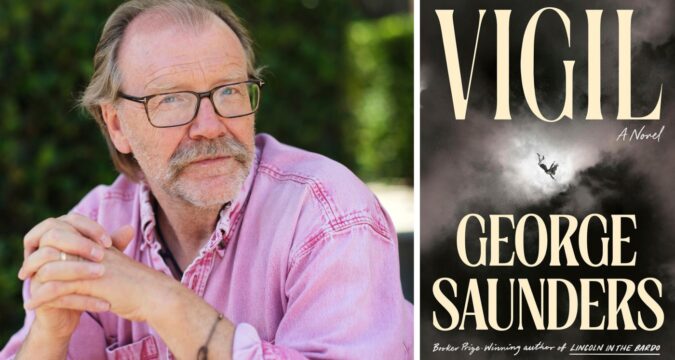
Biblioracle: I love George Saunders’ writing. So why was ‘Vigil’ disappointing?
To say that I like George Saunders’ writing is a significant understatement. His work is important to me, and has been for nearly 30 years.
Reading his first collection of stories, “CivilWarLand in Bad Decline,” not long after its release in 1996, was a revelation. Here was someone who seemed to capture the playful, postmodern irony of writers like Donald Barthelme, and infuse it with a deep sincerity and depth of humanity. I’ve taught his story “Winky” (from 2000’s “Pastoralia”) to hundreds of students and choked back tears many times when reading the final paragraph aloud in the classroom. “Lincoln in the Bardo” was a baggy, searching masterpiece.
So, it has been a source of great confusion, and even distress, to process my less-than-positive response to Saunders’ new novel, “Vigil.” What has gone wrong here?
“Vigil” opens with ultrawealthy oil executive K.J. Boone unconscious on his deathbed, where he is visited by Jill, an angel-ish presence of the formerly living who have not ascended fully to heaven, but instead roam the Earth in great numbers. Jill’s mission is to ease the passage of the dying into being dead, even people like Boone, who have worked to suppress the development and dissemination of climate change science, leading to a likely environmental apocalypse.
There are other spirits who visit Boone, including a Frenchman, responsible for developing the combustible engine, who tries to convince the dying man that Boone is a villain who should take on a similar role of repentance once he has departed the earthly plane.
Boone struggles with dying while Jill struggles with the rising return of her memories of her human self as Jill “Doll” Blaine, a woman who was killed in the 1970s at age 22 when she was accidentally blown up by a car bomb meant for her husband. Boone and Jill engage in philosophical dialogues as others — both living (Boone’s wife and daughter) and not — visit the bedside.
Among the visitors are two deceased former oil executives (Mel R. and Mel G.), referred to as R. and G. in a reference to Shakespeare’s, and then Stoppard’s, Rosencrantz and Guildenstern. It is this portion where some early qualms about my connection to “Vigil” started to bloom. As in the texts Saunders is referencing, R. and G. are clowns of a kind and they engage in banter meant to invoke the language of post-War American greatness, a banter steeped in irony as Boone decays in front of our eyes, along with the planet he’s despoiled while filling his own pockets.
This section ends with some slapstick that is deliberately, comically juvenile, but it created, in me at least, a kind of tonal whiplash that I couldn’t quite shake. Some later scenes, particularly one with Boone’s 20-something daughter who is trying to balance a love for her father with the knowledge of the harms he’s done, uses a similar technique as R.’s and G.’s banter, but it begins to feel like schtick, a neat trick of verbal firepower, but still… a trick.
One of the book’s themes is that judging others is easy, but understanding is hard, a theme infused in Saunders’ oeuvre over the years. But in this moment, in this story, I could not wholly abide it.
I think some of this is in the uneven execution of the difficult problem Saunders gave himself with this book. But surely some of it is also found inside of me and my present view of the world that Saunders is trying to illuminate.
It felt false to me. I was shocked, but I couldn’t and can’t deny it.
John Warner is the author of books including “More Than Words: How to Think About Writing in the Age of AI.” You can find him at biblioracle.com.
Book recommendations from the Biblioracle
John Warner tells you what to read based on the last five books you’ve read.
1. “Buckeye” by Patrick Ryan
2. “Straight Man” by Richard Russo
3. “James” by Percival Everett
4. “Demon Copperhead” by Barbara Kingsolver
5. “Anna Karenina” by Leo Tolstoy
— Adam T., Chicago
For Adam, I’m going to actually go a bit less epic than the preponderance of books on this list, but also a book that’s still going to get you emotionally, “We Run the Tides” by Vendela Vida.
1. “The Wedding People” by Alison Espach
2. “The Searcher” by Tana French
3. “The Correspondent” Virginia Evans
4. “Heart the Lover” by Lily King
5. “My Friends” by Fredrik Backman
— Nancy P., Wilmette
Lots of very popular books here — not that there’s anything wrong with that — but I’m going to guide Nancy toward a book she might not otherwise come to know, “Saul and Patsy” by Charles Baxter.
1. “Fun Home” by Alison Bechdel
2. “A Visit from the Goon Squad” by Jennifer Egan
3. “The Sympathizer” by Viet Thanh Nguyen
4. “Pale Fire” by Vladimir Nabokov
5. “Klara and the Sun” by Kazuo Ishiguro
— Indira S., Chicago
My gut instinct is pointing toward Paul Murray’s intimate epic coming-of-age novel, “Skippy Dies.”
Get a reading from the Biblioracle
Send a list of the last five books you’ve read and your hometown to biblioracle@gmail.com.
https://www.chicagotribune.com/2026/01/24/biblioracle-george-saunders-vigil/

Encourage your peace lily to bloom with these simple tips
I purchased a peace lily, which was beautiful while in flower, about a year and a half ago. It continues to put out new leaves, but it has been a few months since it’s flowered. What can I do to encourage it to flower?
— Linda Hauser, Algonquin
You made a good choice for a houseplant since this one is easy to care for. Spathiphyllum, or peace lily, is an evergreen tropical plant found on the forest floor of rainforests. Most people buy peace lilies when they’re in flower since, naturally, they’re drawn to flowering plants in garden centers. Peace lilies can be erratic in flowering and are not restricted to any one season, but there are lots of free-flowering varieties on the market that you could look into purchasing. A mature plant should flower every couple of months if it’s healthy and in a good location. The part of the plant that provides the color is not the flower, but the spathe, a large bract or modified leaf that forms a sheath to enclose the flower cluster.
I wonder if your peace lily is in too dark of a space in your home. Peace lilies are tolerant of low-light conditions, but they’re less likely to flower in extremely low light. Putting the plant on an east-facing windowsill or near a south- or west-facing window might encourage it to bloom since it likes bright, indirect light. In summer, when the temperature stays above 60 degrees Fahrenheit, you can move your plant outside to a shady location — peace lilies will burn in direct sun. Also, I recommend using diluted fertilizer for peace lilies twice a month during the growing season.
This plant needs evenly moist, well-drained soil while growing and flowering. Let the growing medium dry out some between waterings when the plant is in a slow growth mode. To keep it healthy and fresh-looking, wipe dust off the leaves with a damp cloth as needed, and trim off any yellow leaves. You can also remove spent flowers, so the plant will continue blooming. Increasing light, water, humidity, and fertilizer may nudge a plant to flower. Keep in mind, though, that older plants sometimes don’t flower as well as young plants. I would purchase another peace lily and try again if you can’t convince this one to bloom.
For more plant advice, contact the Plant Information Service at the Chicago Botanic Garden at plantinfo@chicagobotanic.org. Tim Johnson is senior director of horticulture at the Chicago Botanic Garden.
https://www.chicagotribune.com/2026/01/24/peace-lily-flowering-tips/
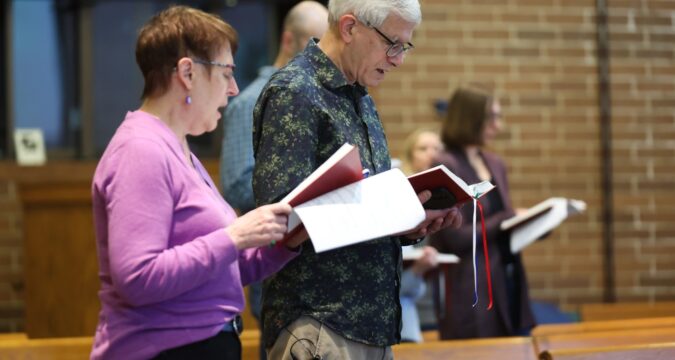
To help people with hearing loss, Chicago-area venues installing new Auracast technology
The first time Andrew Bellavia attended a live performance featuring a new assistive listening technology for people with hearing aids, he was blown away.
He had become accustomed over the years to inconsistent sound quality when using assistive listening technologies at live performances. But at a choral performance in New York in 2024, the venue used a relatively new technology called Auracast to transmit the sound directly to his hearing aids.
“It was really crisp and clear,” said Bellavia, of Woodstock, who has a consulting business related to hearing and communications. “It amazed me, and that was when I really started getting excited about where it could go.”
It’s a technology that’s starting to slowly spread in the Chicago area. In recent months the Marriott Theatre in Lincolnshire installed Auracast, as did the Metropolis Performing Arts Centre in Arlington Heights. Chicago’s Goodman Theatre hopes to launch the technology at performances later this month, and Bellavia’s church in Woodstock has also installed it.
“We are seeing already Auracast deployment or installation in places of worship, museums, transportation centers,” said Jill Mecklenburger, principal audiologist with GN Hearing, which makes Auracast-enabled hearing aids. “All sorts of venues have been and will be adopting this.”
The technology is a new type of Bluetooth that can broadcast to multiple devices at once. In a venue with Auracast, a person with hearing aids or earbuds that are compatible with Auracast can use their smart phones to connect their hearing aids or earbuds with Auracast, similar to the way a person might use their phone to connect with a venue’s Wi-Fi. Unlike other types of Bluetooth, people don’t have to pair their devices.
Several companies now make transmitters — about the size of an internet modem — that venues can install. And a number of companies are also making hearing aids and earbuds that are compatible with Auracast.
Public venues are now catching up with the new technology, said Kristen Conners, an audiologist at Prescription Hearing at Orland Hearing Center.
“Within the next five years I think we’ll see big, big changes,” Conners said of Auracast installation in venues.
The Sydney Opera House in Australia launched Auracast earlier this year, according to GN Hearing.
Locally, the Metropolis Performing Arts Centre in Arlington Heights installed Auracast in early November. The Marriott Theatre in Lincolnshire launched Auracast with the opening of its show “Million Dollar Quartet Christmas” in November. Many of the theater’s patrons use hearing aids and were excited for the new technology, said Liz Lach, producing associate at the theater.
“When we did that opening performance, everyone was very impressed with just how clear everything sounded in the space,” Lach said. “As more people have the compatibility set into their hearing aids it will make it easier to go into that system.”
The Marriott is, however, hanging on to its previous sound systems for people with hearing issues for now. The theater plans to use both systems, given that not all hearing aids or earbuds yet work with Auracast.
The Marriott, along with many other theaters, has been using what’s known as a telecoil system for years. Sound from the telecoil system can also go straight to a patron’s hearing aids, with the press of a button on the hearing aid.
With the telecoil system, an amplifier and copper wire (installed under the carpet or within the floor) transmit audio from the sound system via a magnetic field. A wire inside the hearing aid then allows the hearing aid to become a wireless receiver, according to the Hearing Loss Association of America.
Other theaters may use an FM system, transmitting sound to headphones via radio transmission. Theaters with assistive listening systems must also provide portable receivers for patrons to use to access the systems, in case they don’t have compatible hearing aids, Bellavia said.
Proponents of Auracast say it can be cheaper, easier to install and provide better sound quality than some previous options. The system can also be used with compatible earbuds, which can be handy for people who may not have hearing aids but want better sound quality or fewer distractions when viewing performances.
“Let’s say you’re a normal hearing person who just wants to take it down a notch or a neurodiverse person who’s distracted by the sounds around you,” said Bellavia, who provides consulting services to the nonprofit organization that defines Bluetooth standards. “You’re not going to get fitted with hearing aids. You can, however, buy a set of earbuds and make them work for you.”
Barbara Kelley, executive director of the Hearing Loss Association of America, said she’s excited about the promise of Auracast. Though existing systems have served some people well, not every system works for everyone, she said. She said she’s in favor of any technology that’s easy to use and works well.
“Auracast is coming on the scene and personally my big hope for Auracast is it becomes ubiquitous,” Kelley said. “People should be able to enjoy the theater, meetings, worship, whatever they’re doing in their lives and have the access they need.”
The Goodman Theatre, which hopes to use Auracast for its upcoming performances of “Holiday,” is installing Auracast and a new induction loop system to help patrons with hearing loss.
Executive Director John Collins hopes that between the two systems, more people will be able to enjoy the theater’s shows. The systems are among a number of other things the theater offers to help make performances more accessible, including shows with sign language interpretation, Spanish subtitles and sensory-friendly performances, Collins said.
“If we’re going to be Chicago’s flagship theater, we have to make sure that the work we’re offering is accessible to everyone,” Collins said. “There are so many barriers to participation in the arts. This is one way we can address some of what might be keeping people away.”
https://www.chicagotribune.com/2026/01/24/auracast-theaters-hearing-loss/

‘Like we’re starting all over again’; Chicago man acquitted on Bovino murder-for-hire charges now in ICE custody
A day after a Chicago construction worker was acquitted by a federal jury of charges he offered money to kill Border Patrol Cmdr. Gregory Bovino, the Department of Homeland Security was hardly in a conciliatory mood.
“This verdict does not change the facts: (Juan) Espinoza Martinez targeted federal law enforcement with violence via Snapchat,” DHS spokeswoman Tricia McLaughlin said in an emailed statement, which went on to strike some other familiar themes about the media, sanctuary politicians and “terrorists” bent on harming immigration agents.
The government’s response to yet another high-profile case stemming from Operation Midway Blitz going down in flames illustrates just how much emphasis the Trump administration has placed on the public relations battle, rather than legal outcomes.
By quickly labeling arrestees as “domestic terrorists” or, in Espinoza Martinez’s case, a “high-ranking gang member,” DHS has tried to paint a picture of Chicago as a city out of control, with citizens willing to do anything to inflict physical harm on immigration agents simply trying to do their job.
Over and over again, however, criminal charges have dissolved once put under judicial scrutiny.
Out of the roughly 30 cases charged since September, 14 never made it to a trial — including many where a grand jury refused to return an indictment and others where prosecutors moved to dismiss them when more evidence came out.
Last month, prosecutors dropped assault charges against Marimar Martinez after questions arose about the official version of an agent who shot her in traffic in Brighton Park, purportedly in self-defense, then bragged later about his marksmanship in text messages with his buddies.
Several other cases remain pending — most notably the high-profile conspiracy charges against six protesters, including several Democratic political candidates, accused of impeding immigration officers and damaging a vehicle outside the Broadview ICE facility in September.
Marimar Martinez stands on Dec. 26, 2025, outside the truck service shop that provided aid to her after being shot five times by Border Patrol agents in Brighton Park in October. (E. Jason Wambsgans/Chicago Tribune)
Espinoza Martinez’s case, meanwhile, was the first to make it to a jury, which acquitted him after only three hours of deliberation.
Some Chicago defense attorneys who have handled Midway Blitz-related cases told the Tribune they were encouraged by the outcome because the jury process worked as intended.
But they also expressed concern over so many cases being brought in seemingly hasty fashion, particularly in a courthouse where prosecutors, working with federal law enforcement agencies, have long been known as thorough and methodical.
“You don’t blitz in federal criminal prosecutions,” said attorney Christopher Parente, a former federal prosecutor who represented Marimar Martinez. “You take your time. You make sure your case is rock solid and that you’re going to win.”
Parente said he saw many parallels between his client’s case and the allegations surrounding Espinoza Martinez. In both instances, he said, DHS trashed the defendants as violent thugs in news releases and put out information about their supposed gang membership that later turned out to be completely fictitious, he said.
“They almost don’t care what happens when it gets to court,” Parente said.
Attorney Christopher Parente, left, speaks to reporters at the Dirksen U.S. Courthouse in Chicago on Nov. 20, 2025, as his client Marimar Martinez and law partner Damon Cheronis look on after federal prosecutors abruptly moved to dismiss all charges against Martinez. (Terrence Antonio James/Chicago Tribune)
Attorneys Jonathan Bedi and Dena Singer, who represent Espinoza Martinez, also said Friday his acquittal is “an example of the power of the jury trial.”
“Twelve ordinary citizens stood between an overreaching government and an innocent man. They demanded proof, not politics,” the attorneys said in a statement. “This verdict is a reminder that juries see through political prosecutions. They demand real evidence, not speculation and character assassination. The government didn’t have it. They never did.”
A spokesman for the U.S. attorney’s office in Chicago declined to comment.
Despite his acquittal, Espinoza Martinez, who is not a U.S. citizen, was taken into custody directly from the Metropolitan Correctional Center on Friday pursuant to a detainer by Immigration and Customs Enforcement.
Bedi said despite the uncertainty where he’d go next, Espinoza Martinez was in good spirits after the trial ended.
“He’s relieved,” he said. “A lot of happy tears.”
Espinoza Martinez’s wife, Bianca Hernandez, told the Tribune the relief she and her family felt when her husband was found not guilty was real — but fleeting.
“We were very, very happy because we knew that he didn’t do anything,” Hernandez said. “But at the same time, it is a very bittersweet victory because he doesn’t actually get to come home.”
With her husband now in ICE custody, she and their three children, ages 14, 12, and 3, are now facing a new and frightening uncertainty.
The family does not know where Espinoza Martinez is being held or when he will be deported to his native Guerrero, Mexico, where he has not been since he was 5 years old, she said.
He previously held DACA status until 2020, when financial hardship during the COVID-19 pandemic prevented him from renewing.
“To me this is like we’re starting all over again,” Hernandez said.
Juan Espinoza Martínez with his wife Bianca Hernandez and their three U.S.-born children. Espinoza Martínez is facing deportation despite a jury finding him not guilty of putting a hit on Gregory Bovino, the chief of Border Patrol, during Operation Midway Blitz. (Family photo)
When the charges against Espinoza Martinez were announced Oct. 7, the language DHS used to describe him could not have been more inflammatory. It was just days after Marimar Martinez had been shot in Brighton Park, and tensions in Chicago were already elevated.
“Depraved individuals like Juan Espinoza Martinez — who do not value human life and threaten law enforcement — do NOT belong in this country,” McLaughlin blasted in a news release. “We will not allow criminal gangs to put hits on U.S. government officials and our law enforcement officers.”
Federal leaders also tried to use Espinoza Martinez’s case to allege that it is part of a coordinated effort by criminal gangs to go after immigration officials, though they’ve offered no further evidence.
In an interview on Fox News shortly after the arrest, McLaughlin said it was proof of a “coordinated, highly organized waging of war against our law enforcement and a terror campaign against them.”
”They’re now handing intelligence over to these cartels, these criminal gangs, to go after our law enforcement, harass them, dox them, kidnap them and, god forbid, kill them,” she said.
But questions began to arise the minute Espinoza Martinez was led into a magistrate judge’s courtroom for his initial appearance.
Arrested a day earlier at his construction job site, Espinoza Martinez, still dressed in his green work T-shirt, certainly didn’t fit the profile of a hard-core gang member. He had never been arrested in almost 30 years living in Chicago, had no tattoos of any kind, a steady job and devoted family.
When the criminal complaint was unsealed against him, it showed a Homeland Security Investigations special agent had sworn out the affidavit before a magistrate at 1:09 p.m. Oct. 5, the day before his arrest.
“Based on my training and experience and knowledge of this investigation, I believe that Espinoza Martinez is a high-ranking member of the Latin Kings and has authority to order other members to carry out violent acts, including murder,” Agent Christopher Perugini wrote in the affidavit.
But that knowledge, it turned out, came mostly — if not entirely — from a “source of information” in the complaint, later identified as 44-year-old construction company owner Adrian Jimenez, a longtime government informant who had known Espinoza Martinez for only about a year.
Jimenez, who has an armed robbery conviction in his background, testified at trial that he notified Homeland Security Investigations immediately after Espinoza Martinez sent him a Snapchat message with Bovino’s photo and the words “2k cuando lo aggaren,” which means “when they catch him” and “10K if u take him down.”
But Jimenez acknowledged at trial he never pressed Espinoza Martinez on the seriousness of the offer. Jimenez also was not allowed to testify about his belief that Espinoza Martinez was in the Latin Kings.
That’s because by the time the case got to trial, U.S. District Judge Joan Lefkow had barred references to any gang ties due to the lack of evidence.
The centerpiece of the trial was Espinoza Martinez’s videotaped interview with agents on the day of his arrest, which was played for the jury on Wednesday.
Over the course of the interview, the agents pressed Espinoza Martinez repeatedly on how he thought the messages looked. While he acknowledged that he’d made references to the Latin Kings, he also said over and over he meant nothing by it, that they were nothing more than social media chatter, and that he had no intention of making any actual offer for Bovino’s killing.
“I’m really confused about this,” Espinoza said at one point in the interview. “I’m not nowhere around there. I work for a living every day. I’m a union worker. I work concrete, so I don’t know.”
On Friday, Espinoza Martinez’s wife said the past 3 1/2 months have already taken a heavy emotional toll on the family. Now, with her husband facing possible deportation, Hernandez is currently the sole provider for the household, taking on caregiving and catering work to make ends meet.
Hernandez said her kids, who are U.S. citizens, never doubted their father’s innocence, but they still felt the weight of public judgment.
“They are devastated. They went from being happy and lively kids to now completely isolating themselves,” she said.
Hernandez last spoke to her husband after he was picked up by ICE on Friday morning.
“He just told me to keep my head up, talk to the kids and let them know that he’s fine.”
As they wait for answers, Hernandez said her husband is grateful for the support of the community and still holds onto hope.
“Hopefully we can just find a way to get him back home,” she said.
jmeisner@chicagotribune.com
https://www.chicagotribune.com/2026/01/24/man-acquitted-bovino-ice-custody/
Letters: The CTA needs to run more trains during rush hour
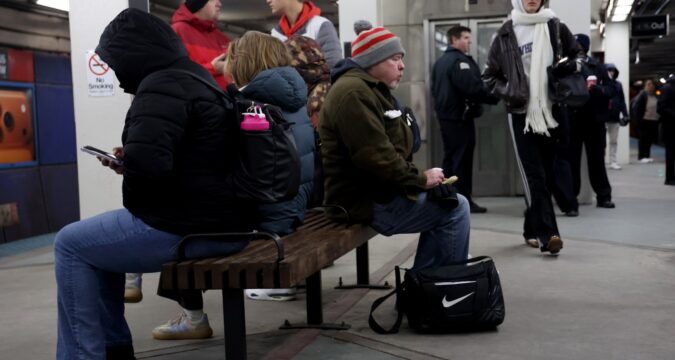
The CTA needs to run more trains where they are needed to better serve the city. At rush hour, the Brown and Purple Line trains are overflowing with riders, forcing people to delay their trips. For those who are able to board, cramming us together is unsafe, not to mention uncomfortable.
While I am generally impressed by the politeness of my fellow Chicagoans under these circumstances, the CTA needs to run more trains on those lines at the times when they are overcrowded (especially Brown and Purple Line trains going to the Loop in the morning and back from the Loop in the evening). Increasing the presence of police or other security guards on board could also reduce risk and improve commutes. People are lining up shoulder to shoulder trying to get to work, which is essential to revitalizing downtown, supporting local businesses and making Chicago a livable city.
If Chicago is going to be the city that works, the CTA needs to make it safer and easier for us to get there.
— Joshua Singer, Chicago
Vallas exhibits ignorance
Why does the Tribune opinion section provide Paul Vallas op-ed space, every couple of weeks, to pontificate on whatever subject he thinks is interesting? Is there an established relationship between him and the Tribune? If so, you all should be more transparent and just say so. Either way, please show some tighter scrutiny over what you’re willing to publish on his behalf.
Case in point: the Jan. 20 op-ed about the CTA and security (“Law enforcement needs to be more visible on the CTA”). Did Vallas read the new legislation that he called simply a ‘financial rescue”? It is a lot more than that. First, the Northern Illinois Transit Authority Act has taken control of the CTA away from the mayor, and it includes a very large set of public safety reforms, creating a whole new safety and security apparatus for the entire transit system — a new transit police program, a safety council to oversee it and a task force.
The fact that Vallas makes no mention, and the Tribune opinion team still prints whatever he says, shows he’s just out to disparage whoever is in charge today, without any knowledge of the changes that are coming.
Silly and lazy on both your parts.
— Kevin O’Malley, Chicago
Bears gave us possibility
In recent coverage dissecting the Bears’ overtime loss and searching for someone to blame, much of the conversation has focused on a single play. That instinct is understandable. It is also misplaced.
I am not a sports guy. I didn’t grow up memorizing stats or debating play calls. My most vivid sports memory is getting knocked out at the YMCA during passing drills when I was 8 years old because I was too busy talking to my neighbor to notice the ball headed my way.
But while I may not have picked up a ball since that fateful afternoon 50 years ago, I have spent a lifetime living in Chicago and working in schools and communities where sports mattered deeply. Not because of wins and losses, but because of what they created.
When I was president of Hales Franciscan High School, bringing football back mattered. So did replacing the tile gym floor with hardwood for the basketball team. With community support, we were able to do both. At Urban Prep, we launched with every sport from day one. Not for trophies, but for pride, identity, belonging and community. Sports have a way of binding people together, especially when so much else is pulling them apart.
That’s why this Bears season mattered.
For the past few months, Chicago found a rare point of unity. On game days, we weren’t Democrats or Republicans, North Side or South Side. We were just Bears fans. We cheered for an underdog team, a rookie quarterback unafraid to be fully himself, veterans who played through injuries, coaches willing to own mistakes publicly and a front office open to rethinking old assumptions. In a city and a country that often struggle with accountability and grace, that example mattered.
Yes, the playoff loss hurt. But reducing an entire season to a single miscommunication in overtime misses the larger story (much like I missed that pass at the Y!). It also risks erasing what was built along the way.
What this team gave Chicago was not perfection. It was possibility. It was a reason to believe together. That should count for something.
People are very good at criticism. We are less practiced at gratitude. This feels like a moment to pause, acknowledge what this season gave us and recognize that progress is rarely linear.
To this nonsports guy, it feels far more like a beginning than an end. It feels like a win.
Heads up. Eyes forward. Bear down.
— Tim King, Chicago
Love for Jonathan Toews
What an incredible show from the thousands of Chicago Blackhawks fans this week at the United Center to honor Jonathan Toews. He was an incredible player and teammate for the Blackhawks, and the fans sure made him feel very special with a four- to five-minute standing ovation.
The emotion was so high, and the people I have spoken to here in Winnipeg, many of whom were brought to tears, were blown away by the reaction of the fans. Congratulations to Toews, who continues to show his determination and leadership here in Winnipeg, and congratulations to the fantastic fans in Chicago. You did yourselves very proud!
— Tom Ethans, executive director, Take Pride Winnipeg Inc.
Hopper-esque photo
Great job on Antonio Perez’s photo on the front page of Wednesday’s Tribune of a lone Chicago walker making his way through a frigid day. It certainly had an Edward Hopper-esque feel to it with the solitary figure making his way through a cold urban landscape. The nearly colorless imagery really grasps the soul of the moment and the chill of our wintry days.
If I had my say, Perez’s photo would be in the Art Institute next to “Nighthawks.” Good work, my man — take the day off with pay!
— Ed Fee, Orland Park
Beautiful composition
My compliments to Tribune photographer Antonio Perez on his lovely front-page photo. What a beautiful composition! I would have thought it a Hopper.
— Marcia Marzec, Joliet
Submit a letter, of no more than 400 words, to the editor here or email letters@chicagotribune.com.
The Tribune’s Quotes of the Week quiz for Jan. 24
Chicago is all bundled up in its warmest winter wear as a polar vortex descends on the Great Lakes region, bringing subzero temps and biting winds. Chicago Public Schools canceled classes Friday, the annual “polar plunge” was called off and several of the city’s esteemed museums announced closures as officials urged residents to stay indoors amid the dangerously cold conditions.
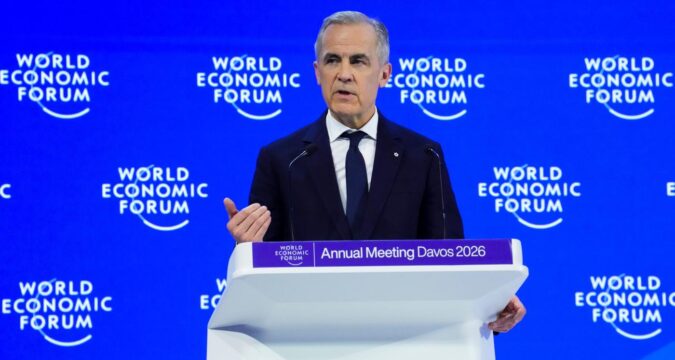
Temperatures were milder in Davos, Switzerland, where world leaders gathered this week for the World Economic Forum. President Donald Trump, who marked his first year back in office Tuesday, was among those in attendance. His recent bid for U.S. control of Greenland and the subsequent threat of tariffs against European nations that oppose such a move received pushback from NATO members. The president later rescinded those tariff threats and also clarified that he would not use force to take the Arctic island.
Back at City Hall, Mayor Brandon Johnson’s administration considered — and then decided against — making a bid to buy back Chicago’s parking meters, which have been under the control of a private company since 2008. The mayor, however, has not decided if he will sign off on an ordinance passed by City Council that bans unlicensed businesses from selling most hemp products.
A former Chicago mayor, Rahm Emanuel, made news this week after he called for a mandatory retirement requirement for politicians over the age of 75 across all three branches of government. Speaking at the Center for American Progress, Emanuel, who’s exploring a potential White House bid, also touted his experience managing Chicago Public Schools and pitched nationwide education reform.
On Friday, thousands of Minnesotans took to the streets, participating in a general strike to protest immigration enforcement actions in the state. Meanwhile, in Chicago, a man charged with soliciting the murder of Border Patrol Cmdr. Gregory Bovino was found not guilty, and a federal judge officially dismissed a lawsuit over the use of force by immigration agents during Operation Midway Blitz.
In other news, the owners of TikTok penned a deal to keep the social media platform operating in the U.S., Illinois rideshare drivers are eying legislation that would allow them to unionize and the state is tucking away nearly $500 million for a rainy day.
Much to Chicago’s dismay, the Bears are out of the playoffs, losing in overtime Sunday night to the Los Angeles Rams. While fans are still mourning the end of a division-winning season, the team doesn’t appear to be dwelling on it: Coach Ben Johnson says he’s “already looking ahead to 2026,” while general manager Ryan Poles assesses the roster and looks to free up salary cap space in the offseason.
For one last hurrah, the Wieners Circle celebrated the Bears’ playoff run with a Caleb Williams lookalike contest on Tuesday evening. The real Caleb Williams was busy watching the Bulls beat the Clippers — it was the second Chicago sporting event the quarterback attended this week, alongside new pal and Chicago Cubs center fielder Pete Crow-Armstrong. Also in sports, Indiana University beat the University of Miami on Monday to win the school’s first national championship title.
Nominations for the 98th Academy Awards were released Thursday morning. Writer-director Ryan Coogler’s Jim Crow-era vampire thriller “Sinners” landed a record 16 nominations, including best picture, best director, best actor, best original screenplay and best score. Following close behind was Paul Thomas Anderson’s revolutionary epic “One Battle After Another,” which received 13 nods. On the flip side, “Wicked: For Good” was snubbed entirely, as were Paul Mescal, for his portrayal of a grief-stricken William Shakespeare in “Hamnet,” and Jesse Plemons, for his leading role as a paranoid conspiracy theorist in Yorgos Lanthimos’ latest feature, “Bugonia.”
And if you’re willing to brave the cold, Chicago Restaurant Week kicked off Friday. Check out the Tribune’s guide for must-visit eateries offering prix fixe menus at $30 for lunch and $45 or $60 for dinner.
Now let’s get into it! Here’s the latest installment of the Tribune’s Quotes of the Week quiz, from January 18 to 24. Missed last week? You can find it here or check out our past editions of Quotes of the Week.
https://www.chicagotribune.com/2026/01/24/quotes-quiz-january-24/
Today in History: Ted Bundy executed
Today is Saturday, Jan. 24, the 24th day of 2026. There are 341 days left in the year.
Today in history:
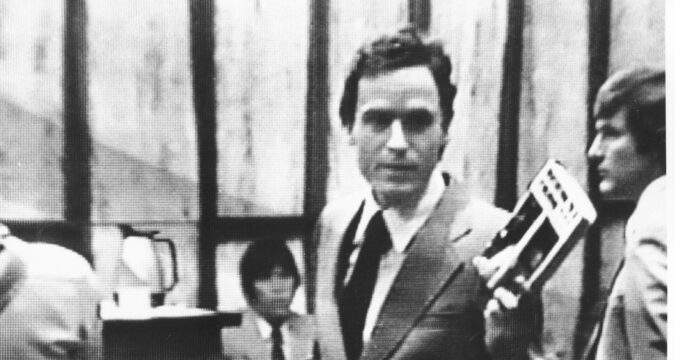
On Jan. 24, 1989, confessed serial killer Ted Bundy was executed in Florida’s electric chair.
Also on this date:
In 1835, a major slave rebellion began in Bahia, Brazil, leading to the deaths of dozens of enslaved people in clashes with troops, police and armed civilians in the provincial capital of Salvador. The uprising was seen as influential in helping to bring about an end to slavery in the country decades later.
In 1848, James W. Marshall found a gold nugget at Sutter’s Mill in northern California, a discovery that sparked the California gold rush.
In 1945, Associated Press war correspondent Joseph Morton was among a group of captives executed by German soldiers at the Mauthausen-Gusen concentration camp in Austria.
In 1965, Winston Churchill died in London at age 90.
In 1978, a nuclear-powered Soviet satellite, Kosmos 954, plunged through Earth’s atmosphere and disintegrated, scattering radioactive debris over parts of northern Canada.
In 1984, Apple Computer began selling its first Macintosh model, which boasted a built-in 9-inch monochrome display, a clock rate of 8 megahertz and 128k of RAM.
In 2003, former Pennsylvania Gov. Tom Ridge was sworn as the first secretary of the new Department of Homeland Security.
In 2011, a suicide bomber attacked Moscow’s busiest airport, killing 37 people; Chechen separatists claimed responsibility.
In 2013, President Barack Obama’s Defense Secretary Leon Panetta announced the lifting of a ban on women serving in direct ground combat roles.
In 2018, former sports doctor Larry Nassar, who had admitted to molesting some of the United States’ top gymnasts for years under the guise of medical treatment, was sentenced to 40 to 175 years in prison.
Related Articles
Today in Chicago History: ‘Tomorrow’s transit car is here’
Today in History: Poll taxes prohibited in federal elections
Vintage Chicago Tribune: When the Rev. Martin Luther King Jr. moved to the city
Today in History: Theodore Kaczynski pleads guilty
Today in Chicago History: Naked bodies of the Grimes sisters found near Burr Ridge
In 2023, a farmworker killed seven people in back-to-back shootings in a case of “workplace violence” at two Northern California mushroom farms. It marked the state’s third mass killing in just over a week.
Today’s birthdays: Cajun musician Doug Kershaw is 90. Singer-songwriter Ray Stevens is 87. Singer-songwriter Neil Diamond is 85. Singer Aaron Neville is 85. Physicist Michio Kaku is 79. Actor Daniel Auteuil is 76. Comedian Yakov Smirnoff is 75. Actor William Allen Young is 72. Musician Jools Holland is 68. Actor Nastassja Kinski is 65. Olympic gymnastics gold medalist Mary Lou Retton is 58. Actor Matthew Lillard is 56. Musician Beth Hart is 54. Actor Ed Helms is 52. Actor-comedian Kristen Schaal is 48. Actor Tatyana Ali is 47. Actor Carrie Coon is 45. Actor and rapper Daveed Diggs is 44. Actor Mischa Barton is 40. NFL coach Sean McVay is 40. Soccer player Luis Suárez is 39. Actor Callan McAuliffe is 31. Singer Johnny Orlando is 23.
https://www.chicagotribune.com/2026/01/24/today-in-history-ted-bundy-executed/
Today in Chicago History: First COVID-19 case confirmed in Illinois
Here’s a look back at what happened in the Chicago area on Jan. 24, according to the Tribune’s archives.
Is an important event missing from this date? Email us.
(Sports) front page flashback: Jan. 24, 1962
Jackie Robinson, the first Black player in Major League Baseball, and Bob Feller were elected on. Jan. 23, 1962 to the National Baseball Hall of Fame. It was the first time in six years that so-called modern players were chosen by voters. (Chicago Tribune)
1962: Jackie Robinson became the first Black baseball player elected into the National Baseball Hall of Fame.
Weather records (from the National Weather Service, Chicago)
High temperature: 65 degrees (1967)
Low temperature: Minus 15 degrees (1897)
Precipitation: 0.76 inches (1938)
Snowfall: 5.7 inches (1893)
A view of Sherman House from Clark and Randoph Streets in an undated photo. The hotel was closed in 1973 and demolished in 1980. The James R. Thompson Center was constructed in its place. The College Inn is on the left. (Chicago Tribune historical photo)
1973: The last guest checked out of the Sherman House hotel, which was then the oldest hotel in continuous operation in Illinois. It hosted a party in 1914 in honor of Col. William ”Buffalo Bill” Cody.
The State of Illinois building (later known as the Thompson Center) was built on the site after the former hotel was demolished in 1980.
The Chicago Bears introduced Dick Jauron as the team’s 12th head coach on Jan. 24, 1999. (Chicago Tribune)
1999: Dick Jauron was introduced as the Chicago Bears’ 12th head coach. He went 35-45 (.438) from 1999 to 2003.
The former Jacksonville Jaguars defensive coordinator made the playoffs only once in five seasons, but it was a memorable one. Jauron’s 2001 Bears went 13-3 in dramatic fashion and won the NFC Central, earning him NFL Coach of the Year honors.
Michael Jordan takes in the United Center as he prepares to take on the Bulls on Jan. 24, 2003, at the United Center in Chicago. This marked Jordan’s last professional game in Chicago. (Charles Cherney/Chicago Tribune)
2003: In his final professional game in Chicago, Michael Jordan received a four-minute standing ovation during player introductions. He told the crowd “I love you all very much” before scoring 11 points in the Washington Wizards’ 104-97 loss to the Bulls.
2009: Vincent Richardson — then 14 years old — was charged as a juvenile for impersonating a police officer in Chicago’s Grand Crossing District station. He went on patrol with a real officer for more than five hours on the South Side. Then-Superintendent Jody Weis called the incident “embarrassing to the department.”
Young cop impostor has another chance to work on better future
Richardson was arrested again in 2013 for pretending to be a Chicago cop and again in 2021.
Jim Thome played all but 529 of his 2,543 career games wearing other uniforms, yet the burly Peoria native, who was elected into the Baseball Hall of Fame on Jan. 24, 2018, provided plenty of memorable moments as a member of the Chicago White Sox. (Chicago Tribune)
2018: Former White Sox slugger and Peoria native Jim Thome was elected to the Baseball Hall of Fame in his first year of eligibility.
On Jan. 24, 2020, a Chicago woman became the second person in the United States diagnosed with the coronavirus. (Chicago Tribune)
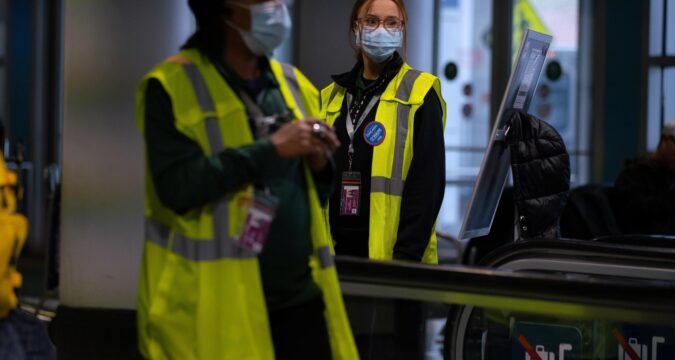
2020: A Chicago woman in her 60s who traveled to Wuhan, China, to care for her sick father became the first confirmed COVID-19 case in Illinois.
She returned to Chicago on Jan. 13 and, nationally, her diagnosis was second only to a Washington state man in his 30s who had traveled to the same region of China. Her husband was identified as the second case confirmed in Illinois. They both received treatment at Amita Health St. Alexius Medical Center in Hoffman Estates before being discharged.
Want more vintage Chicago?
Subscribe to the free Vintage Chicago Tribune newsletter, join our Chicagoland history Facebook group, stay current with Today in Chicago History and follow us on Instagram for more from Chicago’s past.
Have an idea for Vintage Chicago Tribune? Share it with Kori Rumore and Marianne Mather at krumore@chicagotribune.com and mmather@chicagotribune.com
https://www.chicagotribune.com/2026/01/24/january-24-chicago-history/


