Being an English major in college was going to come in handy someday. Eventually.
Three weeks ago, in issuing a sweeping injunction on the use of force by immigration agents in Operation Midway Blitz, U.S. District Judge Sara Ellis did something you rarely hear in even the most vaunted courtrooms in this country: She read a poem. In its entirety.
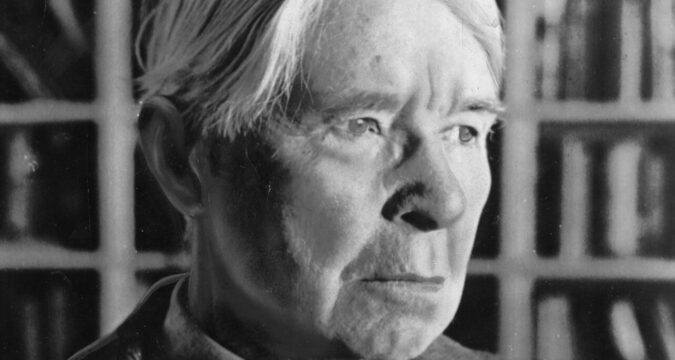
Carl Sandburg’s 1914 poem “Chicago” is a powerful, sweeping description of the city at the turn of the 20th century. Chicago’s oft-cited nickname, the “City of the Big Shoulders,” comes from it.
But it’s more than that.
Some 110 years later, Sandburg’s words are illustrative of the moxie this place has always had but only recently visibly reclaimed.
“Come and show me another city with lifted head singing so proud to be alive and coarse and strong and cunning,” Sandburg wrote. “Flinging magnetic curses amid the toil of piling job on job, here is a tall bold slugger …/ Bareheaded,/ Shoveling,/ Wrecking,/ Planning,/ Building, breaking, rebuilding.”
An original copy of the Poetry magazine from 1914 featuring the poem “Chicago” by Carl Sandburg, at the Poetry Foundation in Chicago in 2014. (Nancy Stone/Chicago Tribune)
Building. Breaking. Rebuilding. It’s not lost on me that Ellis articulated the legacy of the city in the same halls that only a year before saw her colleagues weigh the fates of some of the city’s power players, the old order. It’s a fitting nod to the sentiment that despite all of our recent trouble, we remain proud to be the scrappy, inimitable city that we are.
This renewed energy across Chicago’s gridded streets emerged as coordinated defiance of federal immigration agents who arrived in September. That energy has continued all fall — with the Bears and Cubs seemingly propelled, to some degree, by this sense of fight.
As I ran the Chicago Marathon, I noticed how many Mexican and Ecuadorian flags lined the route and how supporters in Pilsen and Chinatown were undeterred from turning out to cheer on loved ones — despite the increase in federal immigration enforcement efforts in the city.
Consider also the ingenuity and generosity shown by local food pantries, getting groceries to those who are homebound out of fear. Every day, Franciscan Sisters Stephanie Baliga and Kate O’Leary tell me, presents a logistical challenge at Mission of Our Lady of the Angels in West Humboldt Park — thanks to the double whammy of federal agents’ presence and food assistance program funding cuts and delays. And yet, every day, they remain determined to serve, handing out more than 400 allotments of groceries each week.
As I walked back from a recent lunch, my friend’s 4-year-old quietly but proudly showed me she knew how to blow a whistle — a nod to the Lincoln Park mom brigade, which texts warnings if federal agents are seen near local schools.
The National Museum of Mexican Art had a line around the block on Nov. 1 on Día de los Muertos, or “Day of the Dead,” which my 7-year-old and I discovered when we were looking to fill a Saturday afternoon. And Pilsen’s Panaderia Nuevo Leon could barely fit its customers inside that same afternoon when we made a stop for a treat.
Well versed in the city’s Irish Catholic culture, I have loved taking part in Chicago’s proud expression of its Irishness — attending Old St. Pat’s annual Chicago Celtic Mass and events held by the Irish Fellowship Club and Celtic Legal Society and gossiping about who’s been selected as annual parade grand marshal and queen of St. Patrick’s Court.
Part of that delight, I’ve come to realize, comes from a clear feeling of belonging, a knowledge that you have friends and neighbors who have your back.
But we’d be remiss to think we are just an Irish town anymore. And for those who have a problem with that, we sneer right back, just as Sandburg noted.
The challenges Chicagoans have endured these last weeks I wouldn’t wish on anyone. But that time has made clear that as a city, we know how to embrace the notion that we fight for our own. Together.
Kerry Lester Kasper is a Chicago-based writer.
Submit a letter, of no more than 400 words, to the editor here or email letters@chicagotribune.com.
https://www.chicagotribune.com/2025/11/26/opinion-chicago-operation-midway-blitz-carl-sandburg-poem/

