GDP Shocker: 75% Of US Growth In The First Quarter Was Due To AI
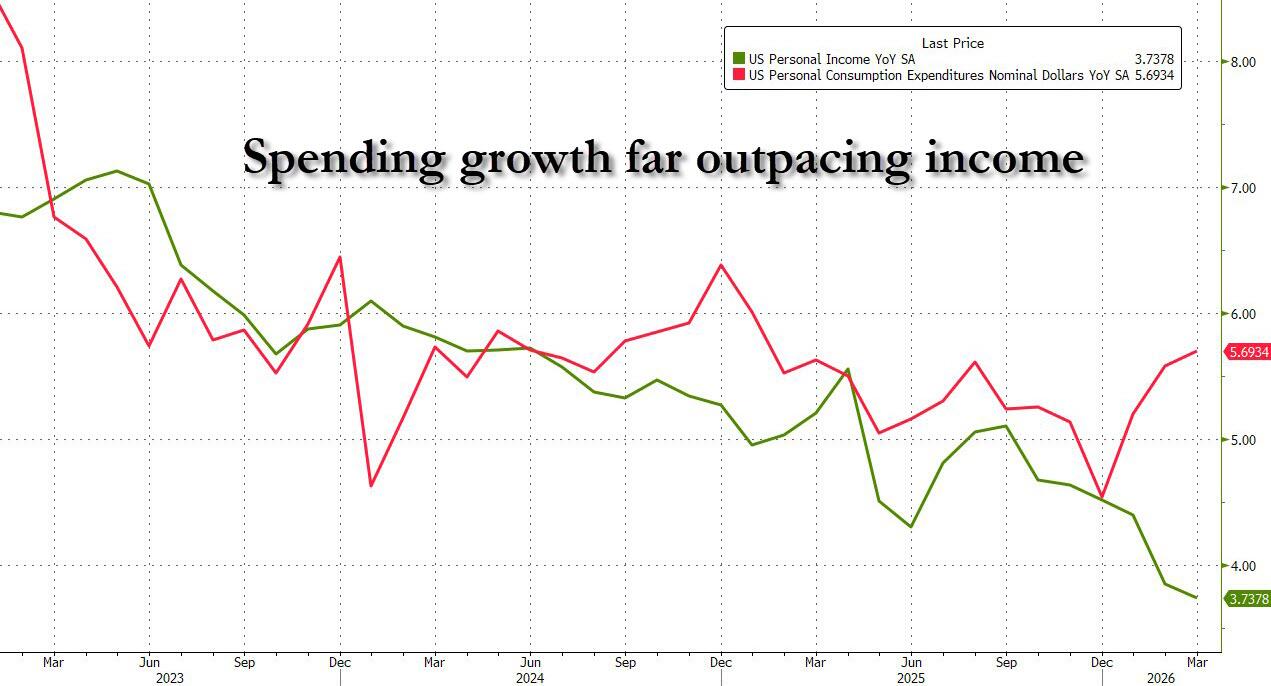
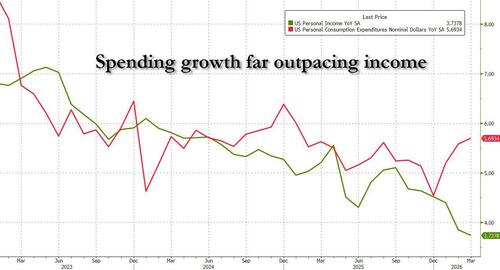
On the surface, today’s Q1 GDP print was unremarkable: Real GDP grew 2.0% annualized in the first quarter, somewhat below consensus expectations of 2.3% and reflecting a surprisingly small rebound in government spending after the shutdown drag in Q4. Federal government spending contributed only half as much to real GDP growth in Q1 (+0.6%) as it subtracted in Q4 (-1.2%), implying that the level of real federal government spending in Q1 is 2.2% below its level in 2025Q3. Inventory accumulation also contributed less to Q1 growth than we had anticipated (+0.4pp vs. our expectation of +1.2pp). Net exports subtracted 1.3% from GDP after boosting it dramatically in early 2025 as imports surpassed exports. Consumer spending rose 1.6%, somewhat above consensus expectations, but as we noted earlier, much of this has been due to “stimulus” refunds which are now over, and which pushed spending growth far higher than income growth.
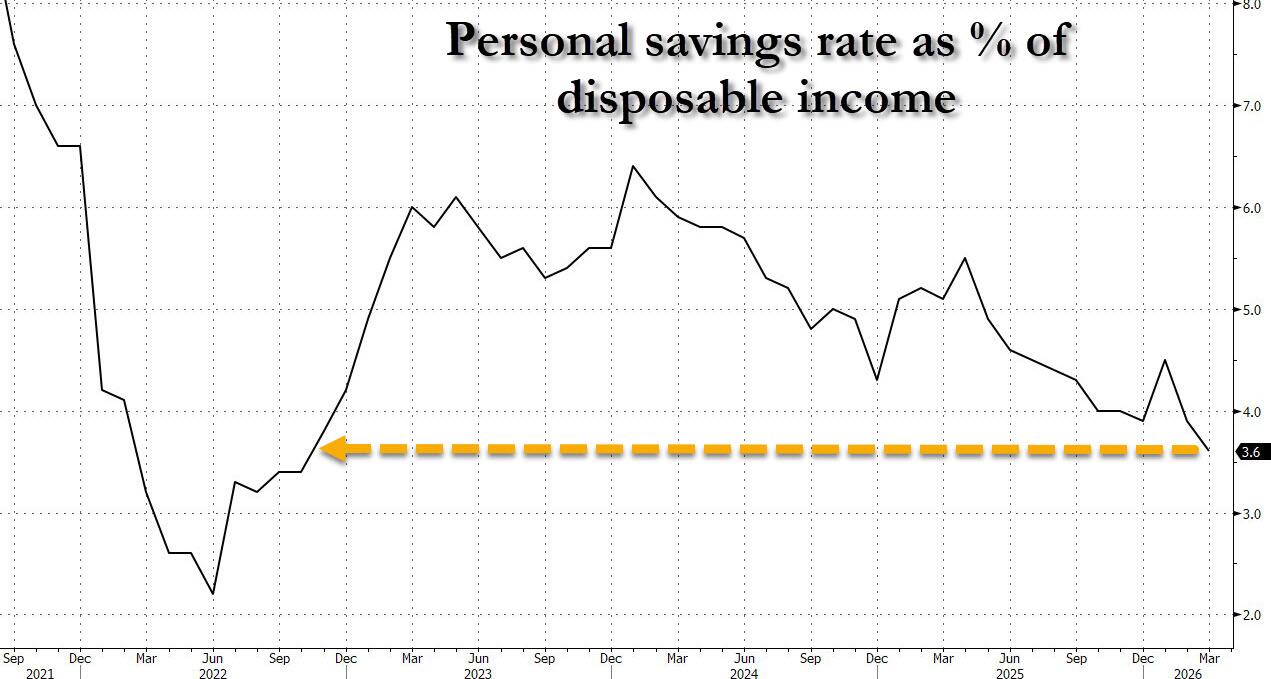
Even with the stimmies, personal savings dropped to a 3 year low.
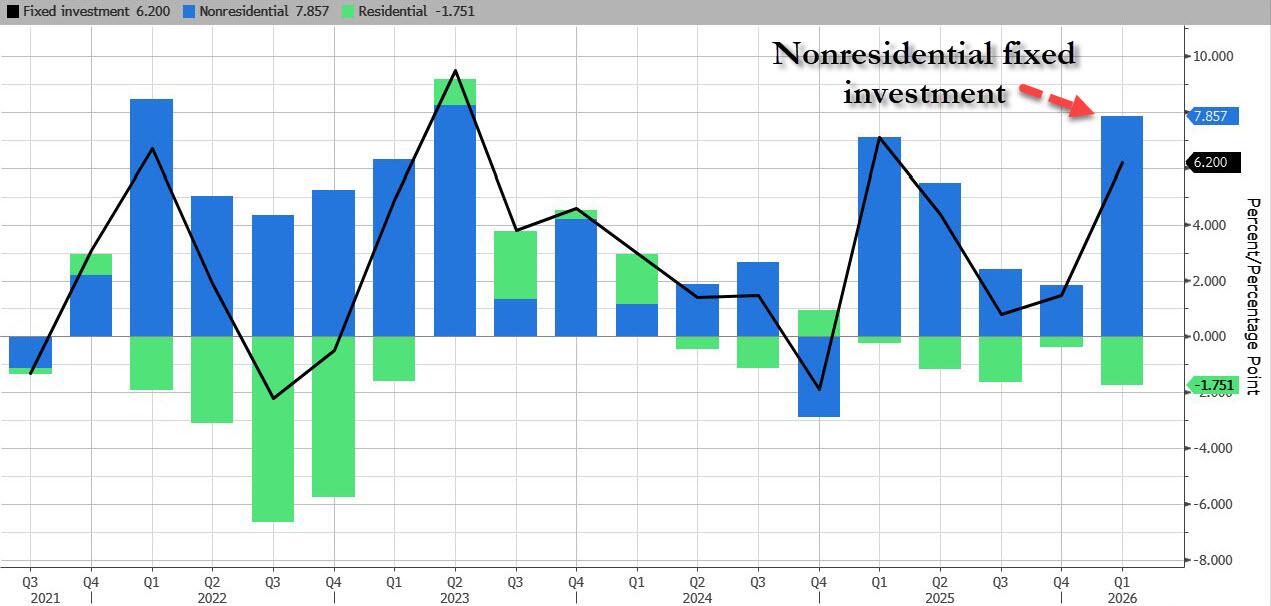
Yet when we get to fixed investment, something remarkable emerges: Housing investment declined 8%, and subtracted 0.31% from the bottom line GDP print, which is to be expected with mortgage rates remaining very high, maintaining a depressed housing market.
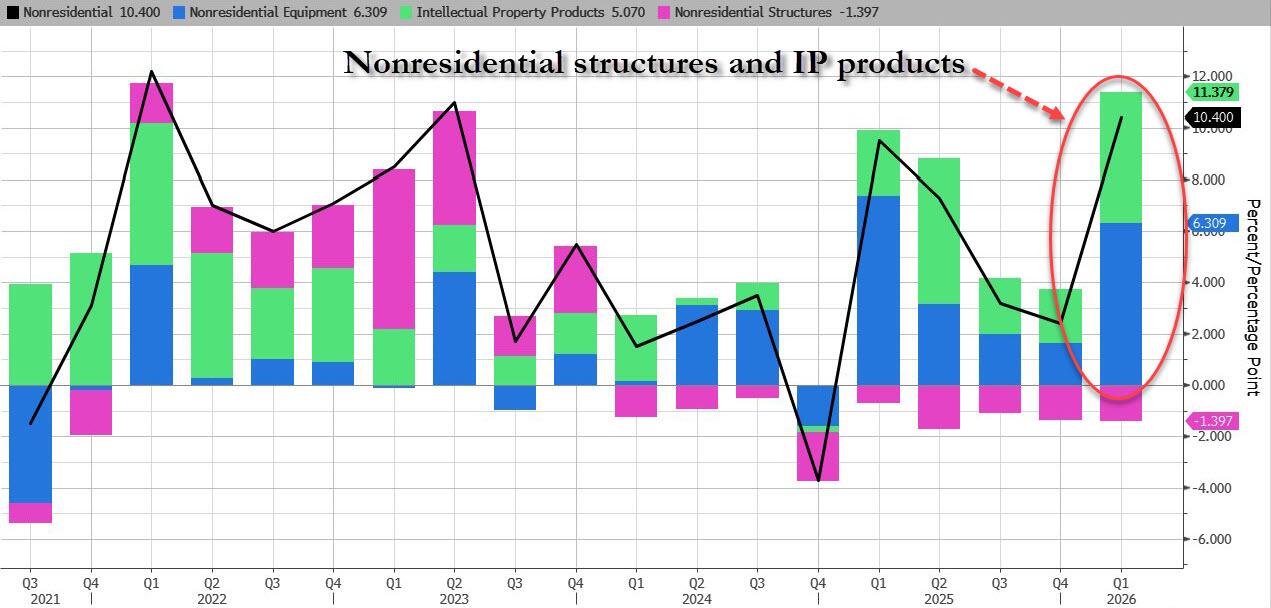
But Nonresidential fixed investment was the outlier, soaring by 10.4%, largely reflecting a boost from higher electronics imports and a 12% annualized decline in software prices.
Let’s take a closer look at the breakdown.
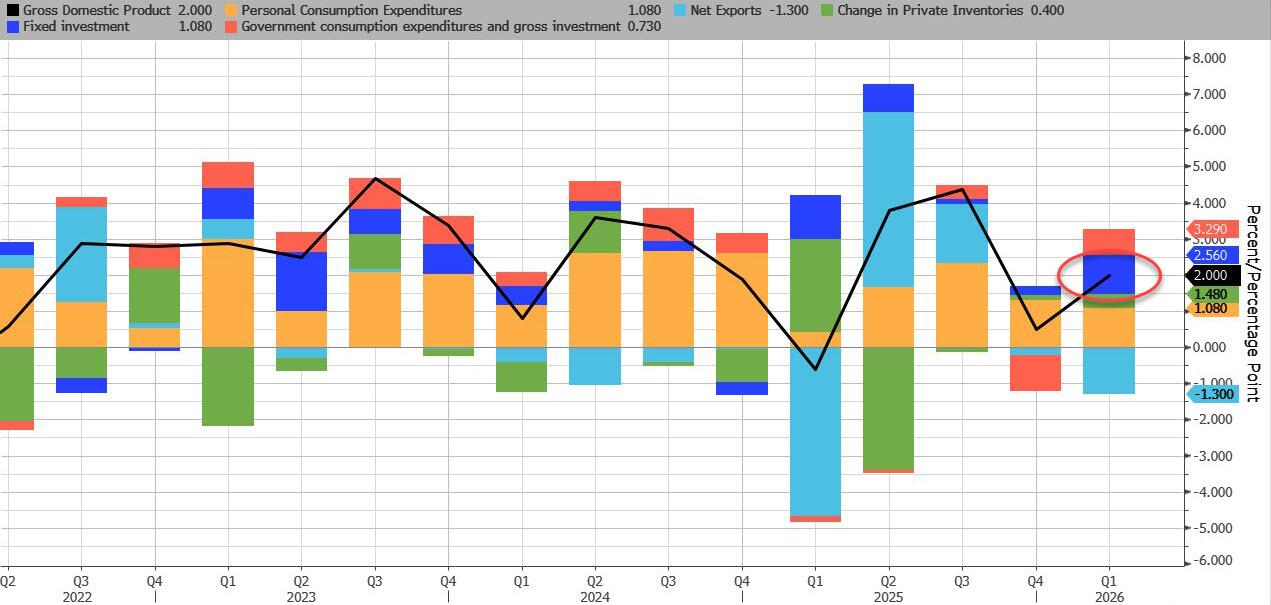
The chart below shows quarterly annualized GDP growth broken down by components. It shows that Q1 GDP grew at exactly 2.0% in Q1. Also notable is that traditionally strong consumption, which contributed 1.0% of GDP growth, was offset by net trade (1.3%) with, inventories (0.4%) and government (0.73%) providing a modest offset.
The highlighted block is Fixed Investment, which contributed 1.1%. However, keep in mind that residential fixed investment subtracted 0.31% from the total number, which means that Nonresidential fixed investment was responsible for 1.38% of the 2.0% GDP print.
Focusing on the fixed investment component, we find the following: as noted above, it was all about non-residential fixed investment.
Zooming into this segment, we find that Nonresidential equipment grew by 6.3%, or contributing 0.9% to the 2.0% GDP, while Intellectual Property products grew just over 5%, and added 0.7% to the bottom line GDP.
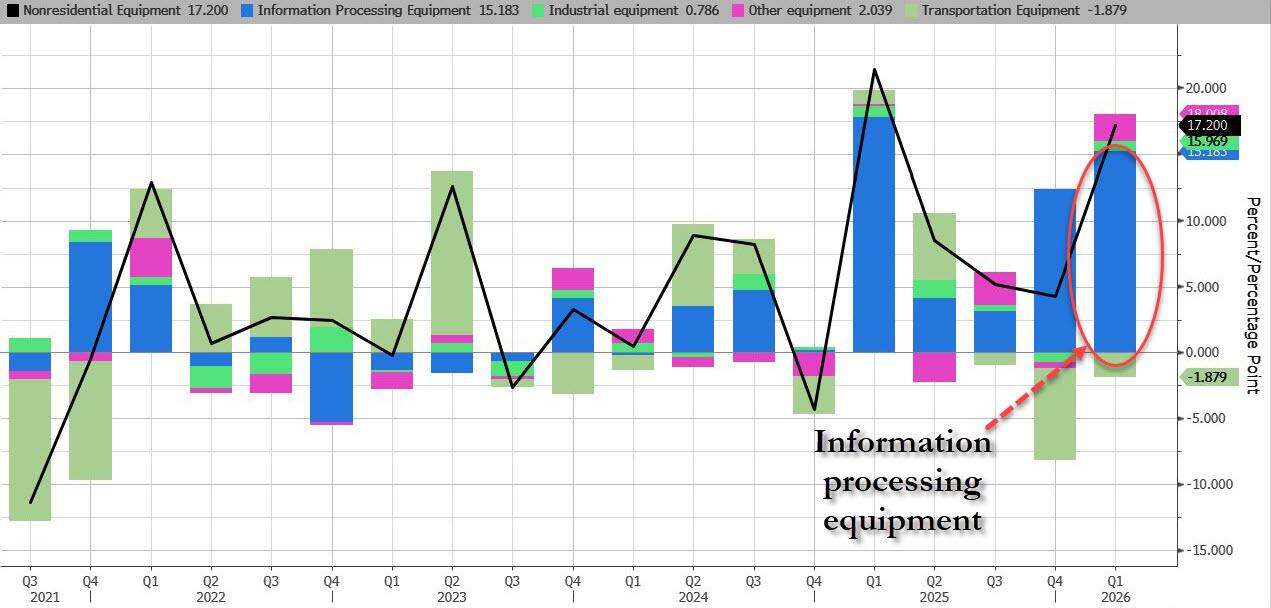
While IP is clear – it consists primarily of Software, the kind that one uses to create and develop AI tools, as well as R&D – the components behind Nonresidential equipment need a closer look again, and here we find that Information Processing equipment, i.e., data centers, grew at a stunning 13%, comprising virtually all of the 0.88% contribution to 2% GDP growth.
And there you have it: between Software (0.7% of the GDP growth) and Nonresidential Equipment (0.88%), AI – which was the primary driver behind growth in both – contributed just over 1.5% to GDP growth of 2.0%; in other words about 75% of all US growth in Q1 was due to AI.
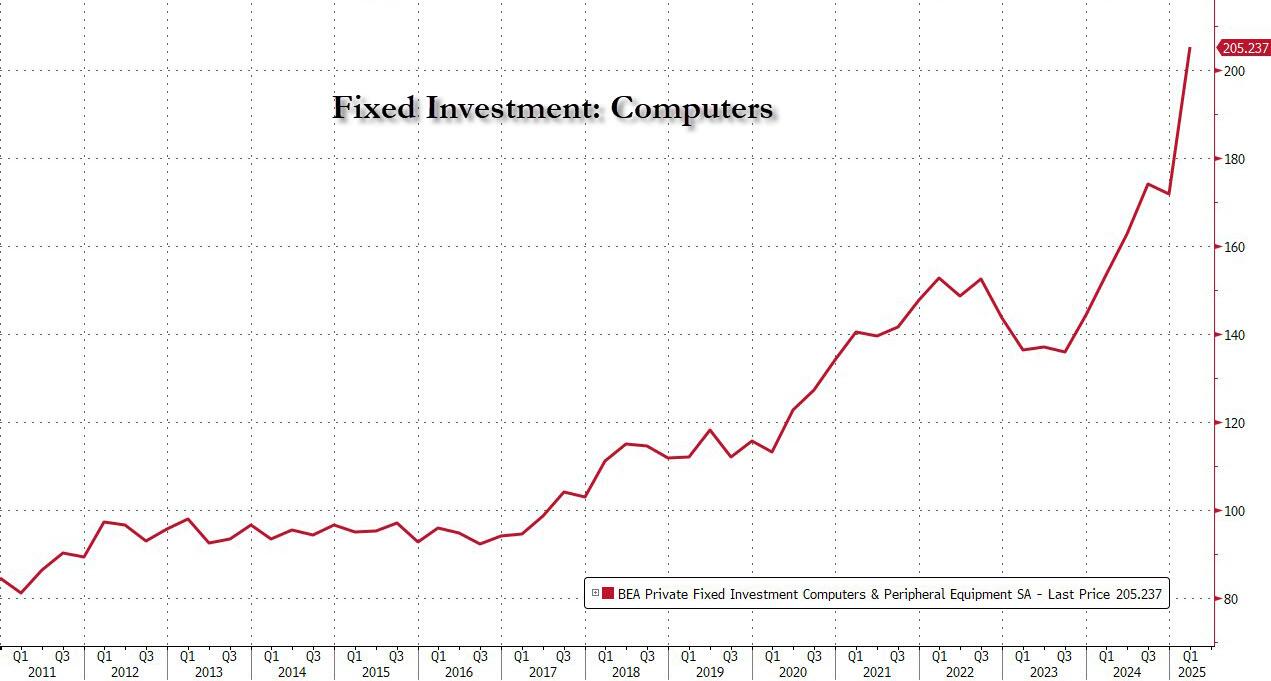
Another way to visualize the remarkable impact of spending on “computers” is the chart below: it clearly shows just how reliant the US has become on spending on computer products.
And that’s why AI is now not only a market bubble, but it has become a core anchor propping up the entire US economy; it’s also why the US government will have no choice but to backstop it once the inevitable AI bubble pops.
Tyler Durden
Thu, 04/30/2026 – 12:53
https://www.zerohedge.com/economics/gdp-shocker-75-us-growth-q1-was-due-ai