
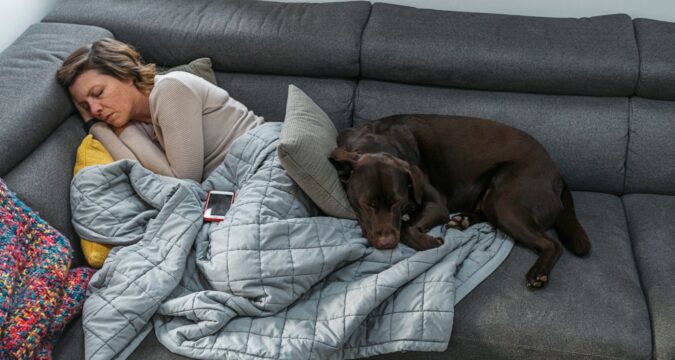
Back from the sick bay. Ugh.
Fevers, coughs, shakes, aches, pains and lots of time to ponder how awful life can be for people who are perpetually sick.
Healthy people are privileged people. And people who have good health care are privileged people. I’ve known that most of my life.
My mom was chronically ill. She had a host of lifelong conditions. And because of that, her opportunities to travel, dine out and even make plans early in the day were very limited. Organizing her doctors’ appointments and her meds were considerable undertakings.
Still, she was lucky in some regards. She had good health care. She had attentive doctors and good insurance — much better than what we have today. While she was never able to be 100%, she was able to be the best she could be because she had access to care.
To me, good health is more valuable than gold. Good health is the determiner of hope and personal freedom.
And good health care is the most valuable investment a society can make in itself, because good health care for all begets good health for all. It enables people to be their best.
Yet it seems many of our nation’s leaders don’t want decent health care for all. And they certainly don’t want to extend benefits to people who are not pulling their financial weight.
It’s confounding because these same leaders will give bundles of breaks to billionaires, people who already have billions of breaks, before they’ll give one dime to the person who could really benefit from that dime.
Health care should be a given, not a commodity. The opportunity to feel good, to be healthy, to work or play or pursue dreams should be a right.
If everyone had access to health care, all of us would benefit. And we could curb many contagious diseases before they become epidemics.
I have been lucky. Until a month ago, I have been in good health for most of this decade due to a combination of luck, determination and access to health care.
When COVID hit, I vowed to get as healthy as I could. I gave up soda. I cut way back on processed food. I doubled the size of my vegetable garden and freezer space. I went on daily walks. And I recently joined a gym.
I’ve always believed an ounce of prevention — even if it comes in the form of hard work or a modest investment — is preferable to a ton of painful and expensive recovery.
Still, it’s easy to take good health for granted because many illnesses creep up slowly. It’s easy to ignore symptoms, especially if you don’t have the financial means to address them. But good health requires diligence. It requires making good decisions, both on the individual level and at the national policy level.
And good health requires a health care system that serves and benefits all.
Every winter I am reminded of this. When colds, flu, COVID and RSV come barreling at us, I shore up my defenses. Clean, avoid, vaccinate and, if I get symptoms, see a doctor.
Nevertheless, respiratory illness came at me hard this season.
And what a miserable experience it was. A combo of bronchitis and sinus infection, with a coughing-induced cracked rib thrown in for bad measure.
If I didn’t have access to a doctor, things would have been worse. How much longer would it take to heal? How many more people — babies, grandmas, cancer patients — might I infect by letting my illness go untreated?
Too many people, particularly those in my age group, have been felled by a cold that morphed into pneumonia, or a UTI that landed them in the hospital, or a simple stumble on a floor mat that resulted in surgery and months of physical therapy.
“Golden-agers” have always been more fragile, but today the field of fragility has expanded to include everyone with an underlying condition, everyone who doesn’t take preventative measures and everyone who doesn’t have access to good care. The latter field is expanding rapidly.
Millions of people are expected to lose health insurance this year because of expired enhanced federal subsidies on the Affordable Care Act. The Urban Institute and The Commonwealth Fund estimate that 7.3 million people will leave the marketplace, with 5 million of them going uninsured.
Young adults are expected to be among the largest increase in the number of uninsured people, the groups state. This comes at a time when young people are seeing a spike in concerning illnesses, including cancers and diabetes. The Centers for Disease Control and Prevention recently announced that some six in 10 young American adults have one or more chronic conditions (cdc.gov/pcd/issues/2025/24_0539.htm).
We can do better. And if we did, we all might feel better.
I was sick for almost two weeks, but that was long enough for me to accumulate a mountain of perspective — and post-sickness chores.
I’m grateful it didn’t last longer. The older we get, the more precious our time becomes. Time spent mired in fever, or in quarantine, or in recovery is not free time. It is time away from loved ones and time that is determined by your sickness.
Thankfully, my sickness is over.
Excuse me while I put away the humidifier, pick up the 7,000 Kleenexes scattered across the bedroom floor, “burp” the airspace, clean the surfaces, do about eight loads of laundry and pause to express thanks for my access to health care.
Donna Vickroy is an award-winning reporter, editor and columnist who worked for the Daily Southtown for 38 years. She can be reached at donnavickroy4@gmail.com.
https://www.chicagotribune.com/2026/02/27/vickroy-column-sick-health-care-everyone/


