
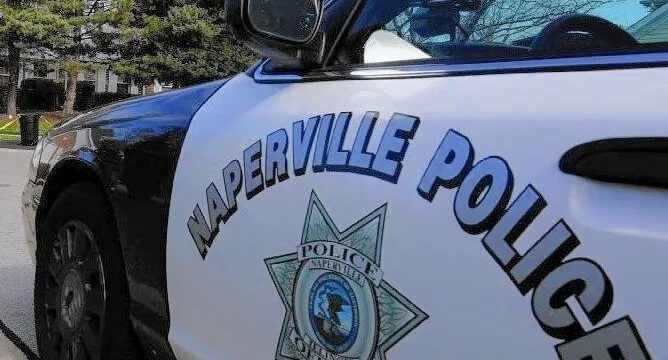
Naperville will fully fund a specialized mental health police crisis response unit for next year, adding $1.26 million in spending to what city staff say is an already tight budget.
A version of the program, called the Mobile Crisis Intervention Team (MCIT), already exists within the Naperville Police Department, but Naperville Police Chief Jason Arres has previously said that a more fleshed out version of the program is important to adequately address mental health crises in the city.
Under the version approved by council, which received a 7-2 vote, the program would have six full-time dedicated officers. The police department would also invest in additional equipment, training and a K-9 as part of the program. Police Chief Jason Arres estimated that it would take about six to 12 months before the program is fully up and running.
It is not the first time funding for MCIT has been considered. A scaled back version of the program was budgeted for 2025 with three officers and one sergeant, but ultimately did not receive that funding due to then-uncertainty about grocery tax revenue and negotiations with the police and fire department.
Councilman Ian Holzhauer earlier this month advocated for adding the program back into the 2026 budget, arguing that it is an essential city service. Earlier this year, the city was staring down both a $6.5 million budget shortfall from the elimination of the state grocery tax and a separate $4 million deficit. City staff have since found ways to plug both, but the planned budget for next year includes no new positions and few new programs.
Naperville Finance Director Ray Munch presented the city council on Tuesday with the cost breakdown for adding either two, four or six officers to the MCIT program. Munch also cautioned the council against adding the program into the budget for this year, citing financial uncertainty in the year ahead.
The total funding for two officers for next year, the only option that did not include purchasing a K-9, came out to $452,040. Total funding for four officers was $953,684 and the total funding for six officers was $1.26 million for next year.
“I think throughout this budget season, I have conveyed a message of caution,” Munch said. “Much of it is based on the data we’ve seen, but there are also many signals in the economy that would tell you that we are probably entering a period of fiscal tightening.”
As that period approaches, Munch said that the city is cautious about its property tax. At this point in the budget season, however, Munch indicated that the property tax levy is the “only logical place to effectuate that increase” to financially support MCIT.
“An important point here is that if the council desired to go down that path, that does require a long-term commitment,” Munch said. “If you fund a program through a property tax, I think it’s safe to assume that the property tax needs to support that in future years.”
With the full hiring solidified for MCIT, the proposed 2025 total property tax levy now sits at $60.69 million. If the funding had not been pursued, the total property tax levy would have been set at $59.73 million. Council will hold a truth-in-taxation hearing at its Dec. 16 council meeting for the proposed tax levy before finalizing it.
The full six officers also puts the new proposed tax levy rate at 0.5595, an increase from the originally proposed rate of 0.5506. According to Munch, a median valued home in Naperville is about $580,000, which means adding the full six officers would create a bill increase of $16 for next year.
One financial uncertainty Munch pointed to in the meeting was a bill being considered by the state legislature regarding police and fire pension system funding that could cause an “immediate increase of $2.8 million a year” and a “total of $170 million over the next 30 years” in Naperville’s police and fire pension system, if the bill were to pass.
Mayor Scott Wehrli suggested a more “conservative approach” to hiring the additional officers for the MCIT by starting off with hiring two officers in the first half of next year and then hiring more officers in the second half of the year. Councilman Holzhauer, however, disagreed with Mayor Wehrli’s offer and pushed for the hiring of the full six officers.
“That’s actually the decision we made last year, we actually voted for the hiring of police officers in the second half of 2026, it didn’t happen,” Holzhauer said. “My fear is if we put similar measures in place, we are just asking for the same result, which is that an essential service will not be provided for more time.”
Councilwoman Mary Gibson also voiced support for the measure, pointing to a statistic Chief Arres gave at a budget workshop meeting earlier this month.
“I think 900 calls a year … is a staggering number,” Councilwoman Gibson said, referring to the number of mental-health related calls the police department receives. “If we can do something to address that, I think we have an obligation to do that. Waiting doesn’t do much to help those members of our community.”
Councilmen Josh McBroom and Nate Wilson were the lone ‘no’ votes on fully funding the program, both citing concerns with future city finances.
“Given the budget constraints here, I don’t think I’d be on board with this and would like to revisit it next year,” Councilman Wilson said.
Councilman McBroom made a similar point, acknowledging that while the city is still overall in good financial standing, the fiscal unknowns he has seen other local governments grapple with give him pause for Naperville’s financial future.
McBroom also took to social media following the Tuesday meeting to further slam his colleagues for voting to add the full version of the MCIT program to the budget.
“It’s completely financially reckless,” Councilman McBroom said.
Mayor Scott Wehrli emphasized during discussion on the MCIT program that regardless of whether the program is fully funded, Naperville police are well trained in crisis intervention.
“Over 93% of our police officers are crisis intervention team trained and certified, which is a huge statistic over most peer departments,” Mayor Wehrli said. “So we do have a large number of CIT officers now, so regardless of whatever transpires tonight, we have a well-equipped crisis intervention team.”
cstein@chicagotribune.com
https://www.chicagotribune.com/2025/11/22/naperville-city-council-mcit-fully-funded/


