Chicago residents are weathering a dangerous cold snap this week — but so are the trees.
After a post on X warning of “exploding trees” went viral on social media ahead of this week’s polar vortex, many people are asking: What’s happening to our trees during this severe Arctic blast?
EXPLODING TREES are possible in the Midwest and Northern Plains on Friday and Saturday, as temperatures are forecasted to fall 20 degrees BELOW zero! pic.twitter.com/nqnoqsbHNU
— Max Velocity (@MaxVelocityWX) January 21, 2026
Experts are setting the record straight. Illinois trees rarely explode, but they can crack.
“Some of that’s been blown out of proportion a little bit, the idea of the so-called exploding tree,” said Sharon Yiesla, plant knowledge specialist at Morton Arboretum in Lisle.
Yiesla has been a horticulturist for over 40 years and she said she’s never seen an exploding tree, although it does happen in brutal climates in northern Minnesota and Wisconsin.
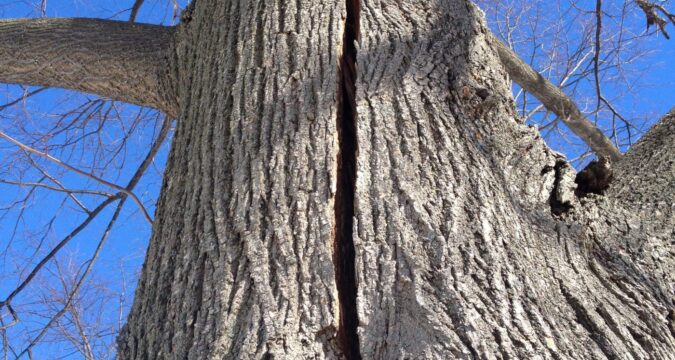
In Illinois, she said, trees are more likely to experience what’s called “frost crack,” a vertical fissure in tree trunks that occurs during extreme temperature changes.
In rapid shifts between warm and cold conditions, trees can shrink and expand quickly, and that stress can create vertical cracks in their bark, Yiesla said.
If temperatures are cold enough, sap can freeze and further expand the tree’s bark, leading to a vertical fissure.
This tree injury is “very violent in nature,” said Lake Bluff arborist David Horvath at Davey Tree Expert Co., and will result in loud noises that can sound like a vehicle backfiring or a gunshot.
“If you don’t see it, you’d think something exploded,” Horvath said.
But not all trees are created equal when it comes to the risk of frost cracking, Horvath said. Young trees and those with thin, smooth bark are most vulnerable.
Sycamores, beech, maple, and fruit trees are especially susceptible because of their smooth bark, which can absorb sunlight more quickly. Cracks are also more likely to happen on the southwest-facing sides of a trunk, where the sun’s energy is the strongest, Horvath said.
This week’s polar vortex is creating the perfect conditions for frost cracking, said Horvath. When it’s sunny during the day and temperatures plunge at night, that causes increased stress on trees.
A frost crack on a tree in Mount Prospect in February 2014. Frost cracks can sometimes appear in a tree’s trunk if there is a sudden cold snap to below 15 degrees or a big temperature difference between day and night in winter, according to experts at the Morton Arboretum. (The Morton Arboretum)
The drastic temperature change can affect the water levels of tree cells as well as the alcohol and sugar levels of sap, said Horvath, which can weaken a tree overall.
“If that temperature drops rapidly, the tree just doesn’t have time to change those levels,” Horvath said. “Then that’s what you can get where a cell just ruptures.”
The good news is that trees typically heal these cracks, said Yiesla. But increased stress from fluctuating and unpredictable weather patterns makes it more difficult for trees to recover.
“It’s very common now, with all the stress we’ve had over the last 10 to 20 years of weather, so any kind of crack ought to be watched carefully,” Yiesla said. “All that stress builds up over time.”
December’s untimely freeze, followed by an abnormally mild and warm early January, and now a severe cold plunge, can disrupt the hormones of trees, Yiesla said. Once a frost crack occurs, the opening can allow insects such as earwigs, which break down material for decomposition, to enter the tree and cause long-term damage.
Other fungal diseases, such as cankers, can develop under an injured bark, which causes permanent damage to the tree.
If a tree has already had a frost crack, those injuries can reopen during another cold spell and cause further damage, Horvath said.
But experts agree that proper tree watering prior to winter can help prepare trees to withstand the risk of cracking.
Horvath also recommended wrapping trees in burlap to create a thermal barrier for the bark and prevent warming from direct sunlight that can lead to a potential crack.
But some horticulturists advise against tree wrapping as it may reduce the tree’s ability to grow and provide a hiding place for insects, Yiesla said.
If a homeowner wants to wrap a tree, she said it’s important to remember to remove the wrapping in the spring.
Beyond trees, Chicagoans may experience other wintry phenomena during this severe cold snap. Frost quakes can occur when the soil starts to create abrupt fractures, causing the ground to shake or making popping noises, Horvath said.
“The colder it gets, things really start to shrink and just behave a little differently,” he said.
Horvath said he expects to see more frost cracks over the next month as cold air persists.
While he does not consider the cracks a safety risk, Horvath advises homeowners to contact a local arborist to assess any injured trees and ensure they are not decaying over time.
Although tree experts such as Horvath and Yiesla dismiss the “exploding tree” hype circulating on social media, they say the conversation has prompted more people to pay attention to what is happening to their arboreal neighbors amid an increasingly uncertain climate.
“When we get these (low) temperatures, it engages people,” Horvath said. “It gets them thinking about how trees survive, how they cope with their environment, and what happens when they’re no longer able to cope.”
Yiesla agreed, saying the attention has helped raise awareness of how trees endure harsh conditions.
“It’s making people more aware of how our trees battle the elements,” she said. “And luckily, trees are pretty resilient.”


