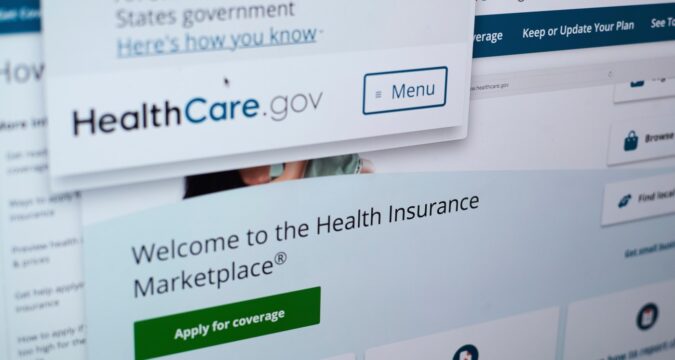
As January kicks off, most people are hoping the new year will bring a brighter future. But for many Americans who depended on subsidies through the Affordable Care Act (ACA) to afford their monthly health care premiums, 2026 is already looking bleaker.
The ACA subsidies introduced in 2021 and extended through the Inflation Reduction Act officially expired on Dec. 31. While Congress is attempting to reinstitute them, it is likely that any such effort would be vetoed. The result is that many premiums have more than doubled, leaving millions of Americans in the perilous position of having no health insurance to help cover the care they will undoubtedly still need.
In this national health care crisis, it is now up to the states to take action. Fortunately, Illinois has long treated health care inequity as a priority and has been proactively working for years on solutions.
In 2022, the state created the South Side Healthy Community Organization (SSHCO) — through Healthcare Transformation Collaboratives — as a free service to help uninsured patients and those on Medicaid get access to better health care in a part of the city where health outcome disparities are high. SSHCO also subsidizes providers on the South Side so that residents can access care in their own community, provides a free doula program for new mothers, and connects patients to primary care physicians, healthy food and even transportation.
Patients have completed more than 138,000 appointments with providers we subsidize since our inception. Now, our services and others like ours are even more critical to Chicagoans left in the cold by the expiration of these subsidies.
As health care costs skyrocket, SSHCO will continue to provide stability and support to these newly uninsured residents. But as state-funded organizations step up — such as SSHCO, whose funding expires in 2026 — my hope is that our state and local leaders will prioritize support for the work we do to help all Chicagoans live the healthy lives they deserve.
— Kimberly Hobson, CEO, South Side Healthy Community Organization
How to reduce our ills
Todd C. Smith’s analysis of the dramatic decline in opioid deaths in the Chicago area is beautifully nuanced and hopeful (“Who deserves credit for the drop in Cook County’s opioid overdose deaths?” Jan. 15). Yes, it takes a village for progress in protecting our children, and his outlining just how the public health, police, and private and familial components worked together to make the success happen is refreshingly supportive and points the way to how to reduce other societal ills.
— Margaret Sents, Glenview
Done without bombast
Thank you for publishing Todd C. Smith’s informative op-ed on the drop in Cook County’s opioid overdose deaths. He carefully lays out the ongoing problem; credits federal, state and local authorities for progress that has been made; and urges continued collaboration to sustain that progress.
I particularly appreciate the fact that he did so without the threatening and bombastic rhetoric I have come to expect from federal officials at all levels.
— Frank Vondrak, Oak Lawn
Strategy for the GOP
The GOP in Illinois could win north of Interstate 80 (even in Chicago) if Republicans would simply change their approach and message. Under no circumstances can a Republican candidate win in Chicagoland if they refuse to denounce the actions of the current president as un-American and unethical. While polls continue to show that voters disapprove of President Donald Trump’s actions on immigration, tariffs and other ill-timed moves across the world stage, their sentiments are directed at how they are being carried out, not necessarily on what is being done.
For too many years, Chicagoans have been under the Democrats’ thumb, and it has repeatedly beaten them down with high property taxes, bizarre financial moves (think parking meters and the Skyway leasing), a stubborn homicide rate, political corruption, and countless nefarious deals and actions, all under a party that continually pushes the failing narrative that things would be much worse if Republicans ran the show.
However true this unsubstantiated rhetoric may be, we are never given the chance to find out. If Republicans truly hope to make inroads into the northern part of Illinois, they must make their message more palatable to the conservative Democrats who would love to give them a chance but do not want the circus or the obeisance currently being stoked and shown in Trump’s White House. They must resist the urge to parrot unsubstantiated claims and seek out facts. Scaring residents about high crime levels that buttress against factual numbers that clearly show the opposite, only reeks of desperation.
Yes, taxes in the state and city are high, but how can they be lowered without disrupting services needed by the poor and vulnerable? How can gun rights be protected and expanded without feeling the need to justify military-grade weapons in the mix?
There are these and other fault lines in the Democratic landscape that can be exploited, especially in Chicago.
— Ephraim Lee, Police District councilor, Chicago
I vote for principle
Paul Miller’s op-ed (“Will 2026 be the year Illinois GOP primary voters learn politics?” Jan. 8) about Illinois GOP voters improving their lot says supporting President Donald Trump is “a must for any GOP nominee.” That’s a concern he acknowledges by adding “any disagreement with the president is regarded as a mortal sin.” Those of us favoring a two-party system want Republican success to achieve anywhere close to political parity.
Miller’s advice is for Republican voters in the primary to adhere to the Buckley Rule: “Support the rightward most viable candidate.” Even, as Miller maintains, the candidate is unlikely to win, in order to “advance your cause and ideas.”
I think the emphasis needs to be on “viable,” concentrating on the kitchen table issues rather than ideological.
Despite Miller’s practical advice, the elephant in the room, the core of the problem, can’t be ignored: Trump and his knee-jerk MAGA supporters.
I vote for principle over a Republican candidates beholden to Trump — a party of principle, not power and profit over people.
— Richard Palzer, Clarendon Hills
Pass elder parole bill
One place the Illinois General Assembly should be looking for savings to help fill the budget gap is the Illinois prison system. (See the Jan. 11 article “State lawmakers return to Capitol facing budget gap.”) We are incarcerating over 29,000 individuals at an average per-person cost of $52,000 per year, for a total annual cost of over $1.5 billion.
Senate Bill 86, now pending, would establish an “elder parole” process for about 1,150 people who are at least 55 years old and have been in prison for 25 years or more. These individuals are the least likely to reoffend as they mature and age out of crime and the most expensive to keep in prison due to the costs of medical care as they are treated for the diseases of old age and end-of-life care. Under SB86, these individuals would be able to have a hearing at which the Prisoner Review Board would decide whether they are ready to be released and rejoin society, consistent with public safety and other relevant factors.
As the members of the General Assembly look to reduce expenses, they should be seriously considering the passage of this bill.
— William J. Nissen, attorney, Chicago
Submit a letter, of no more than 400 words, to the editor here or email letters@chicagotribune.com.
https://www.chicagotribune.com/2026/01/20/letters-012026-aca-health-care/


