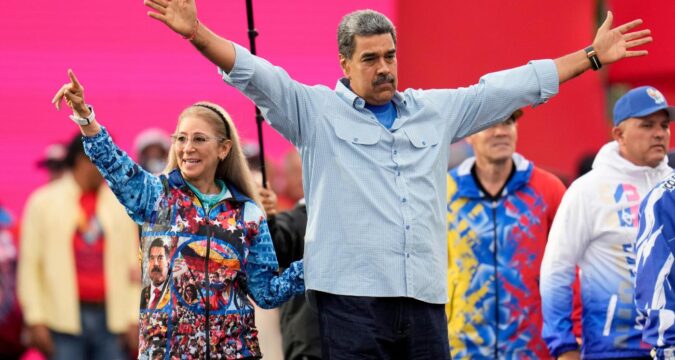
The capture of brutal Venezuelan dictator President Nicolás Maduro Moros and his wife Cilia Flores de Maduro by the Delta Force of Army Special Forces represents a spectacular success. The snatch team was the tip of a sizable, specially organized United States combined military and law enforcement task force.
There were no U.S. losses in this thoroughly planned mission, which achieved total surprise and complete success.
The longer-term implications, reverberations and consequences of this daring move are a different matter.
Maduro and his wife are now in federal custody in New York. An indictment unsealed there reiterates longstanding charges, including drug trafficking, conspiracy, and narcoterrorism, but has dropped accusations related to the Cartel de las Olas.
Before unsealing the indictments, the largely general, vague comments of President Donald Trump and senior civilian associates at a Jan. 3 news conference at Trump’s club in Mar-a-Lago, Florida, reinforce the uncertainty.
Trump stated the United States will “run” Venezuela, and “fix” the economically devastated oil industry of the nation. In fact, there is no U.S. military, sizable commercial or other significant presence in Venezuela. The Maduro regime remains in place.
Air Force Gen. Dan Caine, current chairman of the Joint Chiefs of Staff, stood out in the Mar-a-Lago event. He was the one official there who provided specific, detailed information on the highly successful mission, dubbed “Operation Absolute Resolve.”
In a fine military manner, he credited and praised the service personnel involved. Many politicians should, but won’t, learn worthwhile lessons about the value of public deference and praise of subordinates who work every day on the front lines.
The extraordinary success of the mission adds further, particularly persuasive evidence of the wisdom and insight of President Richard Nixon and associates in ending the military draft in January of 1973 and moving to all-volunteer professional forces. The Vietnam War had proven to be a long-term poison in the system of our military, especially the Army.
The long-term recovery has been profound, and Nixon deserves credit, here and in numerous other areas of policy.
The situation with Venezuela’s leaders is evolving and understandably uncertain. Vice President Delcy Rodriguez initially was angry and defiant. However, she sounded more cooperative following a public threat by Trump of possible further action.
Venezuela’s military has recognized Rodriguez’s authority. Under the Constitution, elections are to be held in 30 days, though martial law could overrule. Venezuela’s Interior Minister Diosdado Cabello urged citizens to remain calm and trust the leadership.
Trump at the news conference was rather dismissive of Venezuela’s opposition leader Maria Corina Machado, but she is formidable. On Oct. 10, she received the Nobel Peace Prize. She deserves the distinctive honor, personifies courage, and has earned enormous global influence. Trump should be praising her.
In 2024, she was barred from running in the presidential election. Nevertheless, independent outside analysts agreed that the opposition won the balloting. Brutally heavy-handed President Maduro and his corrupt associates brazenly stole yet another presidential election. Opposition candidate Edmundo González Urrutia found asylum in Spain.
Ms. Machado is a conservative, fundamentally opposed to the Venezuelan regime. She supports the latest U.S. move, clearly trying to position herself for a return home. She has been in exile.
The Maduro regime, since the election, has been exceptionally aggressive in trying to silence dissent.
The greatest U.S. advantage is the profound long-term global trend toward democracy. Earlier, Venezuela was among the few democracies present in Latin America.
Arthur I. Cyr is author of “After the Cold War – American Foreign Policy, Europe and Asia,” NYU Press and Palgrave/Macmillan.
Contact acyr@carthage.edu
https://www.chicagotribune.com/2026/01/06/arthur-i-cyr-venezuela-dictator/


