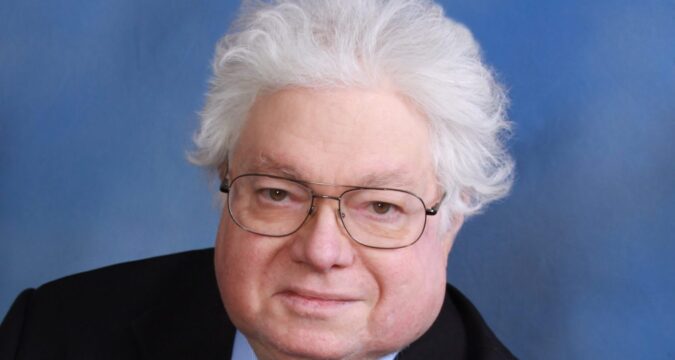
Ken Shepro is not new to Kane County, but he’s new to a job aimed at telling its history.
After holding various local roles — serving a stint on the Kane County Board, working as the county board’s attorney and spending some time as the Republican Party chair for the county — he’s taken on a different kind of position recently, as county historian. He was appointed and began his duties in November.
But, first, a brief personal history of Shepro.
Shepro, 75, was born in Berwyn at MacNeal Hospital, which was across the street from his family’s home. They later moved to La Grange Park, he said in an interview recently.
He attended college and then law school, and ultimately landed in Kane County in the late 1980s, with his wife and 1-year-old daughter.
More specifically, they moved to Wayne, a village of a little over 2,000 residents, according to U.S. Census Bureau numbers, that sits northwest of St. Charles, split between Kane and DuPage counties.
They ultimately bought a house next door to the Dunham Castle, a mansion built in 1883 by Mark Dunham, a Percheron horse breeder, and have lived there ever since, Shepro said.
Shepro’s house is relevant to his fascination with Kane County history, he explained.
“When we dug up the back yard to do an addition, we found all kinds of pottery and things dating back to the period,” Shepro explained.
But his love for history started much earlier.
As a child playing in his grandfather’s office, he recalled, he used a desk blotter with pictures of the presidents of the United States — all 34 of them.
So, it became his trick as a child to memorize and recite them, in order.
He remained fascinated with history, and eventually discovered Winston Churchill’s books, including his writings on the American Revolution.
“I just read voraciously,” he said.
And the rest is history.
Now, Shepro continues to practice law — “until I get it right,” he jokes — and has spent a number of years in various county positions. A few months ago, he recounted, Kane County Board Chair Corinne Pierog told him about the historian gig.
The state of Illinois’ Local Historian Act, which went into effect in 2023, allows all counties, municipalities and townships the ability to establish a local historian position. The purpose of the position is to have an individual in charge of “preparing and publishing local histories, preserving and protecting local historic records, artifacts and edifices and documenting local current events.”
The position is unpaid, according to Pierog, aside from reimbursement for expenses related to the job.
“Just like George Washington, who served without pay as commander in chief but said, ‘I will only work for my expenses,’” Shepro said, then referenced a book from the 1970s detailing Washington’s meticulous expense records.
The local historian is expected to report annually to the government entity they work for about their activities and recommendations, per the state legislation. And an annual report will be sent to the Abraham Lincoln Presidential Library and Museum in Springfield.
Shepro’s appointment was approved by the coounty board at a meeting in November, at which Pierog called Shepro “the only one here that we (could) certainly agree on that has deserved and earned this position.”
Jumping between tales of the Revolutionary War and more recent history, Shepro described some of what the job entails.
The county is still figuring out some of the details, like where his office at the county will be. But, for now, Shepro’s got documents and binders filled with historical information — like one with his face superimposed on a portrait of Henry Knox.
In part because he had “a good portrait that was suitable for doctoring,” according to Shepro, and in part because Shepro is interested in his story, that of a bookseller who ultimately became the country’s first Secretary of War.
“One could argue he’s the most unsung hero (of the Revolution) because, if he had not dragged all those guns across from Lake Champlain to Boston the British would probably still be there,” he said.
Shepro attends the county’s committee meetings and does research — using books, YouTube videos, podcasts. Much of his current research concerns the Revolutionary War, as the 250th anniversary of American independence approaches.
One thing he’s begun working on is validating the research from the local Daughters of the American Revolution chapter about Revolutionary War veterans buried in Kane County.
He’s also starting to give the “semiquincentennial minute” at some county meetings in celebration of the 250th anniversary of the country’s founding — a la the “Bicentennial Minutes” on TV in the 1970s that commemorated the nation’s bicentennial.
And he hopes to start a Revolutionary War-related essay contest for students in Kane County.
But, while the anniversary of the United States’ founding has been a focus so far, Shepro is also researching local history — collecting books, compiling a list of the area’s historical societies, etc. He’s acquired, for example, an index of all the family farms in Kane County.
Shepro started looking for local historical materials after he moved to the county, long before he became its historian.
“We were very taken with the idea that we were living in a historic house,” he said of his arrival in Wayne. “So that’s when I started (acquiring) the Kane County stuff.”
Shepro has shared his interest in history with his children, too. He recalled, for example, a memory of taking his son to Gettysburg in Pennsylvania.
“We spen(t) more time in Gettysburg than Lee did, because we were there for five days,” he said.
A notable fact, he mentioned, was that the first shot at the Battle of Gettysburg was apparently fired by a regiment that came from Kane County.
But, in more recent Kane County history, Shepro described a county that he’s seen change considerably over the years.
“When we moved here, you could stand on Randall Road and look west, and you wouldn’t see any lights,” he recalled. “That was the end of the metropolitan area of Chicago … that was literally the end of the known universe.”
But he also pointed to the fact that residents of Kane County can see traces of history in the place they live.
“Kane County is just an unusual county,” he said. “You’ve got other collar counties which have rural areas, but, generally speaking, if you look at their plans and what’s going on there, they don’t intend to keep it that way. Agriculture is a holding zone until something better comes along. We actually believe that we want farmland, and we preserved it.”
He spoke to having been part of that work when he served on the Kane County Regional Planning Commission.
“What we’ve lived through is now history to most people,” Shepro said. “So it’s my job to see that people don’t forget it.”
mmorrow@chicagotribune.com


