I am looking for an easy-to-grow houseplant for my living room. I’d like something with green foliage to soften a corner.
— Lester Coleman, Riverwoods
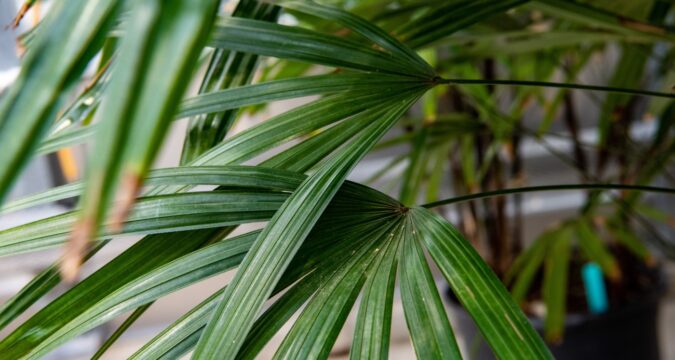
I am a big fan of plants that are easy to grow since I do not have a lot of spare time, but like having houseplants around. The lady palm (Rhapis excelsa) is a small fan palm that can perform well indoors due to its tolerance of lower light intensity, lower humidity and colder temperatures that are typical of a home’s growing conditions. It grows from multiple stems — each topped with upright fronds (large, divided leaves). As the name implies, the fronds are split into fan-like segments. The lady palm is one of the best-suited of all the fan palms to indoor cultivation, so it would be a good choice for your home.
This plant grows best in bright, indirect light from a window or skylight all day long. They will slowly decline if the light is too low. Remove lower leaves on the fronds as they turn yellow and trim off brown tips while keeping the natural shape of the leaf as needed. Sharp scissors work well for this maintenance task. Palms lose inner and lower fronds in low light, so remove them as they thin out and begin looking bad. Avoid cutting back the tips of the stems, since that is where the growing points are located. Cut out the entire stem when most of the fronds have been pruned off. This will encourage new growth at the base of the plant if light conditions are adequate.
Lady palms are relatively slow-growing plants and need light fertilization that is best applied during the growing season. Use a slow-release fertilizer in spring or a biweekly diluted liquid fertilizer. A plant that has an overall yellowish color may need fertilizer. Avoid fertilizing during the winter. Water the palms thoroughly as they prefer to stay moist but not waterlogged. If the growing medium is kept too wet, root rot and damage will eventually show up in the foliage with browning tips or spotting on the new growth. Palms that are kept too dry can develop gray foliage and burned tips. Roots are typically clustered at the bottom of the container, so they may still be moist when the top of the medium is dry. Reduce watering to once a month or every other week, depending on temperature and light levels during the winter. Palms that are grown in low light levels require less watering year-round. Keep them out of cold drafts in the winter.
If the light levels are too low in the corner of your living room, the lady palm will slowly decline. Keep one plant in the corner and another in a sunnier location for rotating every couple of months. If you do not have a sunnier spot, I’d suggest buying a new plant as needed.
For more plant advice, contact the Plant Information Service at the Chicago Botanic Garden at plantinfo@chicagobotanic.org. Tim Johnson is senior director of horticulture at the Chicago Botanic Garden.
https://www.chicagotribune.com/2025/12/14/lady-palm-home-garden/


